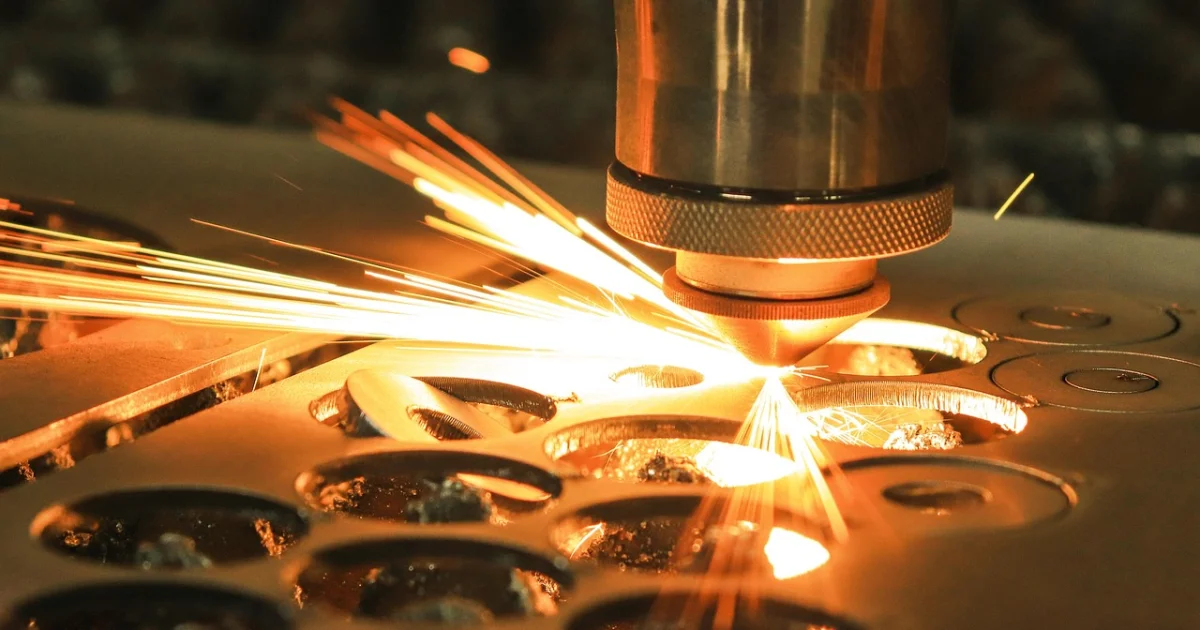
Imagine witnessing the intense burst of energy as a high-powered laser is fired, its beam slicing through the air with precision and speed. For many, the experience is nothing short of breathtaking, a testament to the incredible power and versatility of this remarkable technology. From the cutting-edge research labs where scientists push the boundaries of what’s possible, to the everyday applications where lasers make a tangible difference in our lives, the secrets behind these incredible devices are waiting to be unlocked.
The Science Behind Laser Technology
At its core, laser technology is based on the principle of stimulated emission, a phenomenon where excited atoms release photons that are then amplified by a process called population inversion. This results in a concentrated beam of light that is both intense and coherent, allowing it to travel long distances with minimal loss of energy.
Unlocking the Secrets of Laser Development
For those who have spent years developing new laser technologies, the journey is often a long and winding one, filled with challenges and setbacks. Consider the scientist who has dedicated their career to perfecting a new laser design, pouring over lines of code and testing prototypes until they achieve the desired result. It’s a testament to their dedication and perseverance that their work eventually sees the light of day.
One of the key challenges in laser development is balancing power and precision. As the power of a laser increases, so too does the risk of damage to surrounding materials. Scientists must carefully calibrate their designs to achieve the desired balance, often requiring iterative testing and refinement.
Applications in Everyday Life
Lasers have a multitude of applications in everyday life, from the medical field to manufacturing and beyond. In medicine, lasers are used to treat a range of conditions, from cataracts to skin lesions, while in industry, they’re used to cut and shape materials with incredible precision.
One of the most fascinating applications of laser technology is in the field of spectroscopy, where lasers are used to analyze the properties of materials at a molecular level. This has led to breakthroughs in fields such as materials science and chemistry, enabling researchers to better understand the behavior of complex systems.
The Ethics of Laser Development
As laser technology continues to advance, so too do the questions surrounding its ethics. With the potential for misuse comes a responsibility to ensure that these powerful devices are developed and used responsibly. This raises important questions about regulation, safety protocols, and the responsibilities of those who develop and deploy laser technology.
One approach to addressing these concerns is through the establishment of clear guidelines and regulations surrounding the development and use of laser technology. This can include standards for safety, security, and environmental impact, as well as mechanisms for monitoring and enforcing compliance.
Heart-Racing Moments of Firing a Laser
For those who have experienced it, firing a high-powered laser is a truly exhilarating experience, a rush of adrenaline that comes from witnessing the raw power of this incredible technology. Here are seven heart-racing moments of firing one of the world’s most powerful lasers:
1. Witnessing a Laser Beam Slice Through the Air
As the laser is fired, its beam cuts through the air with a speed and precision that’s both mesmerizing and intimidating. The experience is a testament to the incredible power of this technology, and a reminder of the potential it holds for shaping our world.
2. Seeing the Effects of Laser-Induced Breakdown Spectroscopy</hassistant
2. Witnessing Laser-Induced Breakdown Spectroscopy in Action
One of the most striking effects of firing a high-powered laser is the phenomenon of laser-induced breakdown spectroscopy. As the intense beam interacts with the surrounding material, it causes the atoms to be excited and then release their energy in the form of light, creating a brilliant spectral display. This is a powerful tool for analyzing the composition of materials, and has numerous applications in fields such as materials science and chemistry.
3. Observing the Creation of a Plasma Arc
When a high-powered laser is fired into a target material, it can create a plasma arc, a brilliant display of light and energy that’s both mesmerizing and powerful. This phenomenon is a key area of research in the field of plasma physics, and has numerous applications in fields such as materials science and energy production.
4. Witnessing the Destruction of a Target Material
One of the most impressive effects of firing a high-powered laser is the destruction of a target material. As the intense beam interacts with the surrounding material, it can cause it to vaporize, creating a brilliant display of light and energy. This is a powerful tool for studying the properties of materials at the atomic level, and has numerous applications in fields such as materials science and chemistry.
You may also enjoy reading: "7 Reasons Framework's Laptop Pro Is Revolutionizing the PC Game Beyond MacBook".
5. Seeing the Creation of a Laser-Induced Shockwave
When a high-powered laser is fired into a target material, it can create a shockwave that travels through the surrounding material at incredible speeds. This phenomenon is a key area of research in the field of fluid dynamics, and has numerous applications in fields such as materials science and energy production.
6. Witnessing the Emission of X-Rays and Gamma Rays
One of the most impressive effects of firing a high-powered laser is the emission of X-rays and gamma rays. As the intense beam interacts with the surrounding material, it can cause the atoms to be excited and then release their energy in the form of high-energy radiation. This is a powerful tool for studying the properties of materials at the atomic level, and has numerous applications in fields such as materials science and chemistry.
7. Observing the Creation of a Laser-Induced Plasma</hassistant
7. Witnessing the Creation of a Laser-Induced Plasma
When a high-powered laser is fired into a target material, it can create a laser-induced plasma, a brilliant display of light and energy that’s both mesmerizing and powerful. This phenomenon is a key area of research in the field of plasma physics, and has numerous applications in fields such as materials science and energy production.
Practical Applications of Laser Technology
Lasers have a wide range of practical applications in various fields, including medicine, manufacturing, and energy production. In medicine, lasers are used to treat a variety of conditions, such as cataracts, skin lesions, and tumors. In manufacturing, lasers are used to cut and shape materials with incredible precision, allowing for the creation of complex shapes and designs. In energy production, lasers are used to create high-temperature plasmas, which can be used to generate electricity.
Advantages of Laser Technology
One of the main advantages of laser technology is its high precision and accuracy. Lasers can be precisely controlled to achieve a specific outcome, making them ideal for applications where small errors can have significant consequences. Additionally, lasers are often more efficient than other forms of energy production, as they can achieve the same outcome with less energy input.
Challenges of Laser Technology
Despite the many advantages of laser technology, there are also several challenges associated with its development and use. One of the main challenges is safety, as high-powered lasers can cause serious harm if not handled properly. Additionally, lasers can be complex and difficult to operate, requiring specialized training and expertise.
Future of Laser Technology
The future of laser technology looks bright, with ongoing research and development in various areas. One area of focus is the development of more efficient and powerful lasers, which could have significant applications in fields such as medicine and energy production. Another area of focus is the development of new laser materials and technologies, which could enable the creation of even more precise and efficient lasers.
Conclusion
Lasers are incredibly powerful and versatile devices that have a wide range of applications in various fields. From medicine to manufacturing to energy production, lasers have the potential to make a significant impact on our lives. As technology continues to advance, we can expect to see even more exciting developments in the field of lasers, from more efficient and powerful lasers to new laser materials and technologies.
Whether you’re a scientist, engineer, or simply someone fascinated by the wonders of laser technology, there’s no denying the incredible potential of these devices. As we continue to push the boundaries of what’s possible with lasers, we can expect to see even more amazing applications and innovations in the years to come.