How accurate is generative AI when depicting ancient history?
Matthew Magnani, an assistant professor of anthropology at the University of Maine, directly tested this question alongside Jon Clindaniel, a professor at the University of Chicago who focuses on computational anthropology. They designed a structured experiment using DALL-E 3 for images and the ChatGPT API for narrative text. Across four distinct prompts, they ran 100 generations each, asking the systems to visualize and describe daily Neanderthal life.
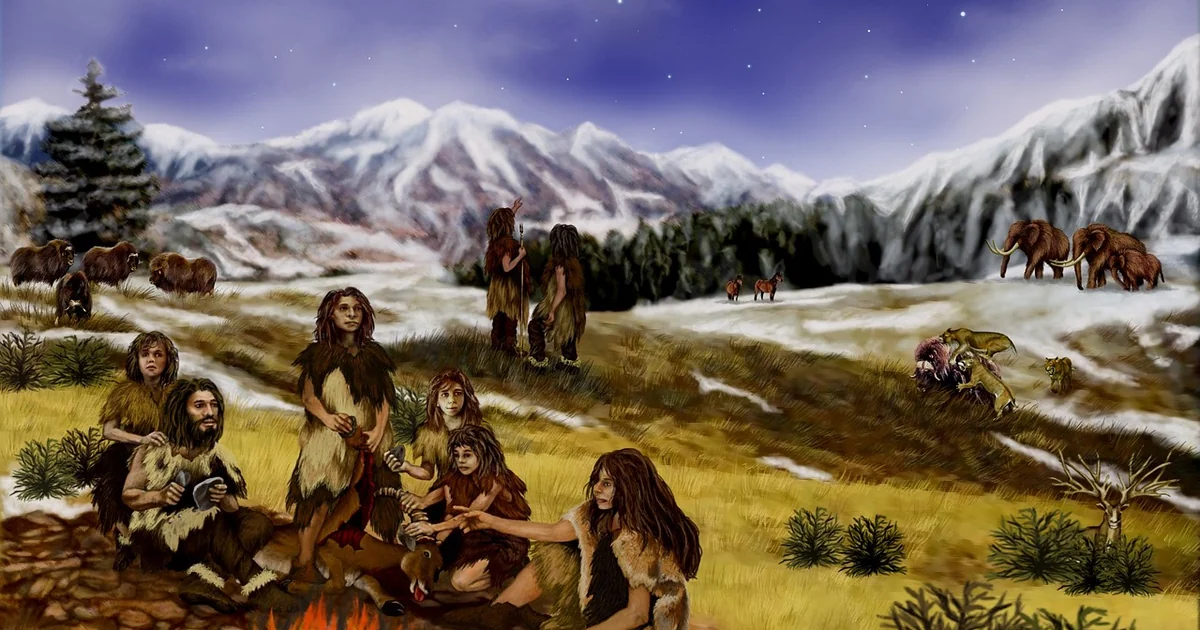
Two of the prompts avoided any mention of scientific accuracy. The other two explicitly demanded it and added context about clothing and activities. The results were unambiguous. The generated images and narratives consistently failed to reflect current archaeological understanding. Instead of portraying Neanderthals as sophisticated, adaptable humans, the AI defaulted to reconstructions that were decades out of date. The text output aligned most closely with scientific consensus from the 1960s. The visual output matched the late 1980s and early 1990s.
This test reveals a deeper structural issue. When an AI cannot access modern paywalled research, it leans on older, freely available material. This is the core of what the study documents as a troubling neanderthal ai bias problem that extends far beyond a single subject.
What specific biases crept into AI-generated Neanderthal images?
The visual bias in the output was stark. The generated hominids displayed archaic features that were more similar to chimpanzees than to modern humans. They showed excessive body hair, pronounced stooped postures, and heavy brows that contemporary science has long since moved away from. The social context was also missing. The images consistently lacked women and children, presenting a distorted demographic picture of Neanderthal bands.
These depictions mirror the “caveman” stereotype that was popularized in the early twentieth century. Scientists revised that view decades ago, emphasizing that Neanderthals walked fully upright, produced complex composite tools, and cared for their sick and elderly. The AI ignored this updated knowledge entirely. It reproduced a caricature that was already being questioned in the 1970s.
For educators or developers building learning tools, this is a critical pitfall. The models do not simply summarize knowledge. They summarize the most accessible knowledge, which often happens to be the oldest and most outdated representation available in the training corpus.
What role do copyright laws play in AI accuracy?
Magnani and Clindaniel traced the root of this distortion to a structural issue in information access. Copyright laws that were largely established in the 1920s created a long tail of restricted access to scholarly research. For much of the twentieth century, academic papers were locked behind expensive subscription services and institutional paywalls.
It was not until the open access movement gained real traction in the early 2000s that a significant volume of modern research became freely crawlable on the web. Since AI training datasets typically rely on what is publicly accessible, they miss the bulk of the most important work done in anthropology during the late twentieth and early twenty-first centuries.
This creates a scenario where the AI is effectively trained on a snapshot of science from the mid-1900s. The copyright wall did not just protect text. It distorted the training data and introduced a systematic neanderthal ai bias that causes the models to lag decades behind current academic consensus.
How can AI output be made more accurate according to the researchers?
Magnani and Clindaniel believe the solution requires a two-part approach that involves both institutions and end users. The first part is structural. Universities and publishers must push harder to make anthropological datasets and high-quality scholarly articles machine-readable and openly accessible for AI training. This means advocating for open access standards across more journals and funding the digitization of older, paywalled archives.
The second part is pedagogical. The people who use these tools must be trained to approach AI output critically. A user cannot simply take a chatbot’s answer about prehistory at face value. They must ask probing questions about whether the sources the model draws from are current or obsolete. The study itself was designed as a repeatable template for researchers to audit AI accuracy in their own fields.
For software engineers working with large language models, this implies that careful curation of the data pipeline is critical. If the retrieval-augmented generation database primarily contains mid-century literature, the system will produce mid-century answers. Adding a weighted freshness score to source documents is one practical way to mitigate this issue.
Could generative AI’s portrayal of Neanderthals reinforce modern stereotypes?
The risk here goes beyond simple factual error. When an AI repeatedly generates images of brutish, hairy, and stooped Neanderthals, it actively reinforces a visual stereotype that scientists have spent decades dismantling. The frequency of the error amplifies its impact. About half of all the text generated by ChatGPT in the study did not align with current scholarly knowledge. For one specific prompt, the inaccuracy rate surged past 80 percent.
You may also enjoy reading: iPhone 18: Everything We Know Apple’s Most Ambitious Lineup.
If these tools are adopted in classrooms, museums, or media without careful oversight, they will propagate a distorted view of human evolution. This is not a neutral mistake. It shapes public perception in a way that is hard to reverse once an image is seen. Visual disinformation often overwrites nuanced textual corrections. The neanderthal ai bias does not just misrepresent the past. It actively undermines scientific literacy by presenting outdated hypotheses as established, generated fact.
What are the broader implications of AI’s inability to distinguish current from obsolete consensus?
This problem is not confined to anthropology. Any field where the scientific consensus has shifted significantly over the last sixty years is vulnerable to the same bias. Medicine, climate science, and engineering all have large bodies of paywalled research that AI training crawls struggle to incorporate. The copyright blind spot creates a systemic lag across domains.
Generative AI has the power to influence how the past is represented and visualized. If the training data is heavily weighted toward older, freely available texts, the model will always lag behind the cutting edge of knowledge. The Neanderthal case is a canary in the coal mine. It demonstrates that AI is not simply a mirror of current knowledge. In many cases, it acts as a mirror of outdated knowledge, amplifying voices that the scientific community has already corrected and moved beyond.
Moving forward, developers need to add a “freshness” metric directly into their data weighting pipelines. Ranking sources by publication date and citation impact within the peer-reviewed community can help close the gap between what the model knows and what humanity actually knows.
Frequently Asked Questions
Why does generative AI produce outdated images of Neanderthals?
The primary cause is the age distribution of the publicly available training data. Copyright laws established in the 1920s kept modern research behind paywalls for most of the twentieth century. AI models trained on openly crawlable web data often rely heavily on texts and images from the 1960s and 1980s. Those older sources depicted Neanderthals as primitive and ape-like, a view that modern anthropology has since thoroughly revised.
How can I evaluate whether an AI-generated historical depiction is accurate?
Ask the AI for its sources or compare its output directly to the current scientific consensus from reputable research institutions. For Neanderthal depictions specifically, check for key details like upright posture, evidence of complex tool use, and the presence of diverse social groups including women and children. If the depiction leans heavily on stereotypes like excessive body hair and stooping, it is almost certainly pulling from outdated research.
What exactly is the “neanderthal ai bias” and why should developers care about it?
The neanderthal ai bias refers to the systematic error introduced when AI training data is skewed by obsolete academic sources due to copyright paywalls and web crawling limitations. Developers should care about it because this same structural bias affects any application that relies on AI for factual recall. Educational platforms, scientific research assistants, and content generation tools all risk spreading subtle misinformation that erodes user trust if their training data is not carefully curated for freshness.
The gap between what the scientific community knows and what a generative AI produces is often invisible to the casual user. By exposing this gap so clearly in the case of our ancient relatives, this research gives the field a strong framework for detecting and correcting similar distortions in other domains. Accurate generative AI depends on fresh data, and fresh data depends on open access.