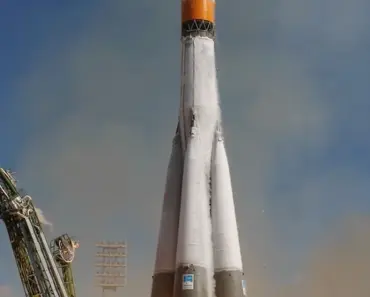
The vast, silent expanse between our solar system and the nearest stars feels insurmountable when measured by the chemical combustion engines that have defined spaceflight for decades. If we were to attempt a journey to Alpha Centauri using the propulsion systems currently powering our satellites and deep-space probes, the trip would span several millennia. This timeline makes interstellar exploration a theoretical dream rather than a practical reality for human generations. However, a paradigm shift is occurring in the realm of nanophotonics, where researchers are looking toward the subtle but persistent force of light to bridge these cosmic gaps.

The Physics of Photon Momentum
To understand how light-propelled metajets might change our future, one must first grasp a concept that feels counterintuitive: light has physical weight in terms of motion. While we often think of photons as massless particles of energy, they possess momentum. When a photon strikes a surface, it doesn’t just pass through or vanish; it exerts a tiny, measurable pressure. This is known as radiation pressure.
Imagine a single ping-pong ball being hit by a stream of microscopic, invisible particles. Even if each individual impact is negligible, a continuous, high-intensity stream can eventually move the ball across a table. In the vacuum of space, where there is no atmospheric drag to slow an object down, these minuscule pushes can accumulate. Over long periods and across vast distances, this cumulative momentum can accelerate a craft to incredible velocities.
This principle is the foundation of solar sailing, a concept where spacecraft use the natural light from the sun to glide through the cosmos. While solar sails are effective, they are largely at the mercy of the sun’s position and intensity. They are passive travelers, much like a sailboat waiting for a breeze. The breakthrough involving light-propelled metajets moves us from passive gliding to active, precision-controlled navigation.
Breaking the Barrier of 3D Maneuverability
Historically, one of the most significant hurdles in light-based propulsion has been steering. If you push an object with a beam of light, it is relatively simple to move it forward. However, moving it up, down, left, or right with precision has proven incredibly difficult. Most previous attempts required complex methods of shaping the light beam itself, which demands massive, highly sophisticated optical arrays that are difficult to deploy in deep space.
The recent work involving metajets changes the equation by moving the intelligence from the light source to the object itself. These devices are engineered at the micron scale, making them thinner than a single strand of human hair. Instead of relying on a complex laser to “shape” the movement, the metajets are etched with intricate microscopic patterns. These patterns function as integrated lenses that dictate exactly how light interacts with the surface upon impact.
This capability for full 3D maneuverability is a monumental leap forward. By controlling how light reflects and refracts through these internal patterns, the metajet can translate a simple beam of light into complex, multi-directional movement. It can pitch, yaw, and roll, allowing for a level of navigational autonomy that was previously thought impossible for light-driven craft. This transition from simple thrust to sophisticated steering is what makes this technology a candidate for actual interstellar missions.
7 Ways Light-Propelled Metajets Could Enable Deep Space Travel
1. Eliminating the Propellant Mass Penalty
One of the most daunting challenges in traditional rocketry is the “tyranny of the rocket equation.” To go faster or further, a rocket needs more fuel. However, more fuel adds more mass, which in turn requires even more fuel to lift that extra weight. This creates a diminishing return that limits how much energy we can actually bring into deep space.
Light-propelled metajets solve this by being propellant-free. Because the energy source (the laser) remains stationary or is deployed separately from the craft, the metajet does not need to carry heavy tanks of chemical oxidizers or fuels. This drastically reduces the initial mass required for launch. By stripping away the need for onboard fuel, the entire energy budget of a mission can be redirected toward speed and scientific instrumentation.
2. Achieving Relativistic Speeds via Scalable Laser Arrays
While a single metajet is microscopic, the underlying physics is entirely scalable. The researchers suggest that as we increase the optical power—the intensity and focus of the laser beam—we can move larger and larger objects. This opens the door to a tiered exploration strategy.
We could start with tiny, chip-sized probes to scout the interstellar medium, and eventually scale the technology to move larger, more robust vessels. If we can deploy massive laser arrays in Earth’s orbit or on the Moon, we could create a “light highway.” A continuous, high-powered beam could accelerate a metajet-equipped craft to a significant fraction of the speed of light. This is the only theoretical way to reach Alpha Centauri within a human lifetime, potentially cutting the journey down to a mere 20 years.
3. Precision Navigation in Uncharted Star Systems
Reaching a star system is only half the battle; navigating the complex gravitational environment of a new solar system is the other. Traditional rockets struggle with this because they have a finite amount of fuel for course corrections. Once the fuel is gone, the craft is on a fixed trajectory.
Because light-propelled metajets use the interaction between their internal geometry and the light beam, they can perform constant, minute adjustments. This allows for highly precise orbital insertions and flybys of planets or moons. The ability to steer in three dimensions means a probe could weave through an asteroid belt or adjust its path to capture the gravity assist of a gas giant, all without ever “burning” a drop of fuel.
4. Long-Term Sustainability and Low Maintenance
Deep space missions often last decades, and the mechanical parts of a traditional spacecraft—valves, pumps, and combustion chambers—are prone to wear and failure. In the harsh environment of space, a single mechanical hiccup can end a multi-billion dollar mission.
Metajets represent a move toward solid-state propulsion. There are no moving mechanical parts to seize up, no fluids to leak, and no combustion to cause thermal stress on the hull. The “engine” is essentially a piece of etched material. This inherent simplicity makes the technology much more resilient to the extreme temperatures and radiation of deep space, ensuring that the craft remains functional for the entire duration of a multi-decade journey.
5. Cost-Effective Deployment of Swarm Intelligence
Instead of sending one massive, expensive flagship, light-propelled metajet technology allows for the deployment of “swarms.” We could launch thousands of tiny, inexpensive metajets simultaneously. Because they are so small and require no fuel, the cost per unit is significantly lower than a traditional probe.
You may also enjoy reading: Itron Says Critical Infrastructure Giant Hit by Hack.
A swarm approach provides redundancy. If ten percent of the probes are damaged by cosmic rays or micrometeoroids, the mission continues with the remaining ninety percent. Furthermore, a swarm can perform distributed sensing. One group of metajets could study a planet’s atmosphere, while another maps its magnetic field, and a third monitors its moons, all coordinated by the same laser-driven propulsion infrastructure.
6. Enabling Interstellar Communication and Data Relays
One of the biggest problems with deep space travel is getting the data back to Earth. As a craft moves further away, the signal weakens, requiring massive antennas and enormous amounts of power. A light-driven mission provides a unique solution: the laser used for propulsion can also serve as a communication backbone.
The same high-powered optical infrastructure used to push the metajets can be used to receive high-bandwidth laser communication from the probes. This creates a two-way street where light is both the engine and the messenger. This synergy between propulsion and communication could allow for high-definition video or massive datasets to be beamed back across the light-years, something currently impossible with radio-wave technology alone.
7. Rapid Prototyping and Modular Design
The way metajets are constructed—through etching patterns into materials—allows for incredible flexibility in design. If we discover that a certain type of maneuver is required for a specific mission, we don’t need to redesign a whole engine; we simply change the microscopic pattern etched into the material.
This modularity means that engineers can iterate quickly. We can create metajets optimized for high-speed transit, others optimized for stable orbiting, and others specifically designed to interact with different wavelengths of light. This ability to “program” the physical response of the craft through its material structure allows for a customized approach to every different corner of the galaxy we wish to explore.
Overcoming the Engineering Hurdles
While the potential is staggering, the path to interstellar metajets is fraught with technical challenges. The first major hurdle is the sheer amount of energy required. To move something substantial at relativistic speeds, we would need laser arrays capable of producing gigawatts or even terawatts of power. This is far beyond our current terrestrial power grids, suggesting that such arrays would likely need to be space-based, powered by massive solar collectors orbiting the sun.
Another challenge involves the material science of the metajets themselves. These devices must be able to withstand intense laser radiation without melting or degrading. The patterns etched into the surface must remain precise at the nanometer scale, even after years of exposure to cosmic radiation. Developing “radiation-hardened” nanostructures is a critical area of ongoing research.
Finally, there is the issue of beam divergence. As a laser beam travels across light-years, it naturally spreads out. To keep the beam focused enough to push a metajet halfway to Alpha Centauri, we would need incredibly advanced optical technologies, perhaps utilizing “Fresnel lenses” the size of entire planets or complex relay stations positioned throughout the solar system to refocus the beam.
The Future of Exploration
The transition from chemical rockets to light-based propulsion represents the most significant shift in astronautics since the dawn of the Space Age. We are moving away from the era of “carrying our energy with us” and toward an era where we “harness the energy of the environment.”
The work being done on light-propelled metajets is a testament to human ingenuity. By mastering the microscopic world of nanophotonics, we are finding the keys to the macroscopic wonders of the universe. Whether it is a tiny probe or a future generation ship, the light that illuminates our night sky may one day be the very thing that carries us toward it.
As we continue to refine these technologies, the dream of seeing the surface of an exoplanet or witnessing the sunset of a distant star moves from the pages of science fiction into the realm of engineering reality. The journey to the stars is long, but for the first time, we are learning how to sail on the light.