This quiet but forceful redirection of resources is at the heart of the data center chip shortage that now affects how many components are available for everyday devices. Understanding this shift requires looking at the structure of the chip industry and how AI demand is reshaping its priorities.
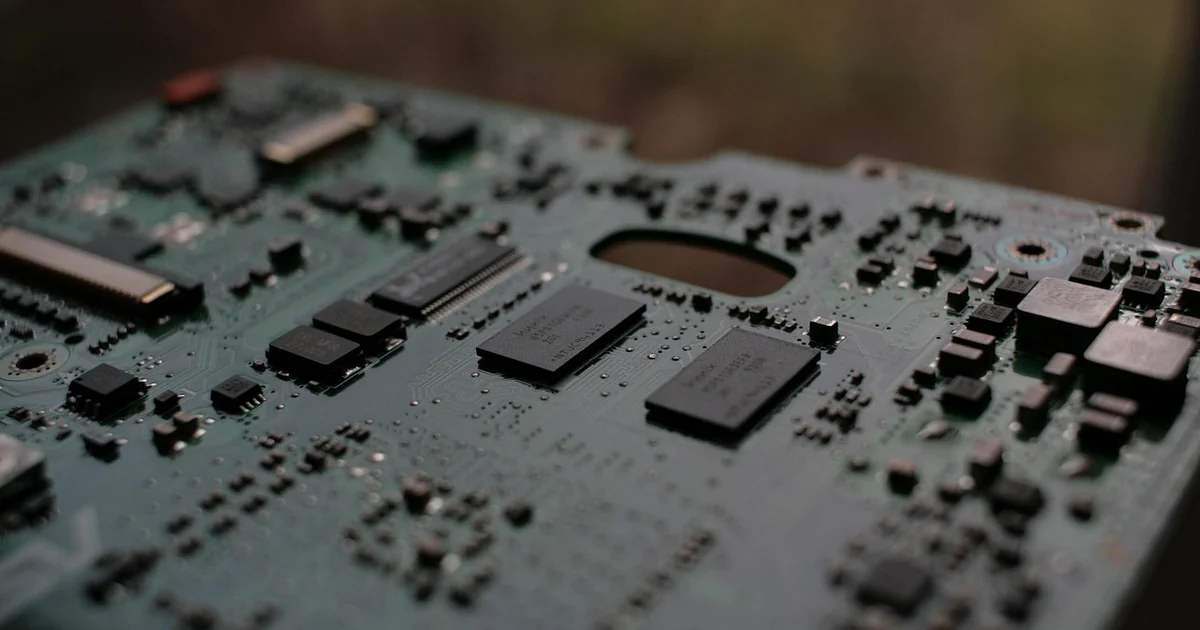
Why the Data Center Chip Shortage Hits Consumer Devices
Smartphones and data center servers do not use the same silicon. A phone runs on a tightly integrated system-on-a-chip designed for low power and thermal efficiency. An AI server relies on graphics processing units paired with high-bandwidth memory. These are different products, built on different architectures, and made in different facilities.
Yet the shortage affects both markets. The reason is not that they compete for identical components. It is that they compete for the same manufacturing and memory capacity. The boom in data center construction is taking up much of the supply of high-tech components, especially processor and memory chips. Foundries and memory makers must choose where to allocate their limited output.
Data center orders offer higher margins and long-term contracts. Consumer electronics orders, though large in volume, carry thinner margins and more volatile demand. When a fabrication plant runs near capacity, the decision is clear: prioritize the customer that pays more per wafer.
In practical terms, a phone maker and a cloud provider both need cutting-edge silicon, but the cloud provider gets priority. The phone maker either waits for an open production slot or accepts older-generation chips.
Because the chip market is concentrated and reorganizing around AI priorities, capacity and investment flow toward data center needs. Consumer devices receive whatever production remains.
How the Chip Industry’s Structure Contributes to the Shortage
Chip manufacturing does not follow the rules of a typical competitive market. When demand for raw materials rises, dozens of suppliers can ramp up production quickly. Semiconductor production works differently. It is a layered oligopoly where a small number of firms control each stage of the supply chain.
Consider the GPU market. NVIDIA holds 85 percent market share in graphics processor chips. These chips are manufactured by TSMC, which controls more than 70 percent of advanced semiconductor foundries. TSMC depends on ASML, a monopoly, for extreme ultraviolet lithography machines. A single bottleneck anywhere in this chain can constrain the entire industry.
That shift is important because it explains why supply does not respond quickly to price signals. Building a new fab takes years and costs billions of dollars. Even if a chipmaker wants to expand, the equipment, materials, and skilled labor are not available on short notice.
However, a competitive commodity market would attract new entrants when prices rise. In semiconductors, the barriers to entry are so high that only a handful of companies can participate. This concentrated structure means that when one segment of demand surges, other segments feel the pinch.
It is a layered oligopoly with high concentration, high costs, and cautious capacity expansion. That combination leads directly to supply constraints for consumer electronics.
The Impact of the Data Center Chip Shortage on Memory Supply
Memory chips form the backbone of both consumer devices and AI servers. But the types of memory they require differ significantly. A smartphone uses DRAM for temporary storage and NAND flash for long-term data. An AI server needs high-bandwidth memory, or HBM, a specialized design that stacks multiple memory dies and connects them through a wide interface.
AI is not replacing consumer electronics. It is reorganizing the chip market around new priorities for specific chip characteristics. HBM production consumes significant fab capacity because of its complexity. Each HBM stack requires multiple layers of silicon, sophisticated through-silicon vias, and extensive testing. A single HBM module can take several weeks to manufacture.
Memory makers such as Samsung, SK Hynix, and Micron have redirected a portion of their production lines from standard DRAM to HBM. This reallocation reduces the output available for consumer-grade memory, even though overall demand for memory continues to grow.
On the other hand, consumer memory chips use older, more mature processes that are cheaper to run. But the equipment that makes them can often be converted to produce higher-margin products. When memory makers see stronger profits in data center memory, they shift lines accordingly.
It shifts demand from broad consumer cycles to a segmented market centered on high-bandwidth memory. That redirection of capacity to data centers leaves less room for the memory that goes into laptops, tablets, and phones.
Why Memory Chip Makers Are Hesitant to Add Capacity
Given the surge in demand, one might expect memory manufacturers to build new fabs as quickly as possible. Instead, they move cautiously. The reason for the consumer electronics supply crunch has to do with the nature of the chip market: its concentration and high costs and how it responds to boom-and-bust cycles.
Memory chipmakers have lived through severe downturns. The post-dot-com collapse, the 2007-09 glut, and the 2022-23 downturn each left the industry with overcapacity and crushed profits. These cycles taught producers that expanding aggressively during a boom often leads to painful write-downs when demand cools.
You may also enjoy reading: 7 Future Drive-In Movie Ideas from Huawei XPixel.
Building a fabrication plant costs upwards of ten billion dollars. Operating it at less than full utilization erodes margins quickly. Producers prefer to run existing fabs at high utilization and allocate output to higher-margin products rather than building new capacity for commodity memory.
Consolidation has reduced the number of major players. The remaining firms focus on profitability over market share growth. They invest in advanced packaging and specialized memory rather than volume expansion.
Because of high fixed costs, risk of underused fabs, and preference for higher-margin products, memory makers add capacity slowly. This hesitation keeps supplies tight for consumer electronics.
Can Consumer Electronics Catch Up?
The gap between data center demand and consumer electronics supply will not close overnight. However, several factors could improve the situation over time. Three companies — Samsung, Micron, and SK Hynix — hold a majority market share in the memory chips market. Their investment decisions will shape the future balance.
These firms have announced expansion plans, but most target HBM and advanced packaging rather than standard DRAM or NAND. Consumer electronics makers will benefit only if overall memory capacity grows enough to satisfy both markets. That requires building new fabs, converting existing lines, or finding efficiency gains in production.
Device makers are adapting in the meantime. Some are designing around available chips, using older process nodes where possible. Others are locking in long-term supply agreements with foundries. These strategies help but do not solve the underlying structural imbalance.
The outlook is that a recovery is possible but incomplete. It depends on capacity expansion and market shifts. Consumer electronics can catch up if the industry adds enough production to serve both segments. If AI demand continues accelerating, the shortage may persist for several more years.
Frequently Asked Questions
How does the data center chip shortage differ from earlier semiconductor shortages?
Earlier shortages, such as the one during the pandemic, resulted from demand surges across all categories at once. The current shortage is a structural reallocation. AI demand pulls capacity away from consumer products toward specialized data center components. This type of imbalance lasts longer because it requires building entirely new fabrication capacity rather than simply reopening existing lines.
Which consumer devices are most affected by the shift in chip allocation?
Smartphones and personal computers feel the pressure most directly because they rely on advanced logic chips and DRAM memory that share production lines with data center components. Gaming consoles, smart home devices, and automotive electronics also compete for the same constrained capacity. Products that depend on high-bandwidth memory or cutting-edge process nodes face longer lead times and higher component costs.
Will building more fabrication plants solve the shortage for consumer devices?
New fabs help, but they take three to five years to become operational and cost billions of dollars. Memory makers tend to direct new capacity toward higher-margin products such as high-bandwidth memory used in AI servers. Consumer devices benefit only when total capacity grows enough to satisfy both segments. Until then, the imbalance between data center and consumer demand persists.
The data center boom represents a fundamental reordering of the chip industry, not a temporary disruption. Until manufacturing capacity expands significantly or AI demand stabilizes, consumer electronics will continue to compete for limited silicon. Understanding this structural shift helps buyers and businesses plan for longer product cycles and tighter availability.