Finding the perfect balance between a massive screen and a reasonable price tag often feels like an impossible mission for home theater enthusiasts. Most people find themselves stuck between choosing a small, high-quality display or a giant, low-quality one that washes out the moment the sun hits the living room. However, a significant opportunity has emerged for those looking to transform their entertainment space without draining their savings. The hisense 75 inch tv, specifically the U7 ULED 4K model, has hit a price point that makes high-end cinematic features accessible to the average household. At a current discount of 35 percent, this massive display offers a level of brightness and color depth that was previously reserved for much more expensive flagship models.
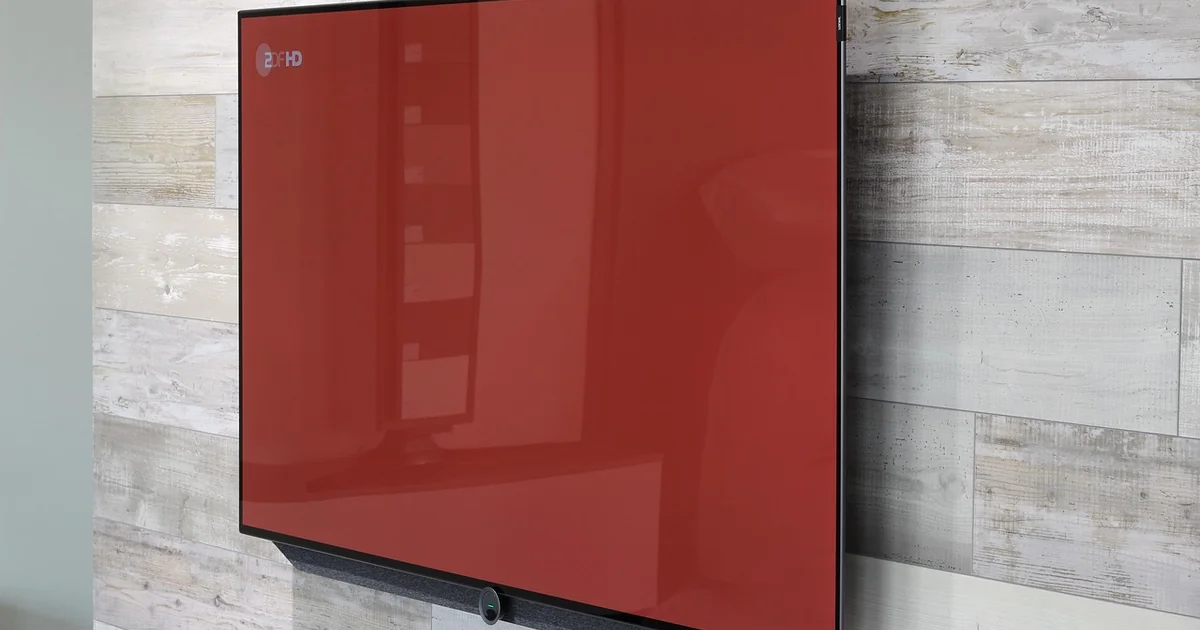
Breaking Down the Value of the Hisense 75 Inch TV Deal
When evaluating a major electronics purchase, it is vital to look beyond the sticker price and examine the actual hardware specifications. A television is more than just a glass panel; it is a complex assembly of light engines, color filters, and processing chips. The current sale on the Hisense U7 model at Amazon brings the price down to $1,299.99 from its original $1,999.99 mark. This $700 reduction represents a rare moment in the retail cycle where premium Mini-LED technology becomes affordable for a mid-range budget.
For many families, the living room serves as the central hub for relaxation, gaming, and movie nights. If your current television struggles with dimness or lacks the sharpness required for modern 4K content, an upgrade can fundamentally change how you interact with your media. This specific model was unveiled at the Consumer Electronics Show (CES) earlier this year, signaling a new era of performance for the brand. By focusing on high peak brightness and advanced color reproduction, this unit aims to solve the common frustrations of daytime viewing and washed-out imagery.
The Impact of 165Hz Native Refresh Rates on Gaming
One of the most standout technical specifications of this hisense 75 inch tv is its 165Hz native refresh rate. For the uninitiated, the refresh rate refers to how many times per second the screen updates its image. While standard televisions typically operate at 60Hz, a jump to 165Hz provides a level of fluidity that is transformative for fast-paced gaming. When you are playing a high-speed racing game or a competitive first-person shooter, every millisecond of motion clarity counts. A higher refresh rate reduces motion blur, ensuring that moving objects remain sharp rather than becoming a smeary mess on the screen.
Conquering Sunlight with Anti-Reflection Technology
A common headache for homeowners is the “glare problem.” Imagine sitting down for a movie on a bright Saturday afternoon, only to find that your windows are reflecting directly into your eyes, making the screen nearly unwatchable. This Hisense model utilizes an anti-reflection and glare-free display designed to mitigate these environmental challenges. By diffusing incoming light rather than reflecting it like a mirror, the screen maintains its integrity even in rooms with significant natural light. This makes it an ideal candidate for open-concept living rooms where controlling light levels can be difficult.
Understanding the Power of 3,000 Nits Peak Brightness
Brightness in a television is measured in nits, a unit that describes the luminance of a surface. Most standard LED televisions struggle to reach even 500 or 600 nits, which can make High Dynamic Range (HDR) content look flat. This Hisense unit reaches up to 3,000 nits of peak brightness. This massive headroom allows for “specular highlights”—the bright glints of sunlight on water, the flash of a lightning bolt, or the glow of a neon sign—to pop with realistic intensity. This extreme brightness is the cornerstone of a true cinematic experience, creating a sense of depth that cheaper models simply cannot replicate.
The Science of Hi-QLED and Color Volume
Color accuracy is often where budget televisions fail, resulting in skin tones that look orange or landscapes that look muddy. This model employs Hi-QLED color technology, which utilizes a layer of quantum dots to enhance the light spectrum. According to manufacturer data, this technology can provide up to 30% more color than ordinary LED TVs. This means that the reds are deeper, the greens are more lush, and the overall color volume—the range of colors available at different brightness levels—is significantly expanded. It bridges the gap between standard displays and professional-grade monitors.
Streamlining Your Setup with Google TV Integration
The days of plugging in a separate streaming stick, a gaming console, and a cable box just to access different apps are fading. This 75-inch model features Google TV built directly into its operating system. This provides a centralized hub where your Netflix, Disney+, YouTube, and Prime Video accounts live in one organized interface. The intelligence of the Google TV platform also means it can provide personalized recommendations based on your viewing habits, effectively acting as a digital concierge for your entertainment needs. This eliminates the clutter of extra hardware and reduces the number of remote controls cluttering your coffee table.
Design Aesthetics: The Unibody Slim Profile
A large television can often feel like a bulky, intrusive object in a well-decorated room. To combat this, Hisense has implemented a unibody slim design. This approach minimizes the thickness of the frame and the overall depth of the unit, allowing it to sit more flush against a wall or look more elegant on a media console. For homeowners who prioritize interior design, a television that looks like a piece of modern art rather than a heavy plastic box is a significant advantage. The slim profile ensures that the focus remains on the massive 75-inch canvas rather than the hardware surrounding it.
Maximizing Your Home Theater Real Estate
When choosing a screen size, many people underestimate how much a 75-inch display changes the room’s geometry. A 75-inch screen provides a much larger field of view, which is essential for achieving an immersive “theater” feeling. If you are sitting in a standard living room, this size allows your eyes to take in the entire frame without constant scanning, which is much closer to the experience of sitting in a cinema. However, it is important to measure your viewing distance; for a 4K screen of this size, a distance of about 7 to 10 feet is often the sweet spot for optimal immersion.
Solving the Connectivity Challenge for Modern Gamers
Gamers often face the frustration of “input lag,” the delay between pressing a button and seeing the action happen on screen. While the 165Hz refresh rate handles the visual smoothness, the underlying processing in this Hisense model is designed to minimize latency. When pairing this TV with a high-end gaming PC or a next-generation console, the combination of high refresh rates and low input lag creates a responsive environment. This is particularly crucial for competitive players who rely on split-second reactions to succeed in online matches.
The Long-Term Value of Mini-LED Technology
Mini-LED is a significant evolution over traditional LED backlighting. Instead of using a few dozen large light sources, Mini-LED uses hundreds or even thousands of tiny LEDs. This allows for much more precise “local dimming,” where the TV can turn off the backlight in dark areas of a scene while keeping bright areas vivid. This results in much deeper blacks and prevents the “blooming” effect, where light from a bright object leaks into the surrounding dark areas. Investing in Mini-LED technology now ensures that your television remains relevant as content standards continue to evolve toward higher HDR specifications.
A Practical Approach to Installation and Mounting
Because a 75-inch television is quite heavy and large, installation requires a bit of planning. If you intend to wall-mount this unit, you must ensure your wall can support the weight and that you have located the studs correctly. Using a heavy-duty, tilting, or articulating mount can help you fine-tune the viewing angle to avoid any remaining glare. If you prefer a stand, ensure your media console is deep enough to accommodate the unibody base. Taking these extra steps during the initial setup prevents the headache of having to move a massive, expensive piece of technology later on.
Comparing Cost-Per-Hour of Entertainment
When looking at a $1,299 price tag, it is helpful to view the purchase through the lens of cost-per-hour. If a family uses their television for four hours every day, that is over 1,400 hours of use per year. Over a five-year lifespan, that equates to 7,000 hours of entertainment. When you break down the cost, you are paying a very small amount for every hour of high-quality cinematic immersion. Compared to the cost of weekly movie theater trips or expensive outings, a high-quality home theater setup often pays for itself in terms of convenience and long-term value.
The Role of AI in Modern Picture Processing
While the hardware provides the foundation, software does the heavy lifting in terms of making content look good. Modern Hisense models utilize AI-driven upscaling to take lower-resolution content—like older shows or standard cable broadcasts—and make them look closer to 4K. This is achieved by using machine learning algorithms to predict what missing pixels should look like, filling in the gaps with intelligent detail rather than just blurring the image. This ensures that even if you aren’t watching a native 4K stream, your 75-inch screen still looks incredibly sharp.
Optimizing Audio for a Cinematic Experience
A common mistake people make when upgrading to a large 4K TV is neglecting the audio. While the Hisense U7 has decent built-in speakers, a 75-inch screen creates a massive visual presence that deserves a corresponding sonic presence. To truly complete the experience, consider pairing this TV with a dedicated soundbar or a surround sound system. Because the TV features modern connectivity standards, setting up an eARC (Enhanced Audio Return Channel) connection is straightforward, allowing you to send high-bitrate audio from your streaming apps directly to your sound system with minimal setup effort.
Navigating the World of HDR Formats
When you start looking into high-end TVs, you will encounter terms like HDR10, HDR10+, and Dolby Vision. These are different ways of telling the TV how to handle brightness and color metadata. This Hisense model is designed to be compatible with these major formats, ensuring that when you watch a movie on a platform like Netflix that uses Dolby Vision, the TV knows exactly how to adjust its 3,000-nit brightness to match the director’s vision. This compatibility is essential for anyone who wants to ensure they are getting the most out of their premium streaming subscriptions.
The Importance of Viewing Angles in Large Rooms
In many households, people don’t all sit directly in front of the TV. Some might be lounging on a side chair, while others are sitting at a dining table nearby. Standard LED TVs often suffer from color shifting when viewed from an angle, where the colors look washed out or distorted. While Mini-LED technology is primarily focused on contrast, the advanced panel construction in this Hisense model helps maintain better color consistency across a wider viewing area. This ensures that everyone in the room has a good seat, regardless of where they are positioned.
Managing Energy Consumption in Large Displays
A 75-inch screen, especially one with a high-brightness Mini-LED backlight, consumes more power than a smaller, older model. However, modern technology has become much more efficient. Most new smart TVs include “Eco Modes” and light sensors that can automatically adjust the brightness based on the ambient light in your room. By using these features, you can enjoy a massive display while ensuring your electricity usage remains reasonable. It is a smart way to balance high-performance entertainment with responsible household management.
You may also enjoy reading: 7 Pro Tips for a Classic 90s Portable TV Audio-Forward Case Mod.
Future-Proofing Your Living Room
Technology moves fast, and what seems cutting-edge today might feel dated in three years. However, by choosing a TV with a high native refresh rate (165Hz) and extreme peak brightness (3,000 nits), you are buying into a specification tier that is well ahead of the current market average. This “over-speccing” acts as a buffer against obsolescence. Even as new gaming consoles and streaming formats emerge, the raw power and brightness of this hardware will allow it to keep up with the demands of the next several years of media production.
Creating the Perfect Lighting Environment
Even with an anti-reflection display, the environment around your TV affects the experience. To get the most out of the 3,000-nit brightness and the Hi-QLED colors, you want to avoid placing the TV directly opposite a bright window if possible. If you must, consider using blackout curtains or smart blinds. On the other hand, you don’t want a room that is pitch black, as this can sometimes make the high-contrast areas of the screen feel too intense. A well-lit room with controlled, indirect light is the ideal setting for this high-performance display.
The Psychological Benefits of High-Quality Entertainment
It might sound unconventional, but the quality of our home environment impacts our well-being. Coming home after a long, stressful day to a beautiful, immersive visual experience can be a powerful way to decompress. Whether it is getting lost in a sprawling fantasy epic or cheering during a high-stakes sports match, high-quality media provides a form of escapism that is restorative. Investing in a display that looks “right”—where colors are natural and motion is smooth—removes the visual friction that can make watching TV feel like a chore rather than a pleasure.
Comparing Hisense to Other Brand Tiers
In the hierarchy of television manufacturers, Hisense has carved out a unique position. They often provide the “specs-per-dollar” that flagship brands like Sony or Samsung struggle to match at the same price point. While those brands might have proprietary processing chips that are slightly more advanced, Hisense offers the raw hardware—the brightness, the refresh rate, and the screen size—that provides the most immediate impact for the consumer. For the buyer who wants the most “wow factor” for their budget, Hisense is frequently the logical choice.
Understanding the Complexity of Mini-LED vs. Standard LED
To truly appreciate this deal, one must understand the technical leap from standard LED to Mini-LED. In a standard LED TV, the backlight is a single large unit. When a scene has a bright moon in a dark sky, the whole screen has to brighten up, which makes the black sky look grey. Mini-LED solves this by dividing the backlight into thousands of tiny, independently controlled zones. This allows the TV to keep the sky perfectly black while making the moon brilliantly bright. This precision is what makes the Hisense U7 feel like a premium device rather than a budget one.
The Role of HDMI 2.1 in Modern Setups
For gamers, the presence of HDMI 2.1 ports is non-negotiable. This standard allows for features like Variable Refresh Rate (VRR) and Auto Low Latency Mode (ALLM). VRR is particularly important because it synchronizes the TV’s refresh rate with the gaming console’s output, preventing “screen tearing.” This Hisense model is built with these modern standards in mind, ensuring that when you plug in a PS5 or an Xbox Series X, you are getting the full, uncompromised performance that those machines are capable of delivering.
How to Spot a Real Deal in Electronics
Not all sales are created equal. Some retailers raise prices shortly before a sale to make the discount look larger. To ensure this 35% discount is legitimate, it is wise to use price-tracking tools or look at the historical pricing data. In the case of this Hisense 75-inch TV, the current $1,299.99 price is noted as a historic low for this specific model on Amazon. This level of transparency in pricing makes it much easier for a consumer to feel confident that they are making a smart financial decision.
The Importance of Viewing Distance for 4K Resolution
One technical nuance often overlooked is that if you sit too far away from a 4K TV, your eyes won’t actually be able to distinguish the extra detail compared to a 1080p screen. Conversely, if you sit too close, you might see individual pixels. For a 75-inch display, the goal is to find that “Goldilocks” zone. For most people, this is between 7 and 11 feet. At this distance, the 4K resolution looks incredibly dense and sharp, and the massive scale of the screen fills your field of view without being overwhelming.
Preparing for the Delivery of a Large Format TV
Ordering a 75-inch television is a logistical undertaking. When it arrives, it will be in a very large, heavy box. It is highly recommended to have at least two people available to move the box into your home. Furthermore, you should inspect the box for any significant damage before signing for the delivery. Once unboxed, be extremely careful when handling the screen itself; even a small amount of pressure from a finger can damage the liquid crystal layer. Treat the panel with the same care you would a piece of fine glassware.
Why 75 Inches is the New Standard for Living Rooms
As residential living rooms have grown in size and as media content has become more sophisticated, the 55-inch and 65-inch TVs are increasingly feeling “small.” A 75-inch screen provides a sense of scale that matches the modern home. It fills the visual space of a large wall and provides a centerpiece for the room. This size is becoming the preferred choice for families who want a dedicated movie-watching experience without having to build a dedicated home theater room.
The Value of Google TV’s User Interface
The software experience is just as important as the hardware. Google TV is designed to be intuitive and easy to navigate. Unlike older smart TV platforms that felt clunky and slow, Google TV is snappy and responsive. The layout is designed to surface content you actually want to watch, reducing the time you spend scrolling through endless menus. This ease of use is especially important in a household with children or elderly family members who may not want to navigate complex settings just to watch a cartoon or a news program.
Final Considerations Before You Buy
Before pulling the trigger on this massive upgrade, take a moment to look at your current setup. Does your room have the space? Do you have the right mounting solution? Are you ready for the jump in brightness and scale? If the answer is yes, then this 35% discount on the Hisense 75-inch TV represents one of the most effective ways to upgrade your home entertainment experience. It is a rare combination of high-end Mini-LED technology, extreme brightness, and a price point that respects your budget.
Securing this specific deal on the Hisense U7 ULED 4K model allows you to bring a professional-grade cinematic experience into your living room for a fraction of the usual cost. Whether you are a hardcore gamer looking for that 165Hz edge or a movie lover wanting to see every detail in HDR, this massive screen is a transformative addition to any home.