You might have heard about SpaceX’s record IPO, which raised about $86 billion—the largest in history. But this milestone was more than a financial headline; it acted as a space industry catalyst, reshaping the startup landscape. Keval Desai compared its impact to Amazon’s 1997 listing on e-commerce, showing how one event can transform an entire sector. The effect on space startup funding was immediate: global investment in space companies surged to nearly $8 billion in Q1 2026, almost double the previous quarter.
The SpaceX IPO Effect: A Catalyst for the New Space Economy
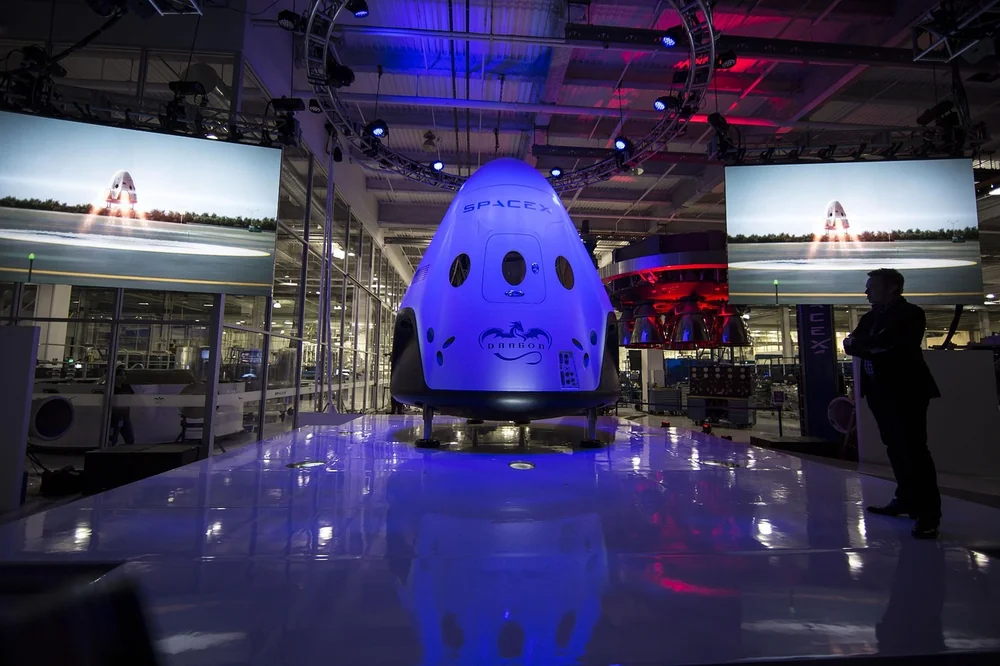
That surge didn’t just benefit ambitious startups. It also reshaped the strategies of long-established players in the space industry. Perhaps the most telling sign of this shift came when Blue Origin, the aerospace company founded by Jeff Bezos, announced it would accept outside capital for the first time. For years, Blue Origin had been privately funded by Bezos himself, but the IPO catalyst created by SpaceX’s record-breaking public offering made it clear that the landscape had changed. The message was unmistakable: if you want to compete in the new space economy, you need to open the door to space investment from a wider pool of investors.
How Blue Origin Responded
Blue Origin’s decision marked a turning point. By welcoming outside capital, the company signaled that it saw the same opportunities that investors were now chasing. This move also validated the broader trend: space startup funding was no longer a niche interest reserved for venture capitalists with a taste for risk. It had become a mainstream asset class, attracting pension funds, institutional investors, and even retail traders who wanted a piece of the action. The capital influx into the sector wasn’t just about funding new rockets or satellites — it was about building the infrastructure for an entire economy beyond Earth.
The ripple effect extended further. Legacy aerospace contractors began spinning off their space divisions into separate entities, hoping to capture some of the investor enthusiasm. Meanwhile, early-stage startups found it easier to raise money, because the IPO catalyst had given investors a clear exit strategy: if a space company could grow fast enough, it might one day go public itself. This created a virtuous cycle where space investment flowed more freely, and space startup funding became a self-reinforcing trend. You could see the confidence spreading across the industry, from small component suppliers to launch service providers, all benefiting from the renewed appetite for space-related ventures.
Space Startup Funding Hits Record $8 Billion in Q1 2026
That confidence translated directly into dollars. The first quarter of 2026 saw an unprecedented surge in space startup funding, with global investment hitting nearly $8 billion. That figure is almost double the previous quarter’s total, marking a sharp acceleration in venture capital space commitments. For you as an observer of the industry, this record funding signals that the sector has moved past its experimental phase and into a period of serious, large-scale capital deployment.

One major player driving this momentum is Shakti. Over the past five years, the firm has placed about 10% of its portfolio in space technology. Now, it expects to climb to 25-30%. That shift represents a massive vote of confidence in the long-term viability of space startup investment. When a major investor doubles down like this, it often pulls other institutional money along with it, creating a ripple effect across the entire ecosystem.
Shakti’s Growing Bet on Space
Why the aggressive increase? Shakti sees the infrastructure layer — satellites, launch systems, and ground stations — as the foundation for future technologies like global connectivity and Earth observation. By increasing its allocation, the firm is betting that these foundational assets will generate consistent returns. For startups seeking capital, this means there is more money chasing quality deals than ever before. The Q1 2026 numbers reflect not just a spike, but a structural shift in how institutional investors view the space sector.
Beyond Rockets: Innovative Startups Targeting Space Debris, Energy, and Commerce
That influx of capital is not just going to rocket companies. A growing share of space startup funding is flowing into ventures that tackle infrastructure challenges beyond launch. While rockets grab headlines, a new wave of startups is quietly building the tools for a sustainable, profitable space economy — from cleaning up orbital junk to generating power in orbit and even creating a stock exchange for space assets.
Nebex: A Stock Exchange for Space
Nebex is building exactly what its name suggests: a stock exchange designed for the space economy. Backed by Google’s GV with a $30 million raise, the startup aims to create a marketplace where investors can trade shares of satellite constellations, space stations, and even asteroid mining rights. For you, that could mean a way to invest in space without betting on a single launch company. Nebex is laying the space economy infrastructure that could make space assets as liquid as traditional stocks.
Cosmoserve: Cleaning Up Orbital Debris
Space debris is a growing headache for satellite operators, and Cosmoserve Space has a clever solution. The company is developing a robotic spacecraft that uses soft, flexible petals inspired by the Venus flytrap to gently capture defunct satellites and debris. Instead of a rigid claw or net, the petal design reduces the risk of damaging the debris or creating more fragments. This approach to space debris removal could become a critical service as orbital traffic increases. Cosmoserve’s technology shows how space startup funding is being directed toward practical cleanup solutions.
Beyond Reach Labs: Giant Solar Arrays
Energy is another frontier. Beyond Reach Labs is building solar panels that start out the size of a table and expand to the size of a football field once in orbit. That leap in scale could provide abundant in-orbit solar power for satellites, space stations, or even future manufacturing platforms. The ability to deploy such large arrays from a compact launch package is a breakthrough in efficiency. For the broader space economy, cheap, plentiful power in orbit unlocks possibilities like data processing, communications relays, and even beaming energy back to Earth. These three startups represent just a slice of the innovation that space startup funding is fueling — and they all point to a future where space is not just about getting there, but about making a living there.
Reusable Rockets Slash Costs, Opening Doors for Startups
That vision of making a living in space only works if you can actually get there without breaking the bank. For decades, the sheer expense of launching anything into orbit kept space the playground of governments and a handful of deep-pocketed corporations. Then SpaceX’s reusable rockets changed the math entirely. Since 2008, the cost of sending mass to orbit has dropped by roughly 95%. That isn’t just a small improvement — it’s a complete reset of what’s financially possible.

Before reusable rockets, every launch meant building a brand-new vehicle from scratch. The Falcon 9 changed that by landing its first stage back on Earth, ready to fly again. That reusable rocket design directly drives launch cost reduction, and it’s opened up space access to a much wider group of players. For a startup, the difference between a $60 million launch and a $15 million one can be the line between a viable business plan and a pipe dream.
The Cost Revolution and Its Impact on Startups
Lower launch costs are a key driver behind the surge in space startup funding. When you know you can afford to fly your payload, you can actually build a business model around it. That shift has encouraged venture capital to flow into everything from small satellite constellations to in-space manufacturing. The same economics that made SpaceX’s record IPO possible are now trickling down to the startups that rent space on those rockets.
Also worth a read: 5 Ways to Watch Hungarian Grand Prix Online Free.
You no longer need a billion-dollar budget to test a new idea in orbit. A team with a clever concept and a well-packed CubeSat can book a ride on a Falcon 9 rideshare mission. That affordability changes the entire landscape — and it’s why the wave of new space companies isn’t slowing down.
Challenges Ahead: Is the Space Startup Boom Sustainable?
Despite the record funding, questions linger about whether the boom is a sustainable growth phase or a speculative bubble. You might be watching the headlines and wondering if the current excitement can last, or if the industry is heading for a correction. The rapid increase in space startup funding has brought both opportunities and risks that deserve a closer look.
Comparing to Previous Record Quarters
Analysts often look back at previous record quarters to gauge the health of space startup funding. By comparing the pace of investments today with past cycles, they try to identify patterns that signal either steady growth or an impending slowdown. The sustainability of the boom depends on whether the underlying business models can deliver real returns over time, rather than just riding a wave of hype.
The Role of Government Policy
Government regulation plays a critical role in shaping the industry’s trajectory. Export controls can limit which technologies startups can sell internationally, while spectrum allocation determines who gets to use the radio frequencies needed for satellite communication. Space policy decisions at the national level can either open up opportunities or create significant bottlenecks for new ventures, directly impacting the flow of capital.
Bubble or Boom?
The influx of capital raises concerns about overvaluation. Some startups may be valued based on hype rather than solid revenue streams, fueling fears of a space bubble. If the market corrects, a shakeout could follow, with weaker companies failing. This has happened before in other tech sectors, and the space industry is not immune. The key question is whether the current wave of space startup funding reflects genuine progress or a speculative bubble that may burst, leaving only the most resilient players standing.
Frequently Asked Questions
How can you evaluate a space startup’s funding potential?
Look for a clear revenue model and a specific problem they solve, such as satellite data analytics or in-space manufacturing. Review their patent filings and partnerships with established aerospace firms. These indicators provide a reliable foundation for assessing space startup funding opportunities beyond speculative hype.
Why is SpaceX’s IPO often compared to Amazon’s 1997 listing?
Both events signaled a shift from speculative moonshots to scalable business models. Amazon proved e-commerce was viable, while SpaceX’s record IPO demonstrated that space ventures can attract mainstream investment. This comparison highlights how a single landmark offering can accelerate space startup funding for a whole sector.
Is the space startup boom sustainable, or is it a bubble?
The current wave is fueled by lower launch costs and growing demand for satellite services, not just investor hype. However, sustainability depends on startups reaching profitability before their funding runs out. Monitor whether firms are hitting practical milestones, like customer contracts or prototype launches, to gauge the health of space startup funding cycles.