In the heart of Gaza, where entire neighborhoods have been reduced to piles of shattered concrete and twisted metal, a quiet experiment in reconstruction is underway. Workers feed debris into hand-built machines, which compress the rubble into interlocking blocks that resemble oversized LEGO pieces. These innovative rubble bricks gaza represent a hyperlocal solution to an overwhelming crisis — one shaped by scarcity, blockades, and the urgent need for shelter. But while early results are promising, every step of this process remains a struggle against destroyed infrastructure, limited funding, and potential health risks.
From Collapse to Construction: The Context Behind Rubble Bricks
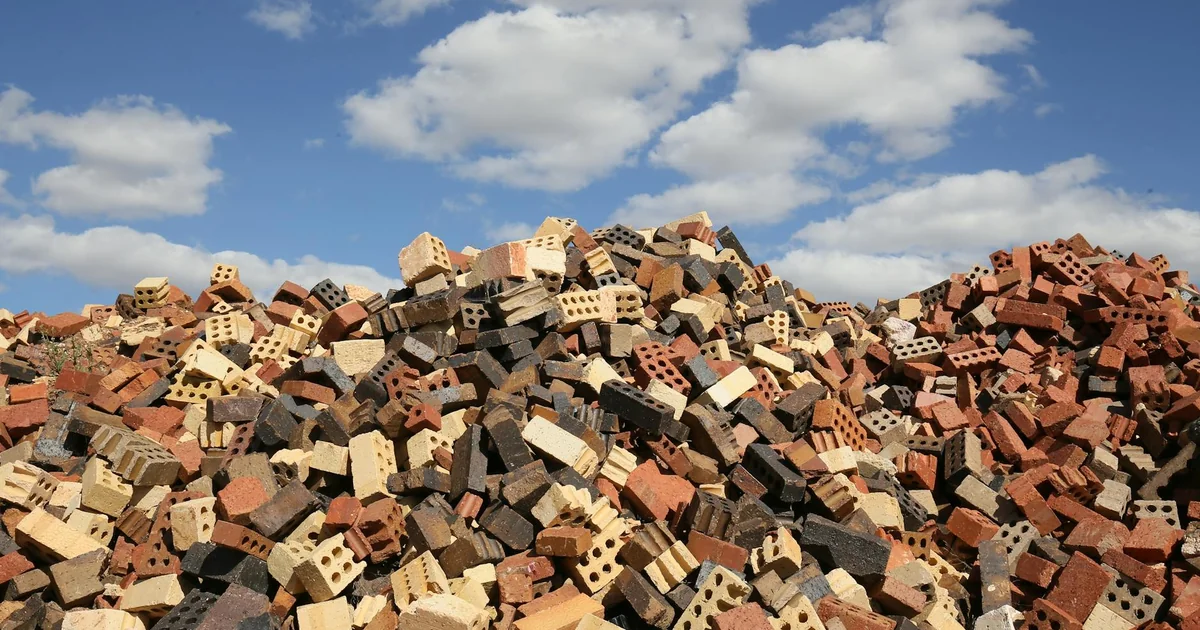
Gaza’s construction sector has been crippled by years of conflict and a strict Israeli blockade that restricts the import of cement, steel, and heavy machinery. After the most recent escalation of hostilities in 2023–2024, an estimated 37 million tons of rubble now litter the territory. With traditional building materials scarce and expensive, local engineers and entrepreneurs have turned to what is abundant: the wreckage itself. Projects like Green Rock have emerged to transform demolition waste into usable building blocks, offering a lifeline for displaced families living in tents or overcrowded shelters.
But this context, the rubble bricks gaza initiative is not a luxury; it is a necessity born from the failure of international aid models and the impossibility of conventional reconstruction. The process involves collecting debris, manually sorting it, crushing it into gravel-sized pieces, mixing it with cement or other binders, and compressing the mixture into interlocking blocks. The resulting product is cheap, insulating, and can be assembled without mortar, much like toy bricks.
7 Lego-Like Bricks from Rubble: Key Aspects of the Innovation
The following seven dimensions capture the promise, the challenges, and the limitations of this grassroots reconstruction effort. Each one tells a part of the story behind these remarkable blocks.
1. Rubble Bricks Gaza: From Debris to Durable Blocks
The very first “brick” in this system is the raw material itself. Workers collect broken concrete, masonry, and ceramic fragments from destroyed homes and infrastructure. The debris is then crushed — often by hand or using simple jaw crushers powered by generators — until it resembles coarse sand. This aggregate is mixed with a small amount of cement and water to form a semi-dry mixture. A hand-built hydraulic press, assembled from scrap metal and salvaged parts, compacts it into solid blocks with a high compressive strength. Current production rates hover between 1,000 and 1,500 bricks per day, which is theoretically enough to erect a small shelter in roughly two weeks. However, every stage is labor intensive. Without heavy machinery, even transporting rubble requires manual carts or donkey-drawn wagons.
2. The Interlocking Design: Building Without Mortar
These blocks are not ordinary bricks. They feature grooves and ridges that allow them to lock together without cement paste. This design reduces the need for scarce binding materials and speeds up construction. Workers can stack them dry, aligning the way a child stacks wooden blocks but with far more precision. The interlocking mechanism also makes the walls easier to dismantle and reuse if families need to relocate. This modularity is a direct response to the uncertainty of life in Gaza, where displacement is a recurring reality. The blocks are durable enough to support walls and roofs, yet light enough for a single person to carry.
3. Thermal and Acoustic Performance: Outperforming Tents
Early testing by local engineers shows that rubble bricks gaza provide significantly better thermal insulation than the canvas tents many families now occupy. In summer, the blocks keep interiors cooler by reducing heat transfer; in winter, they retain warmth. Additionally, the dense material dampens outside noise — a welcome improvement in crowded displacement camps where privacy is nonexistent. While these claims come from small-scale tests rather than peer-reviewed studies, they align with the known properties of rammed earth and compressed concrete blocks. For families enduring extreme temperatures and constant sounds of war, even modest improvements in comfort are transformative.
4. Cost Reduction: Cutting Construction Expenses by 50–60 Percent
One of the most compelling advantages of this approach is economic. By using locally available rubble instead of imported cement and steel, the project slashes material costs dramatically. Reports from Green Rock indicate that building a single block costs roughly half to 60 percent less than a conventional concrete block produced with imported raw materials. For a population where incomes have collapsed and savings have been destroyed, this price difference can mean the difference between living under tarps and having a solid roof. The savings are not only financial — they also conserve foreign currency and reduce dependency on external aid, which is often slow and politicized.
You may also enjoy reading: How to Become a Tech Salesperson: A Step-by-Step Guide for Career Changers.
5. Employment Opportunities for Displaced Workers
The rubble bricks project creates jobs in a territory where unemployment exceeds 70 percent. Locals are hired to collect debris, operate crushers, mix materials, press blocks, and stack finished products. Many of these workers are themselves displaced — they lost their homes and now find purpose and income in rebuilding. This is not just charity; it is a dignified livelihood. A worker might spend a morning sorting asbestos-free concrete from contaminated rubble, then run a press machine in the afternoon, earning enough to feed his family. These jobs also transfer skills — participants learn masonry, equipment maintenance, and quality control, which could serve them in future reconstruction phases.
6. Health and Safety Risks: Asbestos, Heavy Metals, and UXO
Not all rubble is safe for reuse. Gaza’s debris contains hazardous materials, including asbestos from old insulation and roofing, lead and mercury from industrial sites, and even unexploded ordnance (UXO) buried in the wreckage. Sorting by hand puts workers at direct risk of inhalation and injury. Furthermore, without portable testing equipment, it is nearly impossible to guarantee that all blocks are free from contaminants. The dilemma is stark: speed up shelter construction using available debris, or slow down to test every load — a choice that costs either time or health. Currently, most projects operate without systematic screening, relying instead on visual inspection and prior knowledge of the building’s age and original use.
7. Scaling Under Blockade: The Limits of Local Innovation
The seventh aspect is perhaps the most sobering. While the bricks perform well in small trials, they have not been tested at the scale required to rebuild entire neighborhoods. Producing 1,500 bricks a day is a fraction of what would be needed to erect a single apartment building those bricks depend on a steady supply of clean debris, which eventually runs out as rubble is consumed. Moreover, political restrictions prevent the import of hydraulic presses, spare parts, and even high-strength cement. The blockade also limits the flow of technical expertise and funding from abroad. Without a political framework that allows the free movement of goods and people, these hyperlocal solutions will remain at the margins of reconstruction.
The Broader Implications: A Model for Post-Conflict Recovery?
Despite its limitations, the rubble bricks experiment offers lessons that extend beyond Gaza. In any conflict zone or disaster area, the immediate abundance of debris can be turned into a resource rather than a liability. The technique requires minimal imported materials, can be taught to unskilled workers quickly, and produces structures that are far more livable than tents. However, the catch-22 persists: the same war that generates the rubble also destroys the infrastructure needed to process it. Gaza’s story is a reminder that grassroots innovation can thrive under extreme duress, but it cannot replace the need for political solutions that allow large-scale reconstruction.
What Comes Next: The Future of Rubble Bricks Gaza
For now, the project survives on donations, volunteer labour, and the determination of local engineers like those at Green Rock. International aid organizations have taken interest, but funding remains the primary bottleneck. A single workshop capable of producing enough bricks to shelter a hundred families might cost around $50,000 in equipment and materials — a trifle compared to the billions needed for full reconstruction, yet still elusive. If the blockade eases and investment arrives, these blocks could evolve from a stopgap into a mainstream building method. If not, they will remain what they are today: a symbol of resilience, shaped from the ruins, waiting for peace to give them purpose.