Type a question into Amazon’s search bar this week, and something has shifted behind the scenes. Instead of just returning a grid of product tiles and sponsored slots, the box now routes your query through an AI assistant that can compare items, show a year of price history, and build a shopping cart on your behalf. The change is subtle on the surface, but it represents one of the most consequential moves in e-commerce this year. Amazon is embedding its conversational AI directly into the default search flow, merging its two assistants into one and drawing a line in the sand against a growing wave of external AI shopping agents. The stakes involve a $56 billion advertising business, a high-profile lawsuit, and the future of how people discover and buy products online.
The Search Box Becomes a Conversational Gateway
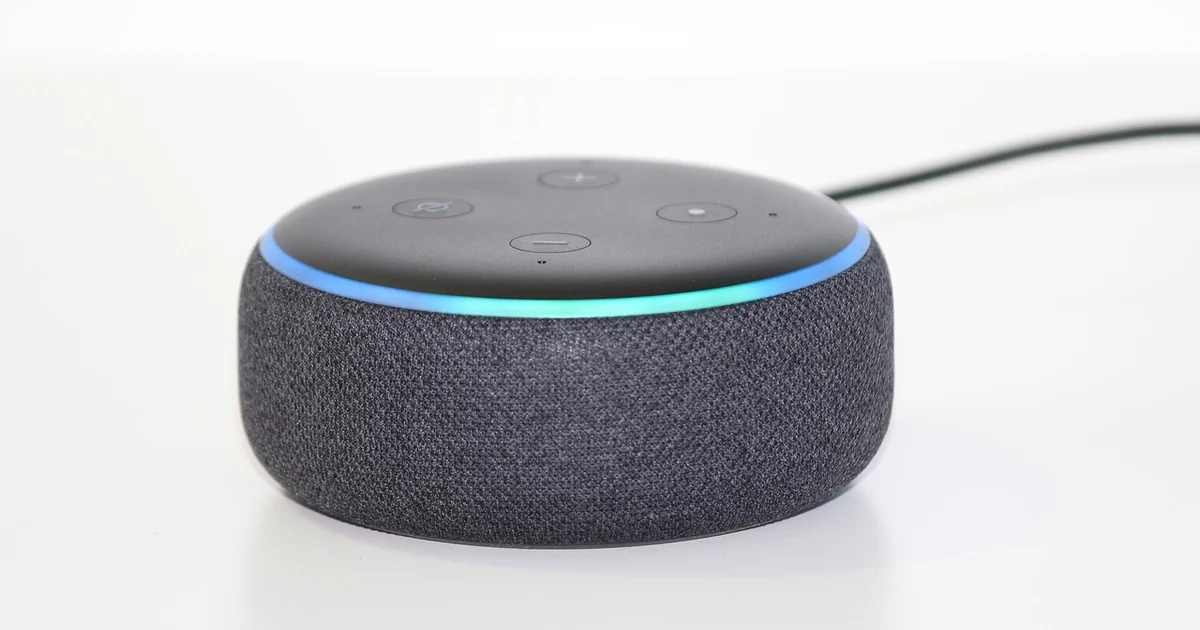
Starting this week, US customers who type into the search field on Amazon.com or in the Amazon app will interact with a unified system called Alexa for Shopping. This new assistant combines the capabilities of the Rufus chatbot, launched in 2024, with the broader Alexa+ assistant. The result is a single conversational layer that sits inside the search bar itself, rather than behind a separate icon or tab.
The structural change is significant. Previously, a shopper could open Rufus as an optional tool for product research, but the standard search experience remained untouched. Now the AI is part of the default flow. When you type a query, you still see the familiar product listings, but you also receive a conversational answer, product comparisons, personalized shopping guides, and historical price data going back up to twelve months. The experience mirrors what Google did with AI Overviews, except the context is purely commercial.
Amazon frames this as making the assistant “agentic.” That term means the AI can complete multi-step tasks on your behalf, such as comparing several products, adding the best option to your cart, and placing a reorder for household staples, all without requiring you to click through multiple pages. The assistant can also track prices, alert you to new products in categories you follow, and build out a cart based on stated preferences you provide during the conversation.
The rollout is US-only for now. International expansion will follow the broader availability of Alexa+ through 2026. No Prime membership, Echo device, or standalone Alexa app is required. Any signed-in US account can use the feature at no additional cost.
Why Amazon Retired the Rufus Brand
The decision to retire the Rufus name from the shopping interface is a telling move. Rufus was launched in 2024 and, by early 2025, had been used by more than 300 million customers. That is an impressive adoption figure by any measure. Yet Amazon chose to fold it into the Alexa for Shopping brand rather than keep it as a standalone identity.
Running two separate AI assistants was confusing for customers and expensive for Amazon to maintain. Rufus excelled at product research, answering detailed questions about features and specifications, but it was less effective at closing transactions. Alexa+, by contrast, was designed as a broader personal assistant capable of managing smart home devices, setting reminders, and handling voice commands. Combining them into a single agent that lives inside the search bar eliminates the confusion and allows Amazon to focus engineering resources on one coherent system.
There is also a branding logic. Alexa is one of the most recognized digital assistant names in the world. Attaching it directly to shopping gives the feature instant familiarity, especially among the millions of households that already use Alexa for voice commands. Retiring Rufus also signals that Amazon is serious about making this unified assistant the primary way people interact with the marketplace.
What Alexa for Shopping Actually Does
The feature set of Alexa for Shopping goes beyond what most shoppers expect from a search bar. Here is a breakdown of the key capabilities.
Conversational Answers and Product Comparisons
Instead of scanning through dozens of product listings manually, you can ask the assistant a natural-language question. For example, you might type, “Which blender has the best motor for crushing ice under $100?” The assistant will return a conversational answer that compares relevant models, highlights differences in wattage and blade design, and points you toward the option that best matches your criteria. The standard product grid still appears alongside, so you are not forced into a purely conversational interface if you prefer the traditional layout.
Price History Tracking
One of the most practical features is the ability to see up to a year of price history for any product. This gives you a clear picture of whether the current price is a genuine deal or just a temporary fluctuation. If you have been watching an item for months, the assistant can show you the low and high points over that period and even alert you when the price drops to a level you specify.
Automated Reordering and Cart Building
The agentic aspect of the assistant means it can handle repetitive tasks. If you regularly buy the same laundry detergent or coffee beans, you can ask the assistant to reorder them. It will check your purchase history, confirm the correct variant, and place the order. Similarly, you can describe a shopping list in natural language, and the assistant will populate your cart with the appropriate items, checking for the best prices and available subscriptions along the way.
Personalized Shopping Guides
Based on your stated preferences and past purchases, the assistant can generate a personalized guide for a category you are exploring. If you are shopping for a new laptop, for instance, the guide might recommend models based on the type of work you do, your budget range, and the brands you have bought before. This shifts product discovery from a manual filtering process to a guided conversation.
The $56 Billion Question: Protecting Amazon’s Ad Business
The competitive backdrop is what makes this move so significant. Amazon’s advertising business generated roughly $56 billion in revenue in the most recent fiscal year. That entire figure is built around sponsored placements inside search results and product pages. When a shopper types “running shoes,” the top slots on the page are paid placements. Every click on those slots generates revenue for Amazon.
This model depends on Amazon being the first and last surface a buyer touches. If a third-party AI agent does the comparison and the click on a customer’s behalf, the sponsored slot loses its target. The ad impression never happens, or it happens in a context where the agent, not the human shopper, is making the decision. That undermines the entire advertising ecosystem that Amazon has spent years building.
The internal answer is to make Amazon’s own AI assistant the most fluent shopper on Amazon.com. Alexa for Shopping has access to the price history, recommendation graph, and account-level purchase data that an external agent does not. It can offer a richer, more personalized experience precisely because it lives inside Amazon’s infrastructure. The goal is to give shoppers no reason to use a third-party agent when the built-in option is faster and more informed.
Whether this strategy works as a product is a separate question. Amazon has tried to make Alexa the front door to its shopping business for the better part of a decade, with mixed results. Voice shopping never reached the share the company once projected. The original Rufus chatbot, while widely used, was better at research than at closing sales. The unification with Alexa+ is a tacit acknowledgment that the previous approach needed a fundamental rethink.
The Perplexity Lawsuit and the Battle for the Search Funnel
The legal dimension of this story sharpens the picture considerably. In November 2024, Amazon sued Perplexity, the AI search company behind the Comet browser. The lawsuit alleged that Comet’s shopping agent accessed Amazon.com in violation of the site’s terms of service and, more critically, created problems for ad-impression measurement. If an AI agent scrapes product pages and completes purchases on behalf of a user, the ads that were supposed to be seen by that user may never render, or they may render in a way that cannot be tracked.
A federal judge granted Amazon a preliminary injunction in March 2025, effectively blocking Perplexity from accessing Amazon.com in the manner the lawsuit described. Perplexity appealed to the Ninth Circuit, which temporarily paused parts of the order while the appeal is heard. The case is ongoing, and its outcome could set a precedent for how external AI agents interact with e-commerce platforms.
The legal argument is over agent access, but the commercial argument is over who captures the high-intent search query at the top of the funnel. That is exactly what Alexa for Shopping is designed to defend. If a shopper starts their journey on Amazon’s own search bar, the entire transaction stays within Amazon’s ecosystem. The ad impressions, the click-throughs, the conversions, all of it remains measurable and monetizable. If the shopper starts on a third-party agent, that funnel leaks.
The Perplexity case also highlights a deeper tension. External AI agents argue they are acting on behalf of consumers, providing a more efficient shopping experience. Amazon argues those agents are free-riding on its infrastructure and distorting its advertising model. Both sides have valid points, but the immediate practical effect is that Amazon is fortifying its own search experience to make external agents less appealing.
When you use amazon alexa search now, you are getting a level of assistance that no external agent can replicate because it draws on proprietary data about pricing history, inventory levels, and your personal purchase patterns. That is the competitive moat Amazon is trying to build.
How Amazon’s Move Compares to Competitors
Amazon is not alone in pursuing agentic commerce, but its approach is distinct. Here is how the landscape looks.
OpenAI Instant Checkout
In September 2025, OpenAI launched Instant Checkout in partnership with Stripe. The system uses an open-source Agentic Commerce Protocol that allows ChatGPT to complete purchases inside its own interface. A user can ask ChatGPT to find and buy a product, and the AI handles the entire transaction without redirecting the user to a retailer’s website. This is a direct challenge to Amazon’s model because it bypasses the retailer’s search and ad surfaces entirely.
Google Buy for Me
Google is integrating a Buy for Me feature into Gemini, its flagship AI assistant. The company also runs an A2A agent-to-agent protocol that has support from more than 150 organizations. Google’s advantage is its massive user base and its existing relationships with merchants through Shopping ads. The Buy for Me feature aims to let users complete purchases directly within the Gemini interface, similar to what OpenAI is doing.
Perplexity Comet
Perplexity’s Comet browser has included a Buy with Pro feature since late 2024. It allows checkout via PayPal across more than 5,000 merchants. Comet is designed as a standalone shopping agent that searches multiple retailers, compares prices, and completes purchases on the user’s behalf. The ongoing lawsuit with Amazon has not stopped Perplexity from expanding the feature, though the legal uncertainty creates a cloud over its long-term viability.
You may also enjoy reading: Day One Now Makes Switching Easier: 5 Key Upgrades.
Alibaba Qwen on Taobao
In China, Alibaba integrated its Qwen AI directly into the Taobao marketplace last quarter. The integration enables end-to-end agentic shopping within Taobao’s own ecosystem. Because Alibaba controls both the AI and the marketplace, the experience is fully contained, similar to what Amazon is now doing with Alexa for Shopping. The difference is that Alibaba’s move came earlier and was more aggressively marketed as a core feature of the Taobao app.
Each of these competitors routes the buy flow through someone other than Amazon. That is why the timing of Amazon’s move matters. The company is not just improving its search experience. It is building a defensive wall around its advertising revenue at a moment when the walls are being tested from multiple directions.
What This Means for Shoppers
For the average shopper, the arrival of Alexa for Shopping in the search bar brings both conveniences and questions.
Practical Benefits
The most immediate benefit is time saved. Instead of opening multiple tabs, comparing specifications manually, and checking price history across third-party sites, you can get all of that information in one place through a natural-language conversation. For busy parents trying to reorder household staples, the ability to say or type “reorder the diapers I bought last month” and have the assistant handle the rest is genuinely useful. For tech enthusiasts who enjoy detailed product comparisons, the conversational interface can surface nuances that a standard grid of listings might hide.
Privacy Considerations
Having an AI assistant that tracks price history, monitors your purchase patterns, and builds shopping carts based on your stated preferences raises legitimate privacy questions. Amazon already collects extensive data on its customers, but the conversational interface creates a new layer of intent data. Every question you type into the search bar becomes a signal about what you want, when you want it, and how much you are willing to spend. Amazon says this data is used to improve the shopping experience and is subject to its existing privacy policy, but the depth of data collection is undeniably greater than it was with a standard search bar.
Can You Opt Out?
A natural question is whether you can avoid the conversational interface and return to the traditional search experience. The answer is nuanced. The AI now sits inside the default search flow, so typing a query will trigger the assistant’s response alongside the standard listings. You can ignore the conversational output and interact only with the product grid, but you cannot disable the assistant entirely from within the search bar. The option to use the traditional search without AI augmentation is not currently available in the US rollout.
Does It Actually Work Well?
This is the question that will determine the feature’s long-term success. Amazon has tried to make Alexa the front door to shopping for nearly a decade, with mixed results. Voice shopping never hit the adoption rates the company projected. The original Rufus chatbot was more useful for research than for closing transactions. The unified Alexa for Shopping has a better data foundation and a more prominent placement, but it still needs to prove that shoppers actually want a conversational interface for buying things. Some people prefer to browse visually. Others want speed and efficiency. The assistant will succeed only if it delivers a noticeably better experience than the traditional search bar for a meaningful range of queries.
When you engage with amazon alexa search, you are essentially testing whether Amazon can finally make conversational commerce work at scale. The technology is more mature than it was five years ago, but the fundamental question remains the same: do shoppers want to talk or type their way through a purchase, or do they prefer the visual scan?
What This Means for Third-Party Sellers
For the millions of third-party sellers who depend on Amazon’s marketplace, the shift to conversational search changes the rules of product discovery and advertising.
Product Visibility Shifts
In a traditional search bar, visibility depends heavily on keywords, ratings, and advertising spend. The top results are usually a mix of sponsored products and highly optimized organic listings. Conversational search introduces a new variable: the assistant’s recommendation logic. If the assistant decides that one product is the best answer to a user’s question, that product gets prime placement in the conversational response, regardless of its advertising budget.
This means sellers need to optimize not just for keywords but for the kinds of questions shoppers might ask. A product description that clearly answers common comparison questions, such as “which model has the longest battery life” or “which option is best for small kitchens,” could perform better in a conversational context than a listing that simply stuffs keywords into the title.
Advertising Costs May Change
Sponsored placements still appear alongside the conversational results, but their effectiveness could change. If a shopper relies on the assistant’s recommendation and adds a product directly to the cart without clicking through the standard results, the sponsored slot may never be seen. Amazon’s advertising system will need to adapt, possibly by offering sponsored placements within the conversational response itself. That would create a new ad format and a new cost structure for sellers.
The Need for Structured Data
Sellers who provide rich, structured product data, including detailed specifications, comparison charts, and use-case descriptions, will likely benefit more from conversational search than those who rely on minimal listings. The assistant pulls from the product catalog to generate its responses, so the quality and completeness of that catalog directly influence whether the assistant recommends a particular product.
The Road Ahead: US-Only for Now
The rollout of Alexa for Shopping in the search bar is limited to US customers at launch. International expansion is tied to the broader availability of Alexa+, which Amazon has indicated will roll out through 2026. This phased approach gives Amazon time to refine the assistant based on US usage patterns before adapting it to different languages, currencies, and shopping behaviors in other markets.
The competitive pressure will only intensify during that window. OpenAI, Google, and Perplexity are all moving quickly to make agentic commerce a standard feature of their AI platforms. Alibaba already has a fully integrated solution in China. Amazon’s lead in the US market gives it an advantage, but that advantage depends on how well Alexa for Shopping performs in practice.
Whether the assistant becomes the default way people shop on Amazon or just another feature that gets occasional use will depend on execution. The technology is in place. The placement is prominent. The advertising business model is defended. Now it comes down to whether shoppers find the conversational experience genuinely better than the search bar they have been using for years.
The amazon alexa search experience is no longer a side experiment. It is the main event, and the next twelve months will determine whether Amazon’s bet on agentic commerce pays off or becomes another chapter in a long history of mixed results with conversational shopping.