The Emergence of the Orbital Nuke Wargame in Military Planning
For decades, military wargames focused on terrestrial battlefields. Tanks, ships, and aircraft dominated the scenarios. The space domain was treated as a supporting environment, not a contested theater. That paradigm has shifted dramatically in recent years. The US military now runs wargame series that deliberately simulate orbital nuclear threats. These exercises challenge commanders to respond to attacks originating from space, including nuclear detonations in orbit. The shift reflects a sobering reality: space is no longer a sanctuary.
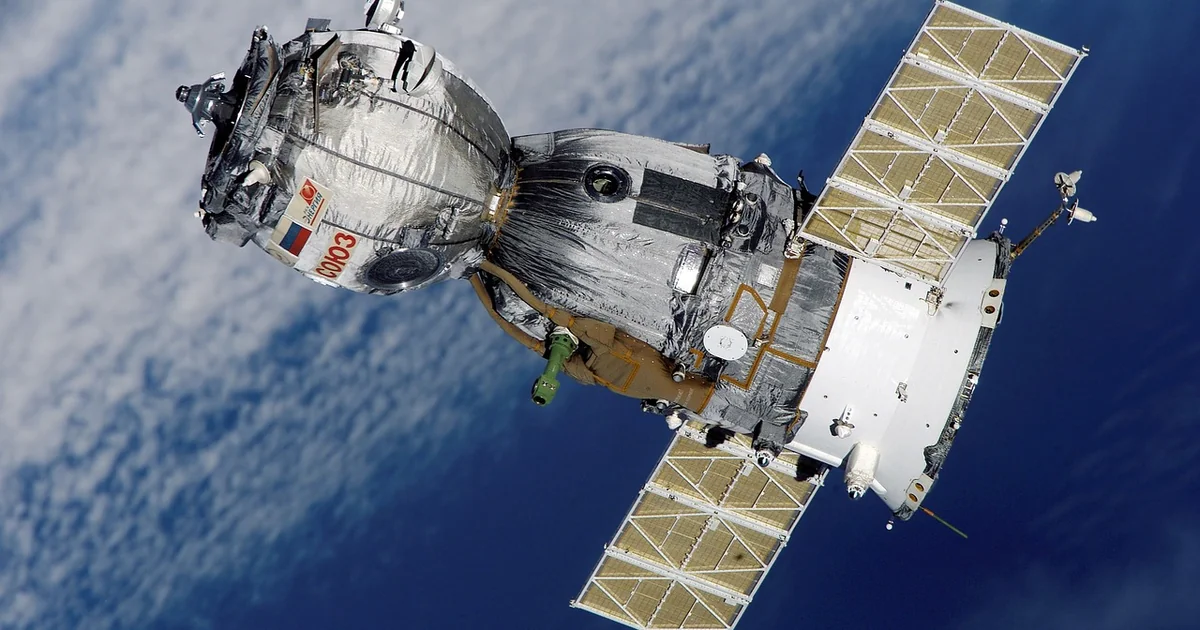
The orbital nuke wargame concept forces strategists to confront scenarios once reserved for science fiction. A nuclear burst in low Earth orbit could disable hundreds of satellites in a single event. The electromagnetic pulse alone would devastate unprotected electronics across a wide swath of orbital real estate. Military planners now treat this as a plausible threat, not a theoretical one. The wargames test decision-making under extreme time pressure, where a single choice could escalate a conflict into a full-scale orbital war.
These exercises also expose weaknesses in current space architecture. Many commercial and military satellites lack hardening against radiation effects from a nuclear detonation. The orbital nuke wargame reveals how quickly communication networks, navigation systems, and surveillance capabilities could collapse. The lessons learned drive investments in resilient satellite designs, distributed constellations, and rapid reconstitution strategies.
Why Commercial Satellites Are Central to Modern Orbital Nuke Wargames
The Space Force has led the Pentagon’s push for deeper partnerships with commercial industry. This is not a peripheral effort. The Space Force has inked contracts with emerging space companies, often called non-traditional primes, to buy services, manufacture satellites and payloads, and launch rockets. Commercial companies now provide or soon will provide the US military with communications, launch, overhead imagery, navigation, refueling, weather data, and surveillance of other satellites. This commercial ecosystem has become a central component of the orbital nuke wargame.
Tracking High Delta-V Maneuvers as a Core Challenge
One of the most demanding elements in an orbital nuke wargame is tracking high delta-V maneuvers. Delta-V refers to a change in velocity, and a high delta-V maneuver represents a large impulse that significantly alters a satellite’s orbit. An adversary could use such a maneuver to escape detection or reposition for an attack. Space Command and the Space Force have explored using commercial satellites as realistic targets to test the military’s ability to continuously track an object through these rapid orbital changes.
The challenge is immense. Traditional ground-based radar and optical sensors struggle to maintain a continuous track on a satellite performing a sudden, large burn. The object might change altitude, inclination, or even its orbital plane. In an orbital nuke wargame, losing track of an adversary’s satellite for even a few minutes could mean missing the setup for a strike. Commercial satellites, with their diverse orbits and maneuverability, offer a more realistic training target than static military satellites.
This approach also benefits the commercial partners. They gain experience operating in contested environments and demonstrate their capabilities to military customers. The relationship becomes symbiotic: the military gets realistic training targets, and the commercial companies prove their value for future contracts. The orbital nuke wargame thus serves as both a training exercise and a procurement demonstration.
The Speed Advantage of Commercial Innovation
Military acquisition cycles are notoriously slow. A new satellite system can take a decade from concept to launch. Commercial companies operate on much faster timelines. They can prototype, test, and deploy new capabilities in months or even weeks. Whiting, a senior Space Force official, expressed this clearly: “I say often that I think US commercial space industry is a massive advantage for us in the United States. Just look at the investment levels, the innovation, the speed at which they’re delivering capability, and we absolutely have to be able to leverage that capability.”
This speed advantage becomes critical in the context of an orbital nuke wargame. The threat environment evolves rapidly. Adversaries develop new counterspace weapons, including directed energy systems, orbital interceptors, and nuclear-tipped anti-satellite missiles. Waiting years for a traditional military acquisition to deliver a response is not feasible. Commercial companies can adapt their offerings quickly, providing new sensors, hardened communications, or maneuverable satellite buses on short timelines. The orbital nuke wargame helps identify which commercial capabilities are most urgently needed.
How Orbital Nuke Wargames Reveal Gaps in Space Situational Awareness
Space situational awareness, or SSA, is the foundation of any orbital nuke wargame. Without accurate knowledge of where every object is and what it is doing, commanders cannot make informed decisions. The wargames consistently reveal gaps in SSA. Tracking thousands of satellites, debris pieces, and unknown objects across multiple orbital regimes is a monumental task. Commercial sensors, data fusion platforms, and analytical services are increasingly filling these gaps.
The Problem of Persistent Jamming Detection
Since Russia invaded Ukraine, there has been persistent satellite communications jamming and GPS jamming. These attacks degrade military operations and complicate the scenarios in an orbital nuke wargame. Commercial companies are often the first to detect the jamming. Their ground stations and user terminals sense anomalies in signal strength, timing, or frequency. They inform the military quickly, sometimes within minutes of the interference starting.
This early warning is invaluable. In an orbital nuke wargame, jamming might precede a kinetic attack. Detecting the jamming early gives commanders time to reposition assets, switch to backup frequencies, or prepare countermeasures. But the current system relies on voluntary reporting from commercial companies. There is no formal mechanism requiring them to report interference, and no standard protocol for sharing data with military systems. The orbital nuke wargame exposes this dependency and the risks it creates.
Liability and Indemnification for Commercial Partners
Commercial companies that detect jamming or provide tracking data assume significant risk. If a company reports interference that later proves to be a routine technical glitch, its reputation with other customers could suffer. If a company provides tracking data that leads to a mistaken attribution of hostile intent, it could face legal liability. The Office of Secretary of War for Space Policy has identified indemnification for commercial partners as a national level issue to be worked.
You may also enjoy reading: Data Center Guzzled 30 Million Gallons: 5 Unnoticed Signs.
The orbital nuke wargame brings this liability question into sharp focus. In a simulated escalation, commercial partners might be asked to share sensitive data, maneuver their satellites, or even accept temporary control by military operators. Without clear contractual protections, few companies would accept that level of risk. The wargame scenarios help policymakers understand what indemnification mechanisms are needed, from insurance pools to government backstops to liability caps.
The Strategic Shift from Traditional Primes to Non-Traditional Contractors
The traditional defense industrial base includes large prime contractors like Lockheed Martin, Northrop Grumman, and Boeing. These companies have dominated military space contracting for decades. But the orbital nuke wargame has revealed the limitations of that model. Traditional primes excel at building large, complex, and heavily protected satellites. They are less adept at rapid iteration, small satellite constellations, and commercial services.
Non-traditional primes bring a different approach. Companies like SpaceX, Planet Labs, Spire Global, and Maxar operate on commercial business models. They raise private capital, develop technology at startup speed, and sell services to multiple customers, including the military. The orbital nuke wargame demonstrates that a distributed constellation of small commercial satellites can survive a nuclear burst in orbit better than a handful of large military satellites. The resilience comes from redundancy, not hardening.
This shift also changes contracting patterns. Instead of buying satellites and owning them for decades, the military is increasingly buying services. The Space Force has signed contracts for commercial imagery, communications bandwidth, and launch services. These contracts are shorter, more flexible, and easier to adjust as threats evolve. The orbital nuke wargame helps the military evaluate which services are most critical and which commercial providers can deliver under stress.
What the Orbital Nuke Wargame Teaches Us About Future Space Conflict
Every orbital nuke wargame produces insights that shape policy, doctrine, and investment. One consistent finding is that deterrence in space requires a credible ability to attribute attacks. If an adversary can launch a nuclear weapon in orbit anonymously, the incentive to do so increases. The wargames highlight the need for robust space surveillance networks that can identify the origin of any attack within seconds.
Another lesson is that commercial assets will be targets in any future space conflict. Adversaries understand that the US military depends on commercial satellites for communications, imagery, and data relay. Taking out those commercial assets would degrade military operations without directly attacking military satellites, which might trigger a stronger response. The orbital nuke wargame forces planners to consider how to protect commercial partners, whether through hardening, maneuverability, or redundancy.
The wargames also reveal the importance of international cooperation. Space is a global commons. A nuclear detonation in orbit would affect satellites belonging to many nations, not just the United States. The orbital nuke wargame scenarios often include allies and partners, testing how information sharing, coordinated responses, and burden sharing might work in a real crisis. The results inform diplomatic efforts to establish norms of behavior in space and to build coalitions for collective defense.
Finally, the orbital nuke wargame underscores the value of commercial speed. The threats are evolving faster than traditional military acquisition can respond. Commercial companies offer a way to close that gap. The challenge is integrating their capabilities into military operations without breaking their commercial business models. The indemnification question is just one piece of a larger puzzle that includes data security, operational security, and command and control arrangements.
In many ways, the orbital nuke wargame is a stress test for the entire space enterprise. It tests technology, doctrine, policy, and partnerships. The results are not always comfortable, but they are essential. A military that trains for the worst cases in peacetime is better prepared to prevent them in crisis. The decision to simulate orbital nuclear threats in wargames is a recognition that space is now a warfighting domain, and the United States must be ready.