NASA’s science leadership is exploring a bold procurement strategy that could reshape how the agency explores the solar system. The concept, known as a “block buy,” involves purchasing multiple copies of a standardized spacecraft platform at once, rather than designing a unique vehicle for each individual mission. This approach, already familiar in defense and commercial satellite markets, promises to slash costs and accelerate timelines for scientific exploration. The focus is on destinations like the Moon, Mars, Venus, and the asteroid belt, where the paths are becoming better understood.
The Logic Behind the Block Buy Strategy for Space Science
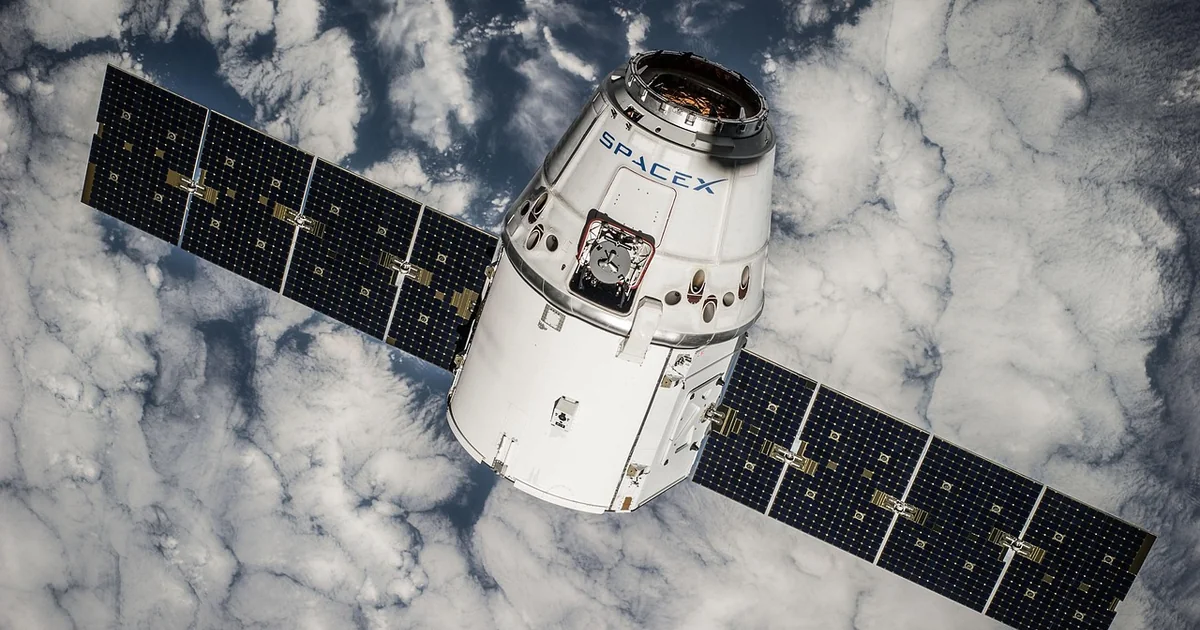
The core idea behind nasa satellite block buys is simple: instead of ordering one custom-built satellite for a single mission, the agency would commit to buying several identical or near-identical spacecraft buses from a commercial provider. This bulk purchasing power drives down the per-unit cost, much like buying a dozen identical laptops is cheaper than ordering twelve different custom-built computers.
Dr. Nicola Fox, NASA’s Associate Administrator for the Science Mission Directorate, has publicly championed this vision. She has expressed a desire to walk into a commercial provider and say, “I’ll buy 10 of those.” This statement signals a major shift in thinking. Traditionally, NASA missions are bespoke, handcrafted affairs that take a decade or more to develop. A block buy approach prioritizes speed and cost-efficiency, using proven, off-the-shelf technology for missions with well-defined destinations and scientific goals.
The potential savings are enormous. By standardizing the spacecraft bus—the platform that carries the scientific instruments—NASA can redirect funding from engineering development to actual science payloads. More missions could fly, gathering data on multiple planets or lunar regions simultaneously.
How the Commercial Lunar Payload Services (CLPS) Model Paved the Way
The blueprint for this strategy is already in action. NASA’s Commercial Lunar Payload Services (CLPS) program contracts private companies to build and operate landers and orbiters that deliver NASA-owned scientific instruments to the Moon. These are not government-owned spacecraft; they are commercial vehicles that carry NASA payloads as a service.
CLPS missions are designed as precursors to human exploration. They scout landing sites, test technologies, and study the lunar environment. The program has already seen successes and setbacks, but the model itself is proving viable. Companies like Intuitive Machines, Firefly Aerospace, Astrobotic, and Blue Origin are all part of the CLPS roster, competing for task orders to fly payloads.
This public-private partnership structure is the direct ancestor of the block buy concept. If the approach works for the Moon, the thinking goes, why not for other destinations?
Mars as the Obvious Next Frontier for Block Buys
According to Dr. Fox, Mars is the logical next step. “Mars is sort of an obvious next one to use the CLPS model,” she has stated. The Red Planet has been visited by numerous orbiters and landers. The flight path is well-characterized. The atmospheric entry, descent, and landing sequence, while still challenging, is no longer entirely unknown territory.
A block buy for Mars could mean purchasing three or four identical orbiter buses from a single manufacturer. Each orbiter could carry a different suite of instruments—one for atmospheric studies, another for surface imaging, a third for communications relay. The scientific community would benefit from simultaneous, multi-point observations, something that is currently impossible with single, expensive missions that fly once a decade.
This approach directly addresses a major pain point for planetary scientists: budget constraints. Waiting for a flagship mission can take a lifetime. A block buy offers a faster, more frequent cadence of exploration.
7 Ways Mass-Produced Satellite Buses Could Transform NASA Missions
The promise of nasa satellite block buys is not just theoretical. Several companies are already developing the hardware that could make this vision a reality. Here are seven specific ways these commercial platforms could be deployed, each representing a distinct mission concept.
1. Lunar Reconnaissance and Resource Mapping
Multiple identical orbiters, built on a standardized bus, could be deployed around the Moon to create a high-resolution map of water ice deposits. Instead of one expensive polar orbiter, a constellation of three or four smaller, cheaper satellites could provide persistent coverage. They would measure the depth, purity, and accessibility of ice in permanently shadowed craters. This data is critical for future human settlements, which would rely on local water for drinking, breathable air, and rocket fuel. A block buy of these orbiters would make the mapping campaign affordable and repeatable.
2. Mars Weather and Climate Network
Mars experiences planet-wide dust storms that can last for months. Understanding these storms requires continuous observation from multiple vantage points. A network of six or seven identical weather satellites in low Mars orbit could track storm development in real time. Each satellite would carry a simple camera and an infrared sounder. Built from a common bus, these satellites would cost a fraction of a single Mars Reconnaissance Orbiter. The data would protect future astronauts by providing early warnings of hazardous weather.
3. Asteroid Belt Prospecting Swarms
Steve Squyres, Blue Origin’s chief scientist, has proposed using a Blue Ring spacecraft to deploy multiple small satellites to prospect for resources around asteroids. Blue Ring is a hybrid solar-electric and chemical propulsion platform designed to maneuver, host, and deploy payloads. In this scenario, a single Blue Ring would travel to the asteroid belt, releasing a swarm of identical prospecting satellites. Each probe would fly by a different asteroid, using spectrometers to measure metal and water content. A block buy of these small probes, produced on an assembly line, makes the economics of asteroid mining exploration feasible for the first time.
4. Venus Atmospheric Probes
Venus is a difficult destination. Its thick, corrosive atmosphere and extreme surface pressure destroy most spacecraft within hours. However, the upper atmosphere, about 50 to 60 kilometers above the surface, is surprisingly Earth-like in temperature and pressure. A block buy of balloon-borne or glider-style probes, deployed from a common carrier spacecraft, could study the Venusian atmosphere for weeks. Each probe would be identical, built from the same commercial bus design adapted for Venus. Flying multiple probes simultaneously would provide a three-dimensional picture of the planet’s atmospheric dynamics and chemistry.
5. Lunar South Pole Communications Relay
The Moon’s south pole is a prime target for human exploration, but it has a major problem: line-of-sight communication with Earth is intermittent. A constellation of three or four relay satellites in highly elliptical lunar orbits could solve this. Built on a standardized, low-cost bus, these relays would provide continuous connectivity for astronauts and rovers on the surface. A block buy of these communications spacecraft is far cheaper than developing a unique, high-capacity relay system. It is a practical, near-term application of the strategy.
6. Near-Earth Object (NEO) Survey and Characterization
NASA is tasked with finding and tracking potentially hazardous asteroids. A dedicated fleet of small, identical survey telescopes in Earth orbit could dramatically accelerate this effort. Each satellite would scan a different region of the sky, looking for moving objects. A block buy of ten or more of these surveyors, built on a common bus, would provide near-complete coverage of the sky every few weeks. This is far more efficient than relying on a single, large space telescope or ground-based observatories that are limited by weather and daylight.
7. Deep Space Heliophysics Constellation
Understanding the Sun’s influence on the solar system—the heliosphere—requires measurements from multiple points simultaneously. A block buy of identical spacecraft could be deployed at the Earth-Sun L1 Lagrange point, at Mars’ orbit, and at Venus’ orbit. Each satellite would carry a magnetometer, a plasma detector, and a solar wind instrument. By flying a fleet of identical, low-cost platforms, scientists could map the structure of the solar wind and space weather in three dimensions. This data is essential for protecting both astronauts and electronics on future deep space missions.
How Satellite Manufacturers Are Building the Buses for These Missions
The commercial sector is already moving in this direction. Companies like K2 Space, Rocket Lab, Apex Space, Blue Canyon Technologies, and Millennium Space Systems are developing mass-produced satellite platforms. These companies primarily serve the US military and commercial communications markets, but their designs are directly applicable to NASA’s needs.
Rocket Lab, for example, has its Photon satellite bus, which has already been used for lunar and deep space missions. Apex Space is building standardized platforms for low Earth orbit. K2 Space is working on a larger bus designed for more demanding orbits. These manufacturers see their primary demand in defense and telecom, but NASA can benefit from the same economies of scale.
You may also enjoy reading: Fractile’s $220m Round Arrives, Anthropic Eyes UK Silicon.
Blue Origin’s Blue Ring is a particularly interesting case. It is described as a “high-powered hybrid solar electric and chemical propelled spacecraft” capable of hosting and deploying payloads across multiple orbits. Blue Origin is currently assembling and testing its first Blue Ring vehicle. The company won NASA study contracts last year to explore novel ways of delivering scientific payloads to difficult-to-reach destinations. Blue Ring could serve as the mothership for many of the block buy concepts described above, carrying a fleet of smaller probes to their destinations.
Addressing the Reliability vs. Speed Trade-Off
One of the biggest questions surrounding nasa satellite block buys is reliability. NASA missions are famous for their rigorous testing and redundancy. A block buy, by its nature, involves accepting a higher level of risk. If a standardized bus has a design flaw, every spacecraft in the block buy inherits that flaw.
However, there is a counterargument: flight heritage. A bus that has flown successfully ten times is actually more reliable than a completely new, bespoke design that has never flown. The more units you build, the more data you have on failure modes. The commercial aviation industry operates on this principle. Every Boeing 787 is essentially identical, and the design is improved incrementally based on fleet-wide data.
For NASA, the trade-off is between the risk of a single mission failure and the opportunity cost of not flying at all. A block buy allows more missions to fly, which means more chances for success. Even if one satellite in a constellation fails, the others continue to gather data. This is a fundamentally different risk calculus than a single, do-or-die flagship mission.
What This Means for the Competition Landscape
The block buy strategy could reshape the competitive dynamics among NASA’s commercial partners. Currently, the CLPS program awards task orders on a per-mission basis. A block buy would involve a single, large contract for multiple spacecraft. This favors companies with the manufacturing capacity to produce vehicles at scale.
It also creates an incentive for companies to invest in their own production lines. Rocket Lab, for example, has already demonstrated the ability to build and launch satellites at a rapid cadence. Apex Space is designing its bus for high-volume manufacturing. The companies that can offer the lowest per-unit cost, while maintaining acceptable reliability, will have a significant advantage.
For smaller startups, the block buy model could be a double-edged sword. Winning a block buy contract would provide stable, long-term revenue. But the upfront investment required to scale up production could be a barrier. NASA may need to provide milestone-based payments to help smaller companies build the necessary infrastructure.
Why Outer Planets Remain a Challenge for This Model
It is important to note that the block buy approach is not a universal solution. Missions to the outer planets—Jupiter, Saturn, Uranus, and Neptune—face unique challenges. The distances are vast. The radiation environments are harsh. The travel times are measured in years, not months.
These destinations require nuclear power sources (radioisotope thermoelectric generators) and radiation-hardened electronics. A standardized commercial bus designed for Earth orbit or cislunar space would not survive the journey to Jupiter without extensive modification. The cost of hardening the bus might erase the savings from the block buy.
For now, the block buy strategy is best suited for destinations within the inner solar system: the Moon, Mars, Venus, and near-Earth asteroids. These are the “well-trodden paths” where commercial technology can be adapted with minimal changes. The outer planets will likely continue to require bespoke, flagship-class missions for the foreseeable future.
A Practical Path Forward for Scientists and Engineers
For a planetary scientist reading this, the practical implication is clear: start thinking about your instrument payload in terms of compatibility with a standardized bus. Instead of designing an instrument that requires a custom spacecraft, consider how your experiment could fit within the mass, power, and data rate constraints of an existing commercial platform.
For a small satellite startup, the message is equally direct. If you can build a reliable, versatile bus that meets NASA’s requirements for deep space, the agency is now actively looking for suppliers. The demand signal is real. The key is to demonstrate flight heritage, even if it means flying a test mission at your own expense.
The era of the bespoke, one-off NASA spacecraft is not over. Flagship missions will always have their place. But for the routine, repetitive science that forms the backbone of our understanding of the solar system, nasa satellite block buys offer a faster, cheaper, and more frequent path to discovery. The commercial sector is ready. The agency’s leadership is ready. The question now is which destinations will be the first to benefit from this new way of doing business.