The Hidden Challenge of Drilling at Microscopic Scales
Anyone who has pushed a 1 mm bit through brass or steel knows the sinking feeling when the tool snaps. A standard drill press helps, but it offers no guarantee against breakage. Now imagine shrinking that bit by a factor of ten. A 0.1 mm drill bit is barely thicker than a human hair. The forces involved become so small that your own perception of pressure vanishes. The machine’s own imperfections start to dominate. This is the world where a true micro drill press stops being a luxury and becomes a necessity.
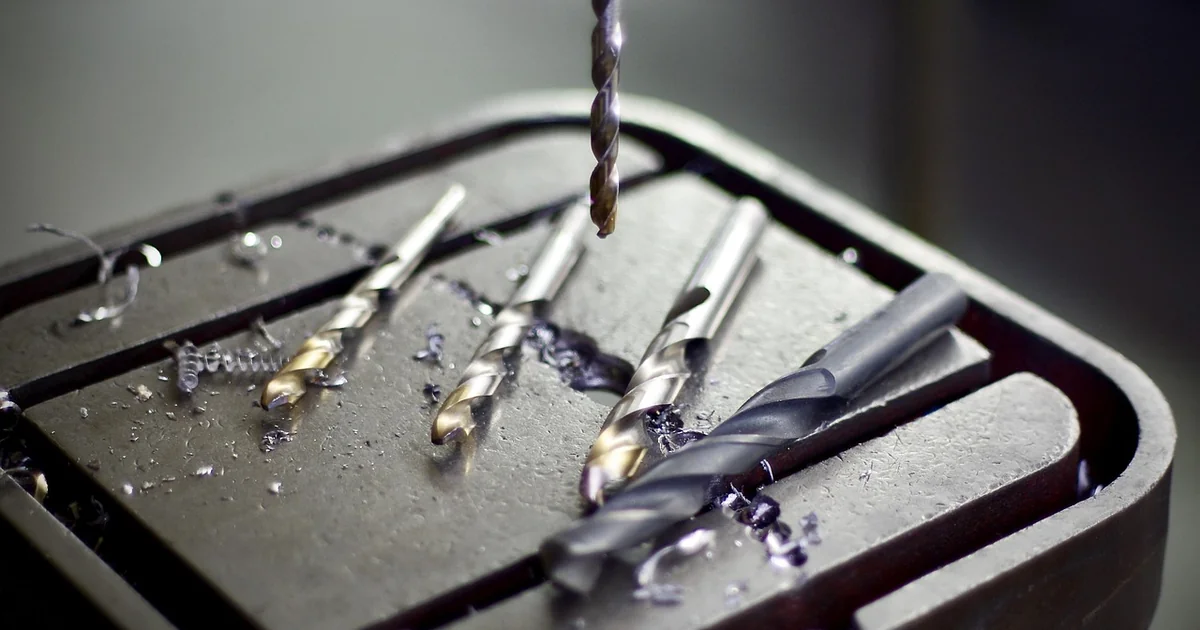
Most hobbyists and small-shop machinists never need to work at this scale. But for those who repair antique watches, build miniature models, or prototype tiny circuit boards, the gap between standard equipment and what the job demands can feel impossibly wide. The problem is not just the bit itself. It is the entire system around it: the chuck, the spindle, the feed mechanism, and the operator’s ability to sense what is happening at the cutting edge.
Why Ordinary Drill Chucks Fail at Sub-Millimeter Work
A good-quality three-jaw chuck typically exhibits runout between 30 and 50 microns. That measurement refers to how far the bit wobbles off its true center as it rotates. For a 1 mm bit, 30 microns represents about three percent of the diameter. That is manageable. For a 0.1 mm bit, the same runout becomes 30 to 50 percent of the bit’s width. The tool is essentially being bent sideways before it even touches the workpiece.
This mismatch explains why so many micro-drilling attempts end with a broken bit and a ruined part. The bit does not break from cutting forces alone. It breaks because the machine imposes a lateral deflection that the slender tool cannot withstand. A proper micro drill press must address this runout problem at its source, not just compensate for it after the fact.
The Runout Compensation Principle
One effective approach involves separating the rotation source from the chuck that holds the bit. In the mechanism built by Mike of Chronova Engineering, a collet mounts directly into the milling machine’s spindle. That collet transfers rotation to a second spindle, which connects to a runout-compensating drill chuck. This two-stage design lets the chuck float slightly, absorbing misalignment that would otherwise transfer to the bit.
The result is a system where the bit rotates around its own true axis rather than being forced to follow the spindle’s imperfect path. This is not a theoretical improvement. In practice, it can reduce effective runout from tens of microns down to just a few microns, which makes drilling at 0.1 mm feasible for the first time.
The Five Precision Drill Press Solutions for Tiny Bits
Below are five distinct approaches to precision micro-drilling. Each solves the core problems of runout, feed control, and operator feedback in a different way. Some are commercial products. Others are DIY builds that skilled machinists can replicate. All of them represent a serious step beyond what a typical benchtop drill press can deliver.
1. The Chronova-Style Milling Attachment
Mike’s mechanism is not a standalone drill press. It is an attachment designed to turn a milling machine into a precision micro-drilling station. The design uses a collet mounted in the machine’s spindle to drive a second, independent spindle. That second spindle holds a runout-compensating chuck and connects to a lever-and-counterweight system for feed control.
The lever mechanism deserves special attention. When you are working with a 0.1 mm bit, the difference between the bit touching the work and the bit snapping is measured in grams of force. A human hand cannot reliably sense that difference through a standard feed handle. The counterweight reduces the force required to move the spindle, and the lever provides mechanical advantage that gives the operator finer control over descent speed.
A dial indicator mounted on the attachment shows exactly how far the bit has traveled. This eliminates guesswork. You can watch the needle move as the bit enters the material and stop at precisely the depth you need. Most parts in this build were machined from steel or brass for rigidity. The handle itself was made from titanium to reduce weight without sacrificing strength.
When Mike first mounted the finished device, the measured runout was severe. The problem was not the drilling mechanism itself but a damaged collet locating pin. After replacing that pin, the system performed exactly as designed. This story illustrates an important lesson: even the best micro-drilling setup is only as good as every component in the chain. A single damaged part can ruin results that would otherwise be excellent.
In initial tests, Mike drilled a single 0.1 mm hole 1.8 mm deep. He then drilled six more holes in the end of a thin steel wire. The results were not perfectly uniform, but the imperfections were only visible under a scanning electron microscope. For practical purposes, the holes were indistinguishable from each other.
2. The Sensitive Drill Press with Fine Feed Control
A sensitive drill press is a machine designed specifically for light, precise work. Unlike a standard drill press, which uses a rack-and-pinion or gear-driven feed, a sensitive press relies on a spring-loaded lever mechanism. The operator applies downward pressure directly, and the spring returns the spindle when pressure is released.
For micro-drilling, the key feature is the absence of mechanical slop. Gears and racks introduce backlash, which translates into uncontrolled bit movement. A well-made sensitive press has almost zero backlash, so the bit goes exactly where you guide it. Some models include a micrometer stop that lets you set depth in increments as small as 0.01 mm.
These machines are common in watchmaking shops and jewelry workshops. They are not cheap, but they offer a level of control that no general-purpose drill press can match. If you regularly drill holes smaller than 0.5 mm, a sensitive press is worth serious consideration.
3. The Collet-Based Micro Drill Press
Standard three-jaw chucks grip the bit on three points. This design inherently introduces some runout because the jaws rarely close perfectly concentric. Collets, by contrast, grip the bit along its entire circumference. A collet is essentially a precision sleeve that collapses evenly around the tool when tightened.
A dedicated micro drill press that uses collets instead of a chuck can achieve runout figures below 5 microns, provided the collets themselves are high quality and the spindle taper is clean. The trade-off is convenience. Changing collets takes longer than opening and closing a chuck. But for production runs of tiny holes, the reliability gain is enormous.
Some micro drill presses combine collets with a spindle lock and a depth stop. This lets you repeat the same hole depth across multiple parts without measuring each time. For circuit board prototyping or model making, this consistency is invaluable.
4. The CNC Micro Drill Press
Computer numerical control removes the human element from the drilling process. A CNC micro drill press uses stepper motors or servos to control spindle position and feed rate with extreme precision. The operator programs the desired hole locations and depths, and the machine executes them automatically.
For tiny bits, the advantage is clear. A CNC system can apply consistent feed pressure across hundreds of holes without fatigue. It can also ramp the feed rate down as the bit enters the material and back up as it exits, reducing the risk of breakage. Some systems include a tool touch-off sensor that measures the exact length of each bit before drilling begins, compensating for tiny variations in bit geometry.
The downside is cost and complexity. A CNC micro drill press suitable for 0.1 mm work can cost several thousand dollars. Programming also takes time, so these machines are best suited for repeat jobs rather than one-off repairs.
5. The Custom-Built Lever-and-Counterweight System
For machinists who prefer to build their own tools, a lever-and-counterweight feed mechanism can be added to an existing milling machine or drill press. The design is similar to what Mike created, but it can be adapted to different machine configurations.
The core components are a second spindle mounted in a floating housing, a collet or runout-compensating chuck, a lever with a counterweight, and a dial indicator. The housing must allow the spindle to move vertically with minimal friction while maintaining lateral rigidity. Bronze bushings or linear ball bearings work well for this purpose.
The counterweight should be adjustable so the operator can tune the feed force to match the bit size. For a 0.1 mm bit, the net downward force should be just a few grams. The lever ratio determines how much hand movement translates into spindle movement. A 10:1 ratio gives fine control at the cost of requiring more hand travel to reach depth.
You may also enjoy reading: Automotive Tech Programs at South Plains College: Certificate vs. Associate Degree.
Building such a system requires access to a lathe and a milling machine, plus experience with precision fitting. But for someone who already owns the equipment, the material cost is relatively low. Steel, brass, and a small piece of titanium for the handle are the main expenses.
Measuring and Compensating for Runout in a Standard Chuck
Before investing in a specialized micro drill press, it helps to understand the runout characteristics of your existing equipment. A simple measurement involves mounting a precision rod in the chuck and placing a dial indicator against it. Rotate the spindle by hand and note the maximum deflection. That number tells you what you are working with.
If runout exceeds 20 microns, micro-drilling will be unreliable. Some chucks allow limited adjustment. Three-jaw chucks often have a slight adjustment range through the mounting flange. Collet chucks are more consistent but still depend on the spindle taper being clean and undamaged.
One practical workaround is to use a runout-compensating chuck, which contains a mechanism that allows the gripping section to float relative to the mounting section. These chucks are expensive but can reduce effective runout to under 5 microns. They are a good option if you need micro-drilling capability but cannot justify a dedicated machine.
Why Small Misalignments Become Catastrophic at 0.1 mm Scales
At macroscopic scales, a few microns of misalignment are invisible. A 1 mm bit can tolerate 20 microns of runout and still produce a usable hole. The bit bends slightly, the hole wall flexes, and the result is acceptable. At 0.1 mm, the same 20 microns represents 20 percent of the bit’s diameter. The bit cannot bend that far without fracturing.
This is why every component in a micro-drilling setup must be examined for fit. A burr on a collet taper, a speck of dust in the spindle bore, or a worn bearing race can all introduce enough runout to break a tiny bit. Cleaning and inspection become as important as the drilling technique itself.
One useful trick is to use a microscope or borescope to inspect the bit and workpiece before drilling. Even a small chip on the cutting edge can cause the bit to wander. A periscopic drilling camera, like the one Mike mentions, lets you see the hole location precisely before the bit touches down. This eliminates the guesswork of positioning.
Recovering from a Broken Bit
Despite all precautions, bits break. When a 0.1 mm bit snaps off inside a workpiece, removing it without damaging the part seems impossible. Mechanical extraction methods usually fail because the bit is too small to grip. Chemical removal is often the better option.
Alum, a compound commonly found in pickling spice and some deodorants, dissolves steel without attacking most non-ferrous metals. A hot saturated solution of alum will slowly eat away a broken high-speed steel bit over several hours. The process is slow but gentle. The workpiece emerges undamaged, and the dissolved bit leaves a clean hole that can be re-drilled.
This method works best with brass, copper, and aluminum workpieces. It is less suitable for steel or stainless steel parts, since alum attacks those metals too. In those cases, electrical discharge machining or ultrasonic drilling may be the only options for removal.
Building a Micro Drilling Workflow
Success with tiny bits depends on more than the machine. The workflow matters just as much. Start by marking the hole location with a center punch or a carbide scriber. Use a microscope or camera to verify alignment. Drill a pilot hole with a slightly larger bit if the material is hard. Then switch to the micro bit for the final hole.
Feed rate should be slow and steady. For a 0.1 mm bit in brass, a feed rate of 0.5 mm per minute is a reasonable starting point. That is about one-third the speed of a clock’s second hand. At that rate, a 1.8 mm deep hole takes over three minutes to drill. Patience is not optional.
Coolant helps. A drop of light oil or alcohol reduces friction and carries away heat. Without coolant, the bit can overheat and lose its temper in seconds. For very deep holes, peck drilling is essential. Retract the bit every 0.2 mm to clear chips and allow coolant to reach the cutting edge.
The Verdict on Micro Drill Presses
A dedicated micro drill press is not a tool everyone needs. But for those who do, the difference between success and failure comes down to runout control, feed precision, and operator feedback. Mike’s Chronova mechanism shows what is possible with careful design and skilled machining. Commercial sensitive presses and collet-based systems offer similar performance in a ready-made package. CNC systems remove human variability at a higher cost. And for the dedicated DIY machinist, building a custom lever-and-counterweight system turns a standard milling machine into a micro-drilling powerhouse.
Each approach has its strengths. The right choice depends on your budget, your existing equipment, and the volume of micro-drilling work you need to do. What matters most is understanding the physics at play. At 0.1 mm, the machine is not just a tool. It is an extension of your hands, and every micron of imperfection becomes a potential breaking point.