Imagine a world where electric motors constantly tune themselves for peak efficiency. That future just got a step closer, as Luffy ai electric motors technology is backed by an £8.1 million Series A funding round. The investment, led by BGF, goes to an Abingdon startup that builds neuroplastic AI – a form of artificial intelligence that learns and adapts in real time to control physical machines. Their first target is the electric motor, and for good reason: around half of the world’s electricity flows through these devices.
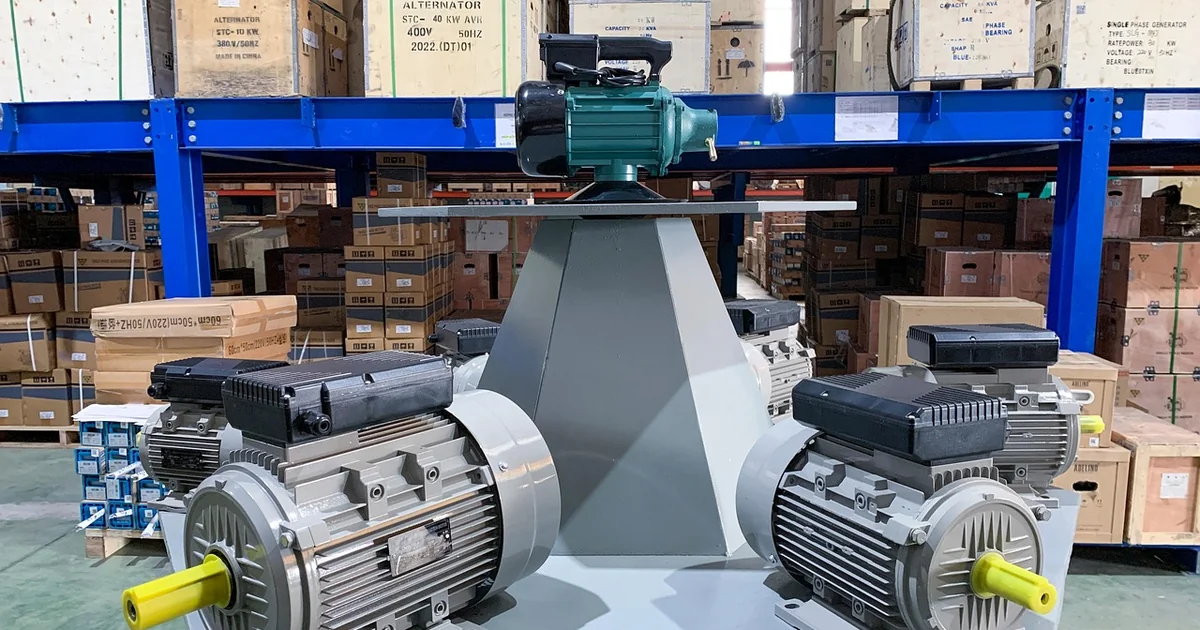
This neuroplastic AI approach means motors can self-tune without human intervention, potentially slashing energy waste across industries. The funding marks a significant vote of confidence in AI-driven motor control and the broader trend of industrial automation funding. It’s a practical step toward making massive energy savings possible, one motor at a time.
What Is Neuroplastic AI and How Does It Differ from Conventional Deep Learning?
That vote of confidence is built on a fundamentally different approach to artificial intelligence. Luffy’s technology, which they call neuroplastic AI, doesn’t rely on the massive, static neural networks you might associate with cloud-based image recognition or language models. Instead, it uses sparse neural networks — models that are computationally lightweight by design because only a fraction of their connections are active at any time. These networks are first trained in a simulated environment, where they learn the physics and behavior of electric motors without needing a physical prototype. Once the simulation is solid, the model is refined against data from the real machine. This simulation-based training dramatically cuts down the time and compute power needed to reach a practical solution.
Where conventional deep learning requires constant retraining on huge datasets, Luffy’s architecture keeps learning on the job. The neural network is designed to run directly on the motor controller hardware — not in a distant server — and continuously tunes itself from live feedback. Luffy claims this approach can be up to 400 times more efficient than traditional deep learning methods. That edge AI efficiency matters when you’re trying to squeeze every watt out of a motor in a factory floor or an electric vehicle. In short, neuroplastic AI is built for real-time adaptation, not batch processing, which makes it a much better fit for Luffy AI electric motors that need to self-optimize without human intervention.
Why Target Electric Motors? The Energy Saving Potential
Think about every device that spins, pumps, or moves in your home and workplace — from your refrigerator compressor to the fans in an industrial factory. Electric motors are behind almost all of them, and together they consume roughly half of the world’s electricity. That makes them the single largest end-user of electrical power, and a massive opportunity for improvement. You don’t need a radical new motor design to make a dent; you just need smarter control of the motors already in use. That’s where Luffy AI electric motors come into play, because traditional variable frequency drives (VFDs) can only follow static tuning parameters. By deploying its models directly into motor control and variable-frequency-drive applications, Luffy can continuously adapt the motor’s behavior to changing loads, temperatures, and wear. The result is a self-tuning system that keeps motor drive efficiency high without any manual recalibration. For industries running hundreds of motors, this kind of variable frequency drive AI optimization translates directly into serious industrial energy savings — cutting waste without sacrificing performance.
How Simulation-Based Training Avoids the Data Bottleneck
However, achieving that level of optimization traditionally requires enormous amounts of labeled industrial data — a resource that’s often scarce. Luffy ai electric motors overcome this by training their sparse neural networks in a simulated environment first. The model learns from a wide range of virtual scenarios, covering normal operation and rare faults. Then, it’s fine-tuned using real-world feedback from the actual machine, needing only minimal data. This simulation-to-reality process is a prime example of data efficient AI. Instead of the usual deep learning approach that demands thousands of labeled examples, Luffy’s method can be up to 400 times more efficient, according to the company. By combining reinforcement learning in simulation with practical refinement, the system sidesteps the data bottleneck entirely, making it feasible for industrial applications where data is hard to come by.
Self-Tuning on Hardware: Edge AI for Factory Floors
That simulated tuning gives Luffy a robust starting point, but the real magic happens when the model moves from the lab to the motor itself. Instead of relying on a distant cloud server to process adjustments, Luffy’s architecture runs directly on the hardware — a practical application of edge AI inference. This means the motor can continuously tune itself from live feedback without needing a constant internet connection. For you, that translates to a self-optimizing motor that adapts on the fly to changing loads, temperatures, or wear patterns, all within the local environment. This approach is particularly valuable on factory floors where connectivity can be spotty or unreliable. By processing everything at the edge, you sidestep latency and keep production lines running smoothly even when the network is down. It’s a direct application of industrial IoT edge computing that makes Luffy ai electric motors a resilient choice for manufacturers who can’t afford downtime. The system monitors performance in real time and tweaks parameters like torque or speed without human intervention, reducing the need for manual recalibration and keeping equipment efficient longer.
Commercial Traction and Next Steps: From Pilots to Deployments
With those real-time efficiency gains and reduced manual recalibration, it’s easy to see why businesses want to put Luffy ai electric motors to work beyond the testing phase. That’s exactly where the £8.1m Series A funding comes in. The cash is earmarked specifically for turning existing industrial AI pilots into full commercial deployments. That means moving from controlled environments and limited runs into real, round-the-clock production settings where the motors can prove their reliability at scale. Right now, the company hasn’t disclosed specific timelines for those commercial rollouts, nor the exact number or size of the pilots underway. What is clear is the next big push: expand the customer base and scale the technology so it reaches more factories, more machines, and more applications. For an AI startup commercialization effort, this phase is critical — it’s the bridge between promising demos and revenue-generating operations. The Luffy ai electric motors system has already shown it can handle the uptime demands of industrial environments; now the challenge is deploying it broadly enough to make a meaningful dent in energy waste and maintenance overhead. With scale-up funding secured, the focus shifts entirely from proving the concept to proving the business model.
The Founders: From Nuclear Physics to Neuroplastic AI
That business model rests on a foundation of unusually deep technical expertise. Luffy AI was founded by Dr Matthew Carr and Dr Alex Meakins, both former nuclear physicists from the UK Atomic Energy Authority. That background isn’t just an interesting footnote — it directly shapes how the company approaches motor control. In nuclear fusion research, you’re dealing with plasma that shifts unpredictably in microseconds. You need control systems that can sense, adapt, and correct almost instantly, often while tolerating hostile conditions. Carr and Meakins spent years building those kinds of real-time control loops. Translating that mind-set to electric motors makes a lot of sense when you think about it. The same principle applies: a motor’s load, temperature, and wear change over time, and a static tuning map can’t keep up. By applying their expertise in complex, adaptive control, the founders designed what they call neuroplastic AI — a system that continuously rewires its own tuning parameters as conditions change. For a deep tech startup team, this kind of cross-domain transfer is rare and valuable. It means the Luffy ai electric motors technology isn’t just an incremental improvement; it’s built from first principles by people who have already solved similar problems in one of the most demanding fields of engineering.
Investor Confidence: Why BGF and Others Backed Luffy
That kind of deep engineering pedigree matters when you’re asking investors to bet on a relatively young company. Luffy’s Series A round, led by BGF and joined by MIG Capital, Bow Capital, Chrysalix, Momenta, and UKI2S, shows strong institutional confidence in the Luffy ai electric motors technology. For a syndicate like this—spanning cleantech venture capital and industrial AI investment specialists—the appeal likely comes down to one simple fact: energy waste is a massive, costly problem, and Luffy’s self-tuning approach offers a practical, scalable fix. BGF, already known for backing high-growth industrial firms, sees a clear fit within its portfolio. The other investors bring deep sector expertise: Chrysalix focuses on sustainable innovation, Momenta on connected vehicles, and UKI2S on deep tech commercialisation. Together, they’re betting that Luffy’s AI can unlock savings where previous attempts failed. No previous funding rounds or valuations were disclosed, but the quality of the backing speaks volumes about the technology’s potential.
Challenges and Future: Deploying AI on Resource-Constrained Edge Devices
Running sophisticated neural networks on motor hardware with limited compute is no small feat. That’s why Luffy’s architecture is designed to run directly on the device itself, continuously tuning itself from live feedback. This approach sidesteps cloud dependency, which is critical for real-time motor control where every millisecond matters. The biggest hurdles are the edge device AI constraints: tight processing power, memory limits, and the need for instant adjustments. Luffy says its method is up to 400 times more efficient than traditional deep learning, thanks in part to smart AI model compression that shrinks the network without sacrificing accuracy. That efficiency is what makes it possible to fit advanced intelligence into the compact hardware of an electric motor. Without it, you’d be forced to rely on larger, more power-hungry chips — exactly what you don’t want in a motor controller.
With the fresh £8.1 million in the bank, the company is earmarking the funding for turning pilots into commercial deployments. While you won’t find specifics on team size or hiring plans yet, the investment suggests significant expansion ahead. Beyond electric motors, Luffy’s self-tuning AI could one day be adapted for other machinery, opening up broader possibilities. For now, the focus is on proving that Luffy ai electric motors can deliver real-world energy savings and performance gains at scale — and overcoming those resource constraints is the key to making it happen.
Frequently Asked Questions
How does Luffy’s simulation-based training actually work for electric motors?
Luffy builds a digital twin of the motor and its environment, then runs millions of virtual scenarios to teach the AI how to adjust motor settings in real time. This approach lets the system learn without needing massive amounts of physical data from real-world operation. Once trained, the AI can be deployed on a factory floor and start optimizing performance immediately.
What makes neuroplastic AI different from standard deep learning models?
Standard deep learning models are typically static after training, but neuroplastic AI can continuously adapt its neural connections as conditions change. For Luffy ai electric motors, this means the system self-tunes when load, temperature, or power supply fluctuates, rather than relying on a fixed set of rules. It’s a more flexible and practical approach for dynamic industrial environments.
Can this AI work on factory floors with limited or intermittent internet connectivity?
Yes, Luffy’s AI is designed to run locally on edge devices, so it doesn’t need a constant cloud connection to function. The self-tuning algorithms process data and make adjustments right on the motor controller. This makes it a reliable option for remote or legacy factory setups where network reliability is a concern.