A blacked-out Kia EV5 test car recently appeared on US roads. Eagle-eyed spy photographers caught a prototype with a small but crucial detail: front amber side markers. Those lights are a federal requirement for vehicles sold in the United States. The sighting has sparked fresh speculation that Kia might be reconsidering its earlier stance that the midsize electric SUV would remain exclusive to Canada for the North American market.
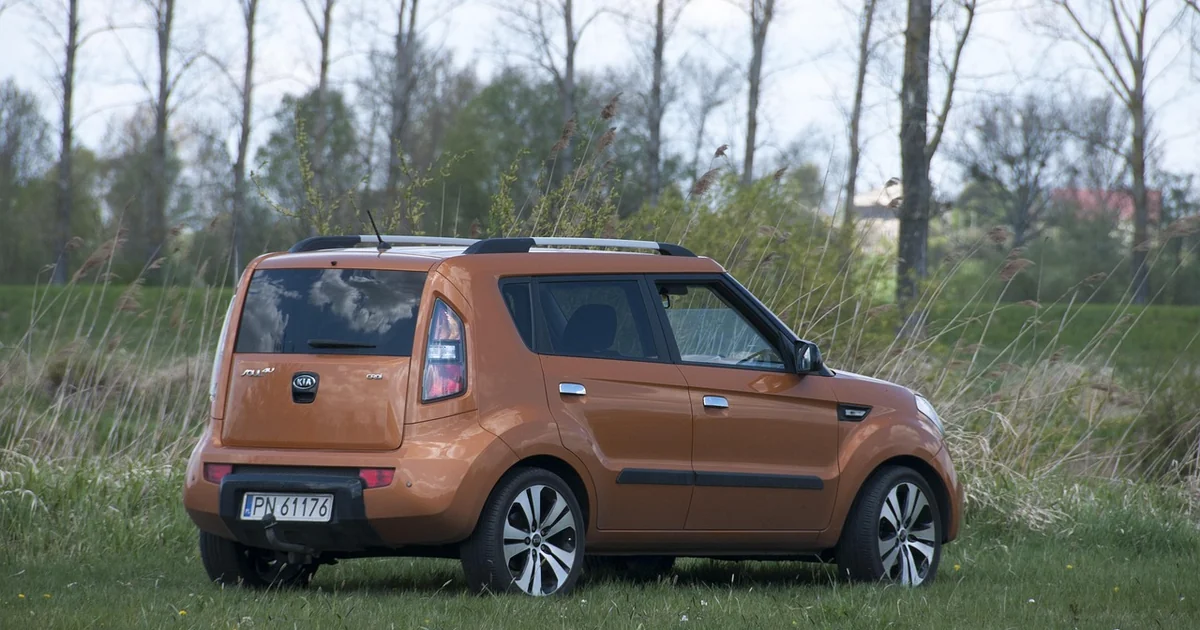
Orders for the kia ev5 us are already open in Europe, South Korea, Thailand, Australia, and Canada. Yet the company has so far kept it out of the American lineup. After spotting a second prototype on US soil — this one wearing amber lamps — many enthusiasts wonder whether the brand is preparing to offer the EV5 here after all. Below are five critical ways this particular test vehicle differs from the versions sold overseas.
5 Key Differences in the US-Spec Kia EV5 Prototype
1. Mandatory Amber Front Side Markers
The most obvious change spotted on the prototype is the addition of amber lights at the front corners. US safety regulations require all vehicles sold in the country to feature amber side markers that illuminate whenever the headlights are on. Overseas versions of the EV5 do not include these lights. Their presence on a test car is a strong signal that Kia engineers are validating the vehicle for US certification.
While automakers sometimes test prototypes outside their intended market, the inclusion of federally mandated lighting strongly suggests that a US launch is under serious consideration. Previous spy shots of EV5 testers in the US lacked these markers, which makes this prototype notably different.
2. NACS Charging Port on the Light Trim
In Canada, the entry-level EV5 Light trim ships with a built-in NACS port. That connector allows direct access to Tesla Superchargers without an adapter. The Light variant uses a smaller 60.4 kWh battery pack with an estimated range of 335 km (208 miles). If a US version arrives, Kia will likely adopt the NACS standard across all trims to meet the growing demand for Tesla Supercharger compatibility.
For US buyers, having a native NACS port would be a major advantage. It eliminates the need for a separate adapter and reduces driver anxiety about finding compatible fast-charging stations. The higher trims — Wind, Land, GT-Line, and GT-Line Limited — use an 81.4 kWh battery providing up to 460 km (285 miles) of range. Whether those trims would also include NACS is unconfirmed, but the prototype’s testing schedule may reveal more.
3. Different Battery Packaging and Range Estimates
All EV5 trims except the Light variant share the same 81.4 kWh battery pack. Depending on the drivetrain and trim, the WLTP range reaches up to 530 km (329 miles) in overseas markets. However, the US Environmental Protection Agency (EPA) tends to produce lower range figures than WLTP. A US-spec EV5 would likely have an EPA-rated range around 260–280 miles for the 81.4 kWh models.
The Canadian pricing structure reveals nine trim levels ranging from $43,495 CAD to $61,495 CAD. For the US, the model lineup would probably be simplified to four or five trims to avoid dealer complexity. The base Light trim with the smaller battery may not even appear in the US, as American buyers tend to prefer longer-range options. Kia’s decision to test the GT-Line trim — the performance-oriented variant — suggests they are evaluating the top-tier configuration for US roads.
4. Interior Space and Display Configuration
Inside, the EV5 offers nearly 30 inches of combined screen real estate. The setup includes dual 12.3-inch displays — one for the driver instrument cluster and one for the touchscreen navigation — plus a dedicated 5-inch panel for climate controls. Kia claims the rear seats provide a best-in-class 1,041 mm of legroom, which would place it ahead of the Tesla Model Y and the Kia Sportage in second-row comfort.
You may also enjoy reading: The Ultimate Tech Pack Checklist: Key Considerations for Fashion Designers.
Dimensions for the EV5 measure 4,610 mm in length, 1,875 mm in width, and 1,675 mm in height, with a wheelbase of 2,750 mm. That makes it about 70 mm longer, 10 mm wider, and 30 mm taller than the current Sportage. The US prototype likely carries identical interior dimensions, but Kia may adjust some infotainment features to meet local preferences — such as adding satellite radio or updating voice commands for English-language markets.
5. Strategic Positioning Between the EV3 and EV9
Kia recently unveiled the US-spec EV3, a compact electric SUV expected to start around $35,000 when it goes on sale later this year. The EV9 is a three-row electric SUV that saw US sales rise 481% in April 2025 compared to the previous year. Between those two models sits a gap: a midsize electric SUV with two rows. The EV5 would fill that slot perfectly.
In Australia, the EV5 has already become one of the top-selling EVs. Kia’s decision to delay the EV4 sedan indefinitely for the US market suggests the company is prioritizing SUVs, which dominate American EV sales. The top ten best-selling EVs in the US in the first quarter of 2025 were almost all SUVs — led by the Tesla Model Y, Toyota bZ4X, Hyundai Ioniq 5, and Chevy Equinox EV. A US-market EV5 could compete directly with the Model Y and Ford Mustang Mach-E at a likely starting price between $38,000 and $45,000 before incentives.
The spotted prototype with amber lights, a NACS port on the Light trim, and the GT-Line badging indicates Kia may be preparing to announce a US launch later this year or in early 2026. Whether they confirm it remains uncertain, but the evidence keeps piling up.
Should Kia bring the EV5 to the US? The brand has already laid the groundwork with the EV9’s success and the upcoming EV3. A midsize family SUV with 285 miles of range, class-leading rear legroom, and access to Tesla Superchargers could win over many American buyers. Perhaps an open letter campaign might nudge Kia toward a decision.