For years, buying something online in China meant typing keywords into a search bar and scrolling through an endless grid of listings. That ritual is being dismantled. China’s largest technology companies are replacing the traditional search interface with AI agents that can find, compare, and purchase products through natural conversation. This shift represents a fundamental change in how millions of people shop every day, and it is happening at a scale that has no parallel anywhere else in the world.
The Scale of What Is Happening
China has roughly 975 million online shoppers, and a significant portion of them are now interacting with AI agents during their shopping journeys. The numbers coming out of the country’s major platforms suggest this is more than a feature upgrade. It is a structural transformation of the e-commerce experience.
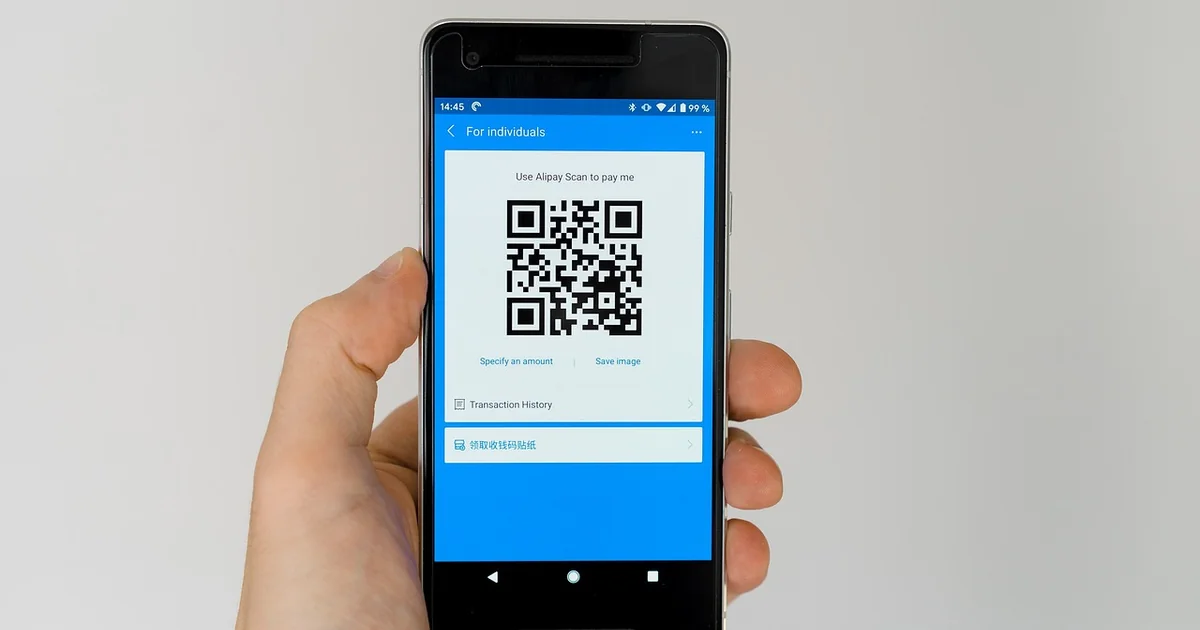
Alibaba’s Qwen assistant reached 300 million monthly active users across the company’s consumer platforms by early 2026. During the Chinese New Year campaign alone, roughly 140 million first-time AI shopping experiences were logged. Alipay, the payment arm of Alibaba’s Ant Group, processed 120 million AI-agent transactions in a single week in February. That volume had never been achieved by any AI-native payment product before.
On the merchant side, tools powered by AI agents are showing measurable results. Dianxiaomi, an AI customer service tool piloted with 200,000 merchants, has lifted conversion rates by 30%. Tmall upgraded its Business Advisor tool with agentic AI capabilities, giving sellers access to AI agents that operate around the clock across store analytics, advertising placement, visual content generation, customer service, and post-sale support.
The global implications are significant. McKinsey estimates that agentic transactions could influence up to 5 trillion US dollars in global sales by 2030. China’s platforms are already building the infrastructure to capture a substantial portion of that value.
Why China Is Ahead in the Agentic Commerce China Race
The structural reason China’s technology companies are moving faster on agentic commerce than their Western counterparts comes down to architecture. Chinese super-apps such as Taobao, WeChat, Meituan, and Douyin already integrate discovery, communication, payment, and fulfillment within a single environment.
When an AI agent on Alibaba’s platform finds a product, compares it across sellers, runs a virtual try-on, monitors a 30-day price history, and places an order, the entire workflow stays inside the ecosystem. The transaction completes through Alipay, with the agent stepping back only for a final user confirmation.
That stands in contrast to the Western approach. ChatGPT’s shopping integration with Shopify and Amazon’s Rufus assistant largely produce search-style answers. The buy-flow happens in a separate app or website, with payment, delivery, and returns handled by different systems. The fragmentation of Western e-commerce infrastructure means that AI agents cannot easily complete end-to-end transactions without jumping between multiple disconnected platforms.
Chinese consumers already live inside these integrated ecosystems. They communicate, browse, pay, and receive deliveries without ever leaving a single app. Adding an AI agent into that loop is a natural extension rather than a disruptive change. This architectural advantage gives China a multi-year lead in deploying agentic commerce at scale.
7 AI Moves Driving the Agentic Commerce China Revolution
1. Alibaba Integrates Qwen AI Assistant with Taobao’s Four-Billion-Product Catalogue
Alibaba Group integrated its Qwen artificial intelligence assistant with Taobao, its largest marketplace, giving the chatbot access to a catalogue of more than four billion products. A shopper can now describe what they want in plain language, have the AI narrow the options by budget, brand, or occasion, and complete the purchase without leaving the conversation.
This integration represents the most ambitious deployment of agentic commerce that any major platform has attempted. The assistant can compare prices across sellers, suggest alternatives, check inventory, and process payment through Alipay. For the shopper, the experience feels like having a personal shopping assistant who knows the entire marketplace.
Qwen reached 300 million monthly active users across Alibaba’s consumer platforms by early 2026. Roughly 140 million first-time AI shopping experiences were logged during the Chinese New Year campaign alone, indicating that the feature is attracting users who had never used an AI assistant for shopping before.
2. Alipay Processes 120 Million AI-Agent Transactions in a Single Week
Alipay, the payment arm of Alibaba’s Ant Group, processed 120 million AI-agent transactions in a single week in February. These were completed purchases that were ordered through a chatbot and paid without the user leaving the conversation. It was the first time any AI-native payment product had reached that volume.
This milestone demonstrates that consumers are willing to trust AI agents with real financial transactions. The psychological barrier of letting an automated system handle payment on your behalf is significant, but Alipay’s numbers suggest that barrier is being overcome at scale in China.
The payment infrastructure is a critical component of the agentic commerce China ecosystem. Without a seamless payment layer that AI agents can access, the transaction loop remains broken. Alipay provides that layer, and its agentic transaction volume is growing rapidly.
3. Meituan Places a Virtual AI Companion at the Centre of Its App
In January, Meituan, China’s dominant on-demand delivery platform, placed a virtual AI companion at the centre of its app’s navigation bar. The AI helps users find restaurants, entertainment venues, and other local services through natural conversation rather than search queries.
Meituan’s platform handles millions of daily orders for food delivery, grocery delivery, event tickets, and local services. The AI companion can understand complex requests such as “find a restaurant near my office that serves Sichuan food, has a rating above 4.5, and can deliver within 30 minutes.” It then presents options and facilitates the order without requiring the user to navigate through multiple screens.
This integration is significant because it puts the AI agent front and centre in the user interface rather than burying it in a chat window or help menu. Meituan is betting that conversational interaction will become the primary way users access its services.
4. JD.com Launches Jingyan AI Shopping Assistant, Accumulates 50 Million Users
JD.com launched its AI shopping assistant, Jingyan, in 2023 and has since accumulated more than 50 million users. The assistant helps with shopping tasks ranging from product research to order tracking and post-purchase support.
JD.com’s platform is known for its logistics strength and focus on authentic products. Jingyan leverages that reputation by providing detailed product comparisons, checking authenticity certifications, and offering personalised recommendations based on purchase history and browsing behaviour.
The assistant also handles practical tasks such as checking delivery dates, rescheduling deliveries, and processing returns. By integrating the AI assistant across the entire customer journey, JD.com has created a more cohesive shopping experience that reduces friction at every touchpoint.
5. ByteDance Upgrades Doubao AI Chatbot to Handle Autonomous Bookings
ByteDance upgraded its Doubao AI chatbot in December to autonomously handle tasks such as ticket bookings through Douyin, the Chinese version of TikTok. The chatbot can now complete entire booking workflows without user intervention beyond the initial request.
Douyin’s ecosystem includes live streaming e-commerce, local services, event ticketing, and travel bookings. By giving Doubao the ability to navigate these services independently, ByteDance is positioning the chatbot as a universal assistant for the Douyin platform.
A user can tell Doubao “book two tickets for the concert next Saturday near the stage, under 200 yuan each, and add a reminder for the day before the event.” The chatbot handles the search, selection, payment, and calendar integration without requiring the user to visit multiple pages or apps.
6. Tencent Builds AI Agent Capabilities into WeChat
Tencent is building AI agent capabilities into WeChat, which has 1.3 billion monthly active users. WeChat already functions as a super-app that handles messaging, social networking, payments, e-commerce, and mini-programs. Adding AI agent capabilities could make it the most powerful agentic commerce platform in the world by user base alone.
WeChat’s ecosystem is uniquely suited for agentic commerce because it already contains the entire transaction loop. Users can discover products through official accounts or mini-programs, communicate with sellers, make payments through WeChat Pay, and arrange delivery through integrated logistics services. An AI agent operating inside WeChat can orchestrate all of these steps without leaving the app.
Tencent has not yet released specific details about the agentic features being developed, but the company’s investment in AI research and its integration of large language models into WeChat suggest that significant capabilities are coming.
7. Tmall Upgrades Business Advisor with Agentic AI for Merchants
Tmall upgraded its Business Advisor tool with agentic AI capabilities, giving every seller on the platform access to a dedicated team of AI agents that operate around the clock. The agents handle tasks across the entire operational chain: store analytics, advertising placement, visual content generation, customer service, and post-sale support.
For merchants, this represents a dramatic reduction in operational overhead. Tasks that previously required dedicated staff can now be handled by AI agents. The agents can analyse sales data and adjust advertising bids in real time. They can generate product images and descriptions based on trending styles. They can respond to customer inquiries and process returns automatically.
Dianxiaomi, an AI customer service tool already piloted with 200,000 merchants, has reportedly lifted conversion rates by 30%. These merchant-side tools are critical to the agentic commerce China ecosystem because they ensure that sellers can keep up with the volume and speed of agent-driven transactions.
The Merchant Side of Agentic Commerce
The consumer-facing AI agents are only half of the story. The merchant-facing side of agentic commerce is equally important, and China’s platforms are investing heavily in tools that help sellers adapt to the new paradigm.
You may also enjoy reading: Your Complete Guide to Surgical Tech Salary in 2026.
Tmall’s Business Advisor upgrade provides merchants with AI agents that monitor store performance, analyse customer behaviour, and recommend operational improvements. These agents work continuously and can respond to changes in demand or pricing within minutes rather than hours or days.
Dianxiaomi’s AI customer service tool represents another layer of the merchant infrastructure. With 200,000 merchants already piloting the tool and conversion rate improvements of 30%, the business case for adopting AI agents is clear. Merchants who do not adopt these tools risk falling behind competitors who can offer faster, more personalised service through AI automation.
The shift to agentic commerce also changes the dynamics of search and discovery on these platforms. Some retailers have reported traffic declines of up to 30% as consumers increasingly rely on AI agents to find products rather than browsing or searching manually. This trend will likely accelerate as AI agents become more sophisticated and trusted.
For merchants, the strategic response is to optimise their product listings and store configurations for AI agent discovery rather than traditional search. This means providing structured data, clear pricing, accurate inventory information, and detailed product descriptions that AI agents can parse and compare effectively.
What Agentic Commerce Means for the Shopping Experience
The practical experience of shopping through an AI agent is fundamentally different from the search-and-browse model. Instead of typing keywords and scrolling through results, a shopper can describe their needs in natural language and let the agent handle the filtering, comparison, and selection.
A typical interaction might go like this: “I need a winter coat for my mother, around 70 years old, not too heavy, preferably in navy blue, under 300 yuan, and it needs to arrive before next Wednesday.” The AI agent searches the catalogue, filters by age-appropriate styles, checks the price history to ensure value, verifies delivery timelines, and presents three options with a recommendation. The shopper reviews the choices, confirms, and the agent completes the purchase.
This level of personalisation and convenience is difficult to achieve through traditional search interfaces. The AI agent can remember preferences from previous interactions, learn from feedback, and make increasingly accurate recommendations over time. For the shopper, the experience becomes more like having a personal assistant than browsing an e-commerce site.
The psychological shift is also significant. When a shopper trusts an AI agent to make purchasing decisions on their behalf, they are delegating a degree of choice and control. This requires a level of trust that platforms must earn through reliable recommendations, transparent processes, and easy recourse if something goes wrong.
The Infrastructure Advantage of Chinese Super-Apps
The architectural advantage of Chinese super-apps cannot be overstated. When an AI agent operates within a platform like Taobao, WeChat, or Meituan, it has access to the entire transaction loop: product discovery, communication with sellers, payment processing, logistics tracking, and post-purchase support.
In the Western context, an AI agent might help a shopper find a product on one platform, but the actual purchase happens on a retailer’s website, payment goes through a separate processor, and delivery is handled by yet another provider. The fragmentation means that AI agents cannot easily complete end-to-end transactions without leaving the conversation.
Chinese platforms eliminate this fragmentation by design. The AI agent never needs to leave the ecosystem. It can navigate the catalogue, negotiate with sellers, process payment through the platform’s integrated payment system, and track delivery through the platform’s logistics network. The entire workflow stays inside a single environment.
This integration allows for capabilities that are difficult to replicate in fragmented systems. Virtual try-ons that overlay products on user photos, price history monitoring that spans weeks or months, and automatic refund processing for delayed deliveries are all possible because the AI agent has access to data across the entire platform.
Consumer Trust and the Adoption Curve
For agentic commerce to reach its full potential, consumers must trust AI agents to handle real transactions with real money. The data from China suggests that this trust is building rapidly.
Alipay’s 120 million AI-agent transactions in a single week indicate that millions of consumers are comfortable letting an AI handle payment on their behalf. The 300 million monthly active users of Qwen across Alibaba’s platforms suggest that the conversational shopping experience is resonating with a broad audience.
The adoption curve appears to be accelerating. Early adopters are typically younger, more tech-savvy consumers, but as the technology matures and becomes more reliable, older and less digitally native consumers are also starting to use AI agents for shopping.
Platforms are supporting this adoption by making the AI agents easy to use and providing clear options for human intervention when needed. Most agents allow users to review and confirm purchases before payment is processed, and disputes can be escalated to human customer service representatives.
Global Implications of the Agentic Commerce China Lead
The developments happening in China have implications for e-commerce markets around the world. If Chinese platforms succeed in making agentic commerce the default shopping experience for nearly a billion consumers, the lessons they learn and the technology they develop will likely influence global e-commerce standards.
Western platforms are already taking notice. Amazon’s Rufus assistant, Shopify’s integration with ChatGPT, and various AI shopping tools being developed by retailers all represent attempts to bring agentic capabilities to Western markets. But these efforts face the structural challenge of fragmented infrastructure that Chinese platforms do not have.
McKinsey’s estimate that agentic transactions could influence up to 5 trillion US dollars in global sales by 2030 suggests that the economic stakes are enormous. The platforms that can deliver seamless, trusted, end-to-end agentic commerce will capture a significant share of that value.
China’s technology companies have a multi-year head start, a unified infrastructure advantage, and a consumer base that is already accustomed to living inside super-app ecosystems. These factors position them to lead the global transition to agentic commerce for the foreseeable future.
The race is not just about who builds the best AI assistant. It is about who can create the most complete ecosystem in which AI agents can operate freely and reliably. China’s tech giants are building that ecosystem today, one AI move at a time.