Imagine standing on a street corner in London, watching a human being defy the very laws of biology and physics. For decades, the sub-two-hour marathon was whispered about as a mathematical impossibility, a frontier that existed only in the realm of theoretical sports science. Then, in 2026, the impossible became a documented reality. As Sabastian Kimaru Sawe crossed the finish line in a staggering 1 hour, 59 minutes, and 30 seconds, the world realized we had entered a new epoch of human endurance. Yet, as the dust settled, a secondary miracle emerged: the realization that this historic leap was powered by a specific piece of engineering known as the adizero adios pro evo.
A Triple Crown of Records in London
The 2026 London Marathon will forever be etched in history, not just for a single performance, but for a collective shattering of human limits. While Sawe’s achievement as the first person to officially break the two-hour barrier captured the global headlines, the depth of the performance was even more profound. Just 11 seconds behind him, Ethiopian runner Yomif Kejelcha crossed the line, proving that Sawe’s feat was not an isolated anomaly but a new standard of excellence. Their combined speed obliterated the previous world record of 2 hours and 5 seconds, which had been held by the legendary Kelvin Kiptum since his performance in Chicago in 2023.
The dominance of the day extended to the women’s field as well. Tigst Assefa delivered a masterclass in distance running, setting a new women’s world record with a time of 2 hours, 15 minutes, and 41 seconds. This wasn’t just a win; it was a total reconfiguration of what the human body can achieve over 26.2 miles. What makes this triple crown of records even more fascinating is the common thread linking these three distinct athletes. Despite their different training backgrounds and physiological profiles, Sawe, Kejelcha, and Assefa all relied on the same technological platform: the adizero adios pro evo 3.
This convergence of elite talent and cutting-edge gear suggests that we are no longer just watching athletes run; we are watching a symbiotic relationship between biology and material science. The timing of this footwear debut was nothing short of perfect, providing the exact mechanical advantage needed to push through the physiological wall that usually hits runners around the 35-kilometer mark. It was the first major road test for a shoe designed specifically to bridge the gap between human potential and the ultimate clock.
The Engineering Behind the 97-Gram Miracle
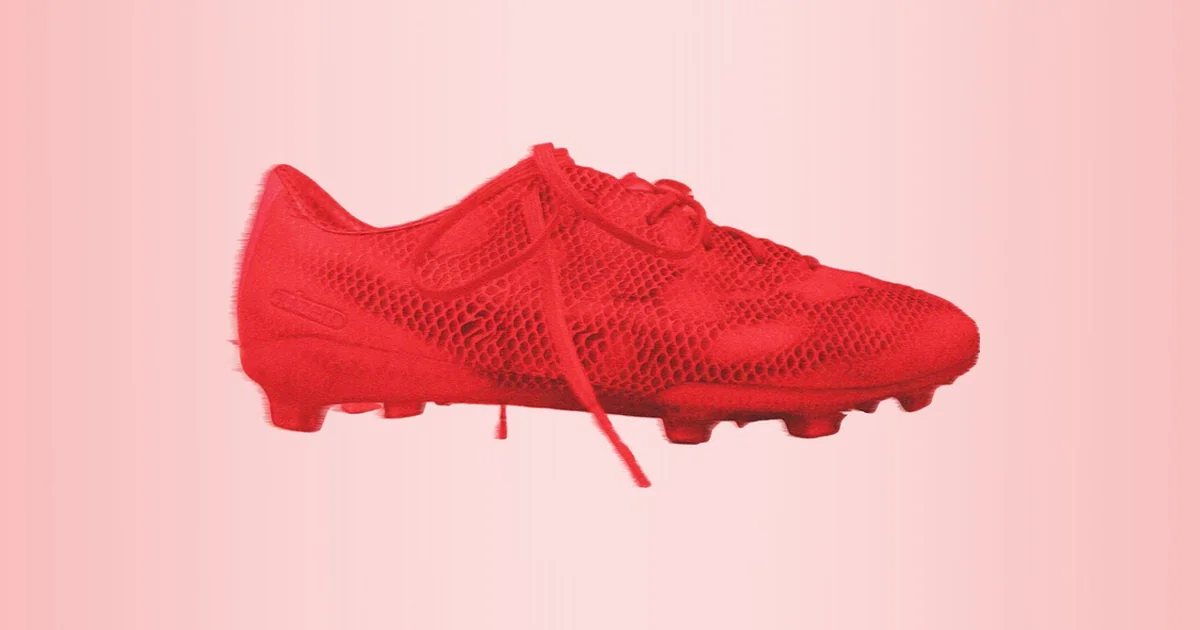
To the casual observer, a running shoe is simply a piece of cushioned footwear. To an elite marathoner, every single gram is a tax on their metabolic efficiency. This is where the adizero adios pro evo changes the conversation entirely. Weighing in at a mere 97 grams, this shoe represents the lightest high-performance model ever produced by the German manufacturer. To put that in perspective, many standard training shoes weigh five to ten times as much.
How does such a lightweight structure maintain the integrity required for a world-record pace? The answer lies in the sophisticated integration of carbon-fiber elements. These components are not merely placed inside the sole; they are woven into the architecture of the shoe to maximize longitudinal stiffness. This stiffness acts as a lever, assisting the foot during the toe-off phase of the running gait. By reducing the energy lost to joint flexion, the shoe allows the athlete to maintain a more efficient stride length even as fatigue sets in.
Furthermore, the core of the shoe’s responsiveness is the Lightstrike Pro Evo foam. This specialized composite is designed to be both incredibly light and exceptionally springy. In the world of sports engineering, there is often a trade-off between weight and energy return. If a foam is too soft, it absorbs too much energy; if it is too firm, it becomes punishing on the legs. The Lightstrike Pro Evo seeks the “Goldilocks zone,” providing a high degree of energy return that propels the runner forward while maintaining a lightweight profile. This specific foam density is a primary reason why athletes can sustain high velocities without the rapid muscular breakdown typically seen in the final stages of a marathon.
How Does Carbon-Fiber Integration Affect Stiffness?
One of the most common questions among gear specialists is how the placement of carbon plates influences the actual mechanics of a stride. In the adizero adios pro evo, the carbon-fiber elements are engineered to provide a specific type of structural rigidity. This rigidity prevents the midsole from compressing unevenly, which ensures that the force generated by the runner’s muscles is directed straight into the ground and then back into the next stride.
Think of it like a springboard. A soft, flexible board absorbs your jump, whereas a stiff, engineered board redirects that energy into upward and forward momentum. For a marathoner running at a sub-three-minute-per-kilometer pace, this mechanical advantage is the difference between maintaining a rhythm and fighting against gravity. The stiffness helps stabilize the foot, reducing the amount of micro-adjustments the stabilizer muscles must make, thereby saving precious glycogen stores for the final miles.
Why Is Weight Such a Critical Factor for Elite Performance?
For a hobbyist runner, a few ounces might not seem like a dealbreaker. However, for an athlete like Sawe, who is operating at the absolute limit of human aerobic capacity, weight is a cumulative burden. Over the course of 42,195 meters, every extra gram requires a corresponding increase in oxygen consumption to move it. This is known as the metabolic cost of transport.
If a shoe is heavier, the runner’s heart rate will climb faster for the same pace. By stripping the weight down to 97 grams, the engineers have essentially lowered the “cost” of every step. This allows the runner to stay below their anaerobic threshold for a longer duration. In a race where seconds determine the history books, reducing the metabolic tax through lightweight design is perhaps the most significant advantage a piece of equipment can offer.
The Development Journey: From Germany to the Highlands
The creation of a world-class racing shoe is not a process that happens overnight in a vacuum. It is a grueling, multi-year cycle of iteration and testing. The design team, led by Italian engineer Patrick Nava, utilized a dual-pronged approach to ensure the shoe could withstand the rigors of elite competition. The first phase took place in the controlled, high-tech environments of the company’s headquarters in Herzogenaurach, Germany. Here, engineers could measure every variable, from foam compression rates to the thermal properties of the upper mesh, down to the nanogram.
However, laboratory data can only take a product so far. To truly understand how a shoe performs under the stress of a world-class marathon, the team moved their testing to the high-altitude regions of Kenya and Ethiopia. These field tests were crucial because they allowed the designers to gather qualitative data directly from the world’s best runners. They didn’t just look at how the shoe performed on a treadmill; they looked at how it felt on uneven terrain, how it handled the heat of the African sun, and how the athletes’ biomechanics shifted as they became exhausted.
You may also enjoy reading: French Satellite Startup Univity Raises €27M in Series A.
This feedback loop—moving from the precision of German labs to the raw, high-altitude reality of East African training camps—is what separates a marketing gimmick from a performance tool. The adizero adios pro evo is a product of this synthesis. It combines the mathematical precision of European engineering with the lived experience of the world’s greatest distance runners. This holistic development process ensures that when the shoe finally hits the pavement in a race like London, it has already survived thousands of miles of simulated and real-world stress.
Navigating the Challenges of High-Performance Gear
While the benefits of advanced footwear are undeniable, the rise of “super shoes” has introduced several challenges for the running community. For the competitive long-distance runner, the primary concern is often accessibility and durability. The adizero adios pro evo, with its projected $500 price tag and limited availability via official apps, is clearly positioned as a specialized tool for the elite. This creates a gap between the technology used to break records and the gear available to the everyday enthusiast.
Another challenge is the durability of high-rebound foams. Because the Lightstrike Pro Evo is designed to be incredibly lightweight and springy, it often lacks the longevity of traditional EVA foams. For many runners, the fear is that a shoe designed for a single, glorious race might lose its “pop” after only 50 or 100 miles. This makes the investment feel much higher, as the shoe becomes a “disposable” high-performance item rather than a long-term training partner.
To implement a practical solution to these challenges, runners should adopt a tiered approach to their footwear rotation. Rather than attempting to use a high-cost, low-durability shoe for all training, athletes should use them exclusively for “key” sessions—such as tempo runs or race simulations. By saving the adizero adios pro evo for the moments that matter most, you maximize the mechanical advantage of the technology while minimizing the financial and physical impact of its limited lifespan. For training, investing in more durable, mid-range stability shoes will protect your feet and your wallet, allowing the “super shoe” to serve its true purpose: the pursuit of a personal best.
The Legacy of the Sub-Two-Hour Quest
To understand why Sawe’s run is so significant, one must look back at the milestones that paved the way. The journey toward the two-hour barrier has been a long and storied one. We cannot discuss this new era without acknowledging the impact of Eliud Kipchoge. While his famous sub-two-hour run in Vienna was not an official world record due to the controlled conditions and the use of rotating pacemakers, it served as a psychological breakthrough. It proved to the world that the human body could move at that velocity for that duration.
Kipchoge’s efforts, along with the previous record set by Kelvin Kiptum, acted as the stepping stones that allowed the current generation to dream bigger. The transition from Kipchoge’s experimental runs to Sawe’s official, sanctioned world record represents the maturation of the sport. We have moved from “trying to see if it’s possible” to “executing it within the rules of competition.”
The role of technology in this evolution remains a subject of intense debate. Some purists argue that the essence of running is being lost to engineering, while others contend that technology is simply a natural extension of human ingenuity. Regardless of where one stands, the facts are clear: the intersection of elite training, rigorous anti-doping protocols—which Sawe underwent throughout his preparation—and advanced material science has fundamentally altered the landscape of distance running. The adizero adios pro evo is not just a shoe; it is a testament to a moment in time when human ambition and technical brilliance finally aligned to break a barrier that once seemed eternal.
As we look toward the future of the marathon, the shadow of the 1:59:30 mark will loom large. Every aspiring runner will now be measured against this new standard, and every manufacturer will be racing to find the next gram to shave off or the next millimeter of foam to optimize. The dawn of this new era has arrived, and it was paved with carbon fiber and lightweight foam.