
As the field of astronomy continues to push the boundaries of human knowledge, the need for powerful computing resources has become increasingly essential. The recent announcement by NASA that it will launch the Nancy Grace Roman space telescope into orbit in September 2026 has sparked a flurry of excitement among astronomers, who are eager to tap into the vast amounts of data that this new telescope will generate. With the ability to deliver 20,000 terabytes of data to astronomers over the course of its life, the implications for the field of astronomy are profound. But as the volume of data grows, so too does the challenge of processing and analyzing it.
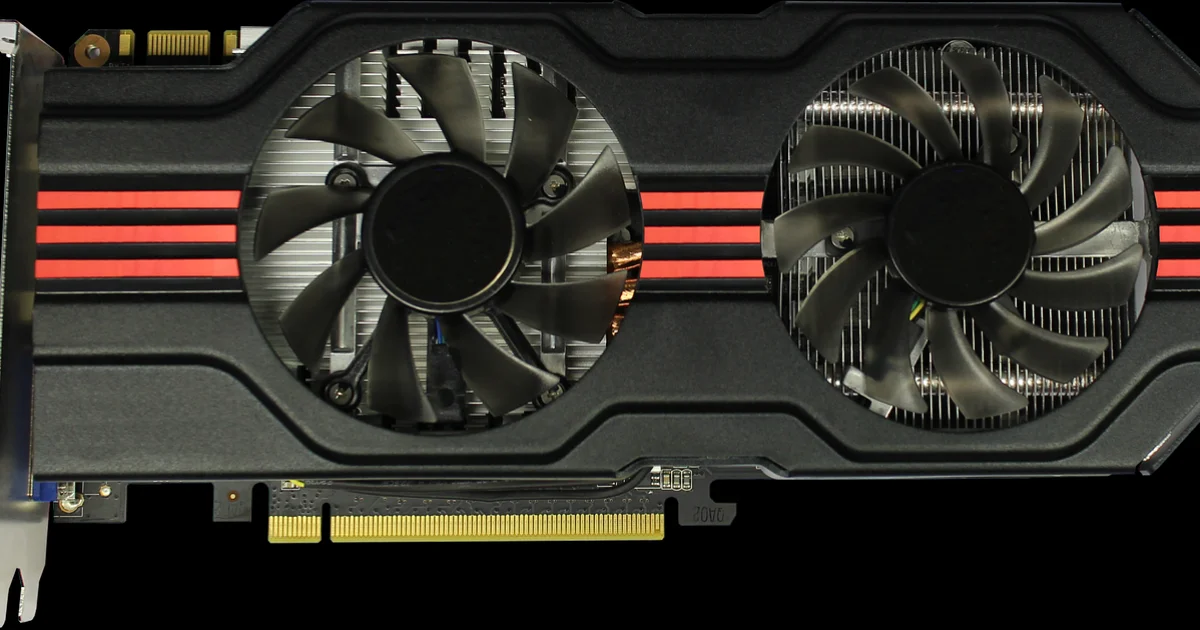
GPU Data Analysis: The Key to Unlocking Astronomical Discoveries
For researchers like Brant Robertson, a UC Santa Cruz astrophysicist who has spent the past 15 years working with Nvidia to apply GPUs to the problems of understanding space, the use of GPUs has been a game-changer. “There’s been this evolution [from] looking at a few objects, to doing CPU-based analyses on large scales of the data set, to then doing GPU-accelerated versions of those same analyses,” he told TechCrunch. By leveraging the power of GPUs, Robertson and his team have been able to analyze large datasets and identify patterns that would be impossible to detect using traditional methods.
GPU Data Analysis: A Growing Need in Astronomy
The growth of the GPU industry has made it possible for researchers to access powerful computing resources that were previously out of reach. But the demand for GPU access is outpacing the supply, with many researchers struggling to secure the resources they need to carry out their work. “People want to do these AI, ML analyses, and GPUs are really the way to do that,” Robertson said. “You have to be entrepreneurial.especially when you’re working kind of at the edge of where the technology is.”
One of the key challenges facing researchers is the sheer volume of data that is being generated by new space telescopes. The James Webb Space Telescope, for example, delivers 57 gigabytes of imagery daily, while the Vera C. Rubin Observatory is expected to gather 20 terabytes of data each night. For researchers, the task of processing and analyzing this data is a daunting one, but one that is essential for unlocking the secrets of the universe.
GPU Data Analysis: Challenges and Limitations
While GPUs have revolutionized the field of astronomy, there are still significant challenges to overcome. One of the main limitations of using GPUs for data analysis is the need for specialized expertise. “You have to be comfortable with programming languages like Python and CUDA,” Robertson said. “And you have to have a good understanding of the algorithms and techniques that are being used.”
Another challenge facing researchers is the need for high-performance computing resources. The National Science Foundation has provided funding for a GPU cluster at UC Santa Cruz, but even this is becoming outdated as more researchers want to apply compute-intensive techniques to their work. “Universities are very risk averse because they just have constrained resources, so you have to go out and show them that, ‘look, this is where we’re going as a field,’” Robertson said.
11 Ways AI’s GPU Appetite Is Changing the Game
1. Enabling Deep Learning Model Development
Deep learning models like Morpheus, developed by Robertson and his team, are being used to analyze large datasets and identify patterns that were previously impossible to detect. By leveraging the power of GPUs, researchers can train and deploy these models at scale, unlocking new insights into the universe.
2. Accelerating Data Analysis Tasks
GPUs are being used to accelerate data analysis tasks, allowing researchers to process and analyze large datasets in a fraction of the time it would take using traditional methods. This has enabled researchers to explore new areas of astronomy and make discoveries that would have been impossible using traditional methods.
3. Enhancing Real-time Data Visualization
GPUs are being used to enhance real-time data visualization, allowing researchers to visualize and interact with large datasets in real-time. This has enabled researchers to gain new insights into the universe and make discoveries that would have been impossible using traditional methods.
4. Improving Scientific Discovery
GPUs are being used to improve scientific discovery, enabling researchers to analyze large datasets and identify patterns that were previously impossible to detect. By leveraging the power of GPUs, researchers can unlock new insights into the universe and make discoveries that would have been impossible using traditional methods.
5. Scaling Machine Learning
GPUs are being used to scale machine learning, enabling researchers to train and deploy large-scale models at scale. This has enabled researchers to explore new areas of astronomy and make discoveries that would have been impossible using traditional methods.
You may also enjoy reading: 10 Tricks for Making Dart:ui_web Compile in Flutter Tests with Ease.
6. Enhancing Model Interpretability
GPUs are being used to enhance model interpretability, enabling researchers to understand how their models are making predictions. This has enabled researchers to gain new insights into the universe and make discoveries that would have been impossible using traditional methods.
7. Improving Data Quality
GPUs are being used to improve data quality, enabling researchers to remove noise and artifacts from large datasets. This has enabled researchers to gain new insights into the universe and make discoveries that would have been impossible using traditional methods.
8. Accelerating Simulation-Based Research
GPUs are being used to accelerate simulation-based research, enabling researchers to simulate complex systems and phenomena at scale. This has enabled researchers to explore new areas of astronomy and make discoveries that would have been impossible using traditional methods.
9. Enhancing Real-time Data Analysis
GPUs are being used to enhance real-time data analysis, enabling researchers to analyze large datasets in real-time. This has enabled researchers to gain new insights into the universe and make discoveries that would have been impossible using traditional methods.
10. Improving Data Storage and Management
GPUs are being used to improve data storage and management, enabling researchers to store and manage large datasets more efficiently. This has enabled researchers to gain new insights into the universe and make discoveries that would have been impossible using traditional methods.
11. Enabling Edge AI
GPUs are being used to enable edge AI, enabling researchers to deploy AI models at the edge of the network. This has enabled researchers to explore new areas of astronomy and make discoveries that would have been impossible using traditional methods.
The use of GPUs in astronomy is a rapidly evolving field, and one that holds great promise for unlocking new insights into the universe. By leveraging the power of GPUs, researchers can analyze large datasets, identify patterns, and make discoveries that would have been impossible using traditional methods. As the field continues to grow and evolve, it is likely that we will see even more innovative applications of GPUs in astronomy.






No Responses