Picture yourself at a lively family dinner. Laughter erupts from one side, a child asks for more mashed potatoes from the other, and the clatter of dishes fills the air. For millions of people, including those with some degree of hearing loss, this warm scene quickly becomes a frustrating wall of noise. Traditional hearing aids struggle in these chaotic environments with multiple speakers, the sort of challenging situation when people might most want assistance. But a new wave of technology is offering a remarkable solution. Instead of amplifying every sound around you, these devices promise to read your focus and boost the right voice automatically.
How Auditory Attention Decoding Powers Brain-Linked Hearing Aids
The foundation of brain-linked hearing aids rests on a clever technique called auditory attention decoding (AAD). When we focus on a particular person talking, we subconsciously track the gradual modulations in their speech volume, which vary from speaker to speaker. This characteristic pattern appears in the brain activity of the listener. In recent years, researchers have been able to find this signature speech pattern in a brain recording, then identify the voice being listened to. This fundamental neuroscience is now stepping into the realm of practical medicine.
The Cocktail Party Problem Meets Its Match
Hearing aids are more technologically advanced than ever, says Bharath Chandrasekaran, a neuroscientist who studies hearing and the brain at Northwestern University in Chicago, Illinois. But they still tend to struggle in noisy environments with multiple speakers. That needs a little direction. That is where auditory attention decoding helps. By isolating the neural signature of the attended voice, AAD can filter out competing noises and bring the desired conversation to the front.
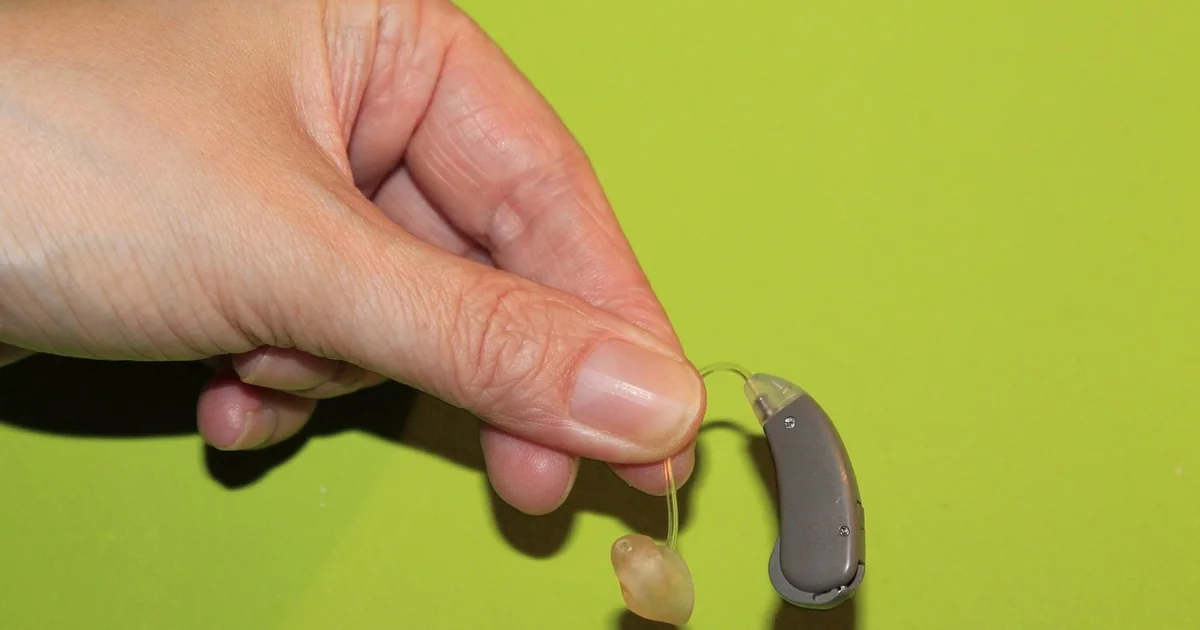
This approach is a significant departure from current technology. Most hearing aids today use directional microphones that amplify sounds coming from a specific angle, such as straight ahead. However, this approach is rigid. If you want to switch your attention to someone sitting beside you, the microphone is still locked on the original direction. Brain-linked hearing aids solve this by letting your intentions guide the sound, rather than the physical position of the device.
A Landmark Study Validates the Real-World Potential
In a study published 11 May in Nature Neuroscience, researchers presented listeners with two competing voices, then applied real-time volume adjustments in response to brain activity. The altered audio improved understanding, reduced listening effort, and was simply preferred by listeners. The study serves as an important proof of principle.
It validates the core idea that brain-controlled hearing enhancement can improve perception, says Inyong Choi, an engineer and psychoacoustician at the University of Iowa in Iowa City, who was not involved in the research. At the same time, it makes clear what still needs to be solved before this could become practical for patients.
What the Data Showed
The study recorded the brain activity of four subjects with typical hearing using implanted electrodes capable of gathering high-quality electroencephalography (EEG) data originally designed for epilepsy monitoring. All four subjects reported greater understanding of what was being said more often when the AAD was turned on.
A panel of 40 participants with hearing loss also listened to the same voices with and without adjusted volume based on the main subjects EEGs. They also benefited in comprehension and preference. This dual-stage testing is vital. It proves that the decoded attention of one person can generate an audio signal that helps another person with hearing loss. This opens the door to prescriptive settings or calibration routines in future consumer devices.
The Remarkable Speed of Brain-Controlled Audio Adjustment
For brain-linked hearing aids to work in the real world, they cannot have a noticeable lag. The audio and brain data must sync perfectly. The researchers in this study accomplished the real-time processing of brain data and audio in less than half a second. This ensures the hearing aid experience feels natural and responsive, preventing the disorienting delay that would otherwise make the technology unusable.
Switching Focus Instantly
Researchers also looked at subjects redirecting their attention between the two speakers, both on command and by choice. The system was able to switch to the preferred speaker on the fly in about five seconds. This fluid transition mirrors how we naturally shift our attention in a conversation, moving from one speaker to another without missing a beat.
You may also enjoy reading: 5 Reasons California’s Wildfire Season Is Already Overactive.
Think about a typical meeting at work. A colleague on your left presents data, and then a manager on your right asks a question. With a traditional hearing aid, you would have to manually adjust the focus or physically turn your chair. With AAD, your brain already knows who you want to hear. The system simply follows your lead. This spontaneous switching ability is a massive leap forward for user experience.
Brain-Linked Hearing Aids Drastically Lower Listening Effort
One of the most compelling benefits of this technology is the reduction in listening effort. For people with hearing loss, straining to hear is exhausting. It increases cognitive load, leading to mental fatigue. The study measured listening effort by tracking pupil size, a well-known proxy for cognitive strain. In the two subjects measured, pupil size indicated significantly lower effort when the AAD system was active.
The Emotional and Social Payoff
All subjects in the study preferred when the AAD was on at least 75 percent of the time. They simply enjoyed the experience more. This preference hints at a deeper truth: brain-linked hearing aids could reduce social isolation and improve relationships.
Imagine a grandparent keeping up with a lively dinner table with multiple grandchildren talking at once. Or imagine a professional excelling in a noisy networking event without asking for constant repetition. The technology promises not just clearer hearing, but a richer, more connected life. The mental energy saved by not straining to hear can be redirected to understanding, empathy, and enjoyment of the moment itself.
The Road Ahead for Non-Invasive Brain-Linked Hearing Aids
While the results are stunning, the researchers used implanted electrodes, which is not practical for everyday hearing aids. Current scalp EEG may not provide high-quality data for real-time AAD applications yet. However, the path forward is becoming clearer. On 7 May, the Advanced Research Projects Agency for Health (ARPA-H) announced a new funding program for hearing aid research with stated goals including neural control or feedback.
Overcoming the Usability Hurdles
Experts said they would like to see follow-up research with more participants, including those with hearing loss, and more work exploring non-invasive EEG. The dream is to have sleek, comfortable hearing aids that can read brain activity through lightweight sensors. This milestone strongly suggests that we will get there. The proof of principle is rock solid. The challenge now is largely one of engineering, not basic neuroscience.
According to the World Health Organization, over 400 million people worldwide have disabling hearing loss. In the United States, roughly 15 percent of adults live with some form of hearing loss, often related to aging. The potential for brain-linked hearing aids to improve these lives is immense. The ability to tune focus effortlessly, to pick a voice out of a crowd using nothing but your intention, could redefine what it means to hear. It could transform a frustrating cacophony back into a meaningful conversation.