The 3 AM Reality Nobody Screenshots
Six months after an AI-generated prototype reaches production, a tired engineer stares at a terminal window at 3 AM. They did not write a single line of the code that is now failing. They have no mental model of why it looks the way it does. The prompt that created it is lost somewhere in a chat history that nobody saved. This scenario is becoming disturbingly common. The industry has fallen in love with generating software at breathtaking speed, but it has barely begun to reckon with what happens when that software needs care, debugging, and extension. That gap between creation and stewardship is what we are calling the vibe coding maintenance problem.
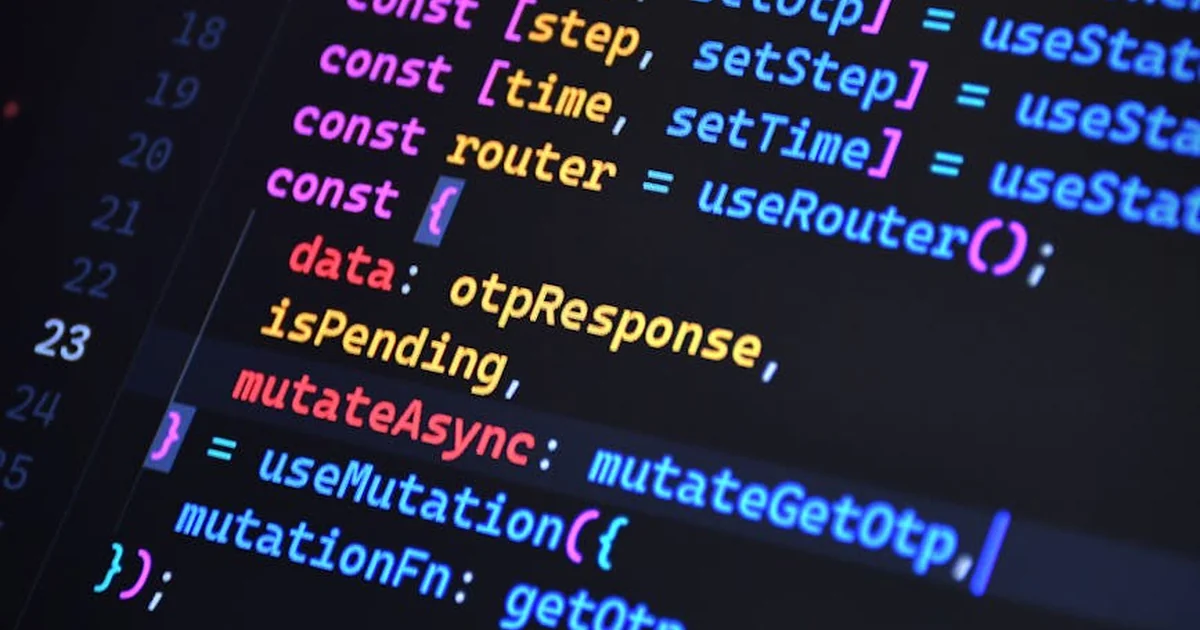
Vibe coding is real, and for certain tasks it works remarkably well. You can describe a feature in plain English and get working code in an hour that would have taken a week to build manually. The demos look incredible. The prototypes feel like magic. The difficulty is that software does not live inside a demo. It lives in production, where it degrades, gets extended by new requirements, fails in edge cases the original prompt never anticipated, and eventually lands on the desk of someone who has to understand what it does and why. The industry today is exceptionally skilled at generating code through natural language prompts and almost entirely unprepared for the vibe coding maintenance that follows.
What Vibe Coding Actually Is
Andrej Karpathy introduced the term in early 2025, and the software world adopted it quickly. The concept is straightforward. Instead of typing syntax yourself, you describe what you need in natural language. The model handles the implementation. You review the output, adjust your prompt, iterate a few times, and end up with a working artifact without touching the actual syntax directly.
If you have used Cursor with agent mode or Claude Code with a well-structured prompt, you have experienced this. You describe a feature, the agent reads your existing codebase, writes the new code, runs the tests, fixes any failures, and opens a pull request. The sensation resembles pair programming with someone who types at 400 words per minute and never needs to look up syntax.
For specific categories of work, this approach is genuinely transformative. Building a proof of concept over a weekend becomes trivial. Generating a test suite for legacy code that has zero coverage saves hours of drudgery. Writing the boilerplate for a new microservice when you already know exactly what the interface should look like becomes a task measured in minutes rather than days. The people who celebrate vibe coding are not wrong about any of that. The demos are real. The productivity gains are measurable. The excitement is justified.
Reason One: Demos Look Incredible, Production Isolated Results Shine
The first reason everyone vibes coding but nobody maintains is simple. The demo experience is pure satisfaction. You type a description. The model generates clean, working code. The tests pass. The UI renders correctly. The API responds with the right data. You feel like a wizard.
This feeling is intoxicating, and it is also misleading. A demo runs in a controlled environment with a single clear requirement. Production runs inside a system with fifteen years of accumulated decisions, most of which are not written in the codebase and are not recorded in any document. They live inside the memory of engineers who have already left the company. They exist in Slack threads from 2021 that nobody archived properly. They reside in the institutional knowledge of why a particular function is written in a peculiar way that actually protects against a bug in a third-party library that broke everyone in 2022.
A vibe-coded feature does not know any of that history. It cannot. The model generates code based on patterns it has seen, not based on the unwritten context of your specific system. So the feature works in the demo, and it looks perfect. In production, six months later, it quietly violates an assumption that the rest of the architecture depends on. The vibe coding maintenance burden then falls on whoever gets the 3 AM page.
Reason Two: Production Has Memory That Prompts Cannot Access
The second reason maintenance gets neglected is that the production environment contains invisible constraints that no prompt can capture. When a vibe-coded feature is deployed and then behaves incorrectly in an edge case nobody anticipated, the debugging process requires understanding not just what the code does but why it was structured a certain way.
Consider a real scenario from recent code reviews. A pull request arrived that was clearly generated by an agent. The comments left in the code were confident and wrong. The code itself was syntactically clean. It compiled without errors. The tests passed. It also quietly violated a transaction boundary assumption that the rest of the system depended on. The engineer who submitted it had not caught the problem because they were reviewing AI output rather than reasoning through the logic themselves. The violation was only discovered because a senior engineer who had written the original transaction layer happened to review the pull request.
What happens when that senior engineer retires? What happens when the person who understands the unspoken architecture leaves for another company? The vibe coding maintenance problem grows exponentially with each generation of AI-generated code that gets shipped without human understanding anchoring it.
Reason Three: The Junior Engineer Pipeline Is Breaking
Here is the part of this conversation that feels genuinely uncomfortable. The fastest path into software engineering has historically been straightforward. A person gets hired as a junior engineer. They receive assignments that are slightly beyond their current ability. They struggle with the work. They ask questions. They make mistakes. They fix those mistakes. Slowly, over time, they build the mental models that turn into genuine competence.
Vibe coding is compressing this loop to the point where the learning disappears entirely. A junior engineer who can generate a working feature in three hours from a prompt is not building the intuition that will let them debug that feature when it breaks in six months. They are not developing the ability to reason about edge cases. They are not building a mental map of how the system fits together.
Companies are also noticing a troubling pattern. Vibe coding allows organizations to hire fewer juniors because one mid-level engineer with strong prompt skills can ship the volume that used to require two or three people. The junior positions are shrinking at precisely the moment when junior engineers have access to tools that make them look like mid-level engineers from the outside, which makes it easier for companies to justify the reduction.
This creates a dangerous feedback loop. Fewer juniors are hired, so there are fewer people learning the deep skills of software maintenance. More code is generated by AI, so the existing codebase becomes increasingly opaque. The people who understand the system eventually leave, and nobody is being trained to replace them. The vibe coding maintenance debt accumulates silently.
Reason Four: Code Review Becomes Theater Rather Than Defense
The fourth reason maintenance suffers is that the code review process itself is degrading. When a human writes code, the reviewer can follow the reasoning. They can see where the author made trade-offs. They can understand what the author was thinking. When AI generates code, none of that context exists.
The generated code is syntactically correct. It is often well-formatted. It follows common patterns. It also frequently makes assumptions that are wrong for the specific system it was written for. These assumptions are not marked. They are not commented. They are woven into the structure of the code itself, waiting to cause problems months later.
Reviewing AI-generated code requires a different skill set than reviewing human-written code. The reviewer cannot trust the structure. They cannot assume the author understood the constraints. They must verify every implicit assumption against the real architecture of the system. This is slower and more cognitively demanding than traditional code review. Organizations that are shipping vibe-coded features at high velocity without adjusting their review process are accumulating maintenance debt with every merged pull request.
You may also enjoy reading: Woman Legally in US, She Was Deported Anyway: 7 Stories.
Reason Five: The Incentives Reward Creation, Not Stewardship
The fifth and perhaps most fundamental reason is that the professional incentives in software engineering heavily favor creation over stewardship. Shipping a new feature gets recognized. Building a prototype gets celebrated. Generating impressive output from a prompt gets shared on social media. Maintaining existing code, debugging subtle failures, and gradually improving architecture rarely gets the same attention.
Vibe coding amplifies this imbalance because it makes creation so much faster and easier. A developer can generate a feature in hours that would have taken days or weeks manually. The dopamine hit of that productivity is powerful. The satisfaction of seeing something new come into existence is immediate. The maintenance of that code in production is invisible, deferred, and unrewarded.
Organizations are not adjusting their incentive structures to account for this shift. They are still measuring output in terms of features shipped and pull requests merged. They are not measuring the long-term health of the codebase or the cognitive load placed on future maintainers. Until the metrics change, the vibe coding maintenance as a first-class concern, the behavior will continue to favor creation at the expense of sustainability.
How to Address the Maintenance Gap
The situation is not hopeless, but it does require intentional action. Here are several practical strategies for organizations that want to benefit of vibe coding without accumulating crippling maintenance debt.
Mandate Human Understanding Before Merge
No AI-generated code should be merged until at least one human can explain, in their own words, what the code does and why. This is not about reviewing syntax. It is about verifying that someone building a mental model of the code before it enters production. If nobody on the team can explain the code, the team does not understand the system it is building.
Require Prompt Documentation
When a feature is created through vibe coding, the prompt and the iterative refinement process should be documented alongside the code. This gives future maintainers a window into the intent behind the implementation. A prompt that says “handle the edge case where the user session expires mid-transaction” tells a maintainer more about the reasoning than the generated code alone ever could.
Reserve Vibe Coding for Disposable Code
Not all code needs to live for years. Proofs of concept, internal tools, prototype demonstrations, and one-off scripts are perfect for vibe coding. code that will become part of a long-lived production system warrants a different approach. A litmus test is simple. ask: will someone be debugging this code in eighteen months? If the answer is yes, the code needs human reasoning at every layer.
Preserve the Junior Engineer Pathway
Organizations should resist the temptation to eliminate junior roles entirely. The junior engineer who struggles with a feature debugging it for two days learns more than the senior engineer who generates the same feature in two hours. That struggle is irreplaceable. Companies that gut their junior pipeline today will find themselves in five years with a maintenance crisis and nobody qualified to handle it.
A Honest Assessment
Vibe coding is not going away, nor should it. The ability to generate working software from natural language descriptions is genuinely powerful. It lowers the barrier to entry. It accelerates prototyping. It reduces tedium. But the technology is being adopted without a corresponding investment in the stewardship practices that keep software healthy over time.
The industry today is extremely good at generating code and almost completely unprepared for the maintenance that follows. Every AI-generated pull request that gets merged without human comprehension adds to the debt. Every junior engineer who learns to prompt rather than to reason loses a piece of professional development that cannot be regained. Every undocumented assumption that slips through review becomes a future incident waiting to happen.
The engineers who will thrive in this new landscape are not the ones who can generate the most code fastest. They are the ones who can maintain systems they did not build, understand code they did not write, and debug failures that emerge from patterns no prompt ever described. That skill set takes years to develop. These years that vibe coding, left unchecked, actively prevents people from accumulating.
The next time you ship a vibe-coded feature, ask yourself who will be on call when it breaks at 3 AM. If you cannot name that person confidently, you are contributing to the problem. And if you are that person, you already know how expensive the vibe coding maintenance bill is about to become.