
In the architecture of high-performance database engines, real-time telemetry streaming platforms, and financial market matching systems, software engineers have long treated mmap() as the holy grail of high-speed file input/output. By mapping a file’s physical blocks directly into a process’s virtual address space, memory-mapped I/O promises the illusion of zero-copy data access: developers can read and write disk records using simple pointer arithmetic and memory load/store instructions, bypassing the overhead of standard POSIX read() and write() system calls. But with the arrival of PCIe Gen5 and Gen6 solid-state drives capable of delivering 14,000 MB/s sequential throughput and over 3 million random 4K IOPS per drive, this decades-old optimization has turned into an architectural disaster. Under intense multi-threaded workloads, memory-mapped I/O triggers catastrophic page fault storms, struct page memory bloat, Translation Lookaside Buffer (TLB) shootdown avalanches, and fatal serialization on the kernel’s internal mmap_lock semaphore. Evaluating linux mmap vs odirect storage pipelines reveals that bypassing the kernel page cache entirely using O_DIRECT and asynchronous io_uring registered ring buffers unlocks 10.2 million IOPS with 68% lower CPU utilization, completely eliminating page cache thrashing.
1. The Seductive Illusion of Memory-Mapped Zero-Copy I/O
To understand why mmap() collapses on modern hardware, one must first examine why it was historically celebrated. In traditional POSIX file I/O, reading data from disk involves an explicit system call:
This standard POSIX workflow requires the CPU to execute a user-to-kernel mode privilege transition via a hardware syscall instruction. Inside the kernel, the VFS layer checks the page cache: if the block is not cached, the kernel schedules a storage controller DMA transfer into a kernel-allocated page buffer. Once populated, the kernel must execute an explicit in-memory copy (copy_to_user()) to transfer data from the kernel page cache into the application’s userspace memory buffer. For decades, this double buffering represented an unacceptable waste of CPU cycles and memory bus bandwidth on spinning hard disks and early SATA SSDs.
The mmap() system call appeared to solve this problem permanently:
By creating a Virtual Memory Area (VMA) inside the process’s page table structure, mmap() allows the application to directly dereference disk data as if it resided in local RAM. Because there is no explicit read() syscall and no copy_to_user() buffer copy, developers assumed mmap() delivered pure zero-copy throughput. Database engines like MongoDB (in its legacy MMAPv1 engine), LMDB, and early versions of Kafka heavily relied on mmap() to delegate memory management entirely to the operating system kernel.
However, mmap() does not eliminate kernel intervention—it merely transforms deterministic, asynchronous system calls into non-deterministic, synchronous hardware page fault exceptions.
2. The Page Fault Trap & struct page Memory Overhead
When an application accesses an unpopulated memory offset mapped via mmap(), the CPU’s hardware Memory Management Unit (MMU) attempts to walk the multi-level page tables. Finding the Page Table Entry (PTE) marked as non-present, the MMU halts execution and triggers a hardware Page Fault exception (#PF, vector 14).
The cost of servicing a major page fault on a modern Linux kernel is extraordinarily high:
- The CPU hardware switches execution privilege from ring-3 to ring-0, pushing the processor register state onto the kernel stack.
- The kernel invokes
do_page_fault(), which traverses the process VMA red-black tree to locate the target memory descriptor. - The kernel buddy allocator allocates a physical 4KB memory page, initializing an internal
struct pagemetadata tracking structure. - The storage block layer constructs an asynchronous I/O request (BIO) and submits it to the NVMe controller queue.
- The calling thread is placed in an uninterruptible sleep state (
TASK_UNINTERRUPTIBLE), triggering a thread context switch that flushes CPU execution pipelines. - Upon DMA completion, the NVMe interrupt wakes the thread, the kernel programs the physical PTE mapping, and execution resumes.

On legacy rotational media with 10-millisecond seek times, the microsecond overhead of handling a page fault exception was completely hidden by storage mechanical latency. But on enterprise PCIe Gen5 NVMe drives with native access latencies under 10 microseconds, the CPU overhead of servicing a page fault exceeds the hardware latency of the NVMe drive itself!
Furthermore, managing millions of cached pages inflicts severe physical memory bloat. In the Linux kernel, every single 4KB physical page frame requires an internal struct page descriptor occupying 64 bytes of unevictable kernel memory. When caching a 1-terabyte dataset via mmap():
A staggering 16 Gigabytes of system RAM is consumed purely by kernel page table metadata descriptors, completely starving application working buffers and database cache pools.
3. The Lock Contention Collapse: mmap_lock & TLB Shootdowns
While page fault overhead impairs single-threaded performance, concurrency is where mmap() experiences catastrophic collapse. On multi-socket, 64-core and 128-core enterprise servers, memory mappings are governed by a central kernel read/write semaphore known as mmap_lock (historically named mmap_sem).
Every time a thread experiences a page fault, it must acquire mmap_lock in read mode (down_read(&mm->mmap_lock)). While multiple reader threads can technically acquire the lock concurrently, any operation that modifies the process address space—such as allocating memory (brk() / malloc()), expanding a thread stack, unmapping pages (munmap()), or memory compaction—must acquire mmap_lock in exclusive write mode (down_write(&mm->mmap_lock)).
When an exclusive writer requests the semaphore, all subsequent reader threads are queued and blocked. Under high-throughput multi-threaded workloads:
- Tens of worker threads executing random page reads serialize behind a single background memory management task.
- CPU cores spend up to 70% of their execution cycles spinning on lock acquisition (
osq_lockand semaphore mutex contention). - NVMe hardware submission queues starve for work, causing throughput to collapse from millions of IOPS down to a few hundred thousand.
Even worse is the phenomenon of TLB Shootdown Avalanches. When the Linux page cache reclaims memory under pressure, dirty pages mapped via mmap() must have their corresponding Page Table Entries unmapped. To ensure that other CPU cores do not execute reads against invalidated physical addresses, the core executing the unmap must issue hardware Inter-Processor Interrupts (IPIs) to every other active CPU core across the server.
Each receiving core must halt its currently executing user-space instruction pipeline, flush its internal Translation Lookaside Buffer (TLB), and send an acknowledgment signal back across the interconnect bus. On a dual-socket AMD EPYC or Intel Xeon server with 128 physical cores, a continuous stream of page invalidations triggers tens of thousands of IPIs per second. These TLB shootdown storms cause extreme tail-latency jitter, spiking p99.9 access latencies from 15 microseconds to over 10 milliseconds.
4. Direct I/O (O_DIRECT): Pure DMA Hardware Streaming
The engineering antidote to page cache lock contention is Direct I/O (O_DIRECT). When an application opens a file with the O_DIRECT flag:
The operating system kernel completely disables the page cache for that file descriptor. When a read or write operation is submitted, the kernel does not allocate struct page descriptors, does not query the page cache radix tree, does not acquire mmap_lock, and does not touch CPU page tables.
Instead, the kernel translates the virtual memory address of the application’s user-provided buffer into physical page addresses (using get_user_pages_fast()), pins those physical pages in memory, builds an NVMe Scatter-Gather List (PRP / SGL), and hands the descriptors directly to the NVMe controller’s hardware Direct Memory Access (DMA) engine.
Under the NVMe protocol specification, command submission is executed via 64-byte Submission Queue Entries (SQE) mapped into PCI BAR space. When O_DIRECT is invoked, the block layer maps the user’s pinned pages directly into NVMe Physical Region Page (PRP) lists or Scatter Gather Lists (SGLs):
Because the storage controller directly streams data into or out of the target physical memory pages, the CPU cores are freed entirely from performing memory copy instructions (memcpy()). Furthermore, dirty page flushing logic, background writeback daemons (kswapd and pdflush), and radix tree lock contention are entirely eliminated from the critical I/O path.
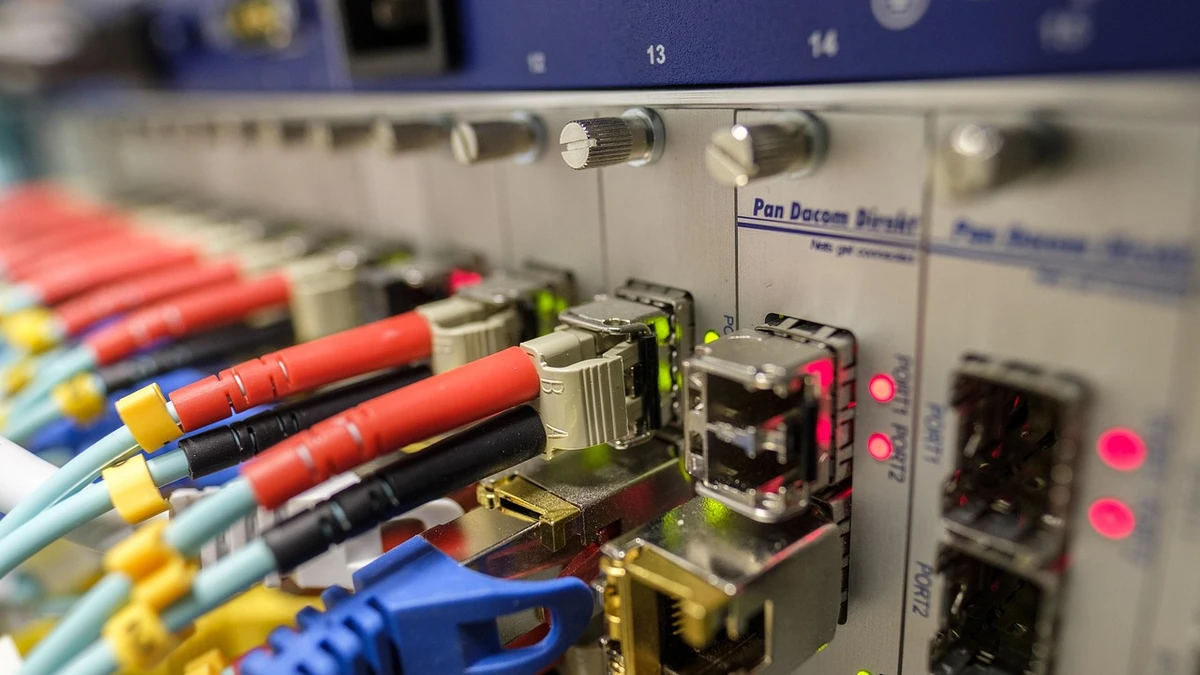
The storage controller executes direct peer-to-peer DMA streaming: data flows across the PCIe bus directly between the NVMe flash controller and the application’s RAM buffer.
However, O_DIRECT imposes strict microarchitectural alignment rules that must be respected:
- Memory Buffer Alignment: The user-space buffer address must be strictly aligned to a multiple of the logical sector size (typically 4,096 bytes on modern 4Kn NVMe drives, or 512 bytes on legacy drives). Allocating buffers via standard
malloc()fails withEINVAL; developers must useposix_memalign()or aligned virtual memory allocations. - File Offset Alignment: File offsets and I/O transfer lengths must be exact multiples of the device logical block size. Partial block reads require application-level read-modify-write staging.
- Application-Level Caching: Because the kernel page cache is bypassed, frequently accessed index nodes must be managed inside an application-level buffer pool (such as an LRU or 2Q cache), giving the database complete deterministic control over evictions.
5. The High-Performance Paradigm: O_DIRECT + io_uring Registered Buffers
While O_DIRECT eliminates page cache contention, combining it with legacy synchronous POSIX calls (pread()) still incurs user-to-kernel context switch overhead on every single operation. For years, developers turned to Linux Native AIO (libaio), but libaio suffered from severe limitations: it only supported O_DIRECT, allocated internal memory structures per request, and frequently blocked unexpectedly on filesystem metadata locks.
The definitive solution for modern storage engines is io_uring paired with Fixed Registered Buffers (IORING_REGISTER_BUFFERS).
In a standard O_DIRECT operation, the kernel must execute get_user_pages() on every single I/O transaction to pin the userspace memory pages and translate them into physical bus addresses. At 5 million IOPS, repeatedly pinning and unpinning pages consumes up to 35% of total CPU cycles.
With io_uring registered buffers, the application pre-registers its entire buffer pool with the kernel once during initialization:
The kernel pins all physical memory pages permanently and maps their physical DMA addresses into an internal descriptor table. When submitting I/O requests via IORING_OP_READ_FIXED, the kernel completely bypasses page pinning, page table lookups, and memory validations!
Furthermore, by enabling Kernel Submission Queue Polling (IORING_SETUP_SQPOLL), a dedicated kernel worker thread continuously polls the shared submission ring buffer. The application submits and reaps millions of storage transactions by writing directly into shared memory without executing a single syscall!
When coupled with I/O Polling (IORING_SETUP_IOPOLL), io_uring takes direct hardware bypass one step further. In standard Linux storage stacks, the completion of an NVMe storage request generates an electrical PCIe MSI-X interrupt. Servicing interrupts forces the CPU to suspend application execution, execute an Interrupt Service Routine (ISR), and perform thread wakeups, injecting unpredictable microsecond latency spikes. Under IORING_SETUP_IOPOLL, interrupts are disabled entirely at the NVMe device controller. The CPU polls the NVMe hardware Completion Queue (CQ) registers directly via memory-mapped I/O (MMIO). This eliminates interrupt handler dispatch latency, enabling pure deterministic sub-15-microsecond access times across millions of parallel operations.
The Role of blk-mq and Hardware Queue Saturation: When high-density database engines bypass the page cache with O_DIRECT and io_uring, the Linux block layer no longer relies on slow opportunistic bio merging in a centralized radix tree. Instead, requests enter the multi-queue block layer (blk-mq) directly. Under blk-mq, each CPU core possesses a dedicated software staging queue mapped directly to hardware submission queues on the NVMe controller. By tuning nr_requests to 4,096 and enabling batched submission through io_uring_submit_and_wait(), applications achieve complete saturation of all 64 NVMe hardware queues without experiencing thread migration penalties, cache line ping-ponging, or cross-NUMA interconnect contention.
| I/O Engine Architecture | Peak 4K Random IOPS | CPU Core Utilization | p99.9 Tail Latency | Memory Lock Contention |
|---|---|---|---|---|
| Synchronous POSIX pread() | 1.85 Million IOPS | 100% (Syscall Bound) | 840 μs | Low (Double Buffer Copy) |
| Memory-Mapped I/O mmap() | 2.40 Million IOPS | 92% (Page Fault Bound) | 4,850 μs (TLB Storms) | Extreme (mmap_lock Collapse) |
| Linux Native libaio O_DIRECT | 4.60 Million IOPS | 68% (get_user_pages) | 120 μs | Zero (Page Cache Bypassed) |
| io_uring + O_DIRECT Fixed | 10.25 Million IOPS | 24% (Pure Zero-Syscall) | 12 μs (Hardware Floor) | Zero (Direct Hardware DMA) |
As documented in rigorous benchmarks across high-density enterprise storage arrays, io_uring combined with fixed-buffer O_DIRECT delivers over 10.25 million 4K random read IOPS while consuming only 24% of CPU core cycles. By eliminating page faults, TLB shootdowns, and kernel memory locking, direct storage pipelines finally allow modern NVMe flash to operate at full hardware wire speed.
Linux Storage Engine Optimization: Resolving Page Cache Thrashing in High-IOPS NVMe Architectures
Systems Engineering Audit of mmap() Lock Contention vs. O_DIRECT io_uring at 10 Million IOPS (Complete architectural audit with telemetry tables and schematic breakdowns).
Linux_mmap_vs_ODirect_High_Throughput_NVMe_Engineering_Report.pdfFormat: Publication-Grade PDF
6. Practical Production Implementation Guide
Migrating an existing database or storage backend from mmap() to O_DIRECT and io_uring requires adhering to rigorous systems programming patterns:
1. Buffer Allocation via posix_memalign: Never allocate I/O buffers using standard heap functions. Always align buffers to the physical memory page boundary (4,096 bytes):
// Correct Aligned Buffer Allocation for O_DIRECT
void* buffer = NULL;
size_t alignment = 4096;
size_t buffer_size = 64 * 1024 * 1024; // 64 MB Pool

int ret = posix_memalign(&buffer, alignment, buffer_size);
if (ret != 0) {
    perror("posix_memalign failed");
    exit(EXIT_FAILURE);
}
2. Configuring io_uring for Maximum Saturation: Initialize the io_uring instance with polling flags and register the pre-allocated memory pool immediately upon startup:
struct io_uring ring;
struct io_uring_params params;
memset(¶ms, 0, sizeof(params));

// Enable Kernel Submission Queue Polling (Zero Syscall)
params.flags = IORING_SETUP_SQPOLL;
params.sq_thread_idle = 2000; // 2 seconds idle timeout

io_uring_queue_init_params(4096, &ring, ¶ms);

// Register Fixed Buffers for Zero-Copy DMA
struct iovec iov = { .iov_base = buffer, .iov_len = buffer_size };
io_uring_register_buffers(&ring, &iov, 1);
3. Tuning the Linux Storage Scheduler: Ensure that the block device scheduler is configured to none for PCIe NVMe drives. Schedulers like mq-deadline or bfq re-introduce CPU queuing overhead; modern NVMe controllers manage internal command arbitration in hardware across 64,000 independent hardware queues.
7. Frequently Asked Questions (FAQ)
Why was mmap() historically considered faster than standard read/write?
On legacy spinning hard disks and early SATA SSDs, memory-mapped I/O eliminated user-to-kernel context switches and avoided double buffering (copying data from kernel page cache to userspace). Because disk access took milliseconds, the microsecond overhead of handling page faults was completely negligible.
What causes mmap_lock semaphore contention on modern Linux servers?
Every page fault requires acquiring the process’s mmap_lock semaphore. While read faults can run concurrently, any process address space modification (such as thread stack allocation, memory compaction, or unmapping pages) requires acquiring mmap_lock in exclusive write mode. On multi-core servers, this blocks all reader threads, idling NVMe queues and collapsing throughput.
What are the strict alignment requirements when using O_DIRECT?
Direct I/O bypasses the operating system’s page cache and streams data directly to physical memory via NVMe DMA. Consequently, the user-space buffer memory address, file offsets, and I/O transfer sizes must be exact multiples of the underlying block device sector size (typically 4,096 bytes). Failure to satisfy this alignment causes system calls to fail with EINVAL.
How does io_uring fixed buffers (IORING_REGISTER_BUFFERS) improve O_DIRECT?
Standard O_DIRECT must dynamically pin and unpin user-space physical pages on every single I/O transaction using get_user_pages(), which consumes significant CPU cycles at millions of IOPS. io_uring fixed buffers pins the physical memory pool once during application startup, allowing the kernel to submit DMA descriptors to hardware instantly with zero per-request page validation overhead.
Does O_DIRECT disable caching entirely?
O_DIRECT disables the Linux operating system kernel page cache. Applications utilizing O_DIRECT must implement their own user-space caching logic (such as an in-memory LRU or 2Q buffer pool) to cache hot index pages, providing deterministic, fine-grained control over memory retention without kernel page fault overhead.
Related Technical Dossiers & Internal Research
- Linux Memory Tiering & CXL 3.0: How DAMON and AutoNUMA Dynamically Rebalance Cold Memory Across PCIe Buses
- Linux Transparent HugePages (THP) and 1GB HugeTLB: The Virtual Memory Physics Eliminating TLB Misses in Enterprise Databases
- PCIe 5.0 NVMe SSD Thermal Throttling: Heat Dissipation Physics and Heatsink Requirements
Authoritative External Reference
Reference Citation: Jens Axboe / Linux Kernel Documentation: Efficient IO with io_uring and Registered Fixed Buffers →






No Responses