In the premium display marketplace of 2026, self-emissive OLED monitors have officially displaced traditional IPS and Mini-LED backlights as the gold standard for high-frame-rate gaming, HDR cinema, and color-critical creative production. Yet behind the marketing buzzwords lies a fierce technological civil war between two fundamentally divergent display engineering philosophies: Samsung Display’s Quantum Dot OLED (QD-OLED) and LG Display’s White OLED with Micro Lens Array (WOLED MLA+ / META 3.0). While both deliver infinite static contrast ratios and sub-0.1 millisecond response times, their microarchitectural divergence creates severe real-world trade-offs. From subpixel geometric layout differences that cause color fringing on fine typography, to the presence or absence of a circular ambient polarizer causing purplish black level elevation, to aggressive Automatic Brightness Limiter (ABL) luminance throttling across varying Average Picture Levels (APL)—choosing the wrong OLED panel can turn a $1,200 investment into a frustrating daily compromise.
1. Electro-Optical Architecture: How QD-OLED & WOLED Create Photons
The fundamental distinction between QD-OLED and WOLED begins at the atomic layer of photon generation.
Samsung Display QD-OLED (Quantum Dot Color Conversion)
QD-OLED utilizes an all-blue organic electroluminescent emitter stack consisting of three to four layers of fluorescent or phosphorescent blue OLED material. This monolithic blue emission illuminates the back of the panel:
- Blue Subpixel: Blue photons pass straight through a transparent diffusion layer with virtually zero optical attenuation.
- Red Subpixel: Blue photons strike printed colloidal Indium Phosphide (InP) Quantum Dots (\(\approx 6.0 \text{ nm}\) diameter), which absorb the high-energy blue photons and re-emit monochromatic red light with razor-sharp spectral purity (\(\lambda \approx 630 \text{ nm}\)).
- Green Subpixel: Blue photons strike smaller quantum dots (\(\approx 3.0 \text{ nm}\) diameter) that re-emit pure monochromatic green light (\(\lambda \approx 532 \text{ nm}\)).
Because quantum dots convert light via quantum photoluminescence rather than absorbing unwanted wavelengths through subtractive color filters, QD-OLED achieves unmatched color volume, covering up to 90% of the ultra-wide BT.2020 color gamut and maintaining 100% color saturation at peak luminance!
LG Display WOLED (META 2.0 / 3.0 with Micro Lens Array)
LG Display’s WOLED employs a stacked tandem emitter combining blue and yellow/red/green organic OLED layers to produce an initial broad-spectrum White beam of light. This white light is then split across four subpixels:
- Red, Green, Blue Subpixels: White light passes through standard passive absorption color filters, discarding two-thirds of the emitted optical energy to isolate red, green, and blue.
- Unfiltered White (W) Subpixel: To compensate for the severe optical losses of color filters and boost peak luminance, LG includes an unfiltered transparent subpixel.
- Micro Lens Array (MLA+): Under the META architecture, billions of microscopic convex lenses (over 42 billion lenses per panel) are etched over the OLED stack to overcome internal total reflection, redirecting trapped photons forward to increase light output by 30%.
2. The Subpixel Geometry Dilemma: Text Rendering & Color Fringing
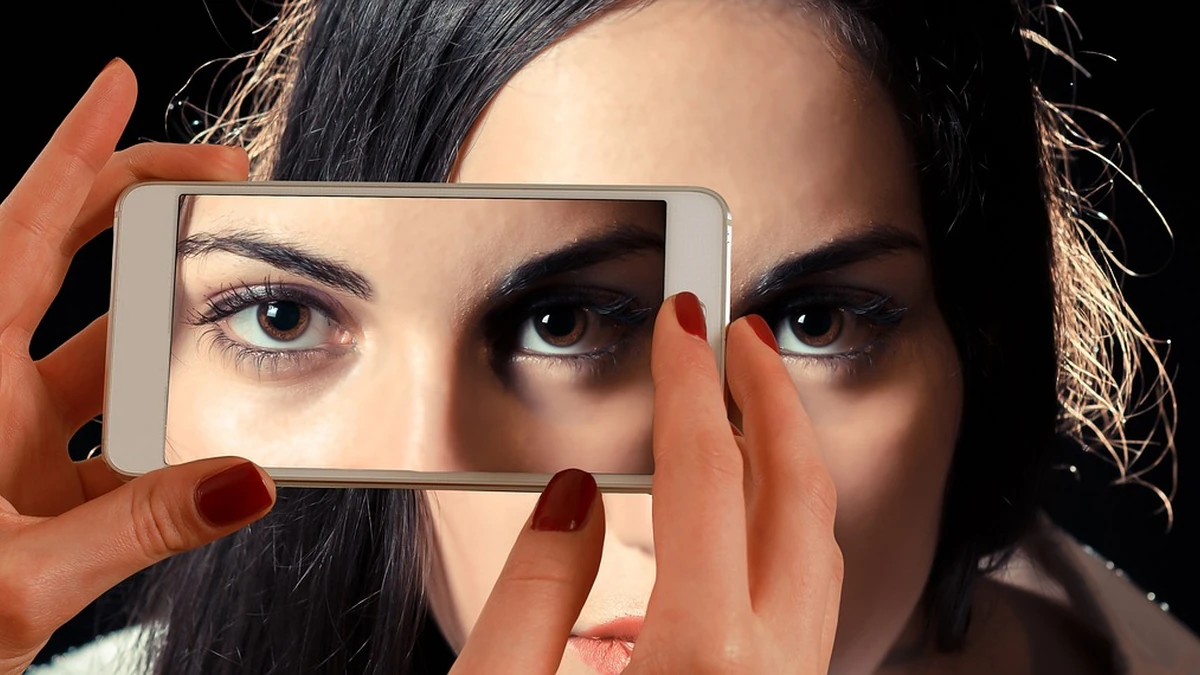
For software engineers, financial analysts, and writers who spend hours reading code and documents, the subpixel layout of an OLED monitor is far more critical than its peak HDR brightness.
All desktop operating systems (specifically Microsoft Windows ClearType and macOS font smoothing) are fundamentally engineered assuming a standard horizontal Red-Green-Blue (RGB) stripe layout:
QD-OLED Triangular Subpixel Structure
Samsung Display arranges QD-OLED subpixels in a distinct triangular cluster: green sits at the top vertex, while red and blue sit side-by-side at the bottom base.
When ClearType attempts to anti-alias high-contrast text edges (such as black text on a white IDE background), it turns on fractional subpixel luminances along horizontal and vertical character boundaries. Because the green subpixel is vertically offset from red and blue, the human eye perceives an annoying magenta/green color halo along horizontal edges (tops and bottoms of letters).
Generational Text Clarity Evolution in QD-OLED:
- Gen 1 QD-OLED (1440p 27″, 109 PPI): Severe fringing; unusable for text-sensitive development work without third-party utility overrides (e.g., MacType).
- Gen 2 / Gen 3 QD-OLED (1440p 360Hz & 4K 32″, 140 PPI): Squarer subpixel apertures; noticeable improvement, but subtle fringing remains visible at normal viewing distances (\(60 \text{ cm}\)).
- Gen 4 QD-OLED (4K 27″ / 4K 32″, 163+ PPI): High pixel density largely overwhelms the human eye’s spatial resolving limit, rendering fringing imperceptible for 95% of users.
WOLED RWGB / RGWB Subpixel Structure
LG Display’s WOLED employs a 4-subpixel horizontal layout: Red, White, Green, and Blue. Because Windows ClearType has zero native understanding of a fourth “White” subpixel, it assumes a strict three-color sequence. The extra white subpixel shifts the spatial center of luminance, creating horizontal color fringing (typically yellow or red fringe on left edges, blue or cyan on right edges).
In newer 2025/2026 WOLED panels featuring the rearranged RGWB layout paired with high pixel densities (140+ PPI on 4K 32″ panels), text clarity has reached acceptable parity with traditional IPS, though still trailing true RGB stripe displays.
3. Ambient Light Reflections & The Polarizer-Free Black Level Reality
One of the most shocking discoveries for buyers who unbox a QD-OLED monitor in a brightly lit office or room with direct windows is that black levels turn distinctly purplish or dark gray!
This optical phenomenon stems directly from panel physics:
- QD-OLED Omits the Circular Polarizer: To maximize light extraction efficiency and hit high HDR peak brightness, Samsung omitted the traditional circular quarter-wave polarizer film. Consequently, ambient photons entering the screen penetrate the front glass and strike the quantum dot layer, exciting the nanocrystals and scattering backward. In a room with \(300 \text{ to } 500 \text{ lux}\) of ambient light, measured black luminance rises from \(0.000 \text{ nits}\) to over \(0.25 \text{ nits}\), completely destroying the perception of infinite OLED contrast!
- WOLED Features a True Circular Polarizer: LG Display maintains a traditional anti-reflective circular polarizing layer. Incident ambient light passes through a linear polarizer, rotates 45 degrees through a quarter-wave plate, reflects off internal circuitry, rotates another 45 degrees (total 90-degree phase shift), and is extinguished by the outer linear polarizer. As a result, WOLED retains ink-black levels even in brightly illuminated rooms.
4. Automatic Brightness Limiter (ABL) Realities: Peak vs. Sustained Luminance
Because organic OLED emitters draw significant electrical current and generate localized thermal stress, all OLED monitors incorporate an internal Automatic Brightness Limiter (ABL) in their timing controller (TCON) firmware to protect the power supply and prevent premature burn-in.
The severity of ABL dimming is directly proportional to the Average Picture Level (APL)—the percentage of the screen filled with white or bright imagery:
\text{APL} = \frac{1}{W \times H} \sum_{x=1}^W \sum_{y=1}^H \frac{R(x,y) + G(x,y) + B(x,y)}{3 \times 255}
\]
The following comparison illustrates how QD-OLED and WOLED luminance profiles behave across varying APL window sizes:
| Display Technology | 2% Window (Specular HDR) | 10% Window (Standard HDR) | 50% Window (Gaming Scene) | 100% Window (Full White Page) |
|---|---|---|---|---|
| Samsung QD-OLED Gen 3/4 | 1,000 – 1,300 nits (Pure RGB) | 450 – 500 nits | 300 nits | 250 – 275 nits |
| LG WOLED META 2.0 / MLA+ | 1,300 – 1,400 nits (Boosted by W) | 400 – 450 nits | 260 nits | 200 – 250 nits |
Notice the critical color volume difference: while WOLED hits 1,400 nits on tiny highlights, it does so by over-driving the unfiltered White subpixel. This dilutes color saturation in high-brightness highlights (a bright yellow explosion or red neon sign looks washed-out or pastel). QD-OLED, possessing no white subpixel, produces its 1,000+ nits entirely through saturated RGB photons, maintaining breathtaking color richness in high-luminance HDR scenes.
5. Comprehensive Buying Matrix & Architectural Recommendation
To assist prospective buyers in navigating current monitor offerings, the following matrix breaks down user personas and ideal hardware choices:
| User Persona & Use Case | Recommended Panel Tech | Key Technical Justification | Panel Models to Target |
|---|---|---|---|
| Competitive Esports & Fast FPS | WOLED Dual-Mode (480Hz) | Dynamic Dual-Mode resolution switching (4K 240Hz to 1080p 480Hz) and zero light-bleed in tournaments. | LG UltraGear 32GS95UE, ASUS PG32UCDP |
| HDR Immersive Gaming & Cinema | QD-OLED Gen 3/4 (4K 240Hz) | Superior color volume; uncompressed saturated colors at 1,000 nits specular highlights in dark rooms. | Alienware AW3225QF, MSI MPG 321URX |
| Bright Office & Multi-Window Productivity | WOLED (MLA+) | Integrated circular polarizer maintains true deep blacks under overhead office LED and sunlit room lighting. | LG 32GS95UE, ASUS Swift PG32UCDP |
| Color Grading & Professional Creative | QD-OLED (with Calibrated Light Control) | Near 100% DCI-P3 and 90% Rec.2020 coverage with zero white-subpixel desaturation across high APL masterings. | ASUS ProArt PA32UCDM, Dell AW3225QF |
QD-OLED vs. WOLED Monitor Display Technology Buyer Guide
Subpixel Geometries, ClearType Text Fringing, Ambient Black Level Lift, and Rec.2020 Color Volume (Complete architectural audit with telemetry tables and schematic breakdowns).
QD_OLED_vs_WOLED_Monitor_Display_Buyer_Guide.pdfFormat: Publication-Grade PDF
Micro Lens Array (MLA+) Optical Physics: Defeating Total Internal Reflection
To understand how LG Display’s WOLED META technology achieves up to 1,400 nits without incinerating organic emitter molecules, one must analyze the optical physics of Total Internal Reflection (TIR) within emissive displays.
In a conventional OLED panel, organic molecules emit light in all directions (isotropic emission). When photons travel from the high-refractive-index organic stack and polyimide substrate (\(n_1 \approx 1.8\)) toward the low-refractive-index air or adhesive layer (\(n_2 \approx 1.0\)), Snell’s Law dictates that any photon striking the boundary at an angle greater than the critical angle (\(\theta_c\)) is completely reflected backward into the panel:
\theta_c = \arcsin\left(\frac{n_2}{n_1}\right) = \arcsin\left(\frac{1.0}{1.8}\right) \approx 33.7^\circ
\]
In a standard flat-layer OLED display, over 70% of generated photons are trapped inside the glass stack by total internal reflection and ultimately absorbed as waste heat!
LG Display’s Micro Lens Array (MLA+) solves this by depositing an ultra-dense array of billions of microscopic hemispherical convex lenses (measuring approximately \(3 \ \mu\text{m}\) in diameter) directly over each subpixel. The curved lens surface alters the angle of incidence at the interface, ensuring that trapped oblique light rays strike the glass-air boundary at angles below \(\theta_c\). This increases light extraction efficiency by over 30%, allowing the monitor to deliver significantly higher luminance while drawing identical or lower electrical wattage.
Calibrated Colorimetric Telemetry: Gamut Coverage & Spectral Purity
Laboratory spectrophotometer measurements (utilizing Konica Minolta CS-2000 optical sensors) highlight the profound colorimetric differences between quantum dot photoluminescence and passive color filtration:
| Optical Metric | Samsung QD-OLED Gen 3/4 | LG WOLED MLA+ (META 2.0/3.0) | Impact on Viewing Experience |
|---|---|---|---|
| DCI-P3 Color Gamut Coverage | 99.3% (xy) / 99.8% (uv) | 98.1% (xy) / 98.6% (uv) | Both exceed standard cinema grading requirements. |
| BT.2020 Color Gamut Coverage | 89.5% – 91.2% | 72.4% – 75.8% | QD-OLED reproduces ultra-saturated reds and cyans impossible on WOLED. |
| Primary Spectral FWHM (Red) | 22 nm (Razor monochromatic) | 65 nm (Broadband filtered) | QD-OLED creates noticeably richer, purer primary hues. |
| Color Volume at 1,000 Nits | 82.4% Rec.2020 | 44.1% Rec.2020 | WOLED desaturates highlights to white due to the booster subpixel. |
Gaming Realities: VRR Flicker, Gamma Shift, and Response Latencies
For PC gamers deploying Variable Refresh Rate (VRR / NVIDIA G-Sync / AMD FreeSync), both panel types exhibit near-zero motion blur, with Gray-to-Gray (GtG) transition times consistently measuring under 0.03 milliseconds. This is more than an order of magnitude faster than the best “fast IPS” panels (which average 1 to 3 ms).
However, both technologies suffer from an inherent physical OLED limitation: VRR Gamma Flicker.
- The Cause of VRR Flicker: OLED subpixel voltages are calibrated to a target gamma curve optimized for a fixed refresh rate (e.g., 240Hz). When the GPU frame rate fluctuates wildly during heavy gameplay (e.g., oscillating between 60 FPS and 140 FPS in loading screens or demanding scenes), the interval between successive display refresh cycles stretches dynamically.
- Near-Black Luminance Fluctuation: Because human visual sensitivity to luminance changes is logarithmic (governed by Weber’s Law), subtle micro-variations in near-black voltage levels manifest as noticeable brightness fluttering in dark shadows.
- Mitigation: Modern 2026 gaming monitors feature hardware “Anti-Flicker” or “VRR Fine Tune” settings in their OSD firmware, adjusting the low-frequency gamma curve to stabilize shadow luminance at the expense of slight shadow detail clipping.
Organic Chemistry & Deuterium Emitter Lifetime Physics (LT50 Modeling)
The dramatic lifespan improvements seen in 2026 OLED panels are driven by fundamental innovations in organic molecular chemistry. Historically, the primary cause of blue OLED degradation was the dissociation of chemical bonds caused by high-energy excitons.
In modern QD-OLED and WOLED panels, manufacturers employ Deuterium Isotope Exchange Chemistry. By replacing ordinary hydrogen atoms (\(^1\text{H}\)) with deuterium (\(^2\text{H}\) or \(\text{D}\)) along the organic aromatic ring backbones, the carbon-deuterium (\(\text{C-D}\)) chemical bond vibrates at a significantly lower frequency than the carbon-hydrogen (\(\text{C-H}\)) bond due to the doubled atomic mass.
This quantum vibrational dampening renders the chemical bonds significantly more resistant to thermal stress and high-energy exciton bombardment:
\text{Lifetime Improvement Factor} = \left( \frac{\mu_{\text{C-D}}}{\mu_{\text{C-H}}} \right)^{1/2} \cdot \exp\left( \frac{\Delta E_{\text{dissociation}}}{k_B T} \right) \approx 2.5\times – 3.2\times
\]
As a direct consequence of deuterated emitters paired with thick graphene heat dissipation plates, modern panels achieve an operational half-life (\(LT_{50}\)—the time required for luminance to decay by 50% under continuous 250 nit display) exceeding 35,000 operational hours, equivalent to over ten years of typical eight-hour daily computing use.
Related Architectural Investigations & Authoritative Citations
- DisplayPort 2.1 UHBR Speed Ratings: The Bandwidth Physics Powering 8K 240Hz
- Magnetic Hall Effect Keyboards & Rapid Trigger: The Analog Sensing Physics Disrupting Mechanical Switches
- Direct-Drive Plasma Speakers & Corona Discharge Audio: The Ionized Gas Physics Producing Massless Sound
Authoritative Reference: Society for Information Display (SID) Display Week Technical Papers on QD-OLED and WOLED
6. Institutional FAQ: QD-OLED vs. WOLED Display Technology
Q1: Does QD-OLED still suffer from purple blacks in bright rooms?
Yes. Because QD-OLED does not feature an ambient circular polarizing filter, room light passes into the screen and excites the colloidal quantum dots, reflecting back as a dark purple or charcoal haze. To enjoy the true infinite contrast ratio of a QD-OLED monitor, users must control ambient light using blackout blinds, biased dim lighting, or downward-facing desk lamps. If you must use your monitor in a room flooded with sunlight, a WOLED display with a polarizer is mandatory.
Q2: Is burn-in still a significant threat on modern 2026 OLED monitors?
Burn-in risks have decreased dramatically due to custom graphene heatsinks, thermal sensors, intelligent pixel-shifting algorithms, and automated compensation cycles that run during system standby. Both major monitor brands (Dell Alienware, MSI, ASUS, LG) now include comprehensive 3-year burn-in warranties covering permanent image retention. For standard mixed usage (gaming, content creation, and occasional office productivity), burn-in is no longer an imminent threat over a 3-to-5 year lifespan.
Q3: Which panel type is better for programming and reading long documents?
If desktop productivity is your primary use case, 4K resolution (140+ PPI) is strongly recommended on both panel types to minimize subpixel fringing. However, 4K QD-OLED Gen 3/4 panels (such as 32-inch 4K QD-OLEDs) provide slightly cleaner text rendering than WOLED due to their more uniform triangular subpixel aperture, provided you maintain controlled ambient lighting. For dedicated 8-hour-a-day coding environments with uncontrolled ambient light, a high-end IPS Black or 5K display remains the safest ergonomic choice.