Why I Decided to Try It
Action cameras serve video first. Everyone knows that. But I kept wondering what would happen if I treated my 360 camera like a regular point-and-shoot. The idea felt strange at first. Why would anyone use a camera built for immersive video clips to capture still images? The question nagged at me long enough that I had to find out for myself.
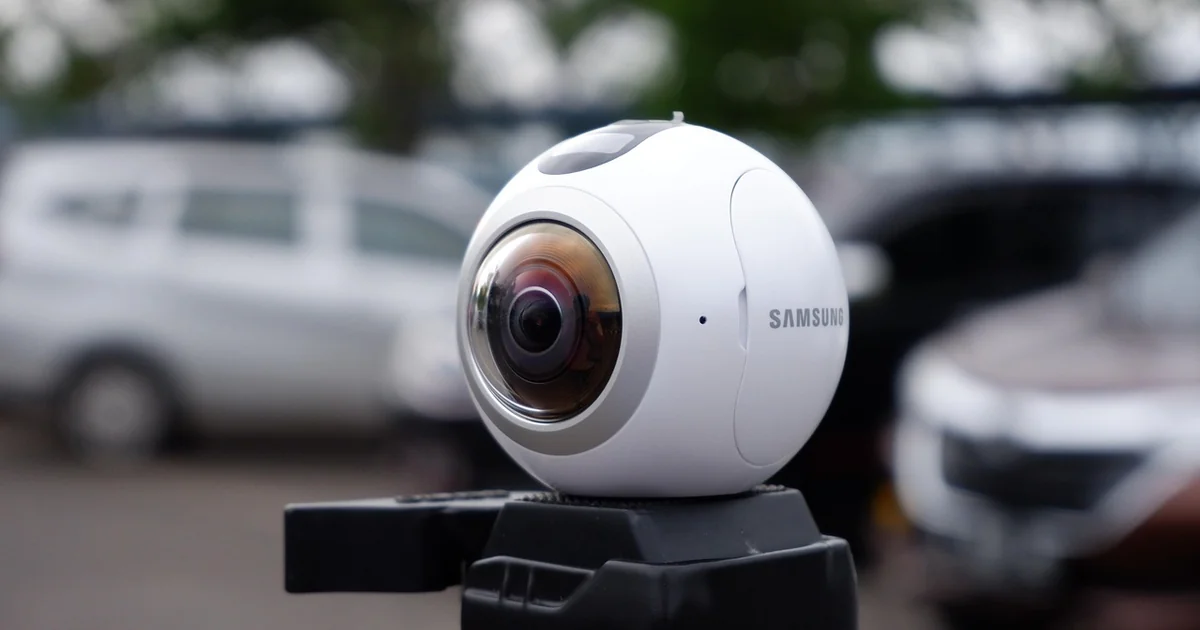
Manufacturers have noticed this curiosity. Insta360, DJI, and others now release accessories that shift these devices toward photography. A dedicated grip here. An optical viewfinder there. Third-party cages that add real buttons and better balance. These products suggest that 360 camera photography might be more viable than most people assume.
I grabbed my favorite 360 camera and spent several weeks shooting nothing but stills. The results surprised me. Some aspects worked beautifully. Others fell short. Here are five specific takeaways from that experiment.
Takeaway One: A Good Grip Transforms Handling Completely
Action cameras have tiny bodies. That small size works for mounting on helmets and handlebars. For handheld photography, it makes the camera awkward. You pinch it between your fingers. You struggle to press tiny buttons without shaking the frame. The whole experience feels wrong.
The Insta360 X5 Photography Grip fixes this problem directly. It costs $49.99 in the United States, £47.99 in the United Kingdom, and AU$87.99 in Australia. It attaches through the tripod mount underneath the camera and connects via the USB-C port. You open the USB-C door to a 90-degree angle, then pull the cover completely off. Keep that cover somewhere safe. You will need it again.
Once attached, the grip gives you something substantial to hold. A dedicated shutter release button sits right where your thumb expects it. You can frame shots at awkward angles without contorting your hand. Holding the camera vertically with the grip positioned at the top felt especially natural. I used that orientation more than any other.
The difference in photo quality became obvious immediately. With the grip, my shots were sharper. Fewer motion blurs. Better composition. The camera became an extension of my hand rather than a slippery gadget I was fighting to control.
What You Lose for This Improvement
There is a trade-off. The Insta360 X5 is waterproof to 5 meters or about 16 feet. That is a real advantage for creative photography. You can hold the lens half-submerged in water to capture above and below the surface simultaneously. Those split-level shots look spectacular.
Attaching the grip removes the USB-C door. That exposes the port. You cannot fully submerge the camera with the grip attached. You have to choose between the handling benefit and the waterproof capability. For most of my street and travel photography, that trade was acceptable. I was not planning to drop the camera in a river. But it is a limitation worth knowing about before you buy the accessory.
Takeaway Two: The Specs Are Better Than You Expect
Most people assume action cameras take mediocre photos. That assumption is outdated. The Insta360 X5 captures 72-megapixel stills that cover the full 360-degree sphere. If you prefer a single lens perspective, it shoots 36-megapixel stills from one lens only. Those numbers compete with many dedicated stills cameras.
Resolution alone does not determine image quality. Color science matters just as much. The Insta360 Ace Pro 2 features Leica-inspired color profiles that produce warm, attractive images straight out of camera. The X5 takes a more limited approach to color settings. Its built-in profiles are fewer and less distinctive.
However, the X5 can shoot in RAW format. That one feature makes a huge difference. RAW files contain all the sensor data without any processing applied. You can adjust white balance, exposure, and color grading after the fact without degrading the image. For anyone comfortable with editing software, this capability compensates for the limited in-camera color options.
The RAW Workflow Changes Everything
Shooting RAW with a 360 camera introduces some quirks. The files are large. Each 72-megapixel RAW frame takes up significant storage space. Your memory card will fill faster than you expect. Processing those files in editing software also takes longer. Your computer needs decent specs to handle the workload.
But the flexibility is worth the hassle. You can rescue underexposed shadows. You can pull back blown-out highlights. You can match the color palette to whatever mood you want the image to convey. The camera captures the data. You decide how to interpret it. That is exactly how serious stills photography works.
Takeaway Three: Field of View Creates Both Problems and Opportunities
Action cameras have extremely wide-angle lenses. The Insta360 X5 takes this to an extreme because it covers the entire sphere. If you want telephoto shots or compressed perspectives, stop reading now. Action cameras cannot do that. Period.
For everything else, the wide field of view offers creative possibilities that traditional cameras struggle to match. Subjects close to the lens appear dramatic and larger than life. You can include foreground elements that lead the eye through the frame. Leading lines become more pronounced. The perspective feels immersive in a way that standard lenses rarely achieve.
The X5 offers three viewing modes for single-lens stills. Ultra gives you the raw wide angle with heavy fisheye distortion. Dewarp straightens curved lines but keeps the frame relatively wide. Linear corrects all distortion to produce a natural-looking image that resembles a standard camera lens. I used Linear for almost everything during my test. It produces the most natural-looking results for everyday photography.
When the Wide Angle Works Best
Street scenes with strong geometric patterns benefit from this perspective. Tall buildings converge dramatically. Running lines of streetlights stretch toward the horizon. Crowded markets feel more expansive. The wide field of view captures context that a standard lens would miss.
Indoor spaces also look better. Traditional cameras struggle in tight rooms because you cannot step far enough back to fit everything in frame. With a 360 camera, that limitation disappears. You can stand in the center of a small room and capture every wall, the ceiling, and the floor in a single shot. Reframing later in software lets you choose exactly which portion of that scene becomes your final composition.
Takeaway Four: Discretion Makes It Surprisingly Good for Street Photography
Street photography requires a certain boldness. You walk up to strangers or public scenes and capture candid moments. Large cameras draw attention. People notice the big lens pointed in their direction. They change their behavior. The moment is lost.
You may also enjoy reading: 5 Ways Claude Agents Finally Connect to Enterprise APIs.
Action cameras are tiny. The Insta360 X5 fits in the palm of your hand. With the photography grip attached, it still looks like a small gadget rather than a serious camera. People do not react to it the same way. They assume it is filming a video or maybe just being held. They relax. They go back to being themselves.
That discretion creates better candid photographs. I walked through busy markets and public squares without anyone giving me a second look. The subjects stayed natural. Their expressions remained unguarded. The resulting images captured real life rather than staged reactions to a photographer.
Being Inconspicuous Takes Practice
You still need to be thoughtful about how you shoot. Holding the camera up to your eye and staring through an electronic viewfinder defeats the purpose of being discreet. The small size helps, but your behavior matters more. Keep the camera at waist level. Point it generally toward your subject without raising it to your face. Use the grip’s shutter button rather than tapping the screen. With practice, you become nearly invisible.
I am not the only person exploring this approach. The Insta360 Go 3S Retro Bundle includes an optical viewfinder that turns that tiny camera into a waist-level shooter. That accessory explicitly embraces the street photography aesthetic. Third-party manufacturers like SmallRig make cages for the DJI Osmo Action 6 that add real camera-like handling. many Sam Kieldsen praised that cage specifically for how it improved photography. The trend is real.
Takeaway Five: Processing Speed Is the Biggest Weakness
Here is the honest downside. Action cameras were designed for video. Their processors handle continuous recording without major issues. But processing a 72-megapixel still image demands different computational resources. The X5 takes noticeable time to write each photo to the memory card.
That delay matters in real-world use. You press the shutter button. The camera captures the image. Then you wait while it processes and saves the file. During that wait, you cannot shoot another frame. Fast-moving scenes escape. Spontaneous moments pass. The camera misses shots because it is still finishing the previous one.
Compare this to a dedicated stills camera. Most modern mirrorless bodies shoot 10, 20, or even 30 frames per second with no delay. The buffer stores the images. The processor writes them in the background. You never stop shooting. Action cameras cannot match that performance yet.
What This Means for Practical Photography
You can still take great photos with a 360 camera. You just need to adjust your approach. Forget about burst shooting or rapid-fire sequences. Slow down. Compose each shot deliberately. Wait for the right moment rather than trying to capture every possible instant. The camera rewards patience.
I found that street photography actually benefited from this limitation. Forcing myself to slow down made me more selective about what I shot. I looked for stronger compositions. I waited for better light. I anticipated when something interesting would happen rather than spraying and praying. The percentage of keepers in my photo library went up significantly.
That said, the processing speed is a genuine barrier to wider adoption. If Insta360 or another manufacturer releases a firmware update that improves photo processing, it would make these cameras far more compelling for stills photographers. The hardware is already capable. The bottleneck is software optimization.
Should You Try This Yourself?
The answer depends on your expectations. If you need telephoto reach, fast burst shooting, or a traditional viewfinder experience, stick with a dedicated camera. Action cameras will frustrate you in those areas.
If you want something small, discreet, and capable of unique perspectives, the experiment is worth your time. The photography grip for the Insta360 X5 makes the experience comfortable and natural. The image quality, especially when shooting RAW, holds up well. The wide field of view opens creative doors that standard cameras cannot access. And the low price point of these accessories makes the experiment affordable.
Action cameras are not replacing traditional stills cameras anytime soon. But they are becoming legitimate options for specific types of photography. 360 camera photography with a grip attached offers a fun, distinctive way to capture the world. I am glad I tried it. You might be too.