The landscape of high-stakes corporate maneuvering shifted overnight as a titan of the aerospace industry prepared to make a move that transcends rocket science. While the world watches launches in Florida and Texas, a much more complex orbital trajectory is unfolding in the realm of artificial intelligence. The potential for spacex acquires cursor to redefine the boundaries between heavy industry and advanced software is no longer a theoretical exercise for analysts; it is a looming reality that could reshape the valuation of the entire tech sector.
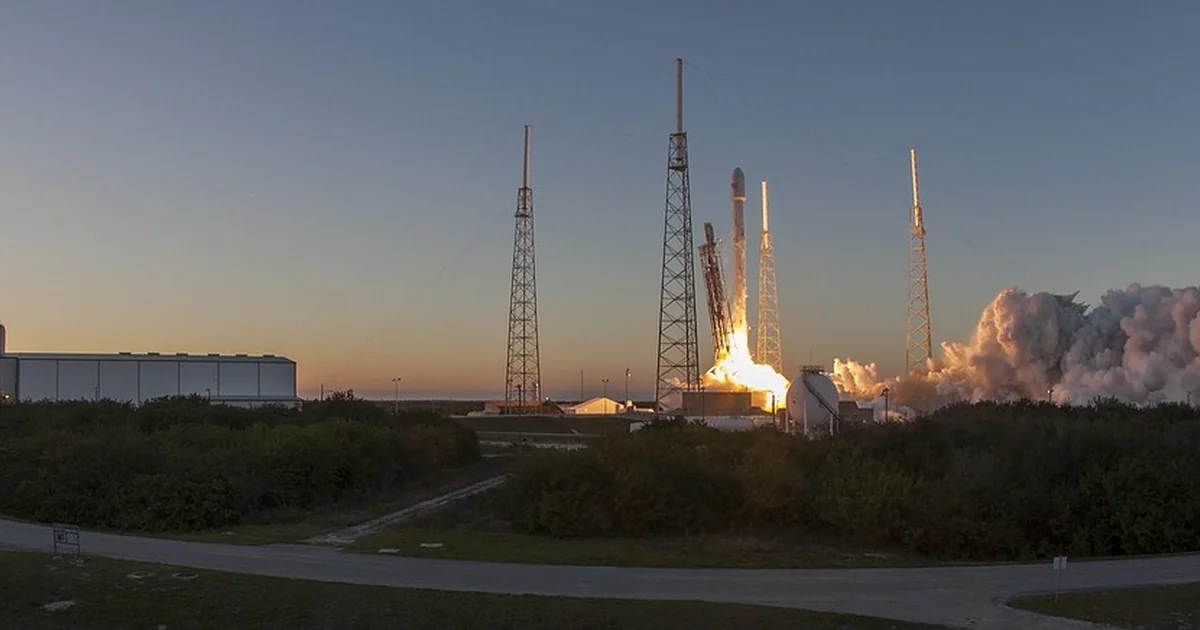
The Collision of Aerospace Ambition and AI Dominance
For years, the perception of SpaceX has been anchored to the physical—the roar of engines, the heat of reentry, and the tangible deployment of satellite constellations. However, a strategic pivot is underway that seeks to capture the intangible: the intelligence that drives modern automation. By positioning itself to potentially absorb the leaders in AI-driven development, the company is attempting to bridge the gap between hardware engineering and the software revolution.
The sheer scale of the proposed deal is staggering. We are looking at a scenario where a company built on liquid oxygen and stainless steel steel aims to secure a foothold in the coding intelligence market through a $60 billion move. This is not merely a diversification of assets; it is a fundamental transformation of corporate identity. If the deal proceeds, the market will no longer view the entity as a transportation provider, but as an intelligence powerhouse.
Consider the implications for an investor trying to understand the difference between a company’s valuation and its actual path to profitability. A space company is valued on its launch cadence and contract backlog. An AI company, however, is valued on its data moats and the scalability of its algorithms. By pursuing the spacex acquires cursor path, the company is chasing the much higher valuation multiples that Wall Street currently assigns to the software and intelligence sectors.
The $2 Billion Funding Gap vs. The $60 Billion Exit
To understand why this move is so disruptive, one must look at the precarious position of the target. Cursor, the architect of cutting-edge AI coding software, was on the verge of closing a massive $2 billion funding round. This round, backed by heavyweights like Nvidia and Andreessen Horowitz, would have valued the startup at a cool $50 billion. On the surface, this looks like a triumph of venture capital.
However, beneath the surface of that $50 billion valuation lies a significant structural challenge. In the world of frontier AI, $2 billion is often just a down payment on the massive compute requirements needed to reach cash-flow breakeven. The cost of training models and maintaining the infrastructure to serve global developer populations is astronomical. A $2 billion injection might keep the lights on, but it might not provide the runway necessary to win the long war against giants like OpenAI or Anthropic.
This creates a fascinating tension between independent growth and the security of a mega-acquisition. A startup can choose to take the VC money and fight for independence, risking a future “liquidity crunch” when the next massive compute bill arrives. Alternatively, they can opt for a buyout that provides near-infinite resources. The choice Cursor faces is between being a high-flying, high-risk independent player or becoming the software heart of a multi-planetary conglomerate.
Strategic Necessity: Why Software is the Missing Link
While SpaceX has mastered the physics of getting to orbit, it currently lacks a deep, integrated AI workforce that can compete with the specialized labs of Silicon Valley. This is a critical vulnerability. As autonomous systems become more complex, the ability to write, debug, and optimize code using AI becomes a core competency for any company managing advanced hardware.
The acquisition represents a way to bypass years of organic talent acquisition. Instead of hiring hundreds of engineers one by one, the company can acquire an entire ecosystem of intelligence. This is a strategic necessity because the speed of AI development is moving faster than traditional corporate hiring cycles can accommodate.
The Competitive Landscape of AI-Powered Coding
The niche that Cursor occupies is arguably the most lucrative application of generative AI today. Software development is a high-margin industry where efficiency gains translate directly into billions of dollars in saved labor. However, it is also a battlefield. Cursor is not operating in a vacuum; it is facing direct pressure from Anthropic’s Claude Code and OpenAI’s Codex.
When a company like SpaceX enters this fray, the competitive dynamics change. Most AI startups are fighting for GPU time on cloud platforms. A company with its own massive data centers in Mississippi and Tennessee, combined with the potential for specialized edge computing in space, offers a unique advantage. The ability to offer “compute-as-a-service” alongside the software could be the decisive factor in winning the developer market.
The Mechanics of the Deal: IPOs and Financial Engineering
The timing of this potential transaction is not accidental. It is a masterclass in financial engineering and regulatory timing. Currently, the move is being held in a state of strategic suspension, with the potential acquisition delayed until after a projected IPO this summer. This delay serves a very specific purpose regarding confidential financial filings.
When a company is preparing for an IPO, its financial disclosures are under intense scrutiny. Any massive, transformative acquisition announced too early could force the company to update its filings mid-stream, creating uncertainty and potentially delaying the listing. By waiting until the company is publicly traded, the leadership can execute the $60 billion purchase using the liquidity of publicly traded stock, making the transaction much smoother for the market to digest.
Why Choose Collaboration Over Acquisition?
One of the most interesting nuances of this deal is the “collaboration” option. The agreement suggests that if a full buyout does not occur, a $10 billion collaboration agreement could still be struck. This raises an important question: Why would a company choose a collaboration agreement over a full acquisition?
There are several practical reasons for this approach:
You may also enjoy reading: 7 Ways Claude Can Now Connect With Spotify, Uber, and More.
- Risk Mitigation: A collaboration allows the parent company to gain access to the technology without the immediate integration headaches and regulatory scrutiny of a full merger.
- Capital Efficiency: It provides the startup with a massive capital injection—$10 billion is more than enough to bridge most cash-flow gaps—without the parent company having to commit the full $60 billion upfront.
- Operational Autonomy: The startup can continue to operate with its unique culture and speed, which is often lost during large-scale corporate integrations.
For the startup, this “middle path” offers the best of both worlds: the deep pockets of a global giant and the agility of a software house. For the parent company, it is a way to “rent” innovation while keeping an option to “own” it later.
The Impact on the Tech Ecosystem and Developer Workflow
For the technology professional watching this unfold, the implications are profound. We are seeing the beginning of a trend where specialized AI tools move from being independent, nimble startups to becoming integral parts of massive, vertically integrated conglomerates. This consolidation of power is a natural progression in the AI era, where the cost of entry (compute and data) is becoming too high for small players to sustain indefinitely.
If the spacex acquires cursor scenario becomes a reality, we might see a new type of developer workflow. Imagine an environment where the AI coding assistant is not just a tool running on a cloud, but is deeply integrated with the very hardware it is helping to design. We could see a closed-loop system where software is written, tested, and optimized by AI that understands the physical constraints of the hardware it resides on, from a laptop to a Starlink satellite.
Practical Solutions for Navigating the AI Consolidation Era
As these massive consolidations occur, how should developers and smaller startups adapt? The landscape is shifting from a “winner-takes-all” software race to a “vertical integration” race. Here are some actionable strategies for those navigating this change:
1. Focus on Niche Specialization: As giants consolidate the general-purpose coding markets, the opportunity lies in hyper-specialized domains. Instead of building a general AI coder, build an AI that specializes in low-level kernel optimization, or one that is specifically tuned for aerospace telemetry. Vertical expertise is harder to commoditize.
2. Prioritize Data Sovereignty: In an era where large companies are buying up the best tools, owning your own proprietary datasets becomes your greatest defense. If your AI is trained on data that a conglomerate cannot easily replicate or acquire, you maintain your leverage.
3. Build for Interoperability: Avoid becoming locked into a single ecosystem. The most successful tools of the next decade will be those that can seamlessly move between different compute environments, whether they are local, cloud-based, or edge-deployed in satellite networks.
The Long-Term Vision: Beyond the Bottom Line
Ultimately, this entire maneuver is about more than just software or rockets. It is about the architecture of the future. The goal is to create a vertically integrated stack that spans from the very code used to write a program to the rockets that carry that program into the stars. This level of integration is what defines the next era of civilization-scale technology.
By positioning itself as an AI company through this massive acquisition, the organization is making a bet on the future of human productivity. They are betting that the ability to automate the most complex task in the world—writing software—is the key to unlocking the next stage of technological evolution. Whether this results in a successful $60 billion acquisition or a $10 billion partnership, the signal is clear: the era of the pure-play space company is ending, and the era of the integrated intelligence giant has begun.
The high-stakes race to dominate AI-powered coding is just beginning, and the players involved are no longer just software engineers, but the architects of our future interplanetary infrastructure.