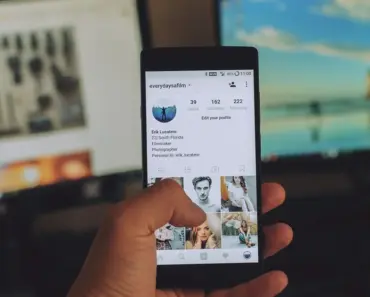
These days, our modern pocket computers all look roughly indistinguishable from one another. Unless you’re touting around a new-age folding phone, the smartphone on your person is most likely a glass slab with rounded corners, metal side rails, and a punch-hole or oblong selfie camera. This homogenization of mobile devices is a far cry from the innovative, often bewildering designs of yesteryear. In fact, it wasn’t until the widespread adoption of iOS and Android that mobile phones began to conform to a standardized aesthetic.
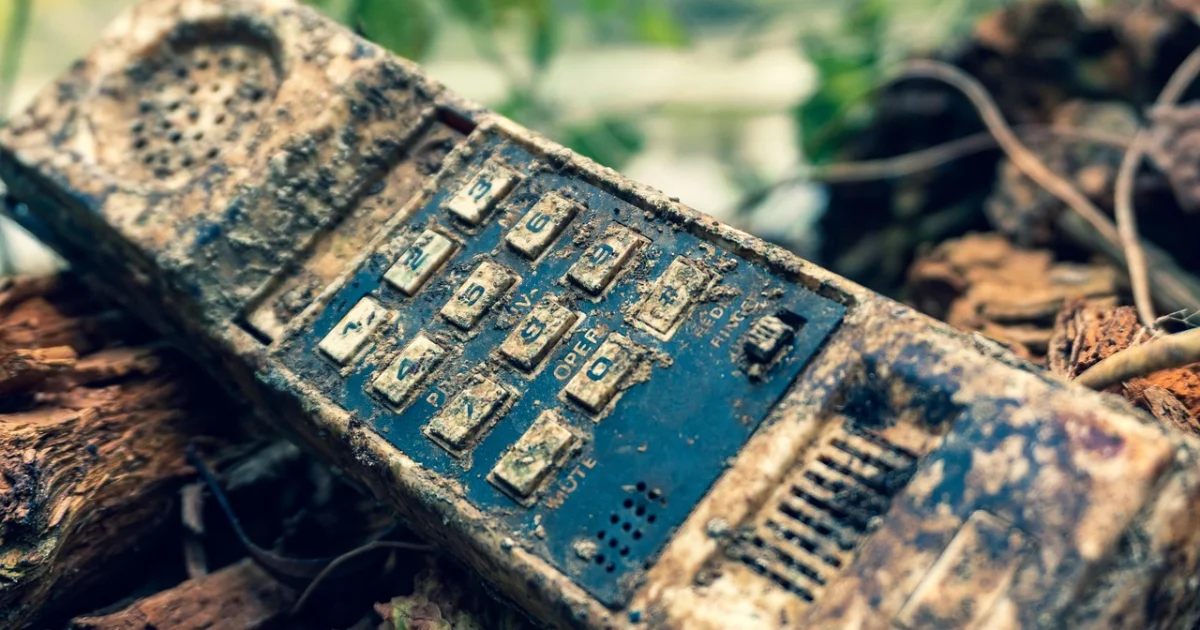
The Forgotten Era of Retro Mobile Phones
Before the iPhone changed the game, mobile phones were a hotbed of creativity and experimentation. Manufacturers were willing to take risks, pushing the boundaries of what a phone could look like, feel like, and do. The result was a cavalcade of bizarre, fascinating, and sometimes downright brilliant devices that, by today’s standards, look like they belong in an alternate universe.
1. Nokia N-Gage (2003)
The Nokia N-Gage has gone down in infamy as the cellphone that tried to also be a Game Boy Advance. It featured a handheld video game console-esque wide body, complete with a d-pad on its left-hand side. The N-Gage even had its own MultiMediaCard-based cartridge slot for inserting titles, as well as access to N-Gage Arena, which was Nokia’s online games service at the time. While perfectly serviceable as a device for sending and receiving phone calls, the N-Gage never managed to dethrone Nintendo’s position in the portable gaming scene.
Design Flaws and Gaming Conundrums
One of the primary issues with the N-Gage was its ergonomics. The device was simply too large and heavy to hold comfortably for extended periods, making it a chore to play games on the go. Furthermore, the N-Gage’s attempts to integrate itself into the gaming world were hampered by the lack of support from developers and publishers. The device’s online games service also struggled to attract a user base, ultimately making the N-Gage a commercial failure.
2. Motorola Rokr E1 (2005)
Before there was the iPhone, there was the Rokr E1. This ill-fated candy-bar style handset was notable for shipping with native support for iTunes, having been conceived of in collaboration between Motorola and Apple. Despite launching with stereo speakers and a built-in iPod-style music player interface, the Rokr E1 failed to capture the public’s attention, ultimately fizzling into irrelevancy not long after its initial release to market.
What Went Wrong with the Rokr E1?
The Rokr E1’s failure can be attributed to its poor timing. Released in 2005, the device was overshadowed by the Apple iPod, which was still the music player of choice for many consumers. Additionally, the Rokr E1’s awkward design and clunky interface failed to impress users, who were increasingly drawn to sleeker, more user-friendly devices.
3. Samsung Juke (2007)
The Samsung Juke, also known as the SCH-u470 or the Verizon Wireless Juke in the US, was a quirky mobile phone notable for its egregiously elongated form factor. The device’s main gimmick was its ability to be swiveled open for use as a cellular handset, and then swiveled closed for use as a music player. In addition to its telephony prowess, the Juke featured robust audio support with a built-in equalizer, 3D sound, and broader-than-average support for audio codecs and file formats.
Designing for Versatility
One of the key selling points of the Juke was its unique design, which allowed users to seamlessly transition between phone and music player modes. However, this innovative approach also came with its drawbacks. The Juke’s elongated shape made it difficult to hold onto, and the swiveling mechanism was prone to breaking over time.
4. Toshiba G450 (2008)
Toshiba’s G450 was certainly an oddball. Physically speaking, the device resembled an oversized lozenge more than a handset (Pocket-lint Managing Editor Amanda Kondolojy affectionately refers to it as the massage chair remote phone). The G450’s circular display was certainly a choice, as was its split, sperical number pad configuration. At the time, Toshiba marketed the G450 as a “four-in-one” product, encompassing a mobile phone, an MP3 player, a USB thumb drive, and, rather uniquely, an HSDPA USB modem.
Four-in-One Fiasco
While the G450’s design was certainly eye-catching, its functionality was not without its drawbacks. The device’s USB modem, for instance, was a novelty that few users actually took advantage of. Additionally, the G450’s compact size and awkward shape made it difficult to use as a phone or music player.
5. Microsoft Kin ONE (2010)
From the moment it was clear the iPhone would be a smashing success, Microsoft began attempting to break into the modern smartphone space. Before we had Windows Phone-clad Lumia devices and dual-screened Surface handsets, we had Kin. Running its own Windows CE-based KIN OS operating system, the first Kin ONE resembled the Palm Pre with its landscape physical keyboard. The Kin ONE was quirky, to say the least, thanks in part to its focus on social networking and its ‘Loop’ home screen, which curated content from Facebook, X (née Twitter), MySpace, and more.
You may also enjoy reading: Apple's Surprise iOS 26.4.2 Update: 11 Features You Need to Know.
Microsoft’s Misstep
One of the primary issues with the Kin ONE was its overly simplistic design and limited functionality. The device’s focus on social networking was admirable, but its execution was clumsy at best. The Kin ONE’s Loop home screen, for instance, was more of a novelty than a genuinely useful feature, and the device’s lack of app support made it a chore to use.
6. Sony Ericsson Xperia Play (2011)
In the early 2010s, there was a growing fear that the mobile games industry would swallow traditional handheld gaming whole. To combat this, Sony devised a two-tier plan: create the PlayStation Vita (a handheld console with smartphone features), and create the Xperia Play (a smartphone with handheld console features). While the Vita was a middling success at best, the Xperia Play simply never took off.
Designing for the Wrong Era
One of the primary issues with the Xperia Play was its design, which was clearly intended for a different era. The device’s focus on physical controls and game-friendly design was admirable, but its execution was clumsy at best. The Xperia Play’s clunky interface and limited app support made it a chore to use, and its gaming capabilities were ultimately overshadowed by the PSP and other handheld consoles.
7. HTC ChaCha (2011)
The HTC ChaCha was a social media phone in collaboration with Facebook. One of the unique features of the device was its physical QWERTY keyboard, which was reminiscent of early BlackBerry devices. The ChaCha’s design was certainly eye-catching, with its sleek lines and vibrant colors.
Designing for Social Media
One of the primary issues with the ChaCha was its focus on social media, which was admirable but ultimately led to a device that was more novelty than necessity. The ChaCha’s physical keyboard was certainly a plus, but its limited app support and clunky interface made it a chore to use.
8. LG Wing (2019)
LG Wing was a seemingly normal smartphone but with a unique design feature. The device’s dual-screen design allowed users to seamlessly transition between phone and tablet modes. However, this innovative approach also came with its drawbacks. The LG Wing’s design was clumsy at best, with a awkward hinge mechanism that made it difficult to use.
Designing for Versatility
One of the key selling points of the LG Wing was its unique design, which allowed users to seamlessly transition between phone and tablet modes. However, this innovative approach also came with its drawbacks. The LG Wing’s design was clumsy at best, with a awkward hinge mechanism that made it difficult to use.