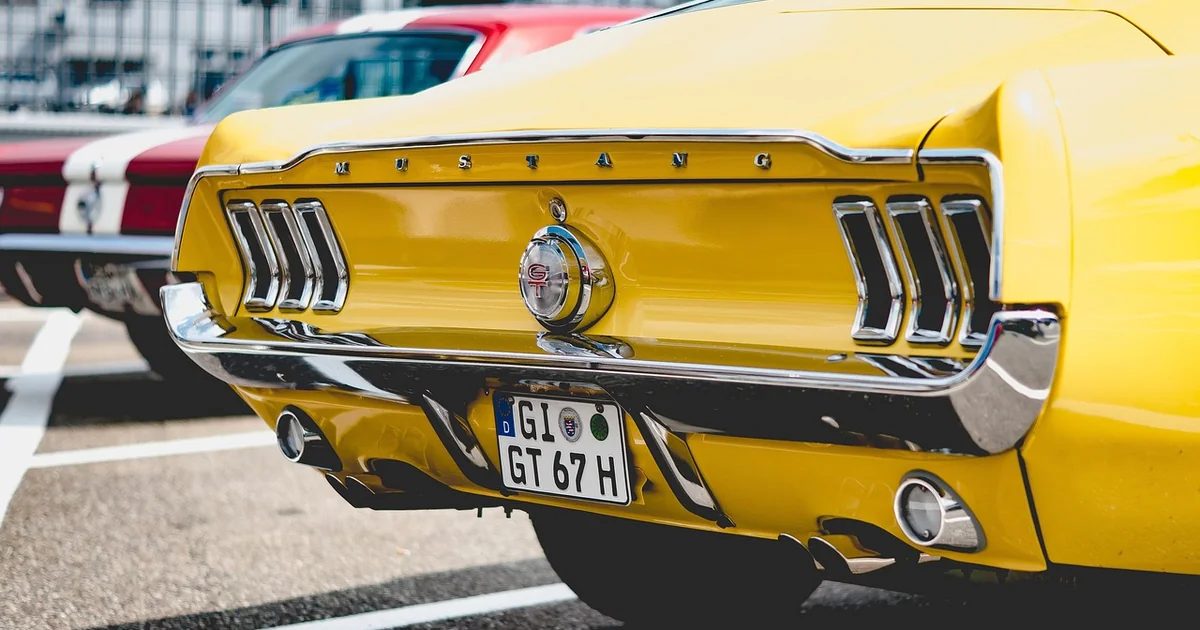
Imagine pulling up to a classic car meet in a vehicle that looks like a pristine relic from 1966, only to watch it glide silently into a parking spot using advanced artificial intelligence. This isn’t a scene from a sci-fi film; it is the reality of a groundbreaking mustang tesla conversion project out of Sacramento. While many enthusiasts dream of swapping a gas engine for an electric motor, the scale of this particular transformation goes far beyond simple electrification. It represents a bridge between mid-century American muscle and the cutting edge of Silicon Valley software, proving that the soul of a classic can coexist with the brains of a modern electric powerhouse.
The Engineering Feat of a Lifetime
Yaro Shcherbanyuk, the owner of Calimotive Auto Recycling, embarked on a journey that most mechanics would find daunting. Using a 1966 Ford Mustang as his canvas, he and his family spent two years meticulously integrating components from a modern Tesla Model 3. This wasn’t just a matter of bolting on a battery; it was a deep-tissue surgical operation on the vehicle’s very architecture. The project required a profound understanding of both vintage chassis design and modern high-voltage electrical systems.
The sheer complexity of such a task cannot be overstated. When you move from a combustion engine to a dual-motor electric setup, you are changing the weight distribution, the center of gravity, and the entire electronic communication protocol of the car. Most DIY enthusiasts struggle with the basic wiring of an EV, but this build tackled the most difficult aspect of modern driving: the software. By successfully marrying a 60-year-old shell with a sophisticated neural network, the team has opened a new door for the entire automotive aftermarket.
1. The Integration of Full Self-Driving Software
The most staggering achievement of this mustang tesla conversion is the successful implementation of Tesla’s Full Self-Driving (Supervised) capability. Typically, Autopilot and FSD rely on a highly calibrated environment where cameras are mounted at precise angles and distances from the ground. The team had to retrofit a complete Tesla camera array onto the Mustang, effectively teaching the software how to “see” through the eyes of a classic car. This is a massive technical milestone because it proves that Tesla’s vision-based neural network is robust enough to function even when the hardware mounting is non-standard. Seeing a vintage pony car navigate streets using the same AI that guides a brand-new Model 3 is nothing short of revolutionary.
2. Unprecedented Performance Metrics
When people think of 1960s classics, they often think of heavy metal and roaring, albeit inefficient, V8 engines. This Mustang has traded that auditory spectacle for sheer, silent violence. By utilizing a Model 3 dual-motor drivetrain, the vehicle produces approximately 400 horsepower and a massive 471 lb-ft of torque. This allows the car to sprint from 0 to 60 mph in a blistering 3.5 seconds. For a car that is over half a century old, these acceleration figures rival modern supercars. The sensation of instant torque in a vintage chassis provides a driving experience that neither a standard internal combustion engine nor a basic electric conversion could ever replicate.
3. Advanced Interior Modernization
Stepping inside this Mustang is like walking through a portal between eras. Instead of a simple analog dashboard, the driver is greeted by a massive 15-inch Tesla touchscreen that serves as the central nervous system for the entire vehicle. This screen controls everything from climate settings to media and vehicle diagnostics, and it even receives over-the-air firmware updates just like a modern Tesla. To add to the futuristic aesthetic, the team installed a Cybertruck-style yoke steering wheel and high-end Tesla seats that feature both heating and cooling functions. It is a masterclass in how to blend retro styling with modern luxury and utility.
4. Remarkable Energy Efficiency
One might assume that a classic car with the aerodynamics of a brick would be an energy hog once converted to electric. However, the results of this build defy conventional wisdom. The Mustang achieves an efficiency rating of roughly 258 Wh/mi (watt-hours per mile), a figure that is remarkably comparable to a standard, factory-built Tesla Model 3. This level of efficiency is a testament to the precision of the drivetrain integration and the clever way the battery weight was managed. Achieving such high efficiency in a non-aerodynamic vehicle is a significant engineering win that suggests well-executed conversions can be both powerful and practical for daily use.
5. The “Grafted” Chassis Architecture
The physical construction of this vehicle required more than just a few wrenches and some mounting brackets. To ensure the battery pack fit perfectly within the Mustang’s frame, the team performed a complex “grafting” procedure. They took three distinct sections of a 2024 Tesla Model 3 floor and seats and integrated them directly into the Mustang’s body. This allowed them to shorten the battery case to fit the vintage dimensions without compromising the car’s original external footprint. This type of structural modification is incredibly difficult, as it requires maintaining the structural integrity of the vehicle while merging two entirely different manufacturing philosophies.
6. Seamless Charging and Utility Integration
A common problem with EV conversions is where to put the charging port without ruining the car’s lines. The team found a brilliant solution by placing the Tesla charging port exactly where the original fuel cap used to sit at the rear of the vehicle. This maintains the classic silhouette while providing a seamless user experience. Beyond just charging, the car retains modern Tesla conveniences like Sentry Mode, which uses the camera array to monitor the vehicle’s surroundings when parked. This turns a classic car into a high-tech security asset, something that was unthinkable for a 1966 model.
7. Incredible Cost-to-Value Ratio
Professional EV conversion companies often charge upwards of $75,000 for a high-quality build, making them a luxury reserved for the ultra-wealthy. This project, however, was completed for approximately $40,000. While it was a two-year labor of love involving family members, the cost-effectiveness is mind-blowing. By leveraging specialized knowledge from an auto parts shop and sourcing components strategically, the team demonstrated that a high-performance, high-tech electric classic can be achieved at a much more accessible price point. This significantly lowers the barrier to entry for enthusiasts looking to enter the electric restomod market.
The Challenges of DIY EV Conversions
While this project is a massive success, it is important to acknowledge the significant hurdles that anyone attempting a mustang tesla conversion or similar project will face. The most common obstacle is the “software wall.” Modern electric vehicles are not just mechanical machines; they are rolling computers. Trying to get a third-party battery management system (BMS) to talk to a high-end motor controller can lead to endless debugging sessions and potential safety risks. If the communication between the battery and the motor is not perfect, the car could experience sudden power loss or, in worst-case scenarios, thermal runaway.
Another major challenge is weight distribution and structural rigidity. Adding hundreds of pounds of lithium-ion batteries to a chassis designed for a cast-iron V8 can change how the car handles, brakes, and even how it survives a collision. A poorly planned conversion can lead to a car that is fast in a straight line but dangerous in a corner. To solve this, builders must use advanced CAD (Computer-Aided Design) software to model the new weight centers and potentially reinforce the frame to handle the increased mass and torque.
You may also enjoy reading: 3 New iOS Features to Add to Popular iPhone Apps.
A Practical Guide to Planning Your Own Conversion
If you are inspired by this Mustang and want to start your own journey into electrification, you should follow a structured approach to avoid the common pitfalls of amateur builds. Success in this field requires a blend of traditional mechanical skill and modern electrical engineering.
First, choose your donor vehicle based on its structural simplicity. A body-on-frame vehicle or a car with a large, relatively flat transmission tunnel is much easier to work with than a unibody car with complex crumple zones. Once you have your vehicle, decide on your power source. While using a complete Tesla drivetrain is the “gold standard” for performance and software, it is also the most expensive and technically difficult route. For beginners, starting with a smaller, dedicated EV conversion kit (like those from NetGain or EV West) can provide a more manageable learning curve.
Second, prioritize your electrical safety infrastructure. You must invest in high-quality contactors, fuses, and a robust Battery Management System. Never skimp on the wiring; use appropriately rated high-voltage cables and ensure all connections are crimped and insulated to professional standards. A second set of eyes—preferably an electrical engineer or a certified EV technician—is invaluable during the initial power-up phase to ensure there are no shorts or ground faults that could cause a fire.
Third, plan for the digital integration. If you want more than just a “dumb” electric car, you will need to think about the CAN bus (Controller Area Network) communications. This is the language the car’s components use to talk to each other. Learning how to interface with a CAN bus using tools like an Arduino or a specialized CAN logger will allow you to display battery percentages, temperature, and speed on a modern digital dashboard, bridging the gap between the old and the new.
The Future of the Global Conversion Market
This Mustang is more than just a cool car; it is a signal of where the automotive industry is headed. The global vehicle conversion market was valued at roughly $5.9 billion in 2024 and is expected to grow steadily over the next decade. As gasoline becomes more expensive and environmental regulations tighten, the desire to preserve classic car aesthetics while embracing electric efficiency will only increase. We are seeing a shift where “retrofitting” is becoming a legitimate and highly profitable sector of the automotive economy.
The success of the mustang tesla conversion also serves as a subtle critique of the current automotive landscape. While major manufacturers debate the merits of licensing autonomous software, independent innovators are proving that the technology is more versatile than the industry leaders might admit. This project demonstrates that the “software-defined vehicle” is not a walled garden; with enough ingenuity, the most advanced technology in the world can be transplanted into almost anything.
Ultimately, the combination of a 1966 Mustang and Tesla’s cutting-edge technology represents the ultimate expression of automotive evolution. It honors the design language of the past while embracing the sustainable, intelligent future of transportation. Whether you are a classic car collector or a tech enthusiast, there is no denying that this build has set a new benchmark for what is possible in the world of custom automotive engineering.