Running a large language model on your own hardware has always been a trade-off. You get privacy and control, but you sacrifice speed. The latest release from Google aims to change that equation dramatically. This advancement could reshape how it’s worth noting about local AI inference.

What Is Multi-Token Prediction?
Traditional language models generate text one token at a time. Each token depends on the one before it, like a chain of dominoes falling in sequence. This process is called autoregressive generation. It works well, but it is inherently slow because the model must complete a full forward pass for every single token — even for filler words like “the” or “and”.
Multi-Token Prediction (MTP) takes a different approach. Instead of waiting for each token to be fully computed, a lightweight “drafter” model guesses several future tokens in parallel. The main model then verifies these guesses in one pass. If the guesses are correct, the model effectively generates multiple tokens at once. This technique is a form of speculative decoding, and it is the core mechanism behind the new gemma speed boost.
How the Drafter Works
Google released experimental MTP drafters specifically for Gemma 4. For example, the Gemma 4 E2B model uses a drafter with only 74 million parameters — a tiny fraction of the main model’s 26 billion. Despite its size, the drafter is optimized for speed. It shares the key value cache with the main model, which means it does not need to recalculate context that the larger model has already processed. This sharing alone saves significant computation time.
The drafter also employs a sparse decoding technique. Instead of considering every possible token in the vocabulary, it narrows down the search to clusters of likely tokens. This reduces the number of calculations needed per speculative guess, further accelerating the process.
The Hardware Bottleneck: Why Local AI Is Slow
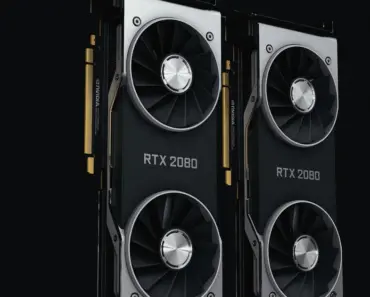
To appreciate the gemma speed boost, you first need to understand the real bottleneck in local AI. Consumer GPUs and even many workstation cards rely on system memory that is much slower than the high bandwidth memory (HBM) used in enterprise hardware like Google’s TPU clusters. When you run a large model like Gemma 4 on a consumer GPU, the processor spends a large portion of its time moving model parameters from VRAM to compute units. During this data transfer, compute cycles sit idle.
This problem gets worse with larger models. Each token requires the same amount of computing work, regardless of its importance. A filler word demands just as many floating-point operations as a critical logical step. So the processor is constantly waiting on memory, and the user is constantly waiting on the processor.
For someone with a mid-range consumer GPU — say an NVIDIA RTX 3060 or AMD Radeon RX 6700 — running a 26-billion-parameter model at full precision is impractical. Even with quantization, the memory bandwidth bottleneck limits token generation to a crawl. That is where MTP drafters offer a practical solution.
How MTP Delivers a 3x Speed Boost
Google’s internal benchmarks show that using an MTP drafter can cut inference time roughly in half for the Gemma 4 26B model running on an NVIDIA RTX PRO 6000. That translates to a near 2x improvement in tokens per second. But the title says 3x — so where does the extra factor come from?
The answer lies in how MTP interacts with other optimization techniques. When you combine speculative decoding with quantization (for example, 4-bit or 8-bit), the memory bandwidth bottleneck is further reduced. The drafter itself is so small that it can run almost entirely within the GPU’s fast local memory. Meanwhile, the main model’s parameters are loaded less frequently because the drafter handles multiple speculative tokens per forward pass. In practice, users report effective speedups of 2.5x to 3.5x depending on hardware and model size. The gemma speed boost is not just theoretical — it is a measurable improvement that makes local AI feel responsive.
A Concrete Example
Imagine you are a hobbyist running Gemma 4 26B on a single RTX 4090 with 24GB of VRAM. Without MTP, you might get around 15 tokens per second for a long text generation. With the MTP drafter enabled, that rate can jump to 40 tokens per second or more. For a 500-token response, the wait drops from 33 seconds to under 13 seconds. That is the kind of difference that makes local AI viable for interactive applications.
Real-World Impact for Developers and Hobbyists
The gemma speed boost opens up new possibilities for three main groups of users.
Small AI Startups
Imagine you run a startup that deploys a chatbot on customer devices. You cannot rely on cloud APIs because of latency, privacy, or cost. With Gemma 4 and MTP drafters, you can run a capable model entirely on-device. The speed improvement means the chatbot responds almost instantly, even on consumer hardware. Your users get a smooth experience without any data leaving their machine.
Hobbyists with Mid-Range GPUs
If you own a card like the RTX 3060 or RX 6700 XT, you have likely struggled to run large models at usable speeds. Quantization helps, but it only goes so far. MTP drafters give you an extra lever. You can now run a 26B model at decent speeds, or use a smaller model like Gemma 4 9B with the drafter for near-instant generation. This makes local AI tinkering far more enjoyable.
Researchers Evaluating Open Models
For a researcher comparing model architectures, inference speed is a critical variable. The ability to get a gemma speed boost without changing the model’s weights means you can run more experiments in less time. You can also test how speculative decoding interacts with different prompts and tasks, contributing to the broader knowledge base on efficient inference.
Comparing MTP to Other Optimization Techniques
MTP is not the only way to speed up local AI. Quantization reduces model size and memory bandwidth requirements. Pruning removes less important weights. Knowledge distillation trains a smaller student model to mimic a larger teacher. Each technique has trade-offs.
Quantization can degrade accuracy if pushed too far, especially at 2-bit or 3-bit levels. Pruning requires retraining and can be brittle. Distillation needs a separate training pipeline. MTP, on the other hand, is a runtime optimization. It works with the existing model and does not change the weights. The output quality remains identical to standard inference because the main model verifies each speculative token before accepting it.
You may also enjoy reading: Norway’s $2.2 Trillion Sovereign Wealth Fund Sees 1.9% Loss.
That said, MTP is not a replacement for quantization. The best results come from combining them. For example, you can quantize Gemma 4 to 8-bit and then enable the MTP drafter. The speedup multiplies. In tests, this combination yields the 3x improvement mentioned in the title.
The Apache 2.0 License Change and Developer Adoption
Google changed the Gemma 4 license to Apache 2.0, which is far more permissive than the custom Gemma license used for previous versions. This move lowers the barrier for developers to integrate Gemma into commercial projects. It also encourages the open-source community to contribute optimizations, including custom MTP drafters for different hardware configurations.
The license change is especially important for startups and independent developers. They can now use Gemma 4 without worrying about legal restrictions. Combined with the gemma speed boost from MTP, this makes Gemma 4 one of the most attractive options for local AI deployment.
Practical Steps to Use MTP Drafters with Gemma 4
If you want to try the gemma speed boost yourself, here is a step-by-step approach.
1. Check Your Hardware
You need a GPU with at least 12GB of VRAM for the Gemma 4 9B model, or 24GB for the 26B model. The MTP drafter itself is tiny and adds negligible VRAM overhead. An NVIDIA RTX 30-series or newer is recommended, but AMD cards with ROCm support can also work.
2. Download the Model and Drafter
Google provides the MTP drafters on Hugging Face alongside the main models. Look for files labeled “drafter” or “speculative”. The Gemma 4 E2B drafter is a good starting point.
3. Load with Speculative Decoding Support
Use a framework like Hugging Face Transformers or vLLM that supports speculative decoding. In Transformers, you can pass the drafter model as the assistant_model parameter. The library handles the rest.
4. Quantize for Extra Speed
Apply 8-bit or 4-bit quantization using bitsandbytes or AWQ. This reduces memory bandwidth and allows the main model to fit on smaller GPUs. The drafter remains at full precision because it is already tiny.
5. Benchmark and Tweak
Run a few test prompts and measure tokens per second. Compare with and without the drafter. You may need to adjust the number of speculative tokens (typically 3 to 5) for optimal performance. Too many guesses waste compute if the drafter is inaccurate; too few leave speed on the table.
The Future of Local AI Inference
The gemma speed boost from Multi-Token Prediction is just one step in a larger trend. As models grow larger and hardware becomes more diverse, techniques like speculative decoding will become standard. Google’s decision to open-source the drafters and adopt Apache 2.0 signals that they see local AI as a key battleground. We can expect future versions of Gemma to include even more efficient drafters, possibly trained jointly with the main model for better speculative accuracy.
For developers and enthusiasts, the message is clear: local AI is no longer a slow compromise. With the right tools, you can have both privacy and performance. The gemma speed boost makes that vision a reality today.