
In the consumer drone industry, the launch of an ultra-compact aircraft typically involves significant compromises: stripped-down video sensors, fragile build quality, or a requirement to carry bulky remote controllers. With the release of the DJI Neo, the world’s undisputed leader in aerial robotics has engineered a groundbreaking solution: a 135-gram 4K vlogging drone that takes off directly from the palm of your hand, flies autonomous AI tracking flight paths without a controller, and retails for an astonishing entry price of just $199 (or $289 for the comprehensive Fly More Combo).
For travelers, content creators, and first-time drone pilots, the DJI Neo represents a watershed moment. However, navigating package options, Federal Aviation Administration (FAA) regulatory classifications, and battery management strategies is essential to getting the most out of your purchase. In this comprehensive review and buyer’s guide, we break down flight performance, controller compatibility, real-world camera quality, and how to find the best package deals.
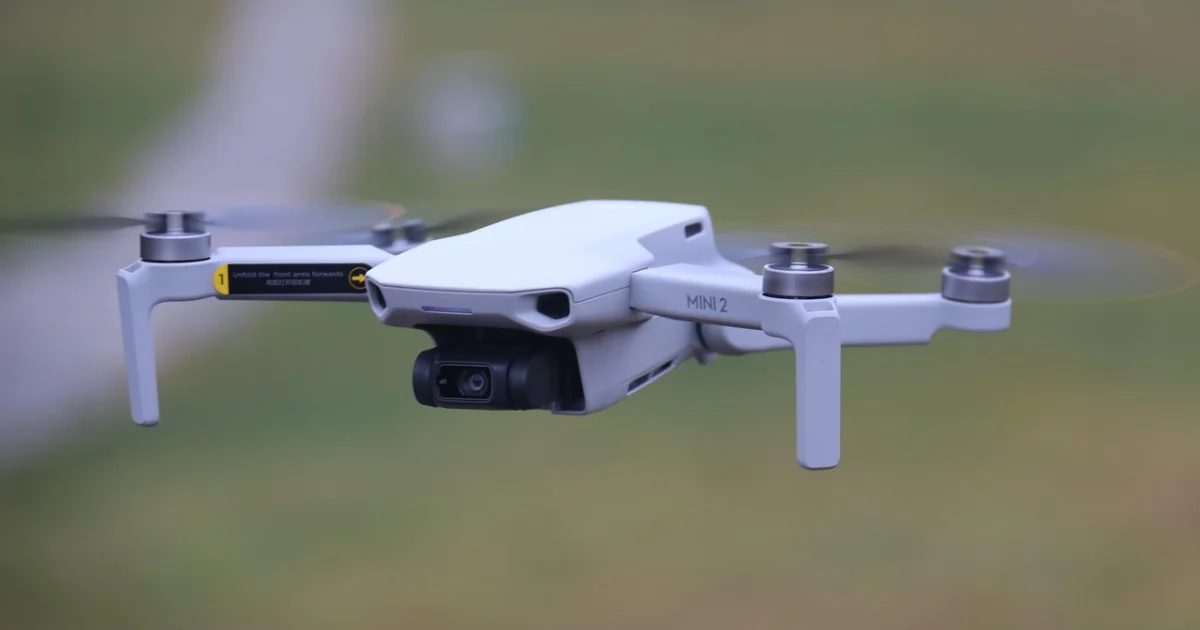
Package Comparison: DJI Neo Standalone vs. Fly More Combo
Choosing the right configuration before buying makes a massive difference in day-to-day usability:
| Component / Capability | DJI Neo Standalone ($199) | DJI Neo Fly More Combo ($289) | HoverAir X1 Smart ($349) |
|---|---|---|---|
| Takeoff Weight | 135 grams (Exempt from FAA registration) | 135 grams (Exempt from FAA registration) | 125 grams |
| Batteries Included | 1 Intelligent Flight Battery (~14 min real-world) | 3 Batteries + Two-Way Charging Hub (~42 min total) | 2 Batteries |
| Physical Remote Controller | Not included (Phone Wi-Fi or Palm button only) | DJI RC-N3 Controller Included (10km transmission) | None (App only) |
| Video Resolution & Stabilization | 4K@30fps (RockSteady + HorizonBalancing) | 4K@30fps (RockSteady + HorizonBalancing) | 2.7K@30fps |
| Propeller Protection | Full 360-degree caged guards built-in | Full 360-degree caged guards built-in | Enclosed frame |
| FPV Goggles Compatibility | Yes (DJI Goggles 3 + RC Motion 3) | Yes (DJI Goggles 3 + RC Motion 3) | No |
5 Standout Features of the DJI Neo
1. True Controller-Free Palm Takeoff and Landing
The single greatest friction point in drone piloting has always been the setup ritual: unfolding arms, calibrating compasses, connecting smartphone cables, and pairing controllers. With the DJI Neo, you press the top mode button to select an automated flight mode (such as Follow, Dronie, or Circle), place the drone flat on your open palm, and look at the camera. Within three seconds, facial recognition locks onto you and the drone effortlessly takes off.
2. Complete Sub-250 Gram FAA Regulatory Exemption
Weighing only 135 grams, the DJI Neo falls comfortably beneath the FAA’s 0.55-pound (250-gram) threshold for recreational pilots in the United States. This means you do not need to register the drone with the FAA or install Remote ID broadcast modules for non-commercial recreational flights, dramatically simplifying where and how you can fly.
3. RockSteady and HorizonBalancing Stabilization
Despite relying on a single-axis mechanical gimbal to protect weight and durability, DJI incorporates its industry-leading EIS (Electronic Image Stabilization) algorithms. Even when operating in moderate winds up to Level 4 (8 m/s), footage remains rock-steady and level with the horizon.
4. Comprehensive 360-Degree Propeller Enclosure
Unlike open-rotor drones that present safety hazards around children, pets, or indoor furniture, the Neo features built-in cage guards that fully encase all four propellers. If the drone brushes against a tree branch or wall, it bounces off safely and maintains altitude rather than crashing.
5. Unprecedented Versatility: Phone, Controller, or FPV
No other drone spans three distinct piloting modalities:
- Casual Vlogging: 100% controller-free using AI tracking.
- Long-Range Scenic Flights: Using the included RC-N3 controller for precise dual-stick maneuvering up to several kilometers.
- Acrobatic FPV: Pairing with DJI Goggles 3 and the Motion 3 controller for thrilling first-person-view cockpit flying.
Why the Fly More Combo is the Smart Value Choice
While the $199 standalone price tag is tempting, the $289 Fly More Combo is mathematically the far superior investment:
- A single Neo battery delivers approximately 14 minutes of actual flight time. Having three batteries plus the Two-Way Charging Hub allows you to cycle through over 40 minutes of flight time without waiting for wall charges.
- Purchasing the RC-N3 controller and charging hub separately costs over $180, meaning the combo saves you nearly $90 compared to a piecemeal upgrade.
The Final Verdict
The DJI Neo proves that miniature drones no longer have to be gimmicky toys. By combining intelligent autonomous tracking, robust propeller safety, and flexible flight modes into an ultra-portable 135-gram package, the Neo sets a new benchmark for accessible aerial cinematography.