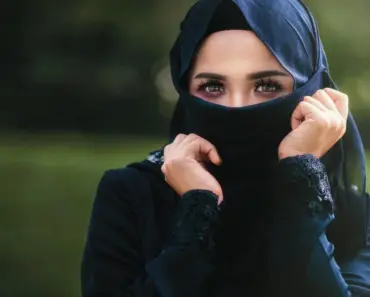
Can you tell a real face from an AI-generated one? It’s harder than you think. Research shows that untrained people get it wrong more often than they get it right. But with the right practice, you can dramatically improve. A few individuals have even reached close to 100% accuracy. This article gives you five test images, each designed to highlight a specific telltale sign. You’ll learn what to look for and train your eye like never before. Prof Amy Dawel, who leads the Australian National University Emotions and Faces Lab, researches exactly this: can people learn to rumble AI imposters? Her team’s findings suggest that focusing on six perceptual qualities makes all the difference. Ready to put your skills to the test? Let’s see how sharp your AI-generated face identification actually is.

Test Image 1: Symmetry – The First Clue
Symmetry is one of the easiest qualities to check, but AI still struggles to get it perfectly right. When you look at a face, your brain naturally expects a balanced arrangement of features. AI-generated faces often trip up here because the model tries to reconstruct both sides independently, leading to subtle mismatches. In the research, participants were trained to look for symmetry as one of six perceptual qualities that reveal deepfake test images. To spot these clues, start by comparing the left and right halves of the face. Pay close attention to the eyes — are they the same shape and at the same height? Check the ears and jawline for any unevenness. A slight tilt or misalignment is a red flag. Also, be aware of AI bias in face generation: the training data skews heavily toward young white people, so AI is less proficient at recreating non-white, older, or younger faces. This means symmetry errors can be more pronounced in those images. By focusing on facial symmetry as a quick first check, you can often spot a fake before moving on to deeper clues. Practice this on a few sample images, and you’ll start seeing deepfake asymmetry clues that were invisible before.
Test Image 2: Proportionality – Beyond the Obvious
After checking symmetry, the next step in your deepfake test images routine is to examine facial proportions. AI used to make obvious blunders like adding an extra finger, but it learns quickly from its mistakes. Today, those glaring errors are rare. Instead, AI-generated face artifacts hide in more subtle proportion issues. A deepfake might get the eyes right individually, but the spacing between them could be slightly off. The nose might look fine at first glance, but its length relative to the mouth could be unnatural. These are the kinds of proportionality check deepfake techniques you need to master.
Why are obvious flaws no longer reliable? Because the AI models that create deepfakes are trained on vast datasets and improve over time. In fact, participants in one study were trained to look for six perceptual qualities, and proportionality was one of them. This means that by focusing on facial proportions—eye spacing, nose length, mouth width—you catch mistakes that even advanced AI struggles to perfect. It’s a more nuanced check, but with practice, you’ll start to spot these subtle tells instantly.
Test Image 3: Attractiveness and Expressiveness – The Human Touch
Once you’ve trained your eye to spot proportion problems, you can move on to a more subjective pair of clues: attractiveness and expressiveness. In the research that trained participants to identify deepfake test images, these two qualities were among the six perceptual traits they learned to evaluate. AI-generated faces often appear a little too perfect—smooth, symmetrical, and conventionally attractive in a way that real people rarely are. That over-polished look can be a red flag. Look closely at skin texture: if it seems unnaturally even, with no pores, freckles, or minor blemishes, you might be looking at a synthetic face.
Expressiveness is trickier. A real person’s face changes subtly with every thought or emotion—micro-expressions that shift around the eyes and mouth. AI often renders a frozen or slightly blank expression, as if the face is caught mid-pose. This flaw shows up more often in deepfake expressiveness flaws because the model struggles to generate believable, fleeting emotions. Keep in mind that AI is less proficient at recreating non-white, older, or younger faces, since its training data skews heavily toward young white people. That means if you’re looking at a photo of someone outside that group, the attractiveness and emotional expression AI can be even more off. When you see a face that’s flawlessly attractive but somehow lifeless, trust your gut—it’s one of the most reliable signals in these deepfake test images.
Test Image 4: Distinctiveness and Memorability – The Uniqueness Test
A face that checks every box for symmetry and proportion can still feel wrong. That’s where facial distinctiveness and memorability of faces come into play. Real people have small quirks—an uneven smile, a slightly off-center nose, a scar or freckle that stands out. These imperfections make a face stick in your memory. AI-generated faces, by contrast, often lean toward a generic, smoothed-out appearance. They lack those tiny, memorable details. The researchers behind the deepfake test images trained participants to evaluate six perceptual qualities, including distinctiveness and memorability. Remarkably, a few individuals scored close to 100% accuracy by focusing solely on how unique or forgettable a face seemed. To build the study, they created a pool of thousands of AI-generated faces using the StyleGAN3 image tool. This massive set allowed them to see patterns: many synthetic faces looked interchangeable, like they came from the same template. You can use this same logic. When you glance at a digital portrait, ask yourself: Would I remember this face if I saw it on the street? If the answer is no—if it feels bland or too “perfect”—that’s a strong signal you’re looking at an AI creation.
Why Some Faces Are Harder to Forget
The generic AI face detection trick is simple but powerful. Real-world distinctiveness doesn’t mean ugly or odd; it means character. A slightly crooked eyebrow or a dimple that only shows on one side gives a face identity. Synthetic faces often miss these asymmetries because their algorithms prioritize flawlessness. Memorability, the other half of this test, ties directly to uniqueness. A face that triggers a sense of déjà vu—a resemblance to someone you know—is likely real. A face that feels entirely new yet strangely average is suspect. Training your eye on these subtle qualities can dramatically improve your ability to spot deepfakes in everyday browsing.
Test Image 5: Confidence Calibration – Knowing When You’re Right
Building your eye for subtle clues is only half the battle. The real value comes when you can trust your own judgment. Training that pairs deepfake test images with immediate feedback does more than boost accuracy—it sharpens your confidence in deepfake detection. Without that, you might second-guess a correct call or feel sure about a wrong one. Studies show that untrained people correctly identify fakes only about 40% of the time. But after just an hour of exposure to labeled images, accuracy can jump to around 80%. That leap doesn’t just mean more right answers; it means you learn to recognize the difference between a genuine hunch and a lucky guess.
How to Practice Your Own Calibration
Calibration of detection skills is a key part of media literacy training. To hone yours, spend time with a set of known real and fake images—the exact kind you see in these test examples. Make a decision on each one before you reveal the answer. Then note whether your confidence matched the outcome. Over time, you’ll develop a more reliable internal meter. This matters because in everyday browsing you don’t get instant feedback; you need to know when your assessment is solid enough to act on. Training your confidence alongside your accuracy turns a guessing game into a practical skill.
Frequently Asked Questions
How can I learn to spot AI-generated faces?
Start by examining deepfake test images side by side with real photos. Focus on specific details like lighting, skin texture, and background consistency. The more you practice, the faster your pattern recognition improves.
Why can’t I rely on obvious flaws like extra fingers?
AI technology is advancing quickly, so obvious errors like extra fingers are becoming rare. Modern deepfake generators correct many of these mistakes. Instead, look for subtle cues like unnatural eye reflections or inconsistent shadows.
Does my confidence in spotting deepfakes match my actual accuracy?
Many people overestimate their ability to detect deepfakes, especially when they rely on outdated clues. Your confidence often outpaces your skill without deliberate practice. Using structured deepfake test images can help you calibrate your judgment.