Why the VIC-II Chip Created a Need for a Sync Splitter
The Commodore 64 remains one of the most beloved 8-bit computers ever built. Yet even this iconic machine had its quirks. Inside, the VIC-II chip handled all video generation. It combined luminance, chrominance, and sync signals into a single composite output. This design choice made sense for connecting to standard television sets. It kept costs down and simplified the mainboard layout.
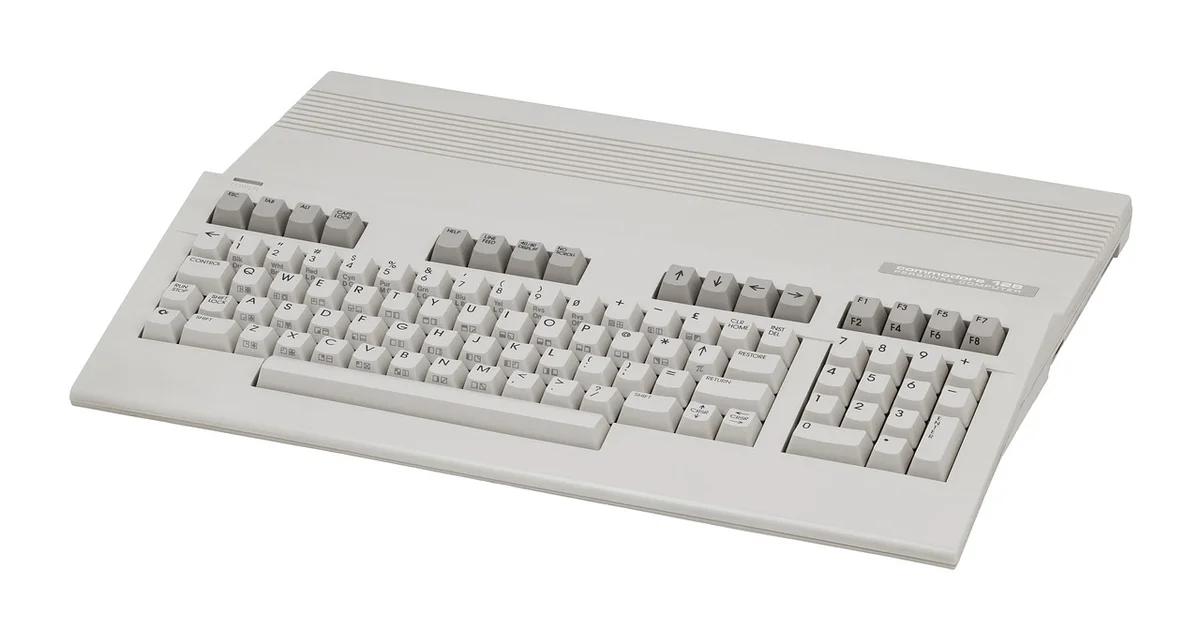
However, this integration created a problem. Many professional monitors and RGB display systems require separate horizontal and vertical sync signals. The VIC-II chip simply did not provide them. Engineers could not change the chip itself. They had to build an external solution. This is where the commodore sync splitter enters the story. It is a dedicated circuit designed to extract clean sync pulses from the composite video stream.
Reverse Engineering a Rare Board
Recently, a rare Commodore 64 housed inside a PET case appeared on the workbench at Tynemouth Software. Inside this unusual machine sat a custom board. Its job was to take the composite output from the mainboard and split out the sync pulses for the monitor. The team at Tynemouth Software decided to fully reverse engineer this board. What they found was a complete and very well-engineered sync splitter. The design choices made by Commodore engineers reveal a deep understanding of video signal processing. Let us examine the five specific ways they built this circuit.
The 5 Engineering Approaches Behind the Commodore Sync Splitter
Each design decision addressed a specific challenge. Together, they formed a reliable interface that has lasted for decades. Here are the five key methods Commodore used to create their sync splitter.
1. Starting with Passive Filters for Signal Extraction
The foundation of any sync splitter is the ability to separate sync pulses from video information. Commodore began with a classic approach using passive components. Resistors and capacitors form filters with specific time constants. A low-pass filter can isolate the longer vertical sync pulse. A differentiator circuit can extract the shorter horizontal sync pulse.
This technology has its origins in the 1930s. It is simple and requires very few parts. However, the output from a purely passive circuit is often messy. The timing can be slightly off. The edges of the pulses are not perfectly sharp. The signal works, but it lacks the precision needed for a stable display on demanding monitors. Commodore knew they needed more than just a basic filter.
2. Adding One-Shot Multivibrators for Timing Precision
The trouble with a simple passive approach is timing jitter. The filtered sync pulses may have the correct frequency, but their duration and shape can vary. To solve this, Commodore added monostable multivibrators. These are commonly known as one-shots.
A one-shot is a logic circuit that outputs a clean pulse of a fixed length when triggered. The filtered signal triggers the one-shot. Instead of passing through the ragged edge of the filtered pulse, the circuit generates a brand new pulse with exact timing. By carefully selecting the timing capacitor and resistor for the one-shot, engineers could create sync pulses with precisely the right width. This transformed an unreliable signal into a professional-grade timing reference.
3. Implementing Blanking Gates to Remove Spurious Pulses
Even with clean pulses from the one-shots, noise could still cause problems. Residual video information or electrical interference might trigger the circuit at the wrong moment. Commodore solved this by adding blanking gates. These logic gates ensure the sync output is only active during the blanking interval of the video signal.
Think of it as a gatekeeper. The circuit says, “Only output a sync pulse when you know one is supposed to be there.” This removes the chance of stray pulses appearing where they should not. This level of noise immunity is essential for a stable image. It shows that Commodore engineers were thinking about real-world operating conditions, not just ideal lab scenarios.
4. Adapting the Circuit for a TTL-Level Digital Video Path
This is one of the most interesting aspects of the commodore sync splitter. Most conventional sync splitters are designed for analog video signals. Analog signals swing between 0V and 0.7V or 1V. The Commodore 64, however, outputs a TTL-level digital signal. This signal swings from 0V to 5V.
Commodore adapted the video path accordingly. Instead of using an analog amplifier or comparator, the circuit passes the video through a standard TTL logic gate. This is a key difference from a conventional sync splitter. The circuit is optimized for the sharp, square-wave output of the 64. This ensures reliable triggering and clean signal paths. It is a perfect example of designing the interface to match the source.
5. Building for Longevity and Future Reverse Engineering
The final way Commodore made this sync splitter was through build quality. The board was constructed on a high-quality PCB with well-chosen components. The solder joints are robust. The traces are clearly laid out. Decades later, the board was fully reverse-engineered by Tynemouth Software.
You may also enjoy reading: NY Bans Government Employees From Insider Trading.
The owner of the machine requested that the board not be cleaned. This preserves its original patina. The dust and oxidation are left intact for historical accuracy. The fact that the circuit still works perfectly and can be mapped out today is a testament to its construction. It allows modern enthusiasts to study and replicate the design. For a restorer, this means you can build a faithful reproduction of this exact circuit if needed.
What Modern Retro Enthusiasts Can Learn
If you are restoring a Commodore 64 or a similar vintage computer, you may face the same problem. Your machine outputs composite video, but your monitor needs separate sync. Understanding the commodore sync splitter gives you a clear solution.
Building Your Own Sync Splitter
You can build a similar circuit using discrete logic components. The principles are exactly the same. First, use passive filters to extract the sync information. Second, use one-shots to clean up the timing. Third, use blanking gates to remove noise. Finally, ensure your circuit is designed for the TTL-level output of the Commodore 64.
Many modern solutions rely on complex FPGA-based upscalers. There is nothing wrong with that approach. However, there is an elegant simplicity in the discrete logic method Commodore used. It is a reminder that good engineering is timeless. You do not always need a powerful chip to solve a problem. Sometimes, a few well-chosen logic gates are enough.
Adapting Modern Monitors to Vintage Computers
Modern monitors are very different from the CRT displays of the 1980s. They are much more sensitive to timing errors. A messy sync signal that worked fine on an old television might cause a modern LCD to flicker or display nothing at all. This is why the precision of the Commodore design is so valuable.
By replicating the exact circuit from the original commodore sync splitter, you can ensure your vintage machine outputs a clean signal. This gives you the best chance of getting a stable image on a modern display. It is a practical solution that has been proven to work for decades.
A Masterclass in Video Signal Processing
The commodore sync splitter is more than just a repair part. It is a lesson in practical problem-solving. The VIC-II chip created a limitation. Commodore engineers did not try to redesign the chip. Instead, they built an elegant external solution.
They combined time-tested passive filtering with clever digital logic. They added one-shots for precision and blanking gates for noise immunity. They adapted the circuit for the unique TTL-level output of the machine. The result was a reliable interface that has stood the test of time. For anyone interested in retro computing hardware, this board offers a masterclass in practical engineering. It shows how to solve a real-world interface problem with simple, elegant hardware.