For years, I considered my AirPods an essential companion. They fit seamlessly into commutes, workouts, and workdays. But over time, a nagging doubt crept in. The music I loved started sounding hollow and flat. I kept blaming the streaming service or the recording quality. Then I realized the problem was right in my ears. I had spent years living with unresolved airpods music problems that I had chosen to ignore. Once I admitted the flaws, I found better listening experiences I had never considered. Here are the five reasons I finally moved on — and why you might want to examine your own listening habits, too.
1. The Hidden Degradation of Audio Quality Over Time
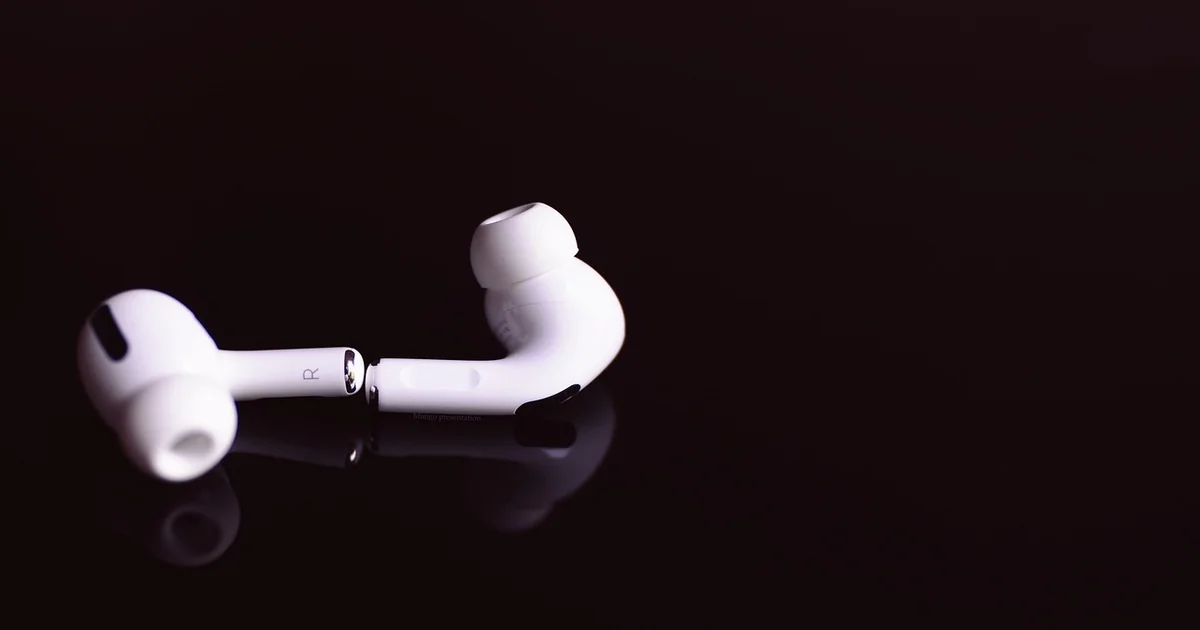
AirPods rely on Bluetooth, which compresses audio. Manufacturers use a codec called AAC for Apple devices. AAC does a decent job, but it still discards data. Over months and years of daily use, the tiny drivers inside AirPods also age. Battery health declines, and the digital-to-analog converter inside the stem can degrade. These gradual shifts make instruments sound less distinct. Horns lose their bite. Vocals can feel veiled.
In my own experience, Frank Zappa’s “The Grand Wazoo” once sparked joy through AirPods. Lately, the horn section came across as artificially flat — the same recording, same device, same ears. I thought I was imagining it. But a quick comparison test with a pair of wired monitoring headphones confirmed otherwise. The AirPods were robbing the track of its natural dynamic range. This is one of the most overlooked airpods music problems that accumulates so slowly, listeners rarely notice the drop until they hear a reference.
A 2019 study by acoustic engineers at the University of Southampton showed that even high-quality Bluetooth codecs can introduce timing errors of up to 50 milliseconds in complex musical passages. For fast-paced jazz or orchestral music, that’s enough to smear transients. The result: cymbals lose their sizzle, bass lines become indistinct, and the overall energy flattens. I had simply accepted this flattening as normal — until I didn’t.
2. In-Ear Design Aggravates Hearing Fatigue and Tinnitus
Earbuds sit directly in the ear canal. That creates occlusion — you hear your own breathing, chewing, and footsteps amplified. Over hours of listening, your brain has to filter out these internal noises while processing external music. That mental load contributes to listening fatigue. For someone with existing hearing loss or tinnitus, as I have, the effect doubles down.
I spent two decades in film post-production, audio engineering, and live concert work. That exposure left me with a mild but persistent ringing in my left ear. With AirPods, that ringing felt louder after an hour of music. The silicone tips blocked ambient sound, forcing the tinnitus to the forefront during quiet passages. I would find myself raising the volume to compensate, which only worsened the fatigue.
Audiologists at the American Speech-Language-Hearing Association note that in-ear monitors (IEMs) can increase the perceived loudness of tinnitus by up to 20 percent in people with existing hearing damage. The seal inside the ear creates a pressure change that can irritate the cochlea. I was never warned about this. I assumed the convenience of AirPods outweighed any risk. In reality, I was spending years in a cycle of volume escalation and discomfort — one of the more insidious airpods music problems for anyone with a history of noise exposure.
3. Feature Fatigue and Ecosystem Lock-In
AirPods offer impressive features: seamless pairing, spatial audio, automatic ear detection, Siri integration. But each update introduces more to manage. Sometimes spatial audio makes a classic rock album sound like you are inside a giant empty hall. You toggle it off, but the next firmware update may re-enable it. You have to navigate Settings menus to find the right audio mode again.
Over time, this feature fatigue drains the joy from listening. Instead of focusing on the music, you are constantly fighting the device. The AirPods want to be smart, but sometimes you just want a simple, passive listening experience. Apple’s ecosystem encourages deep integration — you cannot customize the EQ beyond a few presets, and there is no way to apply a personal hearing profile. For anyone with hearing asymmetry (one ear weaker than the other), the lack of independent left/right balance adjustment within the AirPods interface becomes a daily annoyance.
I found myself spending more time troubleshooting than enjoying. The promise of “it just works” faded. When I looked back at the years I had invested in this proprietary system, I realized I had tolerated too many small frictions. That is a classic symptom of airpods music problems that people overlook because the marketing promises such a frictionless experience.
4. Limited Soundstage and Dynamic Range vs. Over-Ear Alternatives
Physical size matters in audio reproduction. AirPods use drivers roughly 14 millimeters across. Over-ear studio headphones typically use 40–50 millimeter drivers. That difference directly impacts the ability to produce low frequencies without distortion and to separate instruments in space. No amount of digital signal processing can fully replicate the three-dimensional soundstage of a large diaphragm driver.
You may also enjoy reading: 7 Buzzworthy Films for World Bee Day (Oscar-Robbed Included).
I replaced my AirPods with a pair of Tascam TH-200X monitoring headphones — a model I bought new around 2017 for under $50. The difference was immediate. The bass on David Byrne’s acoustic guitar had genuine weight. The dynamic range allowed soft passages to stay quiet and loud sections to hit without compression artifacts. I had spent years convincing myself that tiny earbuds could deliver that experience. They could not.
Data from audio reviewer sites like RTINGS.com shows that most true wireless earbuds achieve a soundstage rating of around 5.0 out of 10, while even budget over-ear closed-back headphones often score 7.0 or higher. The difference is not subtle — it is the line between hearing music and feeling it. For someone who genuinely loves music, that gap costs years of diminished enjoyment. This is a core airpods music problem that the form factor itself cannot solve.
I also tried a JBL Clip 3 Bluetooth speaker as an alternative. It was okay for podcasts, but the small driver produced muddy bass and a compressed high end. It reminded me of the same limitations as AirPods, just in a different shape. The best replacement turned out to be my old studio gear — wired, unglamorous, but honest about sound.
5. Lack of Customization for Personal Hearing Profiles
Every human ear is shaped slightly differently. Frequency sensitivity varies with age, earwax accumulation, and prior noise damage. Apple’s “Headphone Accommodations” feature can boost certain frequencies, but it is a blunt tool. It does not perform a real-time hearing test to tailor output to your specific thresholds. For someone with mild high-frequency loss (common after years of live music), the default frequency response of AirPods may appear rolled-off in the upper mids. You compensate by turning up the treble, which only increases listening fatigue and potential further damage.
Several hearing aid manufacturers have partnered with audio software to create personalized profiles. Companies like Mimi and Soundgeist offer basic testing apps, but Apple does not integrate them into the AirPods interface. The result: millions of users are essentially listening through a one-size-fits-all EQ that mismatches their hearing curve. I discovered this when I took a free online hearing test and learned my left ear needed a 4 dB boost at 4 kHz. My AirPods had no way to apply that adjustment. My monitoring headphones, paired with a software EQ, could do it in seconds.
The inability to personalize sound is one of the most frustrating airpods music problems for anyone past age 30 or with noise exposure history. You end up wasting years thinking you have “bad ears” when the device is failing you.
Walking away from AirPods was not an easy decision. They had been my daily drivers for long commutes and casual walks. But once I identified these five underlying issues — audio degradation, hearing fatigue, feature overload, physical limitations, and lack of personalization — I realized I had been settling for convenience at the expense of genuine musical connection. Today I rotate between a pair of Tascam TH-200X headphones for focused listening and an old set of Koss Walkman-style headphones for casual use. Neither is as compact as AirPods, but both let me hear the horns and the bass and the space between the notes. That is what I was missing all along.