Last month, when the summer heat started driving my energy bills higher, I decided to take action. I set up an Anker Solix F3800 Plus battery paired with two 410W solar panels in my backyard. For 30 days, I tracked the app data, moved the panels around, and calculated every kilowatt-hour. What I learned goes far beyond the manufacturer’s claims. These seven practical solar panel lessons come straight from a month of real-world testing in an average suburban yard.
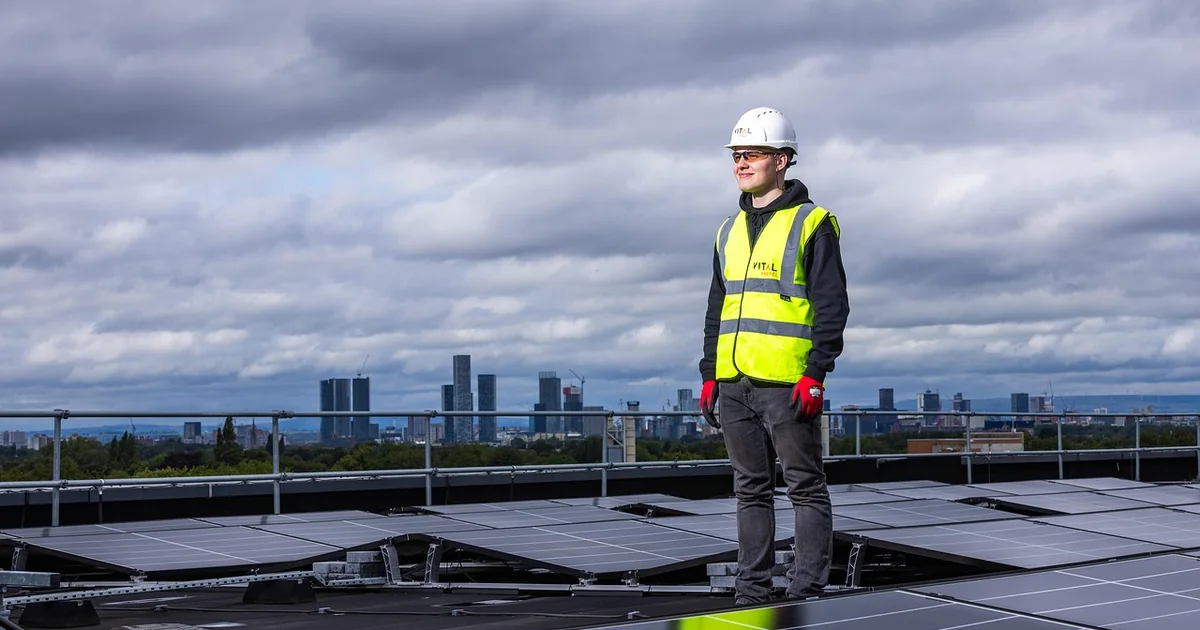
Real-World Solar Panel Lessons After a Month of Testing
Solar energy sounds simple in theory. Sunlight hits a panel, and electricity flows. In practice, the process is full of small surprises that can make or break your savings. Here is what a full month of daily monitoring taught me about backyard solar power.
Lesson 1: Rated Output and Real Output Are Different Numbers
My two panels combine for 820W of rated power. That is the number printed on the spec sheet. In reality, I rarely saw that number hold steady on my display. Solar panels lose efficiency as they heat up. On a hot afternoon, a 410W panel might only produce 320W. That is not a defect. It is a matter of physics. The temperature coefficient of the cells means that high summer heat actually reduces performance. This is the most important solar panel lesson for beginners. You cannot buy a 400W panel and expect 400W all day. Plan for about 70 to 80 percent of the nameplate rating during peak hours. Setting that expectation early prevents disappointment later.
Lesson 2: Portability Has a Weight Limit
The Anker Solix F3800 Plus looks portable. It has wheels and a handle. But it weighs 136 pounds. Rolling it across a smooth garage floor is easy. Moving it across a lawn is much harder. The wheels sink into soft grass. I learned to keep the battery on a concrete patio slab rather than moving it around daily. This solar panel lesson is practical. If you plan to change your setup often, factor in the weight of the battery. A small furniture dolly or a permanent outdoor cart makes a huge difference. Choose a spot for the battery and let it stay there.
Lesson 3: A Few Degrees of Tilt Change Everything
I started with the panels lying flat on the lawn. My average daily generation was about 3.7kWh. That is decent, but I knew I could do better. I built a simple wooden stand to tilt the panels at a 35-degree angle facing south. My daily average jumped to nearly 4.5kWh. I also noticed a tree branch that cast a shadow over one panel in the late afternoon. Trimming that single branch added about 0.5kWh to my daily total. This solar panel lesson is about placement. A few feet of movement and a few degrees of tilt can increase your yield by over 30 percent. Walk your yard at different times of the day. Watch where the shadows fall. Then position your panels accordingly.
Lesson 4: The Fridge Is the Best Test of Real Savings
I plugged my full-size side-by-side refrigerator into the battery. A refrigerator uses between 25 and 67 kWh per month depending on its size and efficiency. My fridge uses about 1.5kWh per day. The solar panels cover that easily in a few hours of good sun. At my local utility rate of roughly 13 cents per kWh, that saves me about $20 per month. That translates to $240 every year just for the fridge. Over the lifespan of the system, that adds up to real money. This solar panel lesson is satisfying. Powering a fridge with sunshine feels like a small miracle. It also confirms that offsetting a continuous load is the most straightforward path to seeing a return on your investment.
You may also enjoy reading: 5 Ways Gantri’s 3D-Printed Lamps Are Going Wireless.
Lesson 5: Direct Plug-In Works, but It Has Limits
The simplest way to use the system is to plug devices directly into the battery. I ran a heavy-duty extension cord to the fridge and a few lamps. This method works perfectly for what I call essential loads. The downside is that you have to manage everything manually. The battery is not connected to your home wiring. You cannot run your built-in lights or your central air conditioner this way. It is a great entry point, but it is not a whole-home solution. This solar panel lesson is about scope. Direct plug-in is excellent for learning the basics and saving on specific appliances. It is limited in convenience. If you want true backup power, you need a more permanent connection.
Lesson 6: The Generator Inlet Unlocks Real Backup Power
My home already had a generator inlet and a transfer switch from a previous setup. I connected the F3800 Plus to the inlet. When I flip the transfer switch, the battery powers the circuits I selected. This is cleaner than a gas generator. There is no exhaust, no smell, and no noise bothering the neighbors. It is also safer because the transfer switch isolates the home from the grid. This solar panel lesson changed my view of the system entirely. It stopped being a portable battery and became a legitimate home backup generator. If you have the ability to install an inlet, it is the most practical upgrade you can make. It gives you the benefit of backup power without the mess of fuel.
Lesson 7: Full Home Integration Is the Dream, but It Requires an Investment
The highest level of integration is a smart home panel. Anker offers its own panel that connects the battery directly to your home electrical system. It automatically detects a power outage and switches to battery power. It also manages solar charging intelligently. This is the most expensive option. It requires a licensed electrician to install. But it works just like a Tesla Powerwall or a Generac PWRcell system. For families who want true whole-home backup without any manual steps, this is the ultimate goal. This solar panel lesson is about planning. If you think you might want full integration later, buy a compatible system now. It saves you from buying new equipment down the road. It is an investment in your home resilience.
After 30 days of daily monitoring, adjusting angles, and shifting loads, I have a much clearer picture of what backyard solar can do. These seven insights have reshaped how I view my home energy use. Whether you start with a simple extension cord or build toward a full smart panel, the most important step is simply getting started. The sun provides the fuel. Your job is to capture it wisely.