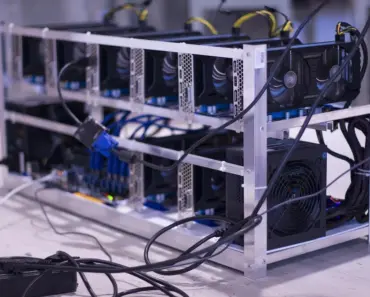
The digital logic of artificial intelligence moves at near-instantaneous speeds, but the physical infrastructure supplying its power remains bound by the slower laws of physics and legacy grid design. This fundamental disconnect creates what industry leaders now call the gigascale power paradox. As AI training clusters scale to gigawatt-level facilities, the challenge is no longer just keeping chips cool or finding enough land. The real bottleneck is the dynamic resilience of the power chain itself. Modern GPU clusters generate high-frequency, abrupt, and synchronized pulse loads. Traditional backup systems and grid utilities simply cannot react to millisecond-level power spikes. Solving this paradox requires a fundamental shift in how energy is stored, managed, and deployed.
Bridging the Gap: Five Strategies to Solve the Gigascale Power Paradox
To move beyond simple backup and tackle the root cause of power instability, the industry is converging on a set of integrated solutions. These five approaches, when aligned, transform energy storage from a passive insurance policy into an active, high-speed stabilizer. They address the physical wall that threatens to stall the next wave of AI expansion.
1. High-Speed Energy Buffering with Semi-Solid-State Chemistry
Conventional power systems were designed for steady-state loads, not the rapid heartbeat of a massive AI GPU cluster. When thousands of GPUs synchronize their computing cycles, they generate high-frequency, abrupt pulse loads. These spikes can lead to voltage sags, frequency oscillations, and potential interruptions of critical AI training. Traditional lead-acid batteries or standard lithium-ion cells struggle to respond fast enough, forcing operators to over-size their infrastructure just to absorb the volatility.
The first solution to the gigascale power paradox lies in the chemistry of the battery itself. Semi-solid-state technology, such as Ampace’s PU Series, acts as a high-speed shock absorber. These cells leverage ultra-low internal resistance, also known as Direct Current Resistance (DCR). Lower resistance means electrons can flow almost instantaneously. This capability neutralizes millisecond-level power spikes at the source, stabilizing the local power loop before disturbances propagate upstream to the grid or on-site generators. For operators of 100 kW+ racks, this means maintaining peak performance without transmitting instability across the power chain. This chemical innovation ensures that the energy system can respond as fast as the silicon demands.
2. Algorithmic Intelligence for Predictive Load Balancing
Hardware alone cannot solve the AI power paradox. Even the fastest battery chemistry is ineffective without intelligent software to manage it. Static thresholds and traditional UPS logic do not work for dynamic AI loads. A standard system might trip unnecessarily during a routine surge or fail to protect against a real fault because it lacks the context of the workload.
By integrating algorithmic intelligence, energy systems can differentiate between a harmless computational pulse and a genuine grid disturbance. Companies like Eaton have developed matured UPS architectures that prioritize rapid load responsiveness and high system stability. These systems use machine learning models to predict power demand based on GPU scheduling. They can intelligently decide when to use the battery buffer for peak shaving and when to reserve that capacity for emergency backup. This ensures continuity and reliability while maximizing the operational efficiency of the entire facility. The software essentially acts as a brain, telling the high-speed battery muscles exactly when and how to flex.
3. Distributed Rack-Level Power Architectures
Centralized UPS systems, while mature and reliable, create a single point of failure and introduce significant latency in large-scale facilities. Running massive copper buses from a central room to thousands of racks is inefficient and expensive. As rack densities soar beyond 100 kW, this centralized model becomes a physical liability.
Solving the gigascale power paradox requires a shift toward distributed, rack-level topologies. Advanced 800V DC architectures are emerging as the preferred standard. By keeping power in direct current form and eliminating multiple AC/DC conversion steps, facilities can achieve significant efficiency gains. Rack-level battery backup units (BBUs) place the energy buffer directly next to the load. This minimizes transmission loss and ensures that millisecond-level response is physically possible. This granular approach also makes scaling more manageable. Operators can add power capacity incrementally, rack by rack, rather than ripping out entire central plant systems. It transforms the power grid of the data center into a flexible, high-performance fabric rather than a rigid central trunk.
You may also enjoy reading: Hotel Check System Left 1 Million Passports Exposed.
4. Active Grid Participation and Stabilization
The utility grid itself is not robust enough to support the volatile loads of gigascale AI sites. This creates an infrastructure gap that often forces operators into a cycle of costly over-sizing just to buffer instability. Traditional backup sources, such as diesel generators and gas turbines, simply cannot react to millisecond-level power spikes. They take seconds to minutes to ramp up.
By aligning on-site battery storage with grid needs, data centers can transform from passive consumers into active stabilizers. This is the paradigm shift from passive insurance to active asset. Large fleets of semi-solid-state batteries, managed by intelligent software, can provide frequency regulation and demand response services to the local utility. This not only generates a potential revenue stream to offset energy costs but also strengthens the local grid for everyone. Instead of simply drawing power and causing headaches for the utility, the AI facility becomes a responsible, dynamic partner in grid management. This active participation is crucial for sustaining the growth of gigascale infrastructure without collapsing the local power network.
5. Enhanced Thermal Stability and Safety Protocols
The high heat density generated by modern GPUs is well documented. Less discussed is the thermal stress placed on the energy storage systems that support them. Rapid charge and discharge cycles, combined with the ambient heat of a dense computing environment, can degrade traditional lithium-ion batteries and increase the risk of thermal runaway.
Advanced chemistry plays a critical role here as well. Semi-solid-state battery designs, like those developed by Ampace, minimize the amount of liquid electrolyte. This drastically reduces the risk of leakage and thermal runaway under continuous high-load conditions. The physical stability of the cell architecture allows it to operate safely within the demanding thermal envelope of an AI cluster. When paired with intelligent thermal management systems, these batteries offer a level of safety and cycle life that traditional cells cannot match. For operators, this translates to lower total cost of ownership and drastically reduced insurance risk. It ensures that the solution to the power paradox does not introduce a fire hazard.
The transition from legacy infrastructure to a high-speed, intelligent, and distributed power ecosystem is already underway. No single technology can solve the gigascale power paradox alone. It requires the alignment of advanced chemistry, algorithmic intelligence, distributed architecture, and a proactive stance toward grid collaboration. By transforming energy storage from a static reserve into a dynamic, instant-response system, the industry can ensure that the physical world keeps pace with the digital future of AI.