A U.S. Court Opens the Door for Cross-Border Evidence Gathering
A federal judge in New Jersey has given Apple the green light to pursue internal records from Samsung Electronics in South Korea. The ruling comes as part of Apple’s broader antitrust battle with the U.S. Department of Justice. This development marks a notable moment in how international evidence gathering intersects with domestic monopoly allegations.
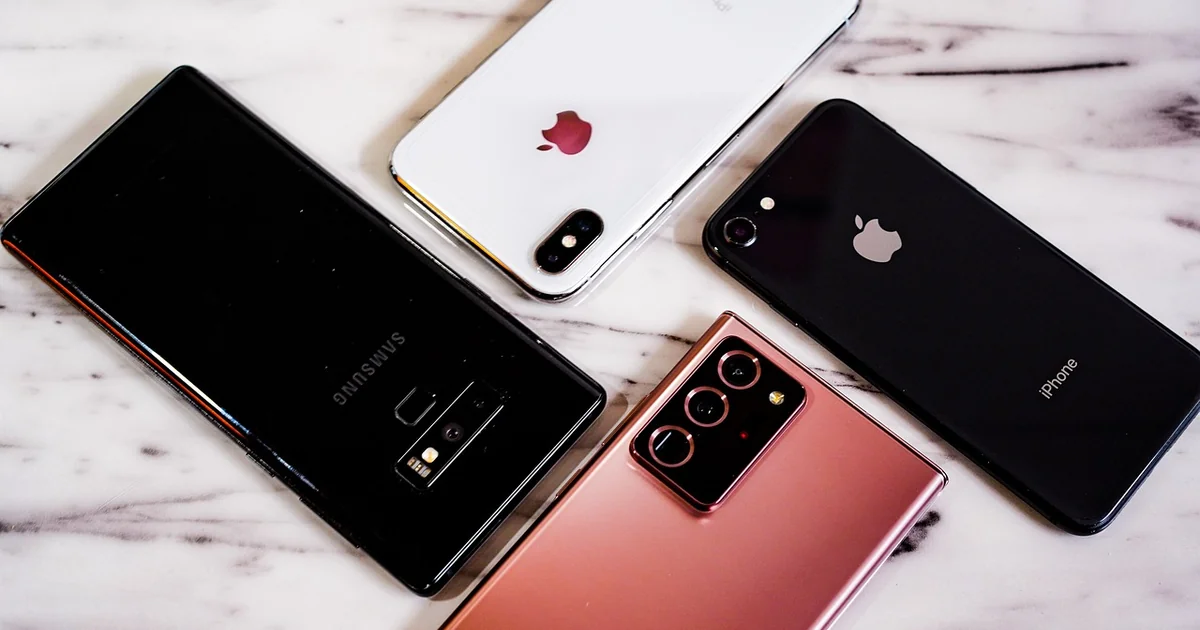
The court found “good cause” to approve the apple samsung evidence request, which relies on a decades-old international treaty known as the Hague Evidence Convention. While the decision represents a procedural win for Apple, it does not guarantee that Samsung will actually hand over any documents. The process now shifts to South Korean authorities, who will decide whether to execute the request under their own laws.
Why Samsung’s Internal Data Matters to Apple’s Case
Apple has argued that Samsung is one of the most relevant third parties in its antitrust dispute with the DOJ. The two tech giants compete head-to-head in several markets, including smartphones, smartwatches, and app distribution. Internal Samsung records could shed light on competitive dynamics that Apple believes support its defense against allegations of monopolistic behavior.
Consider a hypothetical scenario: a legal researcher tracking how the Hague Convention is used in U.S. antitrust cases might note that Samsung’s internal strategy documents could reveal how the company views Apple’s market power. If Samsung’s own planning documents show that the company does not perceive Apple as a monopolist, that evidence could undermine the DOJ’s claims. Conversely, documents showing that Samsung struggled to compete due to Apple’s practices could strengthen the government’s position.
For someone who follows Samsung’s legal exposure in foreign jurisdictions, this case presents an interesting test. Samsung has substantial operations in the United States through its subsidiary, but the records Apple seeks are held by the Korean parent company. The U.S. subsidiary has already declined to produce those records, citing jurisdictional boundaries. That refusal forced Apple to pursue the more complex Hague Convention route.
The Smartphone Market Context
The smartphone market has been a focal point of antitrust scrutiny for years. Apple and Samsung together command a significant share of global smartphone sales. In the United States, Apple’s iOS and Samsung’s Android devices dominate the landscape. App distribution, in particular, has become a flashpoint, with Apple facing criticism over its control of the App Store and the 15% to 30% commission it charges developers.
Samsung operates its own app store, the Galaxy Store, and also distributes apps through Google Play on its Android devices. Internal documents showing how Samsung approaches app distribution pricing, exclusivity deals, or competitive responses to Apple’s policies could be highly relevant to the antitrust case. The court recognized this relevance when it approved Apple’s request.
Understanding the Hague Evidence Convention
The Hague Evidence Convention, formally known as the Hague Convention on the Taking of Evidence Abroad in Civil or Commercial Matters, dates back to 1970. It provides a standardized mechanism for courts in one signatory country to request evidence located in another signatory country. Both the United States and South Korea are parties to the convention.
What does the Hague Evidence Convention actually require for a foreign subpoena? The process begins when a court in the requesting country issues a letter of request, sometimes called a letter rogatory. That letter is transmitted to a central authority in the destination country, which then determines whether the request complies with local law. If approved, the request is executed by a local judicial officer, who gathers the evidence and returns it to the requesting court.
How long does the Hague Convention process typically take in South Korea? Based on historical patterns, the process can take anywhere from six months to over a year. South Korea’s central authority reviews each request carefully, and local courts may impose conditions or limitations. For Apple, which has already waited nine months since the discovery window opened, the timeline adds uncertainty. The DOJ has argued that Apple should bear the risk that the evidence may arrive too late to be used at trial.
Practical Hurdles in International Evidence Gathering
International evidence gathering via the Hague Convention faces several hurdles that parties often underestimate. First, the requesting party must specify the documents with reasonable particularity. A broad fishing expedition is unlikely to succeed. Second, the destination country may refuse to execute requests that violate its public policy or national security interests. Third, the target of the request can object at multiple stages, delaying or derailing the process entirely.
In this case, Samsung could still refuse to produce some or all of the records even after the request reaches South Korea. The company might argue that certain documents contain trade secrets, that compliance would violate Korean privacy laws, or that the request is overly broad. The Hague Convention allows signatory countries to decline requests that are not sufficiently specific or that would require actions contrary to local law.
The DOJ’s Objections and Timing Concerns
The Department of Justice did not quietly accept Apple’s move. In its response to the court, the DOJ criticized the timing of Apple’s request, noting that the company waited nine months before seeking Samsung’s records through the Hague Convention. The government argued that Apple should not be allowed to use the convention process to extend the discovery period or disrupt the trial schedule.
The DOJ also raised a practical concern: if the court granted Apple’s request, Apple should bear the risk that some or all of the evidence from South Korea may not arrive in time for trial. The government did not want to see the case delayed because Apple had waited too long to pursue a known avenue for obtaining relevant documents.
Consider a tech policy analyst assessing the impact of cross-border discovery on litigation timelines. The analyst might observe that the DOJ’s objection reflects a broader tension in antitrust enforcement. Defendants facing monopoly allegations often seek extensive discovery to build their defense. When that discovery crosses international borders, the timeline becomes harder to predict. Courts must balance the defendant’s right to present a complete defense against the government’s interest in moving the case forward efficiently.
Discovery Tactics in Federal Antitrust Cases
Discovery tactics and timing in federal antitrust cases can make or break a party’s strategy. Early discovery gives a party time to analyze documents, depose witnesses, and build arguments. Late discovery, especially from foreign sources, carries the risk that the evidence will arrive after key deadlines have passed. Apple’s decision to wait nine months before invoking the Hague Convention may reflect a calculated judgment about the strength of its existing evidence, or it may simply be a case of procedural oversight.
The court, however, found that Apple had shown good cause for its request despite the timing concerns. The judge considered the submissions from both sides and concluded that the potential relevance of Samsung’s records justified allowing the Hague Convention process to move forward. The ruling does not endorse Apple’s timing but acknowledges that the documents could be important enough to warrant the effort.
What Happens Next in the Hague Convention Process
With the court’s approval in hand, Apple’s request now travels to South Korea. The U.S. District Court for the District of New Jersey will transmit a letter of request to the South Korean central authority designated under the Hague Convention. That authority, typically a division of the Ministry of Justice or the Supreme Court, will review the request for compliance with Korean law and procedure.
You may also enjoy reading: 5 Best Samsung Deals: Get Free Galaxy S26 from T-Mobile.
What happens if Samsung refuses to produce the documents after the request is executed? Samsung has several options. It can object to the request on grounds that it is too broad, that it seeks privileged information, or that compliance would violate Korean law. The South Korean authority may hold hearings, allow Samsung to present objections, and then decide whether to modify or deny the request. Even if the authority approves the request, Samsung could still challenge specific document categories in court.
The Hague Convention does not give the requesting party a direct enforcement mechanism. If Samsung refuses and the South Korean authority declines to compel compliance, Apple’s options become limited. It could ask the U.S. court to impose sanctions on Samsung’s U.S. subsidiary, but that subsidiary has already stated that it does not control the parent company’s records. The practical reality is that international evidence gathering depends heavily on cooperation from the target and the willingness of local authorities to enforce the request.
Potential Outcomes and Their Implications
Several scenarios could unfold. In the best case for Apple, South Korean authorities execute the request quickly, Samsung complies without significant objection, and the documents arrive in time for trial. In a more likely scenario, the process takes months, Samsung objects to key categories, and only a subset of the requested documents is produced. In the worst case for Apple, the request is denied or delayed so long that the evidence arrives after the trial has concluded.
For Samsung, the stakes are also significant. Producing internal strategy documents to a U.S. court in an antitrust case could reveal competitive intelligence that the company would prefer to keep confidential. Samsung may also worry about setting a precedent that makes it easier for other litigants to seek its records in future cases. The company has strong incentives to resist or narrow the request.
Broader Implications for Antitrust Litigation
This case highlights how international evidence gathering is becoming more common in antitrust litigation. As markets globalize and major competitors operate across multiple jurisdictions, the documents needed to prove or defend against monopoly allegations often sit in foreign countries. The Hague Convention provides a framework, but it was designed for an era when cross-border discovery was rare. The process can feel slow and cumbersome by modern standards.
Some legal experts have called for reforms to the Hague Convention or for bilateral agreements that streamline evidence gathering between key trading partners. Others argue that courts should be more willing to impose sanctions on foreign companies that refuse to comply with U.S. discovery requests, even when those companies are not direct parties to the case. The tension between national sovereignty and the need for efficient cross-border discovery is unlikely to resolve anytime soon.
For companies doing business internationally, the takeaway is clear. Internal documents held in one country may become subject to discovery in another country’s litigation. Companies should have clear policies for document retention, privilege review, and response to international evidence requests. Waiting until a request arrives is too late.
A Note on the Court’s Reasoning
The court’s decision to grant Apple’s request rested on a finding of “good cause.” That standard requires the requesting party to show that the evidence is relevant, that it is not obtainable through less burdensome means, and that the request is not unduly burdensome on the target. Apple argued that Samsung’s internal records are uniquely relevant because Samsung is a direct competitor in multiple markets and because its U.S. subsidiary could not produce the records held in Korea.
The court agreed, noting that Samsung’s status as a key competitor made its records potentially valuable to the case. The judge also noted that Apple had attempted to obtain the records through the U.S. subsidiary before turning to the Hague Convention. Those efforts showed that Apple had not chosen the most burdensome route first without reason.
What This Means for Regular Consumers
For most people, this legal maneuvering may seem distant and technical. But the outcome of Apple’s antitrust case could affect how smartphones are priced, how apps are distributed, and how much control companies have over their digital ecosystems. If Apple successfully defends itself by showing that it faces robust competition from Samsung and others, the current structure of the app economy may remain unchanged. If the DOJ prevails, we could see changes to how Apple operates its App Store, potentially leading to lower commissions and more choices for developers.
The documents Apple seeks from Samsung could play a role in shaping that outcome. Whether they arrive in time, and whether they contain the evidence Apple hopes for, remains to be seen. For now, the court has opened the door. What happens on the other side depends on South Korean authorities, Samsung’s willingness to cooperate, and the pace of a process that was designed decades before the smartphone era began.
This case serves as a reminder that antitrust litigation in the technology sector often involves complex international dimensions. The companies involved operate globally, their records are scattered across borders, and the legal frameworks for gathering evidence were built for a different time. As courts and litigants navigate these challenges, the outcomes will shape not only individual cases but also the broader landscape of competition enforcement in the digital age.