Every now and then, something comes along in the world of retrocomputing that manages to surprise even the most seasoned experts. For those who have spent decades tracing the lineage of 8-bit silicon, the evolution of home computing often feels like a well-mapped territory. However, certain hybrid machines emerge that defy standard classification, blending different eras of engineering into a single, peculiar chassis. One such anomaly is the Commodore 4064, a machine that presents a fascinating puzzle for anyone interested in the delicate art of commodore 4064 restoration.
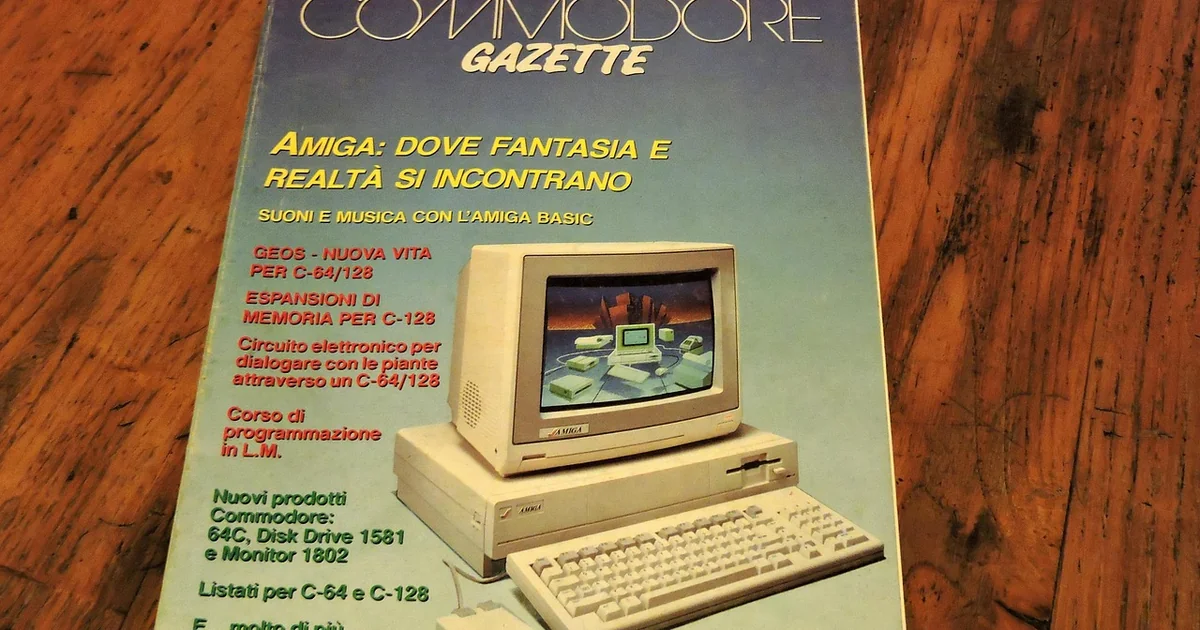
The Hybrid Nature of a Computing Oddity
To understand why this machine is so unique, one must first look at the two distinct worlds it occupies. On one hand, you have the Commodore PET, a staple of the late 1970s computing scene. The PET was a rugged, all-in-one unit featuring a built-in CRT monitor, a 6502 processor, and monochrome graphics. It was designed for business and education, prioritizing stability and connectivity through ports like the IEEE-488. It was a machine built for serious work, characterized by its blocky, utilitarian aesthetic.
On the other hand, we have the legendary Commodore 64 from the early 1980s. This was the king of the home computer market, famous for its vibrant color graphics and the SID synthesizer chip that defined a generation of digital music. While the PET was a monochrome workhorse, the C64 was a multimedia powerhouse designed to plug into a standard television. The 4064 is essentially a bridge between these two philosophies, housing a C64 mainboard inside the robust, professional shell of a PET.
This architectural marriage creates a specific set of challenges for enthusiasts. When embarking on a commodore 4064 restoration, you aren’t just fixing a single computer; you are navigating two different design languages. You might find yourself dealing with the power delivery systems of a 70s all-in-one monitor while simultaneously trying to stabilize the high-speed memory chips of an 80s home computer. It is a technical tightrope walk that requires a deep understanding of both eras.
Navigating the Complexity of Commodore 4064 Restoration
The process of bringing such a hybrid back to life is rarely straightforward. Unlike a standard Commodore 64, where parts are plentiful and documentation is exhaustive, the 4064 introduces variables that can baffle even experienced technicians. The mixture of custom metalwork and repurposed components means that “off-the-shelf” solutions often fall short. You cannot simply swap a part from a standard C64 and expect it to fit perfectly within the PET housing without careful investigation.
One of the primary hurdles involves the physical condition of the hardware. Because these machines were often used in educational or industrial settings, they were frequently stored in less-than-ideal environments. A common scenario involves finding a unit that has been exposed to dampness or high humidity. This leads to a “grubby” motherboard, where oxidation and corrosion begin to eat away at the delicate traces and solder joints. Cleaning such a board requires a surgical approach to avoid damaging the aging components.
1. Identifying Environmental Damage and Corrosion
The first sign of trouble in many vintage machines is visible residue on the PCB. When a machine has lived in a damp environment, the moisture reacts with the copper and solder, creating a layer of grime that can lead to short circuits. In a commodore 4064 restoration, this is often the starting point. You might see a greenish or white powdery substance near the electrolytic capacitors or along the edges of the board. This isn’t just aesthetic; it is a functional threat that can bridge connections and cause catastrophic failure.
To address this, a technician must perform a deep cleaning using high-purity isopropyl alcohol and specialized brushes. However, the challenge lies in the complexity of the hybrid board. Because the 4064 uses custom metalwork to adapt the C64 components to the PET case, there are often tight spaces where moisture can become trapped. A meticulous cleaning process involves not just the surface, but ensuring that the underside of the board and the mounting points are completely free of conductive residue.
2. Debugging Hybrid Power Supply Circuits
Power delivery is perhaps the most critical and difficult stage of the process. In a standard desktop computer, the power supply is often a separate brick or a well-documented internal module. In the 4064, you are dealing with the power regulation systems originally intended for a PET monitor, now tasked with feeding a C64 mainboard. This mismatch can lead to voltage fluctuations that are difficult to track. If the voltage rails are not perfectly stable, the sensitive 6510 processor or the SID chip could be permanently damaged.
A common problem is the failure of aging capacitors within the power section. These components can leak or lose their ability to smooth out the current, leading to “dirty” power. When debugging, one must use an oscilloscope to observe the ripple voltage. If the power is noisy, it can cause the machine to crash or behave erratically, often mimicking the symptoms of a failing ROM. Solving this requires replacing old electrolytic capacitors with modern, high-quality equivalents that can handle the specific thermal profiles of the PET chassis.
3. Resolving Video Signal Discrepancies
Another unique hurdle is the way the video signal is handled. The original PET was designed for monochrome output, whereas the C64 core is capable of high-resolution color. This creates a massive headache when trying to output a signal to a modern monitor. Many enthusiasts find that standard composite connections are insufficient or produce a distorted image due to the way the internal video circuitry is routed through the hybrid assembly. This often necessitates the use of a sync splitter board.
A sync splitter is a specialized piece of hardware used to separate the horizontal and vertical sync signals, allowing the machine to drive non-composite monitors or modern LCDs via RGB or VGA. Without this, the image might appear jittery, or the colors might bleed uncontrollably. During a commodore 4064 restoration, integrating such a solution requires careful soldering and an understanding of how the original video chip interfaces with the modified signal path. It is a bridge between 1970s video standards and the digital displays of today.
4. Troubleshooting Dodgy ROMs and Memory Errors
Once the power and video are stable, the focus shifts to the logic of the machine. It is quite common to encounter a “dodgy” ROM or intermittent memory errors in these hybrid units. Because the 4064 was a specialized build, the way the ROM chips are addressed can sometimes differ from the standard C64 architecture. A single faulty bit in a ROM chip can prevent the computer from ever reaching the BASIC prompt, leaving the user staring at a blank or garbled screen.
You may also enjoy reading: 7 Best Fire Stick Max Deals to Save $20 at Amazon Now.
Memory errors are equally frustrating. The RAM chips in these machines are decades old and susceptible to “bit rot” or physical failure due to thermal cycling. To solve this, a technician must use a logic analyzer or a specialized diagnostic software to test each byte of memory. If a specific address range is failing, the corresponding chip must be identified and replaced. This requires a high level of precision, as the chips are often soldered directly to the board or held in aged sockets that can be difficult to work with.
5. Analyzing Custom Metalwork and Component Layout
There is often a debate among collectors regarding whether machines like the 4064 were simply “frankensteined” from surplus parts or if they were official, purpose-built products. The answer lies in the metalwork. A deep dive into the chassis reveals custom-manufactured metal shields and mounting brackets designed specifically to fit the C64 components into the PET shell. This isn’t just a collection of spare parts; it is a coordinated engineering effort.
For the restorer, this means you cannot rely on standard C64 case layouts. You might find that certain components are mounted in unusual positions to avoid interference with the CRT’s magnetic field or to accommodate the unique internal dimensions of the PET. Understanding this layout is vital when attempting to clean or repair the unit. If you assume a standard layout, you might accidentally apply pressure to a delicate component or fail to notice a custom grounding strap that is essential for reducing electronic noise.
6. Managing Thermal Dynamics in All-in-One Cases
Heat management is an often-overlooked aspect of retrocomputing. The PET case was designed to house components that generated a certain amount of heat, but the C64 mainboard has its own thermal requirements. When you combine them, you create a unique microclimate inside the chassis. If the airflow is restricted by the custom metalwork or if the internal components are packed too tightly, the machine may suffer from thermal throttling or sudden shutdowns.
A practical solution during restoration is to inspect the original ventilation paths and ensure they are unobstructed. In some cases, applying high-quality thermal paste to voltage regulators or adding small, silent cooling elements can prevent the machine from overheating during extended use. This is particularly important if you are using the machine for its intended purpose—running software or perhaps even experimenting with the SID chip’s synthesis capabilities, which can generate significant internal heat over time.
7. Verifying Signal Integrity and Long-Term Stability
The final stage of any successful commodore 4064 restoration is the verification of signal integrity. It is one thing to get the machine to boot; it is quite another to ensure it can run complex programs for hours without a single error. This involves stress-testing the system using specialized software that pushes the CPU, RAM, and I/O ports to their limits. You are looking for the subtle glitches that only appear when the machine is under load.
This testing phase is where the true quality of the work is proven. A successful restoration means that the power rails remain flat, the video signal remains crisp without sync drift, and the memory returns consistent data across all addresses. For the enthusiast, this is the ultimate payoff. Seeing a machine that was once a grubby, non-functional relic transform into a stable, working piece of computing history is a testament to the patience and technical skill required to master these hybrid 8-bit legends.
Restoring a machine as complex as the Commodore 4064 is more than just a hobby; it is an act of digital archaeology. By navigating the challenges of hybrid architecture, environmental damage, and specialized circuitry, you preserve a unique chapter of computing history that would otherwise be lost to time and oxidation.