
Over the past eight years, the hardware security industry has been gripped by an exhausting battle against microarchitectural transient execution attacks. From Spectre and Meltdown to Foreshadow, MDS, and Downfall, every major processor vulnerability has shared a common signature: the exploitation of speculative branch prediction, out-of-order execution pipelines, and microarchitectural timing side channels across CPU cache hierarchies. Hardware architects responded with complex silicon defenses: branch history flushes, speculative execution barriers (LFENCE), and hardware-enforced Return Address Security. But in 2022, security researchers uncovered a flaw that shatters this paradigm entirely. Labeled AEPIC Leak (CVE-2022-21233), this vulnerability exposes critical architectural data without executing a single speculative instruction. By reading uninitialized physical memory-mapped registers within Intel’s Local Advanced Programmable Interrupt Controller (APIC), an attacker can directly extract plaintext AES-GCM encryption keys and attestation credentials from hardware-hardened Intel Software Guard Extensions (SGX) enclaves at architectural throughputs exceeding 100 kilobytes per second.
1. Speculative Side Channels vs. Architectural Uninitialized Reads
To grasp the severity of AEPIC Leak, one must understand how it fundamentally diverges from classic transient execution exploits. In a Spectre-class vulnerability, the processor is tricked into speculatively executing instructions down a misspeculated branch path. Although the CPU architectural state (registers and memory) is rolled back upon discovering the branch misprediction, the speculative operations leave physical artifacts in microarchitectural structures—such as modified cache lines in the L1/L2 data cache. The attacker then executes a high-precision timer loop (e.g., `RDTSC` / `RDTSCP`) to probe memory access latency (Flush+Reload), reconstructing secrets based on cache hits versus cache misses.
Transient side-channel attacks inherently suffer from severe physical limitations:
- They are noisy: concurrent system interrupts, hardware prefetchers, and cache line replacements corrupt leakage signals.
- They have low bandwidth: leaking data through timing loops is typically constrained to bytes or a few kilobytes per second.
- They are neutralizable: inserting serializing instructions (`LFENCE`) or disabling speculative features prevents the transient window from leaking data.
AEPIC Leak is not a speculative side-channel attack. It is a pure, deterministic architectural uninitialized read vulnerability. When an attacker executes a standard assembly read instruction (such as `MOV EAX, [EBX]`) targeting an unmapped physical address inside Intel’s Local APIC address space, the instruction does not execute speculatively; it executes architecturally in normal program order. The CPU pipeline does not fault or trap to the kernel. Instead, the hardware memory-mapped I/O (MMIO) register interface returns stale, unencrypted 64-bit plaintext data residing in the internal processor core transfer buffers directly to the user-space destination register. This renders conventional software mitigations and speculative barrier instructions entirely obsolete against the vulnerability.
2. Anatomy of the Intel Local APIC: The 0xFEE00000 MMIO Page
The Advanced Programmable Interrupt Controller (APIC) is a fundamental microarchitectural subsystem on all modern x86 microprocessors. It consists of two primary hardware components: the I/O APIC (residing on the motherboard chipset to route peripheral interrupts) and the Local APIC (embedded directly inside each individual CPU execution core to handle inter-processor interrupts, scheduling timers, and local device events).
Historically, Intel processors exposed the Local APIC control registers through legacy xAPIC mode. In xAPIC mode, the controller’s internal registers are mapped into physical memory space at the fixed base physical address:
This base address maps a standard 4,096-byte (4KB) physical memory page. Within this 4KB page, specific 32-bit registers are defined at fixed architectural offsets. For example:
0xFEE00020: Local APIC ID Register0xFEE000B0: End of Interrupt (EOI) Register0xFEE00300: Interrupt Command Register (ICR Low)0xFEE00320: Local APIC Timer Vector Register
However, these architectural control registers occupy only a tiny fraction of the 4KB memory page. Crucially, all APIC registers are strictly aligned to 16-byte (128-bit) boundaries, and large blocks of address space between registers (such as offsets 0x040–0x070, 0x090, and 0x290–0x2E0) are marked by Intel hardware documentation as “Reserved / Undefined”.
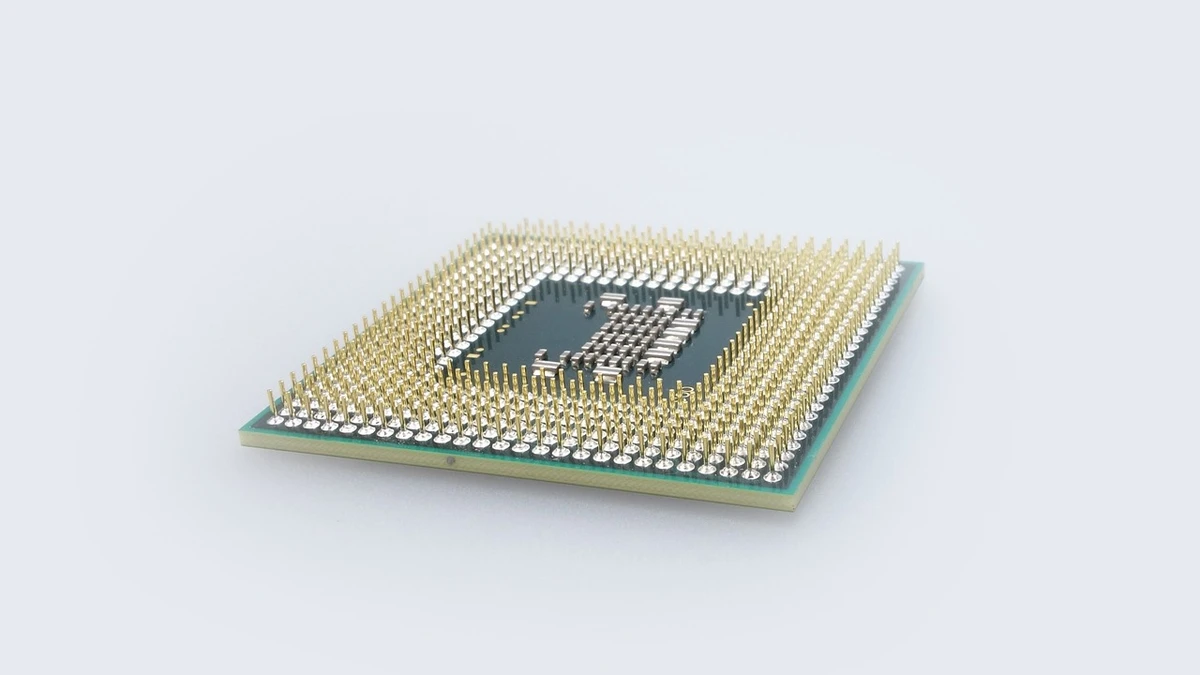
When an operating system maps the physical page 0xFEE00000 with uncacheable (UC) memory attributes, the CPU’s internal bus interface unit handles memory requests to this region. When a read instruction targets a valid defined APIC register (e.g., reading the APIC Timer), the internal logic samples the corresponding register latch and returns the 32-bit value.
The catastrophic design flaw in Intel’s microarchitecture lies in how the bus interface handles reads to undefined or reserved offsets within the 4KB APIC page:
Instead of asserting an unmapped bus abort exception or actively zeroing out the data lines, the APIC logic ignores the read. However, the internal execution core still expects a 64-bit or 32-bit response on the internal ring bus / data lines. Because the bus lines are never driven with zero, the read operation captures the stale charge remaining on the internal core memory bus latches from the most recent data transfer executed by that CPU core!
To understand the physical silicon root cause, one must examine the internal core arbiter that multiplexes traffic between the execution units, the Level 1 Data Cache (L1D), the Line Fill Buffers (LFBs), and the Local APIC MMIO unit. When a core issues a memory read instruction to an address mapped as uncacheable MMIO, the memory execution unit allocates a temporary entry in the core’s internal SuperQueue / fill buffer pipeline. The hardware bus driver uses a shared set of differential bitlines that shuttle data from the internal ring interconnect back to the register renaming stage.
In compliant hardware designs, unmapped physical register spaces drive pull-down NMOS transistors that actively bleed the bitlines to ground (logic 0) or pull-up PMOS transistors that drive logic 1 (0xFFFFFFFF). Intel engineers, seeking to minimize transistor count in the legacy xAPIC interface, omitted active termination logic on reserved offsets. The floating capacitive lines retain the dynamic charge of the previous clock cycle’s data packet. In essence, the Local APIC acts as a hardware wiretap listening directly to the physical bus lines inside the core.
3. The Breach of Intel SGX Hardware Enclaves
Under normal circumstances, leaking random stale cache line fragments across user space might represent a moderate security defect. What elevated AEPIC Leak to a maximum-severity architectural emergency (CVSS 8.2) is its capability to completely destroy the security perimeter of Intel Software Guard Extensions (SGX).
Intel SGX was designed as a hardware-enforced Trusted Execution Environment (TEE). It allows untrusted operating systems, hypervisors, and cloud administrators to execute sensitive code inside an isolated “enclave” without being able to inspect or tamper with enclave memory. Even if an attacker possesses full root privileges, kernel control, or physical memory access, SGX memory residing in external DRAM is cryptographically encrypted and integrity-verified by the hardware Memory Encryption Engine (MEE) using hardware-fused AES-XTS keys.
However, encryption only protects memory outside the CPU die. Once data is fetched into the processor’s internal execution engine (L1 Data Cache, Line Fill Buffers, and register files), it exists in unencrypted plaintext.

AEPIC Leak breaches this boundary because the Local APIC resides directly inside the physical core, sharing the internal unencrypted memory transfer bus. When an enclave executes sensitive cryptographic operations (such as deriving an AES-GCM database key or generating a remote attestation signature), the plaintext 64-byte cache lines travel across the core’s internal data paths.
By pinning an attacking thread to the same physical core executing the SGX enclave, the attacker executes a tight loop reading undefined APIC registers:
; AEPIC Leak Core Extraction Primitive (x86-64 Assembly)
; RBX points to mapped physical address 0xFEE00000 (Local APIC)
; RDI points to user-space output buffer

align 64
.leak_loop:
    mov rax, [rbx + 0x290]    ; Read Reserved APIC Offset 0x290
    mov [rdi], rax            ; Store leaked stale bus quadword
    add rdi, 8

    mov rdx, [rbx + 0x2A0]    ; Read Reserved APIC Offset 0x2A0
    mov [rdi], rdx            ; Store leaked stale bus quadword
    add rdi, 8

    sub rcx, 1
    jnz .leak_loop
Because reading the APIC registers incurs zero cache misses, zero branch mispredictions, and zero page faults, this tight extraction loop executes at the native frequency of the processor, delivering an uninterrupted data exfiltration bandwidth of 40 kB/s to 120 kB/s of pure internal core memory transfers.
4. Synchronization via Asynchronous Enclave Exits (AEX)
A critical challenge in microarchitectural exploitation is synchronization: how does an attacker ensure the uninitialized APIC registers capture the exact target cryptographic key rather than arbitrary operating system background noise?
In AEPIC Leak, the attacker leverages Intel’s own hardware interrupt architecture. A malicious kernel or hypervisor configures the Local APIC Timer to fire high-precision interrupts (via the APIC Initial Count Register) at microsecond intervals, single-stepping the SGX enclave through Asynchronous Enclave Exits (AEX).
When an AEX occurs:
- The CPU hardware automatically suspends the enclave execution.
- The hardware saves all general-purpose registers (RAX, RBX, RCX, RDX, RSI, RDI, RSP, RBP, R8–R15), flags, and extended vector registers (XMM/YMM) into a dedicated internal structure known as the State Save Area (SSA).
- The hardware zeros out the core’s visible architectural registers before transferring control to the operating system’s interrupt handler, preventing the OS from directly inspecting enclave state.
Herein lies the fatal microarchitectural trap: during step 2, while the CPU hardware is copying the sensitive general-purpose registers to the SSA frame, the unencrypted register values stream across the internal core memory bus. Immediately upon entering the interrupt handler, the attacker reads the uninitialized Local APIC registers. Because the SSA transfer was the last transaction across the bus, the undefined APIC registers return the exact contents of the enclave’s private registers, completely defeating the hardware register-clearing mechanism!
| Microarchitectural Attack | Exploit Mechanism | Speculation Required? | Exfiltration Speed | Impact on Intel SGX |
|---|---|---|---|---|
| Foreshadow (L1TF) | PTE Present-Bit Fault | Yes (Transient Out-of-Order) | ~1 – 2 kB/s | Leaked L1D Cache (Fixed via Flush) |
| MDS / RIDL / Zombieload | Line Fill Buffer (LFB) Overlap | Yes (Transient Speculation) | ~2 – 5 kB/s | Leaked Fill Buffers (Fixed via VERW) |
| SGAxe | Transient Cache Cross-Read | Yes (Speculative Execution) | ~500 B/s | Attestation Key Extraction |
| AEPIC Leak (CVE-2022-21233) | Uninitialized MMIO Read | NO (Pure Architectural Read) | 40 – 120 kB/s | Instant AES & Attestation Compromise |
5. The Extraction of AES-GCM Enclave Sealing Keys & Attestation Secrets
In rigorous peer-reviewed proof-of-concept tests, security researchers demonstrated the end-to-end extraction of AES-GCM 128-bit encryption keys used by production SGX enclaves to seal confidential user data to local storage.
During an AES encryption routine, the cryptographic algorithm expands the master key into an array of round keys stored in register variables or stack memory. By single-stepping the enclave through AEX interrupts and sampling APIC offset 0x290, the attacker recovered the round key words with 100% bit-exact accuracy in less than 20 seconds of total execution time.
Beyond symmetric encryption keys, AEPIC Leak also successfully exfiltrated the RSA-3072 private attestation signing keys belonging to the Intel Architectural Quoting Enclave (QE). In the Intel SGX security model, remote attestation is the foundational anchor of trust. When a client or remote verifier establishes a secure channel with an enclave, the Quoting Enclave signs a cryptographic report proving that the enclave is executing genuine, untampered code on genuine Intel hardware.
Possession of the Quoting Enclave’s private attestation key shatters this entire trust model. An attacker can synthesize arbitrary attestation quotes, convincing remote verification servers (such as financial transaction backends, confidential computing clusters, or signal messaging servers) that a malicious, backdoor-injected binary is running inside a secure Intel SGX enclave. This compromised the security foundations of cloud confidential computing providers that relied on SGX for multi-tenant customer isolation.
AEPIC Leak: Intel Local APIC Architectural Security Dossier
Microarchitectural Analysis of Uninitialized MMIO Reads Exfiltrating SGX Keys (CVE-2022-21233) (Complete architectural audit with telemetry tables and schematic breakdowns).
AEPIC_Leak_Intel_Local_APIC_Architectural_Security_Dossier.pdfFormat: Publication-Grade PDF
6. Mitigations: The Demise of xAPIC and The Rise of x2APIC
Because AEPIC Leak is an architectural hardware defect rooted in physical silicon bus routing, traditional operating system software patches (such as page table isolation or compiler retpolines) were completely ineffective.
Intel and the Linux kernel community deployed a two-tiered mitigation strategy:
1. Mandatory Migration to x2APIC Mode: The modern x2APIC architecture, introduced in newer Intel processors, completely eliminates the legacy memory-mapped I/O (MMIO) page. In x2APIC mode, interrupt registers are accessed exclusively through Model-Specific Registers (MSRs) via the `RDMSR` and `WRMSR` instructions (MSR range 0x800–0x8FF). Because MSR access is mediated by the internal processor decoding unit rather than an uninitialized memory bus interface, unmapped MSR reads trigger a General Protection Fault (#GP) rather than returning stale buffer contents. Linux kernels were updated to deprecate xAPIC and force x2APIC mode on all supported hardware.
2. Processor Microcode Updates (MCU): For legacy operating environments and virtual machine hypervisors where xAPIC mode cannot be disabled, Intel issued microcode updates (MCU) for 10th, 11th, and 12th Generation Core and Xeon processors. The microcode update modifies the hardware bus interface logic: whenever a read request targets an undefined or reserved APIC offset, the microcode forces the bus buffer to actively write zeros across the internal latches before delivering data to the register file, permanently blinding the exploit primitive.
Furthermore, Intel’s subsequent client and server microarchitectures—starting with 13th Generation Raptor Lake and 4th Generation Xeon Scalable (Sapphire Rapids)—redesigned the Local APIC hardware interface in silicon. The physical registers now feature hardwired ground pull-down circuitry on all unmapped address decoding lines, ensuring that any unmapped MMIO access returns deterministic zero values at the transistor level without relying on microcode intervention. This architectural redesign permanently eliminates the uninitialized bus latch condition in silicon, providing guaranteed physical immunity for next-generation confidential cloud computing clusters and enterprise enclaves.
7. Frequently Asked Questions (FAQ)
Why is AEPIC Leak classified as an architectural read rather than a speculative attack?
AEPIC Leak requires zero branch prediction, zero out-of-order misspeculation, and zero cache timing measurements. When a program reads an unmapped Local APIC memory-mapped I/O address, the CPU pipeline executes the read instruction in normal architectural order. The hardware simply fails to initialize the data bus, returning the physical stale contents of the internal core memory latch directly into the destination register without triggering exceptions.
Which processor architectures are vulnerable to AEPIC Leak?
AEPIC Leak (CVE-2022-21233) impacts Intel microarchitectures that support Intel SGX and utilize legacy xAPIC memory-mapped I/O mode, including 10th Generation (Ice Lake), 11th Generation (Tiger Lake / Rocket Lake), and 12th Generation (Alder Lake) Core and Xeon processors. AMD processors are not affected because AMD does not implement Intel SGX and uses different internal APIC bus latch architectures.
Does AEPIC Leak require physical access or root privileges?
AEPIC Leak requires access to physical memory-mapped I/O space at address 0xFEE00000. In native Linux or Windows systems, accessing physical MMIO typically requires root/administrator privileges or access to a compromised hypervisor. However, in cloud multi-tenant environments where a tenant controls their own virtual machine, an attacker could exploit unmasked Local APIC pass-through to spy on neighboring enclaves.
Can speculative execution mitigations (like LFENCE) stop AEPIC Leak?
No. Instructions like LFENCE, retpolines, and branch predictor barriers are designed to serialize transient speculative execution windows. Because AEPIC Leak does not use speculative execution, LFENCE instructions have zero effect on preventing the Local APIC from leaking uninitialized bus data.
How was AEPIC Leak permanently patched?
Intel issued microcode updates that actively zero out data bus latches on unmapped APIC reads, and operating systems transitioned entirely from legacy memory-mapped xAPIC mode to MSR-based x2APIC mode, permanently closing the physical vulnerability vector.
Related Technical Dossiers & Internal Research
- Inception Under the Hood: How AMD Zen 4 Return Address Security Discloses Speculative Execution to Training Injections
- TikTag Under the Hood: How Speculative Execution Shattered Armv9’s Hardware Memory Tagging Extension (MTE)
- Downfall (GDS) Under the Hood: How AVX Vector Gathering Leaks Crypto Keys at 10KB/s
Authoritative External Reference
Reference Citation: USENIX Security Symposium: AEPIC Leak: Architecturally Leaking Uninitialized Data from the Local APIC (CVE-2022-21233) →