Imagine buying a car for the price of a used bike, only to find that it still has a full tank of gas and can drive for hundreds of miles. Sounds like a dream come true, right? But for YouTuber Remmy Evans, that’s exactly what happened when he purchased a stripped-down Tesla Model 3 for just $2,000. The car, which had been abandoned by its previous owner, still had a 212-mile range on a full charge, and Evans was eager to put it to the test.
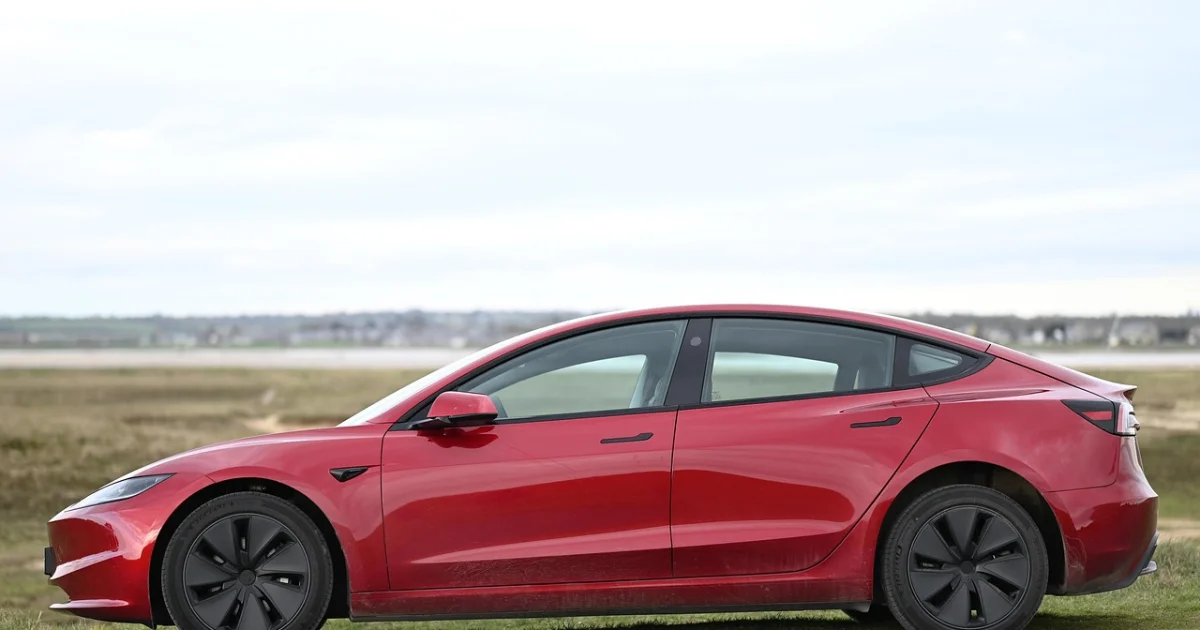
The Tesla Model 3: A Rolling Chassis with a Big Personality
The Tesla Model 3 is a sleek and sophisticated electric vehicle that’s known for its impressive range and advanced features. But when you strip it down to its bare essentials, it becomes something entirely different – a rolling chassis with a big personality. Evans’ purchase was a testament to the durability of Tesla’s drivetrain, which can withstand even the most extreme conditions.
A Brief History of the Tesla Model 3
The Tesla Model 3 was first introduced in 2017, and it quickly became one of the most popular electric vehicles on the market. With its sleek design, impressive range, and advanced features, it was an instant hit with car enthusiasts. But what makes the Model 3 truly unique is its ability to be customized and modified to suit any owner’s needs.
From its inception, the Tesla Model 3 was designed to be a modular vehicle, with interchangeable parts and a flexible platform that could be adapted to suit different applications. This has made it a popular choice among car enthusiasts and builders, who can swap out the drivetrain and other components to create a one-of-a-kind vehicle.
From Abandoned Project to $2,000 ‘Go-Kart’
Evans’ purchase of the stripped-down Tesla Model 3 was a result of a phone call from his friend Jake, who had heard about a special vehicle at Jake’s brother-in-law’s house in Idaho. The previous owner, Grayson, had purchased the Model 3 for $6,000-$7,000 with plans to transplant the drivetrain into a 1970s concept car. However, Grayson eventually abandoned the project after estimating it would take 800 hours to complete the body work.
Evans negotiated the price down from $3,000 to $2,000 and walked away with what is essentially a Tesla rolling chassis – seats, steering wheel, motors, battery pack, and screen, but no windshield, no body panels, and no seatbelts. The car had been sitting unregistered for at least two years, and Evans was eager to put it to the test.
The Wildest Part: 212 Miles of Range on a Full Charge
The wildest part of Evans’ story is that the stripped-down Tesla Model 3 still showed 212 miles of range on a full charge. This is a testament to the durability of Tesla’s drivetrain, which can withstand even the most extreme conditions. The car’s battery pack, which is designed to be highly efficient and long-lasting, still had plenty of life left in it.
But what’s even more impressive is that the car was throwing 78 different error codes on the software side. This is what happens when Tesla’s software expects cameras, sensors, and safety systems that no longer exist. The previous owner had disabled all the safety sensors, which had the side effect of unlocking the ability to drift – something Tesla’s Track Mode normally manages with software controls rather than fully disabling.
The Charging Nightmare
Charging the stripped-down Tesla Model 3 proved to be its own adventure. On the first night, Evans drove to a DC fast charger only to discover that his adapter didn’t fit. His solution: a trip to Harbor Freight for cutting tools, where he literally sawed the top off a charging adapter to make it fit the station, then had to shove an object into the charger handle to keep it engaged. It worked – barely.
The bigger problem emerged later. Evans and a friend with a regular Model 3 discovered that CCS fast charging – the protocol used by most public DC fast chargers – may not be enabled on the stripped car’s software. Enabling it would require a software update, but Evans was terrified that updating would cause the car to recognize all its missing components and refuse to drive entirely.
You may also enjoy reading: "5 Ways to Create a Stunning Visual TUI for Homebrew with React and Ink".
Tesla’s Software Fights Back
Evans avoided updating the car’s software for the charging reasons above, but after downloading the Tesla app and connecting it to the vehicle, the car began displaying “Service Required” messages and became increasingly difficult to operate. This is a known dynamic with salvaged and heavily modified vehicles, where Tesla’s software can fight back against the car’s changed state.
Evans’ experience highlights the challenges of working with salvaged and heavily modified vehicles, where the software and hardware can become disconnected. It’s a reminder that even the most advanced technology can be fragile and prone to failure, and that sometimes the simplest solutions are the best.
The Future of Electric Vehicles: Challenges and Opportunities
The story of Evans’ stripped-down Tesla Model 3 raises important questions about the future of electric vehicles. As more and more people turn to EVs as a sustainable and environmentally friendly option, we’re seeing a growing trend towards customization and modification. But what does this mean for the industry as a whole?
On one hand, the ability to customize and modify EVs offers a range of benefits, from increased performance to improved safety. It also allows owners to express themselves and create unique vehicles that reflect their personalities. But on the other hand, it also creates challenges for manufacturers, who must balance the need for customization with the need for safety and reliability.
Practical Solutions for the Challenges of Electric Vehicle Customization
So what can manufacturers do to address the challenges of electric vehicle customization? One solution is to design vehicles with modular components that can be easily swapped out and replaced. This would allow owners to customize their vehicles without compromising safety or reliability.
Another solution is to develop more advanced software that can adapt to changing vehicle configurations. This would enable vehicles to recognize and respond to changes in their state, even when components are added or removed.
Finally, manufacturers could consider offering more flexible and modular charging solutions that can accommodate a range of vehicle configurations. This would make it easier for owners to charge their vehicles, even when they’ve been modified or customized.