South Korea is making a bold bet on AI infrastructure, and you can see the scale in SK Telecom‘s latest announcement. According to the country’s science minister, total investment in this initiative could exceed 1,000 trillion won by around 2035, tying directly into the government’s AI G3 strategy to become one of the world’s top three AI powers.
This push isn’t happening in a vacuum. SK Telecom points to a global data centre capacity shortage and McKinsey forecasts that demand will grow 19% to 22% annually. With such rapid expansion expected, SK Telecom’s data centre investment aims to position South Korea as a key player in the AI race, while the broader South Korea AI infrastructure plan signals a long-term commitment to the sector.
The Scale and Timeline of South Korea’s AI Data Centre Buildout
Breaking down the ambition into concrete steps, the timeline for this massive push is as structured as it is ambitious. The full 15GW target is not a single, monolithic project, but rather a phased rollout designed to manage investment and construction complexity. This approach means you can expect to see results in stages, starting with a substantial initial phase.

The 8.4GW Initial Phase and 2028 Construction Target
The most concrete milestone on the horizon is the first phase, which targets a combined 8.4GW data centre phase. This effort brings together SK, GS Group, and Naver, who plan to invest roughly 550 trillion won to get this capacity built. For context, 8.4GW is enough to power millions of homes, highlighting the sheer scale of energy and computing resources required for advanced AI workloads. Construction for this initial 8.4GW is targeted to kick off by the first half of 2028, giving you a clear marker for when this infrastructure will start taking physical shape.
SKT’s Regional Plans: 5GW Domestic Capacity by 2029
Within this broader timeline, SK Telecom has its own focused goals. The company aims to develop 5GW of domestic capacity by 2029, with specific regional allocations already mapped out. Plans call for more than 2GW of capacity in the Gyeongsang data centre region and 1GW in the Jeolla data centre region. These regional hubs are not arbitrary; they are likely chosen for available land, energy infrastructure, and connectivity. The timeline for achieving the full 15GW beyond this initial 8.4GW phase is not yet specified, meaning the final buildout will extend well past the early 2030s. This phased, regional strategy reflects a practical response to the global data centre capacity shortage SKT has cited, alongside McKinsey forecasts that global demand will grow 19% to 22% annually. By starting with clear, achievable targets, the plan aims to steadily build South Korea’s position in the AI landscape without overcommitting to an undefined future.
Funding the 15GW Plan: Strategic Partners and Massive Investments
With those initial targets set, the real question is how to pay for it all. While the full funding structure for SK Telecom’s 15GW plan remains unspecified, the early stages are already backed by some of South Korea’s biggest names. You can think of the first phase as a proof of concept, funded by heavy hitters who are already deeply embedded in the country’s tech ecosystem.
The 550 Trillion Won Initial Commitment
For the first 8.4GW of capacity, SK, GS Group, and Naver are committing around 550 trillion won. This isn’t just a symbolic pledge; it is a concrete investment in building out the physical infrastructure. This initial capital is earmarked for constructing the data centres themselves, covering land, power, cooling systems, and networking gear. For you, this means that the South Korea data centre push is moving from a concept on paper to a funded reality, at least for the first major chunk of capacity.
Samsung’s Role in the AI Data Centre Ecosystem
A data centre is only as good as the chips inside it. That is where Samsung enters the picture. The company has its own massive plans: 400 trillion won in new semiconductor fabs in Gwangju and 56 trillion won in advanced HBM (High Bandwidth Memory) fabs in Cheonan and Onyang. These aren’t data centre investments directly, but they are critical to the ecosystem. HBM is the memory technology that powers the AI accelerators used in modern data centres. Without these chips, the 15GW plan would have nothing to run. This South Korea semiconductor investment ensures the supply chain stays local.
Beyond the initial partners, SK Group has long-term ambitions that dwarf even the 15GW plan. Their combined semiconductor and AI data centre projects are valued at about 1,100 trillion won. SK Telecom is also actively considering strategic partners to fund the broader 15GW rollout. This suggests that future data centre funding sources could include international investors, energy companies, or even large cloud providers looking for dedicated capacity. The first phase is funded, but the full journey will require a much wider coalition.
Semiconductor and Robotics: The Supporting Pillars of AI Infrastructure
Beyond the massive funding required, the success of the South Korea data centre push hinges on the hardware that makes AI computing possible. This is where the country’s semiconductor dominance becomes the critical foundation. South Korea is expanding its AI infrastructure base through projects that tightly integrate data centres, advanced chip fabrication, and even robotics, creating a comprehensive ecosystem rather than just a collection of server rooms.
High-Bandwidth Memory and the Cost of AI Data Centres
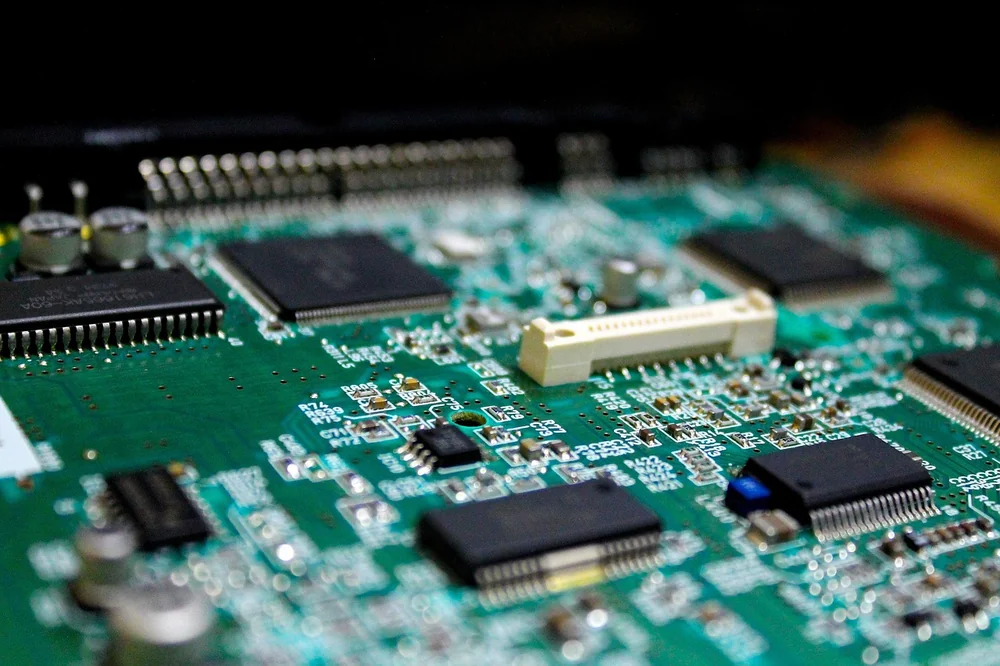
You cannot build a high-performance AI data centre without the right memory chips. This is why Samsung’s ambitious semiconductor plans are so closely tied to the broader infrastructure strategy. Samsung plans to invest 400 trillion won in new semiconductor fabs in Gwangju and 56 trillion won in advanced HBM fabs in Cheonan and Onyang. On a larger scale, Samsung also plans to invest 2,450 trillion won domestically between 2026 and 2040, with 2,100 trillion won allocated to semiconductor clusters. These HBM semiconductor fabs are essential for supplying the high-bandwidth memory that AI workloads demand.
The cost of this hardware is staggering. A typical 1GW-class AI data centre could require about KRW 70 trillion due to high-performance computing infrastructure and rising memory prices. That price tag reflects the expensive components needed to run advanced models, and it underscores why the semiconductor and data centre sectors must grow together. SK Group also has long-term plans for semiconductor projects worth about 1,100 trillion won and AI data centre projects, further reinforcing this link. This mutual investment cycle means that as data centres expand, the demand for HBM memory grows, driving more fab construction.
Robotics as a Component of AI Infrastructure
Robotics is another piece of the puzzle, though details remain scarce compared to the semiconductor side. What is clear is that South Korea is positioning robotics as part of its AI infrastructure expansion. This makes practical sense: AI data centres generate enormous amounts of data that can train robots for logistics, manufacturing, and facility management. For you, this means the South Korea data centre push is not just about cloud computing but about creating a physical AI backbone where robots and servers work together. While specific plans are less defined, the inclusion of robotics signals a long-term vision for an integrated AI economy, moving beyond simple data storage into automated, intelligent systems.
Location and Infrastructure Challenges: Power, Sites, and Costs
While the Gyeongsang and Jeolla regions have been confirmed for some of the capacity, you might wonder where the rest of this massive infrastructure will go. The reality is that specific locations for the 8.4GW and 15GW phases beyond those two regions are not given. This lack of detail raises practical questions about how such an ambitious plan can be executed on the ground.
Undisclosed Sites and Regional Distribution
SKT has stated it plans to develop more than 2GW of capacity in the Gyeongsang region and 1GW in the Jeolla region, aiming to bring domestic capacity to 5GW by 2029. But for the remaining capacity, the map is blank. This is a familiar challenge in AI data centre location planning — finding suitable land that is close to reliable power grids, has good network connectivity, and is free from environmental or regulatory hurdles. Without clear site announcements, it becomes harder for local governments and utility providers to prepare. You can expect that each new location will require careful negotiation on land use, construction permits, and community acceptance.
Power and Energy: An Unanswered Question
Perhaps the biggest unresolved challenge is power supply. Details on power supply and energy sources for the data centres are not provided. This is a critical gap because a typical 1GW-class AI data centre could require about KRW 70 trillion due to high-performance computing infrastructure and rising memory prices. That kind of investment means you are looking at immense electricity demand — enough to strain the national grid. The question of data centre power supply South Korea is not just about capacity, but also about sustainability. With global pressure to reduce carbon emissions, any large-scale plan must address how it will source clean energy. These data centre construction costs go beyond the facility itself; they include grid upgrades, backup power systems, and long-term energy procurement. Until these energy questions are answered, the timeline for delivery remains uncertain.
The Government’s AI G3 Strategy: Why South Korea Is Betting Big
While energy questions remain, the South Korean government is not slowing down its ambitions. Instead, it is doubling down with a coordinated national strategy. The data centre push is not just corporate ambition—it is a national plan to secure a top-three spot in the global AI race. This is where the AI G3 strategy comes in, directly backing projects like SKT’s 15GW data centre as part of a broader vision for South Korea global AI leadership.
The 1,000 Trillion Won Vision
South Korea’s science minister has stated that total investment in AI infrastructure could exceed 1,000 trillion won by around 2035. That figure covers everything from data centres to semiconductor clusters and robotics—making this a true national AI infrastructure plan. For you, this means that the south korea data centre boom is backed by government-level commitment, not just private sector hype. The AI G3 strategy South Korea is pursuing treats compute capacity as a strategic resource, much like energy or transportation networks.
Global Demand Driving Domestic Ambition
Why such aggressive investment? SKT pointed to a global data centre capacity shortage, and McKinsey forecasts that worldwide data centre demand will grow 19% to 22% annually. Those numbers justify the rapid buildout. South Korea is expanding its AI infrastructure base through coordinated projects covering data centres, semiconductors, and robotics. By acting now, the country aims to lock in capacity before demand outstrips supply. The south korea data centre expansion is therefore as much about seizing global opportunity as it is about local AI leadership. This national push positions you—whether as a business owner or tech enthusiast—in a market that is actively shaping the future of artificial intelligence.
Frequently Asked Questions
How does SK Telecom plan to finance its data centre expansion?
You can expect SK Telecom to combine corporate investment with strategic partnerships. They are likely to leverage government incentives for critical national infrastructure. This approach helps distribute the financial burden across multiple stakeholders.
How do the early development phases relate to the overall capacity goals?
The early phases serve as foundational building blocks. They allow you to see the incremental steps toward the long-term capacity target. Each phase adds significant power and computing capacity, gradually scaling up to meet future AI demand.
What challenges does AI data centre construction in South Korea face?
Key challenges include securing enough reliable power and managing environmental concerns. You also need to consider land availability and the global supply chain for advanced hardware. SK Telecom is addressing these through government collaboration and innovative site selection.