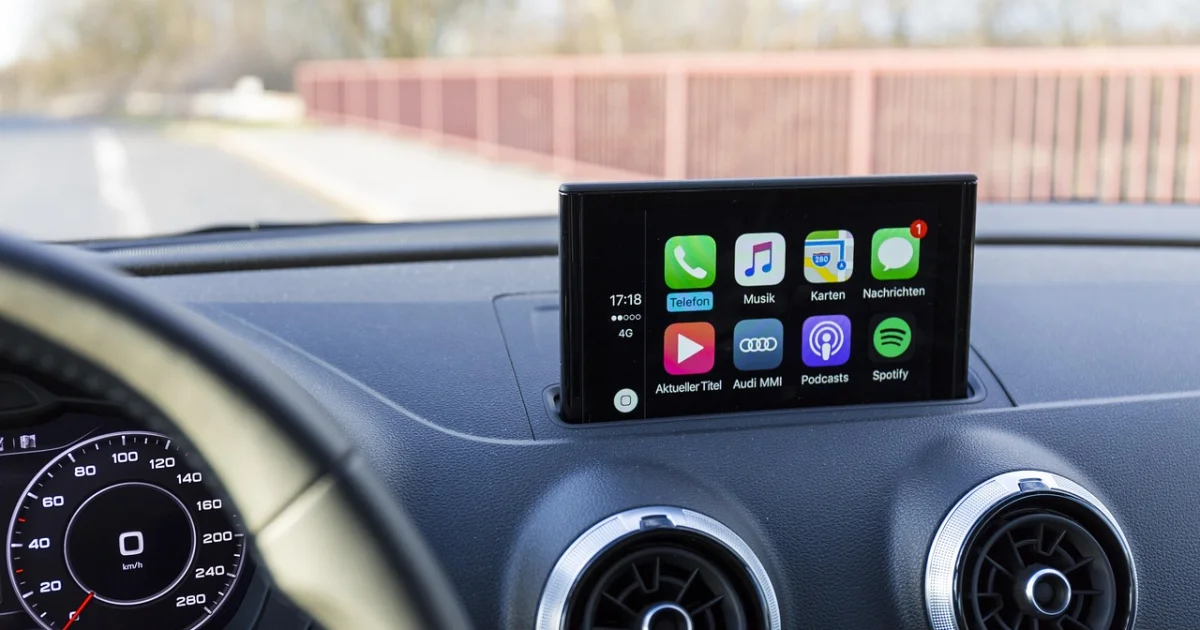
When Apple introduced CarPlay in 2014, it solved an urgent automotive dilemma: vehicle infotainment systems were notoriously clunky, slow to update, and poorly suited for navigation. By mirroring an iPhone’s familiar interface onto the center console, CarPlay became an indispensable buying criterion. Surveys consistently show that more than 80% of new car buyers consider Apple CarPlay support a non-negotiable feature.
Now, Apple is preparing its most ambitious automotive expansion to date: Next-Generation CarPlay. Moving far beyond a simple media window on the center screen, this overhaul reimagines the entire digital vehicle experience. It unifies instrument gauge clusters, climate controls, speedometer dials, and secondary passenger screens into a cohesive, iPhone-powered ecosystem. But as Apple attempts to colonize the entire dashboard, an unprecedented battle for digital control has erupted between Silicon Valley and legacy automakers.
The Architectural Shift: Beyond Center Screen Mirroring
Traditional CarPlay functions as a video stream generated by the iPhone and rendered inside a designated display window. The iPhone knows nothing about your vehicle’s fuel level, battery charge, tire pressure, or engine temperature. If you want to adjust the air conditioning or switch drive modes, you must exit CarPlay to navigate the car manufacturer’s native menus.
Next-Gen CarPlay dismantles this boundary through bidirectional hardware integration. By interfacing securely with the vehicle’s internal Controller Area Network (CAN bus), CarPlay renders native vehicle data directly within Apple-designed gauge clusters. Speedometer, tachometer, fuel level, battery state of charge, and turn-by-turn navigation flow seamlessly across multiple physical displays simultaneously.
Comparison: Classic CarPlay vs. Next-Gen CarPlay vs. Android Automotive
Understanding where Next-Gen CarPlay fits into the evolving digital cockpit landscape:
| Capability / Feature | Classic Apple CarPlay | Next-Gen CarPlay 2.0 | Google Android Automotive (GAS) |
|---|---|---|---|
| Display Reach | Single center display window | Full multi-screen (Cluster, Center, Passenger) | Full multi-screen native integration |
| Gauge Cluster Integration | None (Restricted to OEM cluster) | Complete digital speedometer & tachometer dials | Native digital cluster integration |
| Vehicle Controls (HVAC, Radio) | Requires exiting to OEM menu | Native HVAC, seat heaters, FM/AM tuner within UI | Deeply embedded hardware controls |
| Core Computing Device | User’s iPhone | Hybrid: iPhone + Vehicle on-board real-time chip | Vehicle head unit computer (No phone required) |
| Subscription Lockouts | Zero fees | Zero fees (Tied to user iPhone) | Often tied to automaker data subscriptions |
5 Critical Innovations Defining Next-Gen CarPlay
1. Real-Time Fail-Safe Cluster Rendering
Safety is the primary obstacle when integrating smartphones into vital vehicle readouts. If your iPhone crashes, overheats, or loses battery, your speedometer cannot go black while cruising down a highway. Apple engineered a hybrid safety architecture: while the visual style and themes are customized from your iPhone, the critical telemetry graphics are rendered locally by real-time automotive microcontrollers certified to ISO 26262 functional safety standards. If the phone disconnects, the instrument cluster instantly reverts to native gauges without missing a frame.
2. Brand-Specific Dial Customization
Automakers fiercely protect their interior brand identity. A Porsche 911 dashboard must not look identical to an Aston Martin DBX. Apple built modular customization suites that allow car designers to incorporate their historic typography, circular dial needles, tachometer geometry, and accent lighting into CarPlay themes, preserving the luxury marque’s design DNA.
3. Integrated HVAC and Seat Climate Controls
One of the most annoying quirks of modern driving—exiting CarPlay to adjust cabin temperature by one degree, then navigating back to Google Maps—is completely eliminated. Next-Gen CarPlay includes native controls for heated and ventilated seats, fan speeds, dual-zone climate sliders, and defrosters, accessible right on the home bar.
4. Multi-Display Widget Flow
With widescreen dashboards stretching from pillar to pillar, CarPlay introduces dynamic widgets. A passenger can manage Apple Music playlists, view arrival times, or monitor weather radars on their dedicated passenger display without obscuring the driver’s navigation map or instrument readouts.
5. EV-Specific Battery & Route Telemetry
By communicating with the electric vehicle’s battery management system (BMS), Apple Maps in Next-Gen CarPlay monitors live state of charge in real time. It automatically factors battery consumption, elevation changes, ambient temperature, and wind resistance to suggest optimal charging stops and pre-condition the battery pack before arriving at fast chargers.
The Automaker Schism: Who is In, and Who is Out?
The rollout of Next-Gen CarPlay has divided the automotive industry into two philosophical camps:
- The Tech Adopters (Porsche, Aston Martin): Luxury performance brands have embraced Apple’s multi-screen vision. They recognize that their high-net-worth buyers expect seamless Apple ecosystem integration and prefer to focus engineering budgets on chassis tuning and powertrain performance rather than software development.
- The Defectors (General Motors, Rivian, Tesla): General Motors made the controversial decision to eliminate Apple CarPlay and Android Auto across its future electric vehicle lineup (including the Chevy Blazer EV and Cadillac Lyriq), forcing buyers onto built-in Google Android Automotive. The primary motivators? Recurring subscription revenue, proprietary vehicle telemetry monetization, and closed-ecosystem control.
- The Pragmatic Loyalists (Ford, Hyundai, Honda, Toyota): Manufacturers that recognize customer backlash against subscription paywalls continue to offer robust wireless CarPlay across their volume models.
The Verdict: What This Means for Car Buyers
Next-Gen Apple CarPlay marks the definitive transition of the automobile into an ambient computing platform. While automakers like GM attempt to wall off their dashboards behind proprietary subscription models, consumer demand continues to favor open smartphone projection. For drivers invested in the Apple ecosystem, Next-Gen CarPlay delivers the clean, cohesive cockpit experience that car manufacturers have promised for twenty years but consistently failed to build on their own.