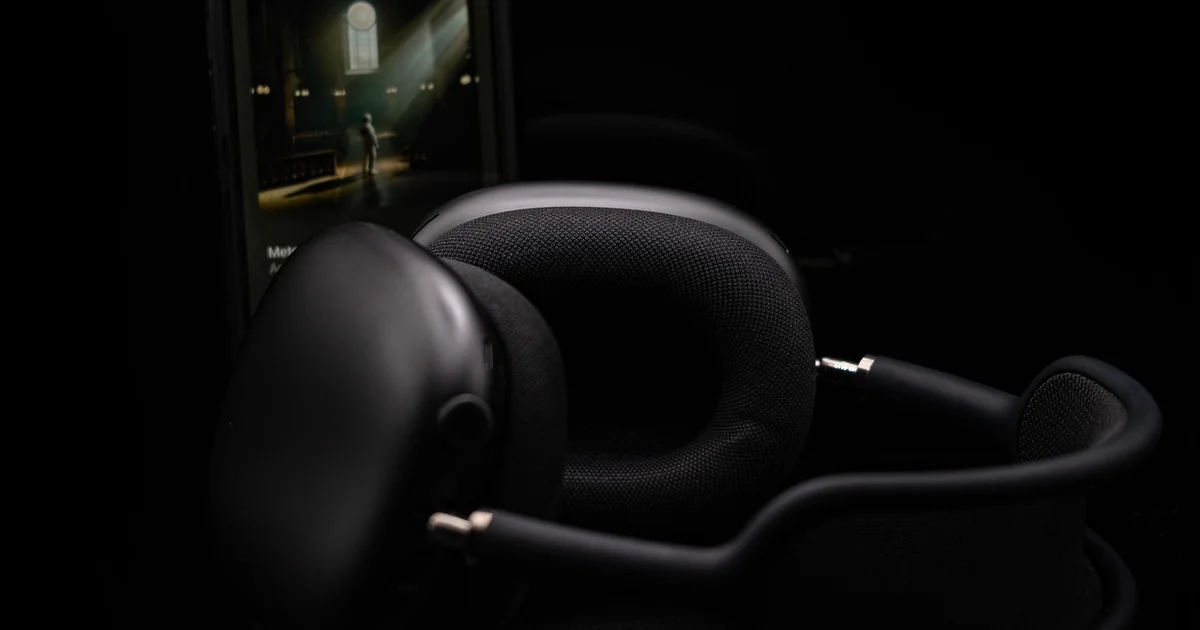
Uncovered by X user @Aaronp613, the filing lists product number A3577 and confirms the design is over-ear rather than in-ear, ruling out a new addition to the AirPods in-ear lineup.
The FCC Filing That Revealed Something Is Coming
Federal Communications Commission filings are routine for any consumer electronics device that uses wireless connectivity. Apple files them regularly for iPhones, iPads, MacBooks, and of course headphones. What makes this particular filing stand out is its timing and its vagueness.
The document, filed under product number A3577, simply describes the device as “Bluetooth over-ear headphones.” No diagrams, no schematics, no design details that would hint at whether this is a Beats product, an AirPods Max variant, or something entirely new. This level of ambiguity is unusual for Apple, which typically files under well-known product categories with more descriptive labeling.
The timing adds to the intrigue. Apple updated the AirPods Max in April 2026 with a USB-C port and new color options. The Beats Studio Pro arrived in July 2023, and the Beats Solo 4 launched in May 2024. None of these updates feel ancient, but none of them feel cutting-edge either. The market for premium over-ear headphones has shifted in the last few years, and Apple may feel pressure to respond.
Apple’s Current Over-Ear Headphone Landscape
Apple currently sells two families of over-ear headphones. The Beats line, acquired in 2014, covers a range of price points and style preferences. The AirPods Max, launched in 2020 and refreshed in April 2026, sits at the premium end of the spectrum with a titanium frame and immersive sound quality.
The Beats lineup includes the Beats Studio Pro, which offers active noise cancellation and spatial audio at a mid-range price, and the Beats Solo 4, a lighter on-ear model that prioritizes portability and battery life. Both have been on the market long enough that their next iterations feel overdue to many observers.
The AirPods Max refresh in April 2026 brought USB-C charging and fresh colors, but kept the same H1 chip and overall design from 2020. Some reviewers expected a more substantial upgrade, including the H2 chip found in newer AirPods Pro models, but that did not materialize.
This context makes the FCC filing especially interesting. Apple rarely files for a product that does not launch within a few months. Something is coming. The question is what.
5 Mysterious New Over-Ear Headphones Apple Could Be Preparing
Based on the filing and the current state of Apple’s audio lineup, five plausible candidates emerge. Each represents a different direction Apple could take, and each would serve a different segment of the market.
Next-Generation AirPods Max With the H2 Chip
The April 2026 refresh of the AirPods Max was a minor update. It added USB-C, a few new colors, and little else. The headphones retained the H1 chip from the original 2020 model, which means they lack the adaptive transparency, personalized spatial audio, and improved noise cancellation that the H2 chip enables in the AirPods Pro 2.
A true second-generation AirPods Max could arrive with the H2 chip, bringing those software-driven audio improvements. It could also feature a lighter frame, improved battery life beyond the current 20 hours, and possibly a smarter case design that actually protects the ear cups.
The product number A3577 does not match the pattern of previous AirPods Max model numbers, but Apple occasionally changes numbering schemes between generations. If this is a new AirPods Max, it would represent the first meaningful hardware upgrade since the original launch five years ago.
Beats Studio Pro 2 With Enhanced Noise Cancellation
The Beats Studio Pro, released in July 2023, was a solid mid-range contender with USB-C audio, spatial audio support, and comfortable over-ear padding. But the headphone market has moved forward since then, and competing brands have introduced better noise cancellation and longer battery life.
A Beats Studio Pro 2 could close that gap. Rumors within the audio community suggest Beats has been working on an adaptive noise cancellation system that rivals Sony’s WH-1000XM series. The Studio Pro 2 could also adopt the H2 chip or a custom Beats silicon that enables tighter integration with Apple’s ecosystem.
Battery life is another area where improvement seems likely. The current Studio Pro offers 24 hours of playback with noise cancellation active, which lags behind the 30 hours offered by several competitors. A jump to 35 or even 40 hours would make the new model far more compelling for travelers and commuters.
Beats Solo 5 — A Smarter On-Ear Option
The Beats Solo 4 launched in May 2024 and was well received for its lightweight design and punchy bass response. But like the Studio Pro, it lacks some of the smart features that modern listeners expect, such as automatic device switching and hands-free Siri with voice detection.
A Beats Solo 5 could bring those missing features while retaining the compact form factor that makes the Solo line popular. The on-ear design is ideal for people who find over-ear headphones too bulky for gym use or daily commuting. Adding the H2 chip would give the Solo 5 access to adaptive EQ, improved call quality, and seamless pairing across Apple devices.
Battery life on the Solo 4 is already strong at 30 hours, so the Solo 5 could match or slightly exceed that figure while adding faster charging via USB-C. A refreshed color palette with more neutral tones might also broaden its appeal beyond the traditional Beats audience.
Beats Pro — A Professional-Grade Return
Before Apple acquired Beats, the brand had a professional line of over-ear headphones aimed at studio engineers and serious audiophiles. The original Beats Pro featured a foldable metal frame, impressive sound isolation, and a design built to survive years of heavy use in recording studios.
Apple has not revisited that professional segment since the acquisition, but the FCC filing could signal a return. A modern Beats Pro would need to compete with brands like Sennheiser, Beyerdynamic, and Sony in the premium monitoring space. That means neutral sound tuning, exceptional build quality, and wired connectivity alongside Bluetooth.
A professional-grade headphone from Apple would also be a natural companion for Logic Pro and the growing ecosystem of music production tools on the iPad. If Apple sees the creative professional market as a growth area, a new Beats Pro would fit perfectly into that strategy.
An Entirely New Headphone Brand From Apple
This is the most speculative possibility, but it cannot be ruled out. Apple has launched entirely new product lines before, most notably the HomePod and the AirPods themselves. Both entered crowded markets and succeeded by offering something distinctive: seamless integration with Apple’s ecosystem.
You may also enjoy reading: 7 Ways to Build a Native Terminal for AI Coding Agents in Rust.
A new headphone brand could target a specific niche that neither Beats nor AirPods Max currently serve. For example, Apple could create a pair of lightweight, fitness-focused over-ear headphones with integrated heart rate monitoring or temperature sensing. Or it could launch audiophile-grade open-back headphones for critical listening at home.
The product number A3577 does not fit the pattern of any existing Apple headphone line, which could mean it belongs to a new family. Without rumors or leaks pointing in this direction, it remains the longest shot on this list, but the possibility is real.
What the FCC Filing Process Tells Us About Release Timing
Understanding the FCC filing process helps set expectations for when these mysterious apple over ear headphones might actually appear on store shelves. When Apple files with the FCC, it typically means the product is in the final stages of development and ready for regulatory testing.
Most consumer electronics companies stagger their FCC filings to avoid tipping off competitors about upcoming products. Apple is no exception. The filing often happens two to four months before a product launch, though the gap can vary depending on the complexity of the device and the number of regulatory approvals required.
If A3577 follows this pattern, a launch could come as early as late 2026 or early 2027. That timeline aligns with the typical refresh cycle for both the Beats and AirPods Max lines. It also gives Apple enough time to incorporate any new technology that might be in development, such as the camera-equipped AirPods that Bloomberg’s Mark Gurman has reported on.
The lack of design information in the filing is normal. Apple often requests confidentiality for certain details, and the FCC grants those requests for competitive reasons. The public version of the filing usually contains only the bare minimum required by law.
The AI Wearable Connection — Camera AirPods and Beyond
Bloomberg’s Mark Gurman reported earlier this year that Apple is in the final testing stage for camera-equipped AirPods. These would not be designed for photography or video recording. Instead, they would use cameras as sensors to provide visual context for Siri queries.
Gurman gave the example of receiving real-time cooking advice based on ingredients visible to the AirPods’ cameras. This would represent a major shift in how wearable audio devices function, moving from passive playback to active environmental awareness.
It is unlikely that the A3577 headphones include camera technology. The FCC filing describes them simply as Bluetooth over-ear headphones, and camera modules would require additional regulatory disclosure. But the existence of the camera AirPods project suggests Apple is investing heavily in the future of wearable AI, and over-ear headphones could eventually play a role in that vision.
A future pair of Apple over-ear headphones could integrate sensors for head tracking, environmental scanning, or biometric monitoring. The hardware platform for such features is not yet mature, but the FCC filing confirms that Apple is actively developing new hardware in this category, and the trajectory points toward smarter, more context-aware devices.
Should You Wait for These Mystery Headphones or Buy Now?
Deciding whether to wait for an unannounced product or purchase what is currently available depends on your specific needs and timeline. Here is a practical breakdown for the three most common reader scenarios.
For the AirPods Max Fan Waiting for a Real Upgrade
If you have been holding out for a true second-generation AirPods Max with the H2 chip and better battery life, the FCC filing gives you reason to stay patient. The April 2026 refresh was disappointing in its restraint, and a more substantial update could arrive within the next year. However, if your current headphones are failing or you need a new pair for work or travel, the current AirPods Max remain excellent headphones with superb sound quality and strong noise cancellation. Buying them now still gets you a premium experience, even if a better version is on the horizon.
For the Beats Enthusiast Who Loves Bass-Heavy Sound
Beats headphones have a distinct sound signature that emphasizes low frequencies, and the current Studio Pro and Solo 4 deliver that experience well. If you are happy with the features they offer, there is no urgent reason to wait. The Solo 4 especially is a strong value for its price. But if you want adaptive noise cancellation, better battery life, or tighter integration with Apple’s ecosystem, waiting for a potential Studio Pro 2 or Solo 5 makes sense.
For the Tech Enthusiast Who Follows FCC Filings Closely
If you track product launches for a living or as a serious hobby, the A3577 filing is a puzzle worth watching. The product number itself does not reveal which line the headphones belong to, but patterns in future FCC filings from Apple could offer clues. Pay attention to any companion filings for accessories like cases or charging cables, as those often hint at product categories. Also watch for trademark applications from Apple or Beats, which sometimes precede hardware announcements by several months.