South Korea stands at a crossroads this June. On June 3, the country will hold local elections, and for the first time, officials will enforce two separate laws designed to limit how artificial intelligence deepfakes can influence political campaigns. These new regulations arrive as generative AI tools become cheaper and more accessible, making it easier than ever to produce fabricated audio, video, and images that look real. The laws represent a significant experiment in election security, but questions remain about whether legislation alone can stop a problem that spreads through encrypted channels and private messages.
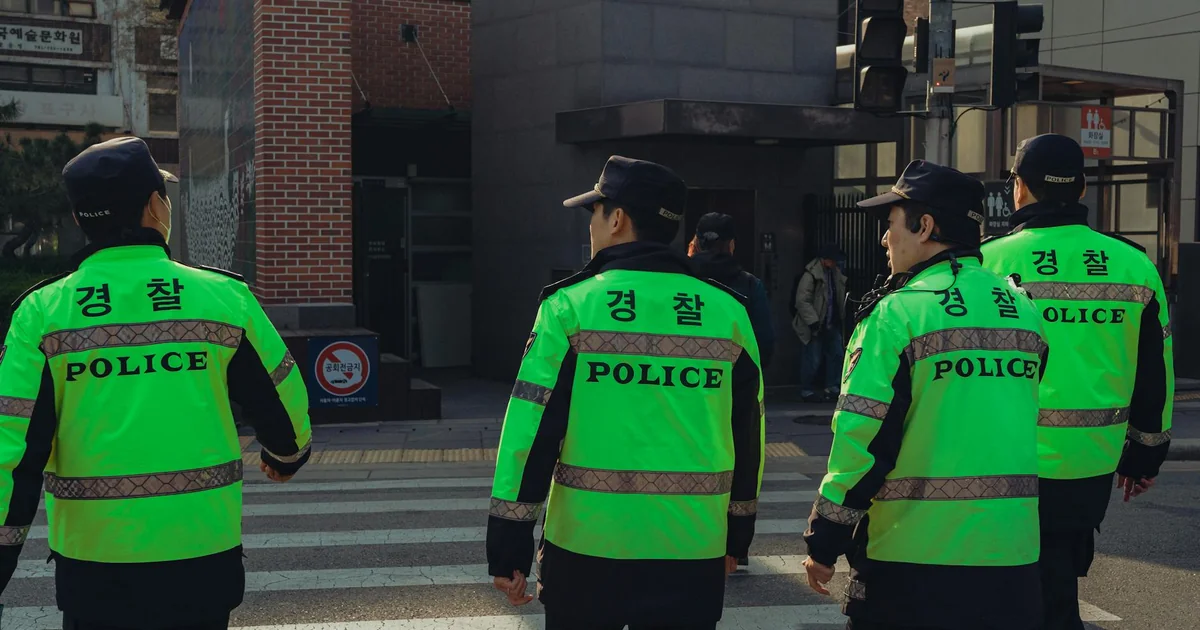
The big question is: will it be enough? While not the most dramatic issue facing voters, deepfakes remain a persistent problem for elections worldwide. In 2024, some New Hampshire voters received a robocall claiming to be from then-US President Joe Biden asking residents not to vote in the state primary. South Korea, meanwhile, has faced everything from fake videos of political candidates on social media to AI-generated television news reports. Leading up to South Korea’s presidential election next year, a video was widely shared which falsely showed President Lee Jae-myung ending his hunger strike. At the time, he was not only the election frontrunner but also the opposition party leader.
Deepfakes have been around for years, but their quality and access have increased alongside the sophistication of generative AI. Today, consumer tools produce convincing audio, video, and synthetic text in minutes. The June 3 elections will be the first real stress test of South Korea’s full regulatory framework. Clear legal infrastructure allows investigators to act faster while giving platforms clearer obligations to remove violating content. The problem exists in the channels that regulators cannot clearly reach. Deepfakes distributed through encrypted messaging apps, targeted SMS campaigns, and direct voice calls move faster than any fact-checker. By the time a platform removes a clip, it has already reached the people it was designed to reach.
Laws address the supply side. Awareness addresses the demand side. Voters who approach political audio and video with the same skepticism they bring to a suspicious phone call are significantly harder to manipulate. Building that instinct at scale, before election season, is where most countries are still in early days.
South Korea: A Unique Test Case for korean deepfake laws
South Korea is unique in that it has taken steps to restrict and penalize the use of deepfakes prior to elections at a codified scale. The country has faced a surge in AI-generated sexually explicit content, with about 53% of deepfake pornography targeting South Korean singers and actresses. This troubling trend has pushed lawmakers to act quickly, and the result is a two-pronged legal approach. One law focuses on election-specific deepfake prohibitions, while the other establishes broader AI transparency rules.
Brian Long, CEO and co-founder of Adaptive Security, a firm that specializes in threat awareness training for phishing and deepfakes, notes that two years ago generating a convincing deepfake required real technical skill. Today, consumer tools produce convincing audio, video, and synthetic text in minutes. He says the June 3 elections will be the first real stress test of South Korea’s full regulatory framework. Clear legal infrastructure, he explains, allows investigators to act faster while giving platforms clearer obligations to remove violating content.
South Korea’s approach is notable because it combines criminal penalties for election-related deepfakes with administrative fines for businesses that fail to disclose AI-generated content. This dual strategy attempts to cover both malicious actors who intentionally create deceptive political content and companies whose platforms may host such material without proper labeling.
Article 82-8 of the Public Official Election Act
Established in 2023, Article 82-8 of the Public Official Election Act prohibits the use of virtual sounds, images, or videos that are difficult to distinguish from reality for 90 days prior to election day. This restriction specifically aims to prevent individuals or campaigns from generating deepfakes intended to influence the outcome of an election. The law covers content clearly labeled as generated as well as content created to encourage voting.
A person who violates Article 82-8 “shall be punished by imprisonment with labor for not more than 7 years or by a fine of not less than 10 million won but not more than 50 million won,” according to the law. In US dollar terms, that fine ranges from approximately $6,700 to $33,500. These penalties are steep enough to serve as a deterrent, but enforcement remains the challenge. Investigators must first detect the deepfake, trace its origin, and then prove intent to influence an election.
The AI Basic Act
In addition to the election law, there is also the AI Basic Act, established early last year and put into effect this January. While the legislation is substantial and aims to regulate many aspects of AI, one relevant portion comes in the form of Article 31, paragraph 3. According to the law, “Where AI systems generate virtual audio, images, or video that are difficult to distinguish from real content, AI business operators shall notify or indicate to users, in a manner that allows clear recognition, that such content has been generated by an AI system.”
The law includes a notable exception: “Provided, that where such outputs constitute, or form part of, artistic or creative works, such notification or indication may be made in a manner that does not interfere with their exhibition or enjoyment.” This carve-out recognizes that not all AI-generated content is harmful. Creative works, satire, and artistic expression deserve protection, and the law attempts to balance transparency with free expression.
Businesses that do not transparently disclose deepfake content can face an administrative fine up to 30 million won. This is roughly $22,500 USD, which some critics argue is too low to meaningfully deter large tech companies. However, the fine is not the only tool. Under the AI Basic Act, companies also face potential reputational damage and regulatory scrutiny if they repeatedly fail to label AI-generated content.
How korean deepfakes spread faster than regulation
The problem exists in the channels that regulators cannot clearly reach. Deepfakes distributed through encrypted messaging apps, targeted SMS campaigns, and direct voice calls move faster than any fact-checker. By the time a platform removes a clip, it has already reached the people it was designed to reach. This is the central challenge of enforcement. Even with strong laws on the books, a well-timed deepfake sent to a group chat on an encrypted app can spread to thousands of voters before any authority even knows it exists.
In New Hampshire, the robocall incident showed how quickly this can happen. Voters received calls that sounded exactly like the sitting president, telling them not to vote in the state primary. The call was fake, but by the time officials confirmed that and issued warnings, many voters had already heard the message. The damage was done.
South Korea’s laws try to address this by creating a 90-day quiet period before elections. During this window, any AI-generated political content must be clearly labeled. The idea is to give voters and fact-checkers a fighting chance. If a fake video appears, the fact that it was created without proper labeling immediately triggers a legal violation. This gives investigators a clear path to act.
The detection tool gap
South Korea’s National Police Agency developed a deepfake detection tool deployed in 2024. This tool scans video and audio for artifacts that indicate AI generation. However, detection technology is in a constant arms race with generation technology. As Brian Long points out, consumer tools today produce convincing audio, video, and synthetic text in minutes. Detection tools must improve at the same pace, or they risk becoming obsolete.
The police tool is a start, but it cannot cover every platform or channel. Encrypted messaging apps like Telegram and Signal are notoriously difficult to monitor because the content is scrambled end-to-end. Even if law enforcement identifies a deepfake, they may not be able to see who sent it or how widely it spread. This is one of the most significant limitations of current korean deepfake laws.
Why transparency is the new battleground
The AI Basic Act’s transparency requirements are an attempt to shift the burden onto AI businesses. Instead of expecting every citizen to become a deepfake detection expert, the law requires companies to flag what their own AI-generated content. This changes the dynamic. Instead of regulators chasing down every fake video, they can audit companies for non-compliance.
But transparency only works if the labeling is enforceable. If a smaller AI startup can easily ignore the requirement, or if foreign companies operate outside South Korea’s jurisdiction, the law’s reach is limited. South Korea’s regulators will need to coordinate with international tech companies, which often resist mandatory labeling requirements on the grounds that they impose technical burdens and limit free expression.
The law’s carve-out for artistic and creative works adds another layer of complexity. What counts as “creative”? If a political campaign creates a satirical video that exaggerates a candidate’s position, is that a creative work or a deceptive political tool? These questions will inevitably end up in court, and the answers will shape how korean deepfake laws apply in practice.
The scale of the problem at home
South Korea has faced a particularly troubling surge in AI-generated sexually explicit content. A 2023 report found that a staggering proportion of deepfake pornographic content targeted South Korean singers and actresses. This is not a fringe problem. It affects real people, damages careers, and erodes trust in online content. The government’s response has been shaped by this crisis. Lawmakers understand that deepfakes are not just a political problem. They are a social problem that undermines privacy, consent, and public safety.
The connection between sexually explicit deepfakes and political deepfakes may not be immediately obvious, but they share the same technical foundation. The same generative AI models that create fake images of celebrities can also create fake videos of politicians. The same detection tools that find unauthorized intimate images can also find election interference attempts. South Korea’s dual approach addresses both sides of this coin by criminalizing harmful uses of AI while mandating transparency for all AI-generated content.
You may also enjoy reading: Virginia Tech vs UVA: Smithfield Commonwealth Clash Preview and Key Stats.
Lessons for other countries watching closely
Other nations are watching South Korea’s experiment closely. The United States has debated the Federal AI Deepfake Disclosure Act but has not passed it. The European Union’s AI Act includes transparency requirements but does not specifically target election season deepfakes. South Korea’s 90-day election blackout period is unique in its specificity and timing.
If the June 3 elections proceed without major deepfake disruptions, other countries may adopt similar measures. If a well-crafted deepfake slips through and influences the outcome, critics will argue that legislation alone cannot solve the problem. The result of this election cycle will inform global policy debates for years to come.
One lesson is already clear: enforcement requires collaboration. Platforms like Facebook, YouTube, and TikTok must cooperate with regulators to remove violating content quickly. Telecom providers must help trace robocalls and spam SMS campaigns. And voters must develop a healthy skepticism toward political content that arrives in unexpected ways.
What voters can do to protect themselves
Laws alone cannot stop deepfakes. Awareness plays a critical role. Voters who approach political audio and video with the same skepticism they bring to a suspicious phone call are significantly harder to manipulate. Building that instinct at scale, before election season, is where most countries are still in early days.
Here are practical steps every voter can take during this election season:
- Check the source. If a video or audio clip comes from an official campaign account or a reputable news organization, it is more likely to be authentic. If it appears in a forwarded message from an unknown number, treat it with caution.
- Look for telltale signs. Deepfakes often have subtle artifacts unnatural blinking, mismatched lighting, or audio that does not sync perfectly with lip movements. These signs are not foolproof but can raise red flags.
- Cross-reference with official sources. If a candidate appears to say something shocking, check the official campaign website or a trusted news outlet before sharing. Most major news organizations fact-check political content rapidly during election season.
- Report suspicious content. South Korea’s election commission and police have set up channels to report suspected deepfakes. If you see something that does not look right, report it rather than share it.
- Use critical thinking. Ask yourself: does this content appeal to my emotions in an emotional way that makes me want to share it immediately? Emotional manipulation is a common tactic in deepfake attacks.
South Korea’s korean deepfake laws are a strong start, but they require active participation from citizens. A law only works if people know about it, understand it, and follow it. The government has launched public awareness campaigns to teach voters about deepfakes and how to spot them. These campaigns are running on television, social media, and public transit ads.
The combination of legal penalties, transparency requirements, detection tools, and public education represents the most comprehensive deep strategy. No single element is sufficient on its own. Together, they create a framework that can adapt as technology evolves. The question is whether the framework will hold under pressure.
The June 3 stress test
On June 3, South Korea will hold local elections for mayors, governors, and council members. These positions manage local infrastructure, education policy, and public services. They may not generate the same national attention as a presidential race, but they matter deeply to local communities.
The election will be the first major test of the new regulatory framework. Investigators will be watching for deepfakes. Platforms will be preparing to remove violative content. And voters will be urged to stay vigilant. If the system works, we will see few incidents, and the ones that occur will be quickly identified and removed. If the system fails, we will see a flood of AI-generated content that overwhelms fact-checkers and influences local races.
Brian Long sums it up simply: “Clear legal infrastructure allows investigators to act faster while giving platforms clearer obligations to remove violating content.” The key is execution. Laws on paper mean little if they are not enforced. The coming weeks will show whether South Korea’s enforcement machinery is ready for the challenge.
What happens after June 3
Regardless of the outcome, the June 3 election will produce valuable data. Regulators will know which types of deepfakes were attempted, which channels were used, and how quickly they responded. This information will inform future updates to the laws. No legal framework is perfect on the first try. The goal is to iterate and improve.
South Korea’s experience will also influence international norms. If the country can demonstrate that a combination of laws, detection tools, and public awareness measurably reduces the impact of deepfakes on elections, other nations will follow. If the experiment fails, policymakers will look for different approaches.
One thing is certain: the problem is not going away. Generative AI will only become more sophisticated. Deepfakes will become harder to detect. The legal framework must evolve at the same pace or risk becoming irrelevant. South Korea’s korean deepfake laws are a bold first step, but they are not the final step.
The June 3 local elections are just the beginning. The real test will come in future national elections, where stakes are higher and the volume of disinformation is greater. For now, the world is watching to see whether a country small enough to act decisively can set a global example for how to defend democracy from AI-generated lies.