In the vast expanse of the early universe, a tiny dwarf galaxy has become a cosmic Rosetta Stone. Known as LAP1-B, this faint object holds the chemical signature of the very first stars that ever existed. This strange mix points directly to the explosive deaths of population iii supernova galaxy remnants that shaped the cosmos.
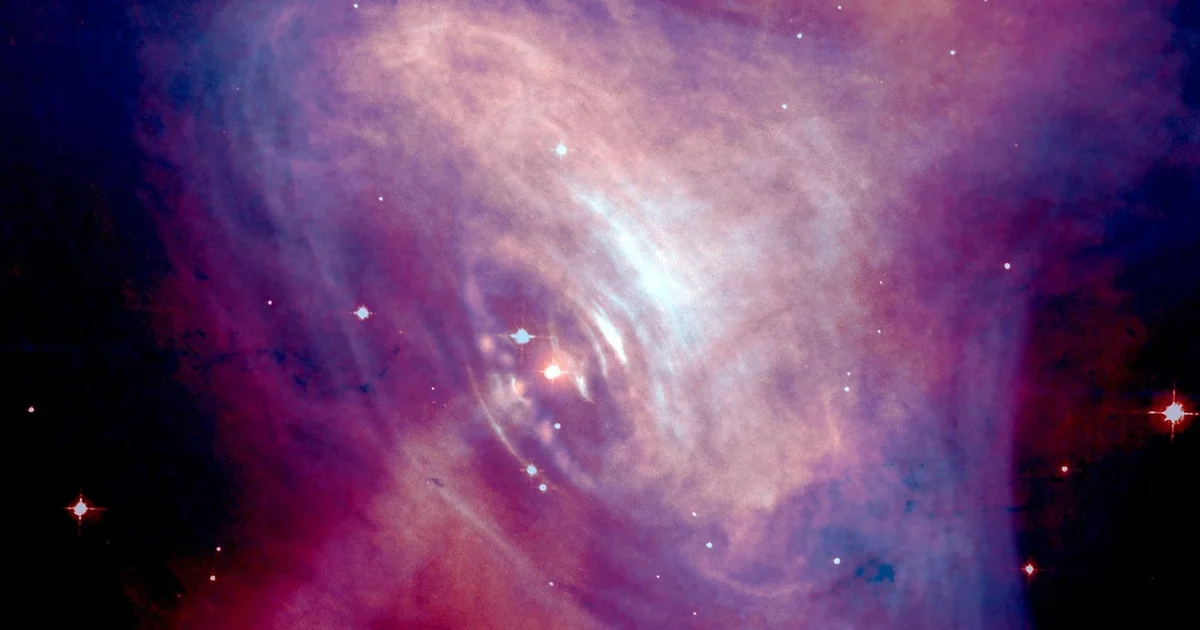
A Galactic Fossil Preserved Since Cosmic Dawn
LAP1-B is not an ordinary galaxy. Its chemical makeup defies what we typically see in younger, more evolved systems. The galaxy contains very few heavy elements—elements like oxygen, silicon, and iron that are forged inside stars and scattered across space by supernovae. Yet its carbon abundance is surprisingly high. In fact, the carbon-to-oxygen ratio in LAP1-B is significantly higher than that of our Sun.
To put that in perspective, the Sun is a relatively young star. It formed billions of years after the first stars died. Its composition has been enriched by countless supernova explosions. But LAP1-B formed much earlier, when the universe was still in its infancy. The gas that built this galaxy had been processed by only a handful of the earliest stellar deaths. That makes its elevated carbon a powerful clue.
Our Sun has a carbon-to-oxygen ratio of roughly 0.5 to 1. In LAP1-B, the ratio is far above that. Scientists believe this extreme value is a direct fingerprint of the explosion of a population iii supernova galaxy—a galaxy where the first generation of stars lived and died in a very specific way.
Faint Supernovae and the Fallback Process
The first stars, known as Population III, were enormous. They could have been hundreds of times more massive than the Sun. When such a star runs out of nuclear fuel, its core collapses into a black hole. But the explosion that follows is not always the brilliant, star-destroying blast we might expect.
According to models developed by the research team led by Nakajima, these early supernovae were surprisingly faint. The gravitational binding energy of a Population III star is so immense that the explosion cannot fully tear the star apart. Instead, much of the star’s material falls back into the newly formed black hole. Heavier elements like oxygen, which were produced deep in the core, get sucked past the event horizon and vanish forever. Meanwhile, the lighter outer layers—rich in carbon—escape into space.
This process creates a chemical signature that matches what we see in LAP1-B: low oxygen, high carbon. The galaxy’s gas cloud was enriched by one or more such “fallback supernovae.” This is the smoking gun that confirms LAP1-B is a direct descendant of a population iii supernova galaxy.
Why Carbon Escapes While Oxygen Gets Trapped
The key difference lies in where these elements form inside a massive star. Carbon is produced in the outer layers, while oxygen comes from deeper, hotter regions. When a faint supernova with fallback occurs, the inner region collapses into the black hole. The explosion’s shockwave carries away only the outermost material. Oxygen, being deeper, is more likely to be swallowed by the black hole. Carbon, being closer to the surface, gets ejected.
This selective enrichment is rare in later generations of stars. Modern supernovae are powerful enough to blow off all layers, scattering both carbon and oxygen evenly. The pattern in LAP1-B is thus a direct sign that we are seeing the legacy of the very first stars.
The Speed of Gas Reveals Invisible Mass
There is another remarkable clue hidden in LAP1-B. By studying the light from the galaxy, astronomers measured the motion of its gas. The emission lines in the spectrum were broadened by the Doppler effect. This broadening told them that the gas inside the galaxy is swirling at about 58 kilometers per second. That speed is typical for dwarf galaxies, but it held a surprise.
Using the laws of gravity, the team calculated how much mass must be present to keep that gas moving at such a speed without flying off into space. They arrived at a figure of roughly 10 million solar masses. That is the total mass holding the galaxy together. But when they added up the mass of all the stars in LAP1-B, they found less than 3,300 solar masses. The gas contributed only a tiny amount more.
Something invisible had to make up the rest. That something is dark matter.
Dark Matter in the Early Universe
This discovery reinforces a central idea in cosmology: dark matter dominates the mass of galaxies from the very beginning. In LAP1-B, the dark matter content is overwhelmingly larger than the visible matter. The galaxy’s gravitational pull is primarily due to this mysterious substance. Without dark matter, the gas would have escaped, and the galaxy would not have held together long enough to form stars.
Understanding the dark matter fraction in such an early galaxy helps astronomers test their models of structure formation. LAP1-B suggests that even the smallest galactic seeds contained a huge amount of dark matter, acting as a scaffold for the first stars and supernovae.
You may also enjoy reading: Data Center Guzzled 30 Million Gallons: 5 Unnoticed Signs.
How Gravitational Lensing Made This Discovery Possible
LAP1-B is so far away and so faint that it would be invisible without a cosmic magnifying glass. That magnifying glass is gravitational lensing. A massive foreground galaxy cluster bends and amplifies the light from more distant objects. In this case, the cluster’s immense gravity stretched the image of LAP1-B, making it bright enough for Hubble and ground-based telescopes to study in detail.
Without lensing, we would never have detected this tiny galaxy’s unusual chemistry or measured its gas motions. Gravitational lensing is the tool that lets us look back to the universe’s first few hundred million years and catch the faint glow of a population iii supernova galaxy.
Implications for Galaxy Formation Models
The discovery of LAP1-B challenges some long-held assumptions. Many models predicted that early dwarf galaxies would be uniformly poor in heavy elements, with no strong carbon overabundance. LAP1-B shows that the first supernovae were not all powerful explosions but could be faint events that selectively enriched the interstellar medium.
Astronomers now need to incorporate fallback supernova yields into simulations of early galaxy formation. The chemical fingerprint of this one small galaxy could rewrite the story of how the universe transitioned from darkness to light.
What This Means for Future Observatories
Upcoming telescopes like the James Webb Space Telescope (JWST) and the Nancy Grace Roman Space Telescope will be able to find many more such galaxies. They will search for the same carbon-to-oxygen anomaly in other faint dwarf galaxies at high redshifts. Each discovery will refine our understanding of the population iii supernova galaxy phenomenon.
For now, LAP1-B stands as a proof of concept. It shows that the chemical legacy of the first stars is preserved in small, dark-matter-dominated galaxies. As we map more of these ancient objects, we will piece together a complete picture of cosmic dawn.
A Tiny Window Into a Vast Epoch
LAP1-B is just one galaxy among trillions, but its tiny size belies its immense importance. It is a living fossil from a time when the universe was only 6% of its current age. The faint supernova that enriched it sent carbon into space while oxygen fell into a black hole. That carbon later became part of the gas that formed new stars and eventually, perhaps, planets.
Every atom of carbon in our bodies was once forged in a star. Some of that carbon may have come from supernovae just like the one that left its mark on LAP1-B. This dwarf galaxy reminds us that we are connected to the earliest moments of cosmic history, a connection written in the elements themselves.
The discovery of LAP1-B is a testament to the power of combining gravitational lensing, spectroscopy, and theoretical modeling. It is a story that began 13.7 billion years ago, and we are only now learning to read its dim but undeniable signal.