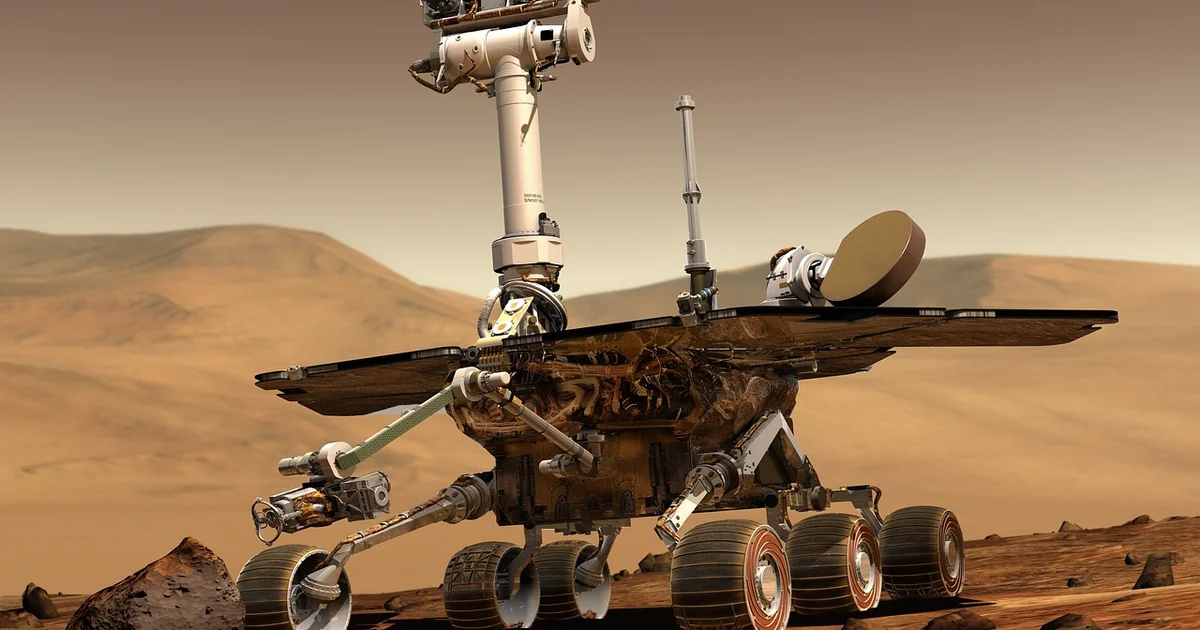
The dusty, crimson horizon of Mars often hides secrets that look more like something from a science fiction novel than a barren desert. Recently, while traversing the rugged terrain toward the Antofagasta crater, the Curiosity rover’s high-resolution eyes caught something truly peculiar. Instead of the usual jagged boulders and smooth sand drifts, the rover encountered a vast expanse of rocks covered in intricate, repeating geometries. These curiosity rover patterns resemble the delicate, overlapping scales of a massive fish or perhaps the shed skin of a prehistoric reptile, stretching across the Martian landscape in a way that has left planetary scientists deeply intrigued.
Decoding the Mystery of the Martian Honeycomb
When we look at these textures through the lens of a camera mounted on a robotic explorer millions of miles away, it is easy to feel a sense of wonder. The sheer scale of these formations is what caught the attention of the mission team. Unlike isolated instances of geometric rock textures seen in previous years, these patterns appear to be remarkably abundant. In the Mastcam mosaics, they seem to stretch for meters, creating a continuous tapestry of polygons that blanket the ground. This abundance suggests that whatever process created them was not a localized fluke but a widespread geological event.
To understand why these curiosity rover patterns are so significant, we have to look at the mechanics of planetary surfaces. On our own planet, such shapes are rarely accidental. They are the footprints of environmental forces. When scientists see these repeating shapes, they don’t just see “cool rocks”; they see a data set that can be used to reconstruct the climate of a world that died billions of years ago. The challenge lies in determining whether these patterns were carved by the wind, the extreme temperature shifts of the Martian day-night cycle, or the movement of ancient, subsurface fluids.
The scientific detective work involved in this discovery is immense. It is not enough to simply snap a photo. The team must cross-reference the visual imagery with chemical data to rule out competing hypotheses. For instance, a pattern might look like it was caused by ice, but if the chemical composition of the rock shows no trace of hydrated minerals, the ice theory loses its footing. This meticulous process of elimination is how we move from “that looks weird” to “this proves Mars once had a liquid water cycle.”
1. The Visual Allure of Biological Mimicry
One of the first things anyone notices when viewing these images is how strikingly biological they appear. To a human observer, the way the polygons intersect looks almost organic, much like the scales on a snake or the skin of a large aquatic creature. This phenomenon, known as biomimicry in design, often occurs in nature where mathematical efficiency dictates shape. While there is no evidence that these patterns were created by living organisms, the visual similarity is a powerful tool for engagement. It helps us bridge the gap between the cold, inorganic reality of space exploration and the familiar, living world we inhabit. For a student of geology, this serves as a reminder that even the most alien environments follow the fundamental laws of physics and geometry that we see in our own backyards.
2. The Role of Thermal Expansion and Contraction
On Earth, one of the most common ways to create polygonal ground is through the relentless cycle of freezing and thawing. Imagine a patch of soil that becomes saturated with water. As the temperature drops, the water turns to ice and expands, pushing the soil particles apart. When it thaws, the ground settles, but the cracks remain. Over thousands of iterations, these cracks organize themselves into a predictable, geometric network. Scientists are investigating if a similar process occurred on Mars. Even if the surface is currently a frozen desert, the historical presence of even trace amounts of moisture could have driven these thermal cycles, leaving behind a permanent geometric record in the bedrock.
3. Evidence of Ancient Subsurface Water Flow
Another compelling theory involves the movement of groundwater through the cracks of Martian stones. Before reaching the Antofagasta area, Curiosity encountered “boxwork” formations in Mount Sharp. These are zigzagging ridges that look like a spiderweb etched into the rock. These typically form when mineral-rich water seeps into fractures, deposits minerals like silica or calcium, and then hardens. If the surrounding rock eventually erodes away, only the mineral “veins” remain. The new curiosity rover patterns might be a more advanced version of this process, where the water didn’t just fill cracks but actively shaped the very structure of the rock through chemical weathering and mineral precipitation.
4. The Significance of the Antofagasta Crater Age
The location of this discovery is just as important as the pattern itself. The Antofagasta crater is considered relatively young in geological terms, having formed less than 50 million years ago. This is a blink of an eye compared to the billions of years of Martian history. Because this crater is a more recent addition to the landscape, the rocks within and around it may have been protected from the intense, erosive cosmic radiation that has battered older surfaces. This provides a unique window into a much more recent chapter of Martian history, potentially showing us how the planet transitioned from a wet, active world to the dry, irradiated desert it is today.
5. Chemical Clues and Organic Molecules
Visual evidence is only half the battle. The real breakthrough comes when we look at what the rocks are actually made of. Curiosity has recently detected more than 20 different organic molecules within clay-rich sandstones in this region. Organic molecules are the fundamental building blocks of life as we know it. While their presence does not prove that life ever existed on Mars, it proves that the “ingredients” were present. When these molecules are found in close proximity to the types of rocks displaying these honeycomb patterns, it strengthens the argument that these areas were once chemically active and potentially habitable environments.
6. Comparing Terrestrial and Martian Geologies
To solve the mystery of these patterns, researchers use a method called comparative planetology. By studying how similar shapes form in the Atacama Desert on Earth or in the permafrost of Antarctica, scientists can create models for Mars. If a specific pattern in Antarctica only forms under a certain type of salt-rich moisture, and we see a similar pattern on Mars, we can make an educated guess about the salinity of ancient Martian waters. This comparative approach turns the entire Earth into a laboratory for understanding the Red Planet, allowing us to use our own world to decode the secrets of another.
You may also enjoy reading: Australia Forces Big Tech Firms to Pay or Face 2.25% Tax.
7. The Impact of High-Resolution Mastcam Imagery
Finally, we must consider the technology that made this discovery possible. The Mast Camera (Mastcam) on Curiosity is not just a standard digital camera; it is a sophisticated scientific instrument capable of capturing incredible detail across vast distances. The ability to produce “mosaics”—large, stitched-together images—is what allowed the team to realize that these patterns were not just isolated rocks but a widespread geological feature. Without this high-resolution, wide-angle perspective, these patterns might have been dismissed as mere surface irregularities rather than the significant climatic indicators they actually are.
Practical Challenges in Remote Planetary Analysis
One of the primary hurdles in interpreting these curiosity rover patterns is the “distance gap.” When a geologist studies a rock on Earth, they can use a hammer, a magnifying glass, or even a portable electron microscope. On Mars, we are limited to what a robotic arm can reach or what a camera can see from several meters away. This creates a significant problem: how do you distinguish between a surface coating and the actual structure of the rock? A pattern might look like it is part of the rock, but it could actually be a thin layer of dust or mineral crust that has settled into existing cracks.
Another challenge is the delay in communication. Data from Mars takes anywhere from several minutes to over twenty minutes to reach Earth, depending on the orbital positions of the planets. This means the rover cannot “react” to a discovery in real-time. If it sees something interesting, it must continue its programmed path, and scientists must wait for the next communication window to analyze the data and decide if the rover should turn around or deploy its tools. This slow-motion exploration requires immense patience and highly advanced autonomous programming to ensure the rover doesn’t miss critical details while waiting for human instructions.
Bridging the Gap: Solutions for Future Exploration
To overcome these challenges, the next generation of space exploration is moving toward increased autonomy and multi-modal sensing. One practical solution being implemented is the use of AI-driven “onboard science.” Instead of waiting for Earth to tell it what is interesting, future rovers will be equipped with machine learning algorithms that can recognize unusual patterns—like these honeycomb shapes—and automatically decide to stop, take more photos, or even use a laser to zap the rock for chemical analysis. This would drastically increase the efficiency of missions by capturing high-value data before the rover moves on.
Another step forward is the deployment of micro-rovers or “scout” drones. Imagine a larger rover like Curiosity acting as a mother ship, releasing tiny, agile robots that can crawl into crevices or fly over specific geological features. These smaller units could provide the close-up, tactile data that a large rover cannot. By combining the wide-scale vision of a Mastcam with the granular, “hands-on” approach of a micro-bot, we can finally move from observing patterns to truly understanding the chemical and physical processes that etched them into the Martian crust.
The discovery of these intricate textures serves as a profound reminder that Mars is not a dead world, but a world with a complex, layered history. Every polygon and every zigzag ridge is a sentence in a story that is still being written. As we continue to decode these curiosity rover patterns, we move one step closer to answering the ultimate question: was Mars once a home for something other than the wind and the dust?