The digital world is about to get a lot more physical. For years, the giants of Silicon Valley have focused on capturing our attention through screens, pixels, and scrolling feeds. However, a massive shift is occurring as the race for artificial intelligence moves from the realm of pure software into the tangible, unpredictable world of physical matter. Meta’s recent acquisition of Assured Robot Intelligence (ARI) signals that the pursuit of intelligence is no longer just about processing text or generating images; it is about movement, dexterity, and the ability to navigate a kitchen or a living room.
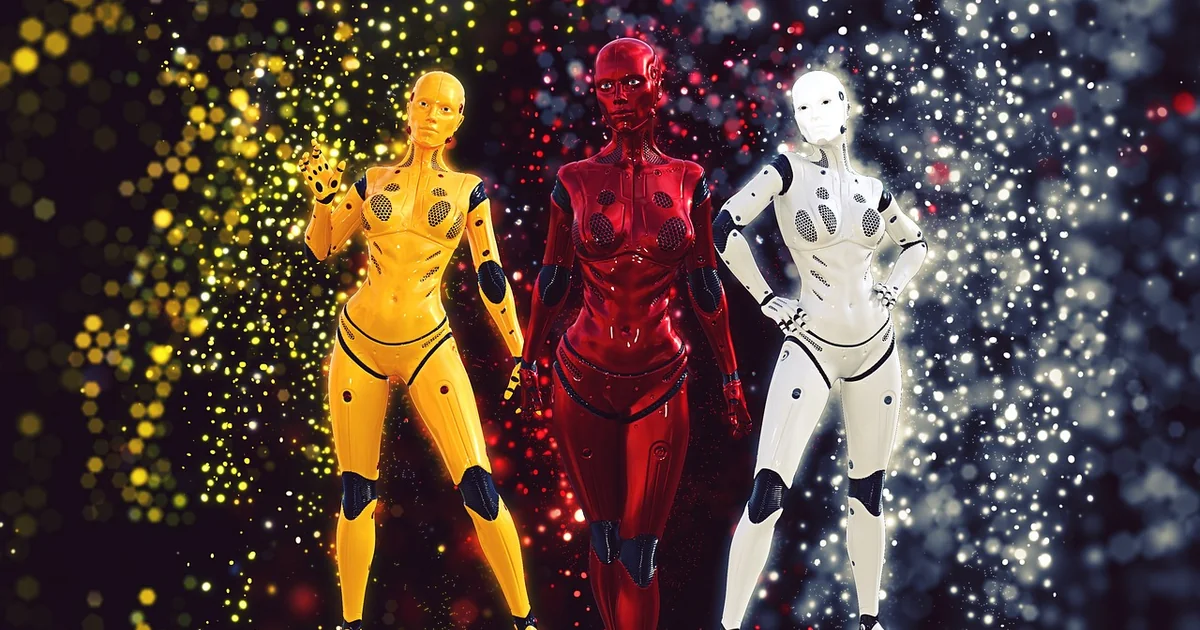
The Strategic Shift Toward Meta Humanoid Robotics
When we discuss the evolution of artificial intelligence, we often focus on Large Language Models (LLMs) that can write poetry or code. While impressive, these models exist in a vacuum of data. They understand the concept of a “cup” through millions of descriptions, but they do not understand the weight, the friction of a ceramic surface, or the delicate pressure required to lift a glass without shattering it. This is where meta humanoid robotics enters the equation, bridging the gap between digital reasoning and physical execution.
By acquiring ARI, Meta is not just buying a collection of patents or a piece of hardware. They are absorbing a specialized brain designed for embodiment. The startup was focused on creating foundation models specifically for humanoid forms. Unlike a standard chatbot, a foundation model for robotics must account for gravity, momentum, and the complex spatial geometry of a human-shaped machine. This acquisition places Meta at the center of a high-stakes competition to define how machines interact with our everyday environments.
The integration of the ARI team into Meta’s Superintelligence Labs is a significant move for the company’s long-term roadmap. This research division is tasked with pushing the boundaries of what machines can achieve. By bringing in experts like Xiaolong Wang and Lerrel Pinto, Meta is injecting deep academic and practical expertise into its hardware ambitions. This move suggests that the company views the physical world as the ultimate training ground for the next generation of intelligence.
Why Physical Interaction is the Key to AGI
A central question currently dividing the tech community is whether Artificial General Intelligence (AGI) can truly be achieved through digital data alone. Many researchers argue that true intelligence requires “embodiment.” To understand the world, an entity must be able to act upon it and receive feedback from that action. This feedback loop—action, observation, correction—is the bedrock of learning in biological entities.
If an AI only learns from reading about the world, it develops a “hallucination” problem that is much harder to fix in the physical realm. A robot that thinks a table is a liquid will cause significant damage. Therefore, the pursuit of meta humanoid robotics is essentially a pursuit of more robust, grounded intelligence. By training models in a physical environment, Meta aims to create systems that understand cause and effect with a level of nuance that text-based models simply cannot replicate.
This concept, often referred to as embodied AI, suggests that the path to AGI is not just through more parameters or more GPUs, but through more sensors and more movement. The ability to perceive a change in a room—such as a child moving a chair or a pet running across a floor—and adapt in real-time is what separates a sophisticated tool from a truly intelligent agent. This level of adaptability is the holy grail of the robotics industry.
The Difference Between LLMs and Robotic Foundation Models
It is easy to conflate a chatbot with a robot, but the underlying architecture required for meta humanoid robotics is fundamentally different. A standard LLM predicts the next most likely token in a sequence of text. A robotic foundation model must predict the next most likely movement in a sequence of physical coordinates, while simultaneously accounting for environmental variables.
Consider the complexity of a single task, such as folding a laundry basket of clothes. An LLM can describe the steps of folding a shirt with perfect clarity. However, a robotic model must manage “whole-body control.” This involves coordinating dozens of actuators (motors) in the arms, hands, torso, and legs to maintain balance while applying the precise amount of force to the fabric. The model must process visual data from cameras, tactile data from sensors in the fingertips, and proprioceptive data from the robot’s own joints.
This creates a multi-modal challenge that is orders of magnitude more complex than text generation. The model must translate high-level intent (“fold this shirt”) into low-level motor commands, all while adjusting for the fact that the shirt might be slippery, heavy, or crumpled in an unexpected way. This is the frontier where Meta’s new research team will likely focus their efforts.
The Economic Landscape: From Billions to Trillions
The scale of this industry shift cannot be overstated. While the current market for specialized industrial robots is well-established, the market for general-purpose humanoid robots is still in its nascent stages. This creates a massive divergence in financial forecasts, reflecting both the immense potential and the inherent risks of the technology.
On one hand, conservative estimates from institutions like Goldman Sachs suggest the robotics market could reach approximately $38 billion by 2035. This figure largely accounts for existing applications in manufacturing, logistics, and medical assistance. On the other hand, more aggressive projections from firms like Morgan Stanley suggest a potential market value of $5 trillion by 2050. This staggering difference stems from the assumption of whether humanoid robots will become ubiquitous consumer products.
If robots can truly perform household chores, provide elderly care, or assist in complex manual labor, the economic impact would be transformative. We are talking about the automation of tasks that currently require significant human time and energy. For a company like Meta, even a small percentage of this market represents a revenue stream that could rival their current advertising-based model. The acquisition of ARI is a strategic bet on the higher end of these projections.
The Competitive Sprint: Amazon, Meta, and Beyond
Meta is not alone in this race. The recent acquisition of Fauna Robotics by Amazon highlights a broader trend of tech titans securing the talent and intellectual property necessary to dominate the physical AI space. While Amazon’s focus may lean toward logistics and warehouse optimization, the underlying technology—humanoid movement and spatial reasoning—is highly transferable to the consumer sector.
This “arms race” is characterized by a movement of elite talent from academia and specialized startups into large-scale corporate labs. When researchers like Xiaolong Wang, formerly of Nvidia and UC San Diego, move into a corporate environment, they bring with them years of fundamental breakthroughs. This creates a cycle where the most advanced research is increasingly concentrated in companies with the capital to build massive simulation environments and hardware testbeds.
The competition is not just about who has the best code, but who has the best data. To train a humanoid, you need millions of hours of high-quality physical interaction data. This is why companies are investing so heavily in “sim-to-real” technology—the ability to train a robot in a highly accurate digital simulation and then successfully transfer that intelligence to a physical machine. The winner of this race will be the one who can most efficiently bridge that gap.
You may also enjoy reading: Take 25% Off: The Best Asus ROG Strix Gaming Monitor Deal.
Challenges in Humanoid Deployment and Practical Solutions
Despite the excitement, the path to a robot in every home is fraught with technical and social hurdles. For anyone following this space, it is important to look past the marketing and understand the real-world friction points that engineers are currently fighting to solve.
One of the primary challenges is the “edge case” problem. In a controlled factory setting, a robot knows exactly where every object is and how it will behave. In a human home, the environment is chaotic. A dog might bark and jump, a rug might slip, or a person might walk into the robot’s path unexpectedly. Creating a system that is both safe and functional in these dynamic environments is a monumental task.
Another significant hurdle is energy density and battery life. Humanoid robots require a massive amount of power to move heavy limbs and process complex AI models in real-time. Currently, most advanced prototypes have very limited operational windows before they require recharging. This limits their utility for sustained tasks like cleaning an entire house or assisting with long-term caregiving.
Solving the Complexity: A Step-by-Step Approach
How do we move from laboratory prototypes to reliable consumer products? The industry is currently looking at several practical solutions to these bottlenecks. If you are an investor or a tech enthusiast, these are the areas to watch closely.
Step 1: Advanced Simulation and Synthetic Data Generation. To solve the data scarcity problem, companies are building hyper-realistic physics engines. By simulating millions of different household scenarios—varying the lighting, the friction of surfaces, and the movement of obstacles—they can train robots in a “virtual world” much faster than they could in the real one. This allows the AI to experience “years” of practice in just a few days of computing time.
Step 2: Modular Hardware Design. To address cost and repairability, we are seeing a shift toward modularity. Instead of a single, monolithic machine, future humanoids may be composed of swappable parts. If a hand actuator fails, it should be as easy to replace as a computer mouse. This reduces the barrier to entry for consumers and makes the technology more sustainable.
Step 3: Edge Computing and Specialized AI Chips. To solve the latency and power issues, the industry is moving toward specialized silicon. Rather than relying on a distant cloud server to process every movement, robots will need “on-device” intelligence. This means designing AI chips that are optimized specifically for the mathematical operations required by robotics, allowing for near-instantaneous reactions without draining the battery.
The Social and Ethical Implications of Embodied AI
As meta humanoid robotics moves closer to reality, we must confront the societal shifts that will inevitably follow. The introduction of autonomous physical agents into our private spaces is not just a technological milestone; it is a social one. The presence of a machine that can observe, move, and interact within our homes raises profound questions about privacy and autonomy.
If a robot is learning by observing your behavior, what happens to the data it collects? The privacy implications of a device with cameras and microphones capable of navigating your most intimate spaces are immense. Ensuring that these machines are “privacy-first” by design—perhaps through local processing that never sends video data to the cloud—will be a critical requirement for public trust.
Furthermore, there is the question of human-robot interaction. How will we perceive these machines? Will they be viewed as appliances, like a vacuum cleaner, or as companions? The way we design the “personality” and movement of humanoids will dictate how they are integrated into our social fabric. A robot that moves too fluidly might trigger the “uncanny valley” effect, causing discomfort, while one that is too clunky may be perceived as untrustworthy or dangerous.
Ultimately, the goal of companies like Meta is to create technology that augments human capability rather than replacing it. Whether these machines become tools that handle the mundane chores of life or become sophisticated assistants that help us navigate a complex world, their impact will be felt in every corner of human existence. The acquisition of ARI is a bold step into a future where the line between the digital and the physical becomes increasingly blurred.