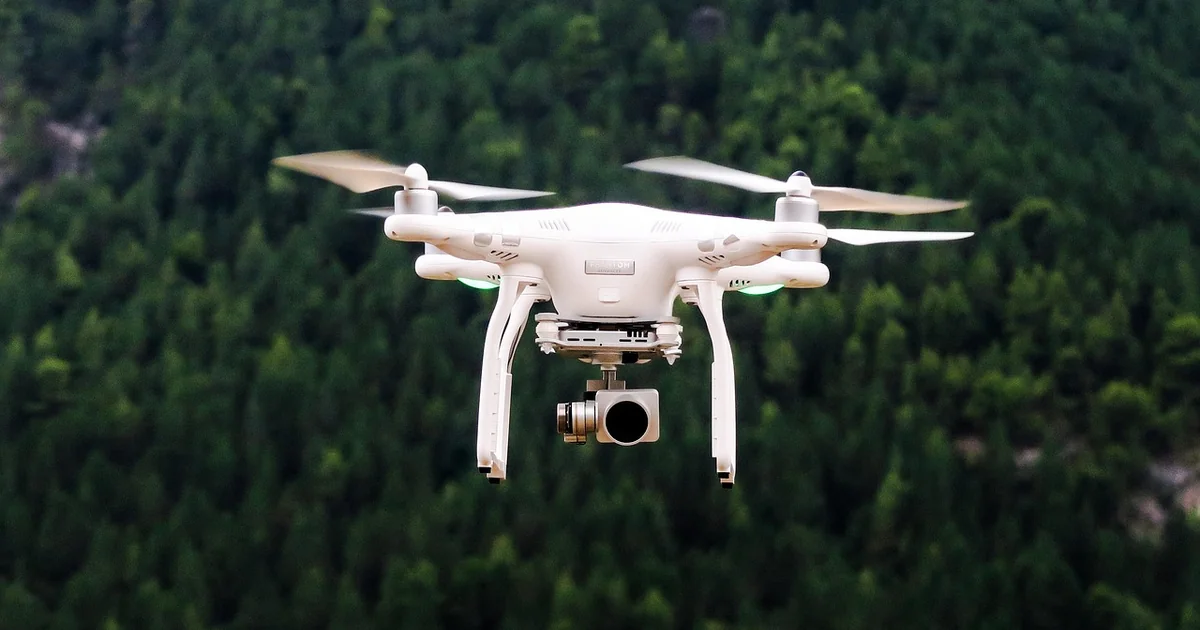
The hum of a brushless motor and the steady spin of carbon fiber propellers have become the soundtrack to modern aerial documentation. For many, a drone is not just a gadget but a vital tool for journalism, art, and civic engagement. However, a recent shift in federal advisory language has introduced a layer of anxiety for anyone looking toward the sky. The emergence of restricted ice drone fly zones and the accompanying warnings from the Federal Aviation Administration (FAA) have sparked a significant debate regarding the intersection of national security and constitutional freedoms.
The Shift in Federal Aerial Oversight
A recent advisory issued by the FAA has sent ripples through the unmanned aircraft system (UAS) community. This notice clarifies that federal agents possess the authority to seize, damage, or even destroy drones that are perceived as a credible threat to the safety or security of Department of Homeland Security (DHS) assets. While protecting government personnel is a standard operational priority, the broadness of the language used in these advisories has raised eyebrows among civil liberties advocates.
The core of the tension lies in the definition of a “credible safety or security threat.” In the realm of aviation, terms must be precise to prevent overreach. When an advisory suggests that mobile assets—such as federal vehicles or enforcement teams in transit—are protected from aerial observation, it creates a gray area. For a pilot, the line between a lawful hobbyist and a perceived security risk becomes dangerously thin, especially when operating near sensitive federal operations.
This is not merely a matter of technical regulation; it is a matter of legal interpretation. The advisory points toward existing statutes that grant federal agencies the power to mitigate threats. Yet, the application of these laws to small, consumer-grade drones remains a subject of intense scrutiny. The fear is that the mere existence of such warnings acts as a deterrent, stopping pilots from exercising their rights before they even power up their controllers.
The Concept of the Chilling Effect
In legal and sociological terms, a “chilling effect” occurs when individuals refrain from exercising a legitimate right because they fear legal repercussions or physical interference. For drone pilots, this effect is becoming a tangible reality. When an agency warns that your equipment might be destroyed, the psychological barrier to flight increases exponentially.
Consider a citizen journalist attempting to document a public demonstration. Under normal circumstances, flying a drone to provide a bird’s-eye view of a protest is a protected form of expression. However, if that protest involves federal agents, the pilot must now weigh the value of the footage against the potential loss of a multi-thousand-dollar piece of hardware and the possibility of legal entanglement. This hesitation is exactly what advocates fear will lead to a sanitized version of public events, where only the perspectives approved by authorities are captured.
Legal Frameworks and the Requirement for Risk Assessments
The authority cited by the FAA does not exist in a vacuum. It relies on three specific federal laws that grant agencies the power to neutralize threats. However, these laws are not unconditional “blank checks” for equipment seizure. A critical component of these statutes is the requirement for a risk-based assessment.
A risk-based assessment is a formal process where an agency must evaluate the specific nature of a threat before taking action. It involves analyzing the intent, the capability, and the actual danger posed by a specific entity. For example, a drone being used to fly a banner for a political cause is fundamentally different from a drone being used to carry a payload toward a sensitive facility. The law requires the agency to distinguish between these scenarios through a structured evaluation.
The controversy arises because it is currently unclear if these assessments are being performed on an individual basis or if the mere presence of a drone in certain areas is being treated as a pre-determined threat. If agencies skip the granular assessment in favor of broad-spectrum enforcement, they may be violating the very laws they cite to justify their actions. This lack of transparency makes it difficult for pilots to know if they are operating within the law or if they are walking into a trap of administrative overreach.
Navigating the Ambiguity of “Mobile Assets”
One of the most complicating factors in the discussion of ice drone fly zones is the protection of “covered mobile assets.” Unlike a stationary federal building, which has clear boundaries and permanent security perimeters, mobile assets move through public spaces. This movement creates a moving target for both enforcement and documentation.
If a federal convoy is traveling down a public highway, where does the “secure zone” begin and end? If a pilot is flying several hundred feet above a public street, are they encroaching on the security perimeter of a moving vehicle? The fluidity of these assets makes it nearly impossible for a standard consumer drone operator to maintain a clear understanding of where they are legally safe to fly.
Real-World Impact: Stories from the Field
The theoretical debates in legal halls find their most poignant expression in the lived experiences of drone operators. For some, the impact is not a legal battle, but a missed opportunity to capture history. One pilot, Rob Levine, has experienced this firsthand. During a period of heightened enforcement known as Operation Metro Surge, he found himself unable to document significant public activity because of the perceived risks associated with flight restrictions.
Levine recounts a scenario where protesters were actively blocking federal vehicles in his own neighborhood. This was a moment of significant civic interest, a visual narrative that could have provided immense context to the public. Yet, the hesitation caused by the advisory meant the opportunity passed him by. The risk of having his drone seized or damaged outweighed the drive to document the event, illustrating how policy can effectively silence aerial observers without ever needing to make a single arrest.
Even in non-confrontational settings, the psychological weight remains. Levine describes a moment when he was asked to film a performance art event. Even though the activity was creative and peaceful, he felt a profound sense of trepidation. He had to “screw up his courage” just to engage in a lawful activity, fearing that the presence of his drone might be misinterpreted by nearby authorities. This internal struggle is a hallmark of a community operating under the shadow of uncertainty.
The Dilemma of the Creative Pilot
Beyond journalists, the creative community is also feeling the pressure. Aerial cinematographers and performance artists use drones to explore perspectives that are impossible to achieve from the ground. When these artists work near areas where federal activity might occur, they face a unique set of challenges. A performance art piece might be seen as a distraction or a security concern by an agent who does not understand the context of the flight.
For these individuals, the drone is an extension of their artistic voice. The threat of equipment destruction is not just a financial loss; it is the destruction of a tool used to create culture. The ambiguity surrounding where federal presence ends and public space begins forces artists to self-censor, potentially limiting the scope of aerial art in the modern era.
Practical Strategies for Drone Pilots
While the legal landscape remains in flux, pilots can take proactive steps to protect themselves and their equipment. Navigating these complexities requires a combination of technical knowledge, legal awareness, and situational judgment. While no strategy can offer absolute immunity, the following approaches can help mitigate risk.
You may also enjoy reading: FTC: Americans Lost Over $2.1 Billion to Social Media Scams.
1. Master the Technical Nuances of Local Regulations
The first line of defense is a deep understanding of FAA Part 107 regulations and any local ordinances. While federal advisories are not the same as formal laws, they indicate the priorities of enforcement agencies. Pilots should stay updated on the latest FAA notices to understand which areas are being flagged for increased scrutiny. Using apps that provide real-time airspace updates can be helpful, but they may not always reflect the most recent, uncodified advisory warnings.
Understanding the difference between controlled airspace and uncontrolled airspace is fundamental. Even in uncontrolled airspace, being aware of “sensitive” areas—such as those near federal facilities—is crucial. If you are operating near a government site, ensure your flight plan is conservative and your altitude is well within legal limits to avoid being perceived as a low-level threat.
2. Implement Rigorous Documentation Protocols
If you are engaging in journalism or documenting public events, documentation is your best shield. Before taking off, record a video of your pre-flight checklist and your current surroundings. This can prove that you were operating in a safe, controlled manner and that you were not attempting to hover directly over sensitive personnel or assets.
Furthermore, keeping a digital log of your flight paths, timestamps, and the purpose of your flight can be invaluable if you are ever questioned. If you can demonstrate that your flight path was intended to capture a wide-angle view of a public square rather than a close-up of a federal agent, you provide a much stronger argument for your lawful intent. This “digital breadcrumb trail” can assist legal counsel in proving that no “credible threat” was actually posed.
3. Understand Your Constitutional Rights
Knowledge of the First Amendment is as important as knowing how to calibrate a compass. In the United States, the right to gather information and document public activities is a cornerstone of a free society. While the government has a legitimate interest in security, that interest must be balanced against the rights of the citizenry.
If approached by law enforcement, it is important to remain calm and professional. Avoid aggressive confrontations, which can escalate a situation and lead to the very seizure you fear. Instead, clearly state your purpose. For example, “I am an aerial photographer documenting this public event from a lawful altitude.” While this does not guarantee that an agent won’t attempt to seize your drone, it sets a tone of compliance and awareness that can be helpful in later legal proceedings.
The Future of Aerial Civil Liberties
The debate over ice drone fly zones is a precursor to a much larger conversation about privacy and surveillance in the digital age. As drone technology becomes more sophisticated, the ability of both citizens and governments to monitor the world from above will only increase. This creates a natural tension: the government wants to use drones for security, while citizens want to use them for transparency and expression.
The resolution of this tension will likely come through the courts. We can expect to see legal challenges that specifically target the lack of clarity in these FAA advisories. These cases will force the government to define exactly what constitutes a “risk-based assessment” and how much leeway agents have when interacting with civilian UAS operators. The outcomes of these cases will set the precedent for how the sky is governed for decades to come.
The Role of Technology in Transparency
Interestingly, the technology that creates the tension can also help resolve it. Remote ID, a mandatory feature for many drones, allows authorities to identify the pilot and the aircraft in real-time. While some privacy advocates worry about this, it can also serve as a tool for lawful pilots. By being “visible” to the system, a pilot can demonstrate that they are a registered, compliant operator, potentially reducing the suspicion that leads to aggressive enforcement actions.
As we move forward, the goal should be a framework where security and liberty are not viewed as a zero-sum game. A well-regulated sky is one where federal agencies can protect their personnel without turning the public’s eyes away from the ground. For the drone community, the path forward involves staying informed, staying documented, and continuing to fly with the courage required to witness the world from above.
The evolution of drone policy is a living history, one that requires constant vigilance from pilots, lawyers, and the public alike to ensure that the view from above remains a tool for everyone, not just those in power.