The semiconductor landscape is currently undergoing a seismic shift that few predicted just a few years ago. For a long period, the narrative surrounding artificial intelligence was dominated by a single type of hardware: the massive, power-hungry GPU. However, recent financial disclosures suggest that the old guard is finding its footing in a much more nuanced way. As companies move from merely building massive AI models to actually running them in the real world, the requirements for silicon are changing. This evolution provides a unique window for an intel financial recovery to move from a speculative theory to a documented reality.
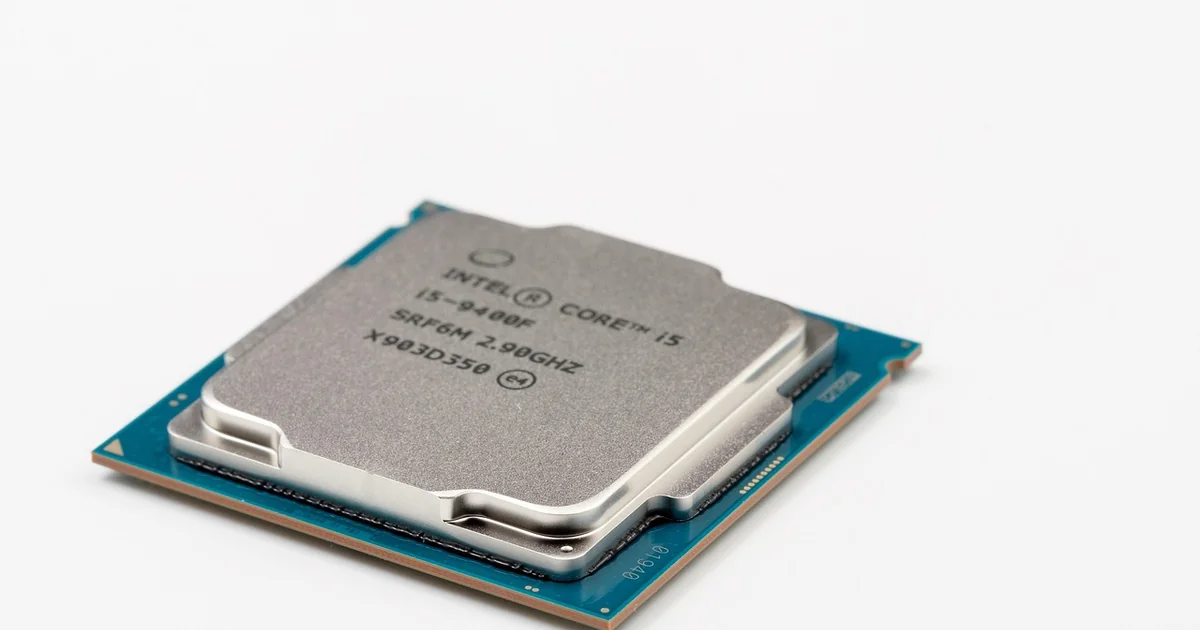
Analyzing the Momentum of an Intel Financial Recovery
Looking at the most recent quarterly data, the numbers paint a picture of a company that is successfully navigating a complex structural pivot. While much of the industry focus remains on high-end training clusters, a massive amount of capital is beginning to flow toward the “inference” stage of the AI lifecycle. This is the stage where an AI actually answers a question or performs a task, rather than just learning how to do it. Because this stage requires lower latency and more efficient distribution, the traditional CPU is seeing a massive resurgence in importance.
For a retail investor, the sheer scale of the recent earnings beat can be jarring. When a company reports earnings per share that exceed consensus estimates by such a staggering margin, it often triggers a massive rally in stock price. In this case, the jump was not just a fluke of accounting; it was supported by a 9.4% beat on total revenue. However, to understand if this momentum is sustainable, we must look beyond the headline figures and examine the specific indicators that signal long-term health.
1. The Massive Surge in Data Centre and AI Revenue
The most telling sign of progress is the performance of the Data Centre and AI (DCAI) segment. This division is no longer just a legacy business supporting standard server workloads; it has become a primary engine for growth. Revenue in this sector climbed 22% year-on-year, reaching a substantial $5.1 billion. This growth is critical because it demonstrates that the company is successfully capturing a slice of the massive AI infrastructure spend that many thought was exclusively reserved for GPU manufacturers.
What is perhaps more impressive than the top-line revenue growth is the expansion of operating margins within this specific segment. Moving from a 13.9% margin to a 30.5% margin suggests that the company is achieving significant economies of scale. It is not just selling more chips; it is selling them more profitably. This indicates that the product mix is shifting toward higher-value, specialized silicon designed for the modern era of computing.
2. The Critical Pivot to Inference-Heavy Architectures
A fundamental misunderstanding in the tech industry is the idea that AI is a one-size-fits-all hardware problem. While training a large language model requires the brute force of thousands of GPUs, running that model for millions of users—known as inference—is a different beast entirely. Inference workloads are often more sensitive to the way a CPU manages memory and handles diverse, unpredictable tasks. Intel is betting heavily on the fact that the world is moving toward this inference-heavy phase.
As AI becomes integrated into every software application, the demand for “agentic computing”—where AI agents perform autonomous tasks—will explode. These agents need to live on servers and edge devices that can handle complex logic and rapid switching between tasks. By positioning the x86 architecture as the indispensable foundation for these agents, the company is attempting to turn the tide of the AI era in its favor.
3. The Dominance of AI PCs in the Client Segment
The consumer and enterprise laptop market has traditionally been a steady but slow-moving segment. However, the introduction of dedicated AI capabilities within personal computers has breathed new life into this category. We are seeing a significant trend where AI PC revenue now accounts for more than 60% of the total client CPU mix. This is a massive shift in the product portfolio, moving away from general-purpose processors toward specialized silicon with built-in neural processing units.
This transition is vital for a long-term intel financial recovery because it secures the “edge.” If every laptop and desktop becomes an AI-enabled device, the volume of silicon required is astronomical. The 8% sequential growth in this specific sub-sector shows that the market is beginning to bite, as users and enterprises look for hardware that can run local AI models without relying entirely on the cloud.
4. Strategic Partnerships with Cloud Giants
Validation from industry leaders is often more important than any internal spreadsheet. One of the most significant recent wins is the multiyear arrangement with Google. By securing a deal to power Google Cloud workloads with Xeon CPUs, the company has effectively neutralized much of the criticism regarding lost market share in the data centre space. This partnership provides a steady, predictable stream of revenue and, more importantly, serves as a massive endorsement of the Xeon roadmap.
When a major player like Google chooses a specific architecture to underpin its cloud infrastructure, it sends a signal to the entire ecosystem. It tells other enterprise customers that these chips are reliable, scalable, and optimized for the modern workload. This kind of institutional trust is difficult to build and even harder to lose, making it a cornerstone of the current turnaround strategy.
5. Collaborations in Advanced Semiconductor Research
The future of silicon is being written in research facilities, and the company is positioning itself at the center of high-stakes innovation. The announced collaboration regarding the Terafab semiconductor research facility in Austin, Texas, is a prime example. Working alongside figures like Elon Musk on facilities that will support companies like SpaceX, xAI, and Tesla, places the company in the middle of the most aggressive technological expansion in history.
This isn’t just about selling chips; it is about being part of the foundational infrastructure of the next generation of technology. By participating in the research and development of facilities that will produce chips for the most advanced autonomous and aerospace companies, the company is ensuring its relevance in the high-growth sectors of the next decade.
6. Bridging the Gap Between GAAP and Non-GAAP Earnings
For the sophisticated financial analyst, the discrepancy between GAAP and non-GAAP earnings is a crucial area of study. In the most recent quarter, the company reported a negative GAAP EPS of $0.73, while the non-GAAP EPS was a staggering $0.29. At first glance, this might look like a contradiction, but it actually reveals a lot about the company’s current state of transition. The GAAP losses are largely driven by one-time restructuring charges and the massive costs associated with building out new fabrication plants.
Understanding this distinction is vital for anyone tracking an intel financial recovery. The non-GAAP figures represent the actual “running” profitability of the core business, stripped of the heavy costs of reorganization. When you see a 29-fold beat on the non-GAAP side, you are seeing the underlying strength of the product sales and operational efficiency, even as the company pays the “tax” of restructuring itself for the future.
7. Consistent Execution Against Internal Forecasts
Reliability is a currency in the stock market. For many years, the company struggled with missed guidance and unpredictable earnings. However, the current streak of exceeding internal financial forecasts for six consecutive quarters is a powerful indicator of improved management and operational discipline. This consistency allows investors to model future growth with much higher confidence.
When a company consistently beats its own guidance, it suggests that the leadership team has a firm grasp on supply chains, manufacturing yields, and market demand. It moves the company out of the “uncertainty” category and into the “execution” category. For a business that has undergone significant workforce reductions and project cancellations, this newfound predictability is a sign of a stabilized foundation.
8. The Scaling of Intel Foundry Services
While the Intel Foundry segment reported an operating loss of $2.4 billion in the first quarter, the context of this loss is essential. Building cutting-edge semiconductor fabrication plants (fabs) is one of the most capital-intensive endeavors in human history. These losses are not necessarily a sign of a failing business model, but rather a reflection of the massive upfront investment required to compete in the foundry market.
You may also enjoy reading: CISA Orders Feds to Patch Critical BlueHammer Zero-Day Flaw.
The key metric to watch here is not the current loss, but the rate of improvement. The fact that the loss showed meaningful improvement compared to previous quarters suggests that the “ramp-up” phase is working. As more external customers begin to use these fabs to manufacture their own chips, the massive fixed costs will be spread across a much larger revenue base, eventually turning this segment into a high-margin powerhouse.
9. The Resilience of the x86 Architecture
There has been much discussion about the rise of ARM-based chips in mobile and some server environments. However, the x86 architecture remains the bedrock of the computing world. The strategic thesis currently being articulated is that as AI workloads become more complex and require more sophisticated instruction sets, the maturity and software compatibility of x86 will remain a massive advantage.
The “comeback” of x86 in the AI era is driven by the sheer volume of existing software that is optimized for this architecture. Moving an entire global enterprise to a new instruction set is a monumental task. By integrating AI acceleration directly into the x86 pipeline, the company is making it easy for businesses to adopt AI without the headache of a total architectural overhaul.
10. Improved Gross Margins and Pricing Power
Gross margin is perhaps the most important indicator of a company’s competitive moat. The recent report of a 41% non-GAAP gross margin—which was about 650 basis points ahead of what was expected—is a significant victory. High margins suggest that the company has “pricing power,” meaning it can sell its products at a premium because customers value them highly.
In the semiconductor world, thin margins are a death sentence because they leave no room for error in manufacturing. By expanding these margins, the company is creating a financial buffer that can be used to fund further R&D or to weather the inevitable cyclical downturns that hit the hardware industry. This margin expansion is a clear sign of a healthy, recovering business.
11. Managing the Tension of Workforce Restructuring
A major challenge in any massive corporate turnaround is the human element. The company underwent a significant workforce reduction of 15% in mid-2025. While these moves are often necessary to lean out a business and protect the bottom line, they can create internal tension and impact morale. The ability to execute a turnaround while maintaining the talent necessary for high-level engineering is a delicate balancing act.
Investors should watch how the company manages this transition. A successful intel financial recovery requires not just cutting costs, but also reinvesting in the right talent. The recent ability to beat earnings suggests that the restructuring is achieving its goal of efficiency without crippling the company’s ability to innovate and meet the “unprecedented demand for silicon” cited by leadership.
12. Diversification of Revenue Streams
One of the biggest risks for any tech company is over-reliance on a single product or customer. Historically, the company was heavily dependent on the PC market. Today, the revenue profile is much more balanced. With significant growth in Data Centre/AI, the emergence of the AI PC, and the long-term potential of the Foundry business, the company is building a diversified ecosystem.
This diversification acts as a hedge. If the PC market enters a slump, the Data Centre segment can pick up the slack. If the Foundry business takes longer to become profitable, the high-margin CPU business can provide the necessary cash flow. This multi-pronged approach is a hallmark of a mature, resilient corporation.
13. Navigating Global Geopolitics and Supply Chains
The semiconductor industry is now at the heart of global geopolitics. The decision to cancel fabrication projects in Germany and Poland in favor of focusing resources elsewhere shows a strategic pivot toward more certain and impactful investments. Navigating the complexities of global chip supply chains requires immense agility and foresight.
The company’s ability to secure long-term supply agreements and enter into multiyear deals with entities like Google demonstrates that it is successfully navigating these geopolitical waters. By focusing on key markets and high-impact research facilities like the one in Austin, the company is positioning itself to be a primary beneficiary of the push for domestic semiconductor sovereignty in the United States.
The journey toward a full-scale intel financial recovery is far from over, but the indicators are shifting from cautionary to optimistic. The combination of massive earnings surprises, a strategic pivot toward the inference-heavy AI market, and a disciplined approach to margin expansion suggests that the company is successfully navigating one of the most difficult transitions in its history. Whether it can maintain this momentum against aggressive competitors remains to be seen, but the current trajectory is undeniably upward.