
The era of subsidized skyward expansion is drawing to a close. For years, the commercial space sector has operated under a regulatory grace period, benefiting from minimal costs while the industry found its footing. However, a significant shift is approaching that will fundamentally alter the financial landscape for aerospace pioneers. The Federal Aviation Administration (FAA) is preparing to implement a new fee structure, meaning that companies like SpaceX will soon be required to pay for their access to the heavens.
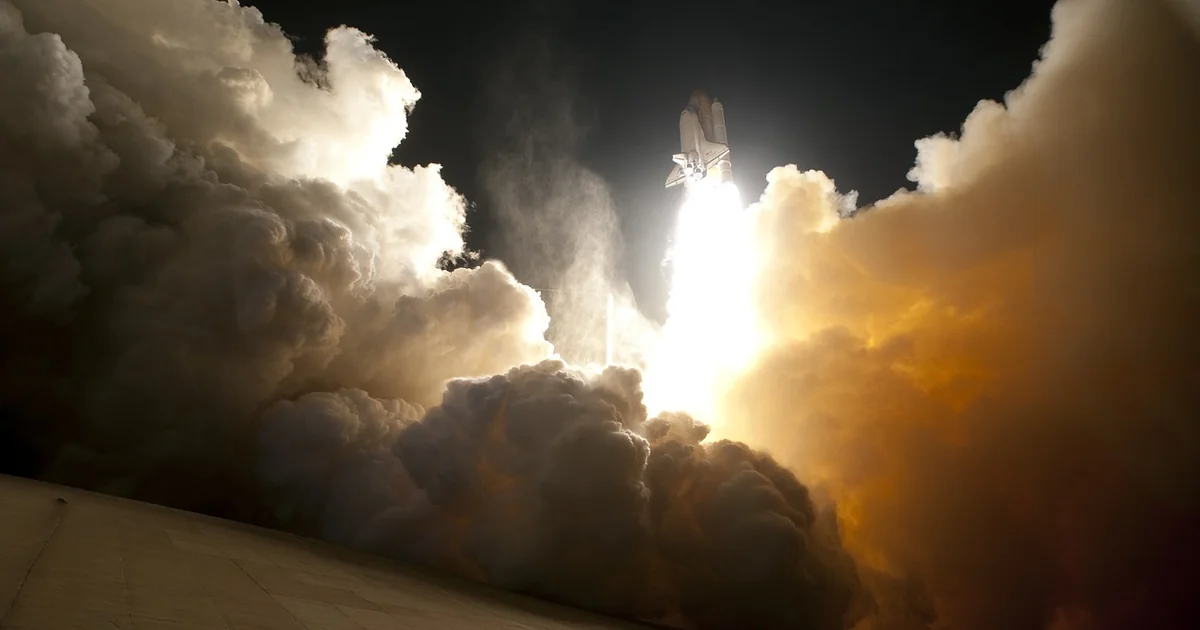
The Shift Toward Commercial Spaceflight Accountability
As it stands today, the cost of obtaining a license to launch a rocket or manage a reentry is relatively modest. These small administrative fees cover the basic application process, but they do not reflect the massive logistical undertaking required by the government. When a rocket prepares for liftoff, the FAA must coordinate the clearing of airspace, ensuring that commercial airlines and private aircraft are safely diverted from the flight path. This coordination requires significant man-hours and complex communication networks.
In return for these services, the aerospace industry has largely enjoyed a low-cost entry point. This was a deliberate strategy to nurture the burgeoning space economy during its infancy. But as the frequency of launches moves from once a month to multiple times a week, the old model is breaking under the weight of its own success. The FAA is now moving toward a mandatory user fee model to ensure that those profiting from the sky contribute to its upkeep.
The implementation of faa rocket launch fees is not just a matter of collecting revenue; it is a matter of survival for the regulatory framework itself. The sheer volume of activity requires a level of oversight that the current budget simply cannot sustain. By transitioning to a fee-based system, the government aims to align the costs of regulation with the scale of the industry’s growth.
Understanding the New Fee Structure and Timelines
The transition to this new economic reality is scheduled to begin in 2026, following provisions laid out in a recent budget reconciliation bill. This isn’t a flat tax, but rather a dynamic system designed to scale alongside the payload capacity of the vehicles involved. Understanding how these costs will escalate is crucial for any stakeholder involved in the aerospace supply chain.
The proposed model uses payload weight as the primary metric for calculation. According to the current plan, the initial rate in 2026 will start at approximately $0.25 per pound. While this might seem negligible for a small satellite, the math changes rapidly when you consider the massive lift capacities of modern heavy-lift vehicles. To ensure a steady increase in regulatory funding, the rate is expected to climb by roughly $0.10 per pound every year.
If these projections hold true, the cost landscape will look very different by the early 2030s. By the year 2033, companies could find themselves facing a rate of $1.50 per pound of payload. To prevent these costs from becoming completely prohibitive for even the largest missions, the FAA has proposed a ceiling. The fees will be capped at $30,000 per individual launch or reentry event, providing a level of predictability for the largest players in the industry.
The Impact of Escalating Costs on Heavy-Payload Economics
For an investor tracking the long-term operational costs of private aerospace companies, these numbers represent a new variable in the risk-reward equation. In the past, launch costs were primarily driven by fuel, hardware, and labor. Now, a predictable, albeit increasing, regulatory tax must be factored into every mission profile. This is particularly relevant for companies focusing on mega-constellations, where hundreds of launches are required to maintain a network.
How will these increasing per-pound fees affect the economics of heavy-payload launches? For a vehicle designed to carry massive components into orbit, the per-pound fee is a minor line item compared to the hundreds of millions spent on development. However, for the emerging “small-sat” market, where margins are much thinner, the annual $0.10 increase per pound could represent a significant shift in operational overhead. Companies will need to optimize their payload configurations to ensure they aren’t paying for “dead weight” that doesn’t contribute to mission success.
Timeline and Reporting Requirements
The administrative process for paying these fees is strictly regulated to ensure the FAA can manage its cash flow and staffing. Companies cannot simply show up on launch day and pay the bill. There is a rigorous lead-time requirement that demands precision in mission planning. Rocket operators must inform the FAA of the exact weight of their payload at least 60 days prior to the scheduled liftoff.
Once the weight is submitted, the FAA will calculate the specific fee based on the current year’s rate and issue a formal pay notification. From the moment a company receives this notification, they have a 30-day window to settle the balance. This 60-day/30-day cycle means that launch windows must be locked in and payload weights finalized well in advance of the actual countdown. Any last-minute changes to the payload weight could trigger recalculations, potentially causing administrative delays that interfere with launch schedules.
The Funding Gap in Commercial Space Transportation
One of the most pressing reasons for this change is the “distress” within the FAA’s Office of Commercial Space Transportation (AST). As the frequency of launches has skyrocketed, the department’s ability to process licenses and ensure safety has been stretched to its limit. In 2023, high-level executives in the industry voiced concerns that the licensing department actually needs twice its current resources to keep up with the pace of modern innovation.
The collected faa rocket launch fees are not intended to disappear into a general government fund. Instead, they are earmarked for a specific trust fund dedicated to the AST. This money is intended to be reinvested directly into the department to hire more inspectors, upgrade digital licensing platforms, and expand the technical expertise required to oversee increasingly complex reentry maneuvers. Essentially, the companies using the sky are paying for the air traffic controllers of the space age.
You may also enjoy reading: Astrobotic Detonation Engine Fires 4,000 Pounds of Thrust.
In 2025, the disparity in launch frequency became even more apparent. SpaceX achieved a staggering 165 orbital launches, a number that dwarfs the rest of the industry combined. In contrast, other major players like United Launch Alliance recorded only six launches during the same period. This massive gap in activity means that a very small number of companies will actually be responsible for the lion’s share of the new regulatory revenue. This creates a unique dynamic where the industry’s most successful innovators are also its primary funders.
Challenges and Practical Solutions for Aerospace Companies
While the move toward a user-fee model is logical from a government standpoint, it introduces several practical challenges for the private sector. For a startup founder in the space sector planning a multi-year launch schedule, these shifting costs can make long-term financial forecasting incredibly difficult. A budget that looks healthy in 2025 might be insufficient by 2029 due to the scheduled annual rate increases.
One major challenge is the rigidity of the payload weight reporting. In the aerospace world, weight is everything. If a company discovers a minor technical issue during final integration that requires adding a piece of shielding or a secondary sensor, they may inadvertently increase their payload weight. This could lead to unexpected fee increases that were not accounted for in the initial mission budget.
To navigate these challenges, companies should consider the following practical solutions:
- Implement Weight Buffer Margins: When forecasting budgets, companies should not use the “ideal” payload weight. Instead, they should include a 5% to 10% weight buffer in their financial models to account for late-stage hardware additions or weight fluctuations.
- Automated Regulatory Tracking: Large aerospace firms should integrate regulatory fee schedules directly into their Enterprise Resource Planning (ERP) software. This allows for real-time updates to mission costs as the FAA’s annual rate increases are announced.
- Early Weight Finalization: To avoid the stress of the 60-day reporting window, engineering teams should aim to “freeze” payload specifications much earlier in the integration cycle. This provides a safety net for the administrative teams handling the FAA notifications.
- Payload Optimization Audits: As the per-pound cost increases, companies should conduct regular audits of their secondary payloads. Ensuring that every ounce of weight is mission-critical will help mitigate the impact of the escalating fees.
A New Era of Regulatory Accountability
The transition to faa rocket launch fees marks the end of the “wild west” era of commercial spaceflight. While some may view this as a burden, it is arguably a sign of the industry’s maturity. For the space economy to become a permanent fixture of global commerce, it must operate within a sustainable and self-funding regulatory framework. Just as the commercial airline industry pays into trust funds to maintain the safety and efficiency of global airspace, the space industry must now do the same.
The impact of this policy will likely be felt most acutely by the companies that are currently driving the industry forward. By providing the AST with the resources it desperately needs, these fees may actually speed up the licensing process in the long run. A well-funded, well-staffed FAA can move through applications more quickly, reducing the very bottlenecks that industry leaders have complained about for years.
As we look toward 2026 and beyond, the aerospace industry is entering a period of heightened accountability. The cost of reaching orbit is no longer just about the physics of escaping gravity; it is also about the economics of maintaining the infrastructure that makes such escapes possible. For the companies that can master this new balance of innovation and regulation, the sky is no longer a limit, but a regulated and sustainable highway to the stars.
The evolution of these fees reflects a broader trend in technology: as a sector moves from experimental to essential, the rules of engagement inevitably become more formal and more costly. For the next generation of space explorers, the challenge will be to keep pushing the boundaries of what is possible while navigating the increasingly complex financial realities of the atmosphere.







No Responses