Watching the numbers climb at the local fuel pump can feel like a slow-motion financial crisis. For many families, a sudden spike in crude oil prices translates directly into tighter grocery budgets and less disposable income. While the volatility of the petroleum market remains a constant headache for internal combustion engine owners, a growing community of drivers has found a way to decouple their daily commute from the whims of global oil politics. Transitioning to electric mobility is not just an environmental choice; it is a strategic financial move designed to beat high gas prices and reclaim control over monthly transportation costs.
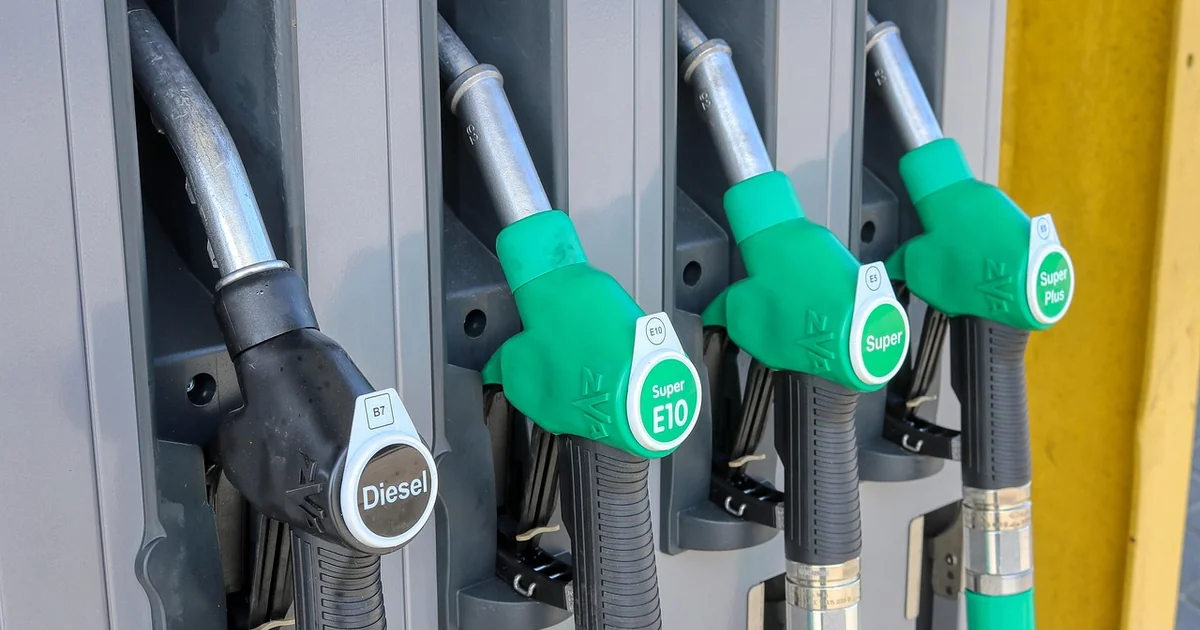
Strategic Planning to Beat High Gas Prices via Electrification
The most immediate advantage of an electric vehicle (EV) is the fundamental difference in how energy is purchased and consumed. When you drive a gasoline car, you are a captive consumer at the pump, subject to real-time price fluctuations that can change between Monday and Friday. With an EV, you are essentially moving your fuel source from a volatile commodity market to a much more stable utility market. This shift allows for a level of budgeting precision that was previously impossible for the average driver.
To truly maximize these savings, one must look beyond the simple cost per mile. The real magic happens when you integrate smart charging habits with the existing infrastructure of your home or workplace. By treating your vehicle like a large-scale electronic device rather than a traditional machine, you can exploit the nuances of time-of-use electricity rates to ensure your “fuel” is as inexpensive as possible.
1. Leverage Time-of-Use Electricity Rates
If you want to beat high gas prices, you cannot simply plug your car in whenever you feel like it. Most modern utility companies offer what is known as Time-of-Use (TOU) pricing. This structure means that electricity is significantly cheaper during “off-peak” hours, typically late at night or in the early morning, when the overall demand on the power grid is low. Conversely, “peak” hours—usually during the late afternoon when everyone is coming home and turning on air conditioners—carry a premium price.
To implement this, you should invest in a smart home charging station. These devices can be programmed to communicate with your utility provider. You can set a schedule so that the vehicle only draws power when rates are at their absolute lowest. For example, instead of charging from 5:00 PM to 9:00 PM, your car might wait until 2:00 AM to begin drawing current. This simple automation can reduce your per-mile energy cost by as much as 50% compared to standard residential rates, creating a massive buffer against the rising costs of fossil fuels.
2. Utilize Public Infrastructure and Workplace Charging
Many people assume that the only way to charge an EV is at home, but relying solely on your residential meter can limit your ability to save. One of the most effective ways to lower your total cost of ownership is to treat your workplace or local community hubs as your primary charging stations. Many corporations now offer subsidized or even free charging for employees as part of their sustainability initiatives. If you can top off your battery during an eight-hour workday, you are essentially driving on “subsidized” energy.
Beyond the office, many municipal parking structures and shopping centers offer Level 2 charging stations. While it might take a few hours to reach a full charge, these sessions can significantly extend your range without costing you a dime in home electricity. By strategically planning your route to include these “top-off” locations, you reduce the frequency of expensive home charging sessions and keep your vehicle ready for long-distance travel without the stress of fuel costs.
3. Master Regenerative Braking Techniques
A concept that often surprises new EV owners is the ability to “create” energy while driving. This is achieved through regenerative braking, a process where the electric motor runs in reverse to act as a generator when you lift your foot off the accelerator. This process converts the kinetic energy of the moving vehicle back into electrical energy, which is then sent directly back into the battery.
To maximize this efficiency, you should adopt a “one-pedal driving” mindset. Instead of riding the brake pedal throughout your trip, try to anticipate traffic flow and hills. If you see a red light ahead, lift off the accelerator early. This allows the car to enter a high-regen state, slowing the vehicle down smoothly while feeding electricity back into your storage. In stop-and-go city traffic, this can improve your overall efficiency by a noticeable margin, ensuring that every bit of energy you pay for is used to its maximum potential.
4. Optimize Climate Control and Aerodynamics
Energy efficiency in an EV is highly sensitive to how you manage the cabin environment and how the car cuts through the air. While it is tempting to blast the air conditioning on a hot summer day, high-power climate control draws significant energy from the battery, which can reduce your range and increase your effective cost per mile. A more efficient approach is to use “pre-conditioning.”
Most modern EVs allow you to control the temperature via a smartphone app. By pre-conditioning the cabin while the vehicle is still plugged into the wall, you use grid power to reach a comfortable temperature rather than using the battery’s stored energy. Once you start driving, the battery only has to maintain the temperature rather than fight against a hot interior. Additionally, being mindful of high-speed driving is crucial. Because aerodynamic drag increases exponentially with speed, driving at 65 mph instead of 75 mph can significantly improve your Wh/mi (Watt-hours per mile) efficiency, helping you beat high gas prices through smarter driving habits.
You may also enjoy reading: “Worst AI Tools Making Design Decisions: 7 Hidden Outputs of Black Box AI Drift”.
5. Participate in Community Learning and Events
One of the biggest hurdles to transitioning to electric mobility is the “information gap.” Many potential buyers feel intimidated by the technical jargon or the perceived complexities of charging. This is where community-led initiatives become invaluable. Every April, the movement gains significant momentum through Drive Electric Earth Month, an expansion of the original Drive Electric Earth Day. This month-long celebration is organized by a coalition of groups including Plug In America, the Sierra Club, the Electric Vehicle Association, EV Hybrid Noire, and Drive Electric USA.
These events are designed to take the mystery out of the technology. Rather than sitting in a high-pressure dealership environment, you can attend local “Ride & Drive” events to experience different models firsthand. For instance, there are often large-scale gatherings like the Electric CARnival in Kansas City or specialized expos like ELECTRATON in Mexico. These meetups allow you to speak directly with actual owners. These real-world users can give you the unfiltered truth about how much they actually spend on electricity versus what they used to spend on gas, providing a level of practical insight that no marketing brochure can match.
6. Monitor Battery Health and Efficiency Data
To truly optimize your savings, you must treat your vehicle’s data as a financial tool. Most EVs come equipped with sophisticated onboard computers that track energy consumption in real-time. By regularly checking your efficiency metrics, you can identify patterns in your driving that might be costing you money. Are you losing significant range on certain routes? Does your efficiency drop sharply in specific weather conditions?
Understanding these variables allows you to make data-driven decisions. For example, if you notice that your efficiency plummets during extreme cold, you might decide to schedule more frequent, shorter charging sessions to keep the battery in its optimal temperature range. By treating your EV as a piece of precision technology rather than a simple transport tool, you can fine-tune your usage to ensure that your cost-per-mile remains as low as possible, effectively insulating your wallet from the volatility of the energy market.
7. Evaluate Total Cost of Ownership (TCO) Over Time
Many people hesitate to switch to electric because the upfront purchase price can sometimes be higher than a comparable gasoline vehicle. However, focusing solely on the sticker price is a common mistake that prevents people from seeing the long-term benefits. To truly beat high gas prices, you must look at the Total Cost of Ownership (TCO), which includes fuel, maintenance, insurance, and depreciation.
Electric vehicles have significantly fewer moving parts than internal combustion engines. There are no oil changes, no spark plugs to replace, no timing belts to swap, and no complex transmission systems to fail. This reduction in mechanical complexity leads to much lower long-term maintenance costs. When you combine these savings with the lower cost of electricity and the ability to avoid the frequent price hikes at the pump, the mathematical reality becomes clear: over a three-to-five-year period, an EV often becomes the much more economical choice. Conducting a thorough TCO analysis—accounting for local tax incentives, fuel savings, and reduced service intervals—is the final step in making a confident, financially sound transition to electric mobility.
The Reality of the Transition
Making the switch to electric is a journey of adaptation, but the rewards are tangible. By moving away from the unpredictable nature of liquid fuels, you gain a sense of stability in your monthly household budget. Whether you are attending a local Earth Day EV show to learn from veterans or simply setting your smart charger to run at 3:00 AM, every small step helps you build a more resilient and cost-effective way to move through the world.