The dream of a car that navigates the world without a single human touch has long been the centerpiece of the electric vehicle revolution. For years, enthusiasts and early adopters believed that the hardware currently sitting in their trunks was more than capable of handling the heavy lifting of autonomous intelligence. However, a recent shift in rhetoric from the top of Tesla has sent ripples through the automotive and tech communities, suggesting that the path to true autonomy is much more physical than purely digital. The realization that millions of drivers may face mandatory tesla fsd hardware upgrades marks a pivotal turning point in the company’s relationship with its most dedicated customer base.
The Shift from Software Dreams to Physical Reality
For a significant period, the prevailing narrative surrounding autonomous driving was one of pure software evolution. The idea was simple: as neural networks became more sophisticated and training data grew more robust, the existing silicon in existing cars would simply receive a “brain transplant” via an over-the-air update. This concept of the software-defined vehicle promised that a car purchased in 2019 would be just as capable in 2025, provided the code was sufficiently advanced.
That paradigm has officially encountered a bottleneck. Recent admissions from Elon Musk indicate that the current computational ceiling has been reached for a massive segment of the fleet. Specifically, vehicles equipped with Hardware 3 (HW3), which were produced in high volumes between 2019 and 2023, lack the raw processing power and sensory input capabilities required for unsupervised Full Self-Driving. This means the leap from “driver assistance” to “unsupervised autonomy” cannot be achieved through code alone; it requires new physical components.
This admission creates a fascinating, albeit difficult, tension between the company’s software ambitions and the physical limitations of automotive hardware lifecycles. While software can be iterated upon in milliseconds across a global fleet, hardware is bound by the laws of physics and the constraints of manufacturing. We are seeing a collision between the infinite scalability of AI and the finite capacity of current-generation silicon.
The Discrepancy in Corporate Messaging
One of the most striking aspects of this development is the apparent divergence in communication between Tesla’s executive leadership. In late 2025, Chief Financial Officer Vaibhav Taneja offered a more optimistic outlook, suggesting that the company had not entirely abandoned the possibility of making the current hardware sufficient for advanced tasks. This provided a glimmer of hope for owners who were wary of the costs associated with physical retrofitting.
However, the more recent stance taken by Musk has been far more definitive. By stating unequivocally that Hardware 3 simply lacks the capability for unsupervised autonomy, the company has effectively closed the door on the “software-only” solution for many. This shift in tone moves the conversation from “when will the software be ready” to “how much will it cost to upgrade the hardware.”
Understanding the Hardware Gap
To understand why tesla fsd hardware upgrades are becoming a necessity, one must look at the architecture of autonomous driving. An autonomous system is essentially a loop consisting of perception, prediction, planning, and execution. Each of these stages requires immense computational throughput and high-fidelity data.
Hardware 3 was designed with a specific threshold of TOPS (Trillions of Operations Per Second) in mind. While impressive for its time, the rapid advancement in transformer-based neural networks—the same technology powering modern large language models—has increased the computational load required to process visual data in real-time. The “eyes” of the car, the cameras, also play a vital role. If the next generation of autonomy requires higher resolution, better dynamic range, or different viewing angles to navigate complex urban environments, the existing camera suite becomes a legacy component that cannot be bypassed by software.
Imagine trying to run a modern, high-end AAA video game on a computer from ten years ago. You might be able to get the game to launch, and you might even be able to play it on the lowest possible settings, but you will never experience the full graphical fidelity or the smooth frame rates that the game was designed to provide. This is precisely the situation facing Hardware 3 owners: they may receive “slightly more advanced” versions of current software, but they will likely be locked out of the true, unsupervised experience.
The Technical Components of the Upgrade
Based on recent disclosures, the upgrade path is expected to involve two primary elements:
- A New Central Computer: The “brain” of the vehicle will need a more powerful SoC (System on a Chip) capable of handling the increased mathematical complexity of unsupervised neural networks.
- New Camera Modules: To support the higher level of perception required for true autonomy, the vehicle will likely need upgraded sensors that provide more granular data to the new computer.
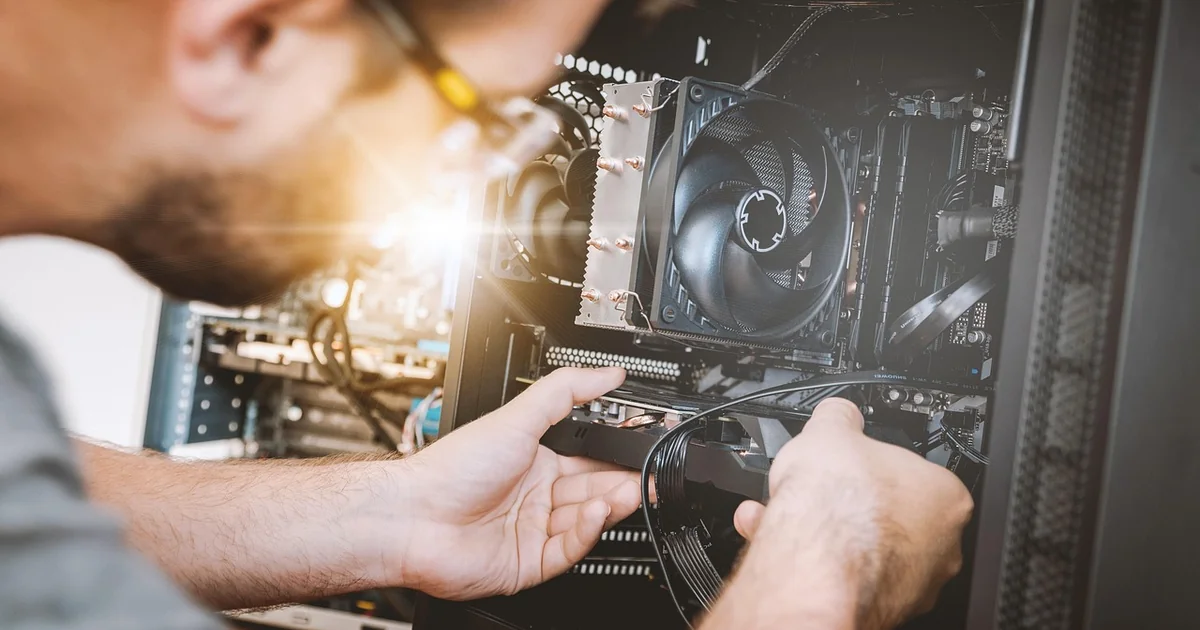
This is a significant departure from the “over-the-air” promise. A physical installation requires the vehicle to be stationary, disassembled to some degree, and serviced by a technician. This introduces variables like labor costs, parts availability, and vehicle downtime that software updates simply do not have.
The Logistical Challenge: Micro-Factories and Service Bottlenecks
If millions of vehicles require physical modifications, the traditional service center model faces an existential threat. A standard Tesla service center is designed for maintenance, tire rotations, and minor repairs. It is not a high-volume manufacturing plant capable of performing complex hardware retrofits on thousands of cars per week.
To mitigate this, there is a proposal to utilize “micro-factories” located in major metropolitan areas. This is a strategic move to decentralize the upgrade process. Instead of owners driving hundreds of miles to a central hub, these specialized production lines would be embedded within urban centers to handle the surge in demand efficiently.
The concept of a micro-factory is essentially a highly automated, compact assembly line designed for a single, specific task. In this case, the task is the surgical replacement of a car’s computer and camera array. By treating the upgrade as a specialized production process rather than a standard repair, Tesla aims to avoid the massive bottlenecks that would otherwise paralyze their service network. However, the sheer scale of this undertaking is unprecedented in the automotive industry.
The Complexity of Scaling Physical Upgrades
Scaling a hardware rollout to millions of units involves several layers of complexity:
You may also enjoy reading: Kia Cuts EV4 Prices by $10,000 in Electric Vehicle Price War After VW’s ID.3 Neo Launch.
- Supply Chain Management: Sourcing millions of high-performance chips and specialized camera sensors simultaneously is a monumental task that requires tight coordination with semiconductor manufacturers.
- Labor Specialization: Technicians will need specific training to perform these upgrades quickly and accurately without compromising the vehicle’s structural or electronic integrity.
- Inventory Logistics: Moving parts to micro-factories and managing the flow of vehicles in and out of these centers requires sophisticated logistics software.
Impact on Vehicle Value and Consumer Trust
The announcement of necessary tesla fsd hardware upgrades has profound implications for the secondary market. For many, a Tesla is not just a mode of transport; it is a piece of evolving technology. The resale value of a used Tesla is often tied to its perceived “future-proofing.”
Consider a hypothetical scenario: an owner purchased a Model 3 in 2021, specifically paying a premium for the Full Self-Driving package. They operated under the assumption that their vehicle would eventually become a fully autonomous robot. Now, facing the prospect of an additional, potentially expensive hardware retrofit to reach that goal, the perceived value of their original investment has shifted. This could lead to a depreciation in the resale value of Hardware 3 vehicles, as savvy buyers may avoid them to escape the looming upgrade costs.
Furthermore, there is the question of consumer trust. The gap between the early promises of “hardware-ready” autonomy and the current reality of “hardware-limited” autonomy is wide. This discrepancy could potentially open the door to legal scrutiny. If customers purchased a product based on a specific capability that is later deemed physically impossible without further investment, the definition of what was actually sold becomes a point of contention.
Navigating the Transition for Current Owners
For those currently driving Hardware 3 vehicles, the path forward involves a mix of patience and strategic planning. While the “unsupervised” dream may be delayed, it is important to note that Tesla has indicated they will still release improved software versions for existing hardware. This means the driving experience will likely continue to improve, even if it doesn’t reach the absolute pinnacle of autonomy.
Owners should consider the following steps:
- Monitor Official Channels: Avoid speculative rumors on social media and stick to official Tesla communications regarding upgrade timelines and costs.
- Evaluate Long-term Use: If you plan to keep your vehicle for a decade, the cost of an upgrade may be a manageable part of the total cost of ownership. If you trade in every two years, the hardware limitation becomes a much larger factor in your decision-making.
- Budget for the Future: Treating the potential upgrade as a “planned maintenance” item rather than a surprise expense can help mitigate the financial shock.
The Broader Context of Autonomous Technology
Tesla’s struggle with hardware limitations is not an isolated incident; it is a fundamental characteristic of the current state of autonomous vehicle technology. The industry as a whole is grappling with the “long tail” of edge cases—those rare, unpredictable scenarios that occur on the road. Solving these cases requires massive amounts of compute and high-fidelity sensing.
We are seeing a broader trend in the automotive sector toward “software-defined vehicles,” but this trend is proving to be more cyclical than linear. Hardware must evolve in leaps to support the incremental improvements in software. This creates a staggered lifecycle where vehicles are not just “old” or “new,” but exist in different tiers of computational capability.
The Future of Vehicle Architecture
Looking ahead, the lessons learned from the Hardware 3 transition will likely influence how all future electric vehicles are designed. We can expect to see:
- Modular Computing: Future vehicles may be designed with “plug-and-play” computing modules, making it easier to swap out the central brain as AI advances.
- Over-Provisioned Hardware: Manufacturers may begin to include more powerful chips than currently necessary, essentially “pre-paying” for future software capabilities to avoid the need for physical retrofits.
- Standardized Sensor Arrays: Creating more modularity in camera and lidar mounting could allow for easier sensor upgrades.
The transition from Hardware 3 to the next generation is a growing pain for a company that is essentially building the future of transportation in real-time. While the necessity of tesla fsd hardware upgrades is a setback for those expecting a seamless digital evolution, it is a realistic acknowledgment of the physical constraints that govern all advanced technology.
As the industry moves toward a world of unsupervised autonomy, the focus will shift from how much software we can write to how much physical intelligence we can pack into a chassis. For the millions of Tesla owners currently navigating this transition, the journey toward the autonomous dream is becoming a much more tangible, hands-on experience.