In 1976, the Cray-1 supercomputer dominated scientific computing with its distinctive circular design and liquid cooling systems. Today, teenagers carry devices in their pockets that deliver computational force exceeding those room-sized giants. When examining modern iphone performance against the benchmarks of 1980s supercomputers, the disparity reveals not just technological evolution, but a fundamental restructuring of how society processes information. This comparison illuminates the trajectory of semiconductor engineering while highlighting unexpected limitations that persist despite four decades of innovation.
Benchmarking Modern iPhone Performance Against Historical Giants
The Cray-1, released by Cray Research in 1976 and prevalent throughout the 1980s, represented the pinnacle of computational ambition. Weighing approximately 5.5 tons and occupying a circular space roughly eight feet in diameter, this machine processed data at speeds approaching 160 million floating-point operations per second (MFLOPS). For context, contemporary engineers considered this velocity revolutionary for weather modeling, nuclear simulations, and cryptographic analysis.
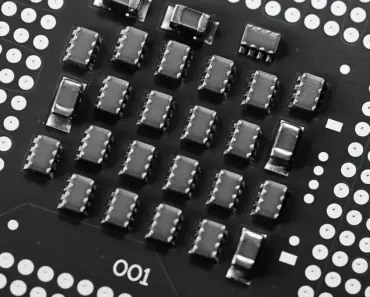
Contrast this with the Apple A17 Pro chip powering recent flagship devices. This silicon delivers approximately 2.15 trillion floating-point operations per second (TFLOPS) of graphics processing capability alone, while the CPU complex handles general-purpose computing at speeds exceeding 3.7 gigahertz across performance cores. The transistor count tells an equally dramatic story: the Cray-1 relied on roughly 200,000 discrete components and integrated circuits, whereas the A17 Pro packs 19 billion transistors onto a die measuring roughly 130 square millimeters using a three-nanometer manufacturing process.
The architectural philosophy diverges as sharply as the specifications. Seymour Cray designed his supercomputer around vector processing, optimizing for mathematical operations on large data arrays essential for scientific visualization. Modern mobile processors employ ARM-based reduced instruction set computing (RISC) architectures optimized for thermal efficiency, task switching, and heterogeneous computing. This distinction matters for users attempting specialized workloads: while an iPhone excels at concurrent applications, video encoding, and machine learning inference, it approaches numerical computation differently than the vector monsters of the Reagan era.
Memory Architectures and Storage Density
Memory capacity reveals another chasm between eras. The Cray-1 supported a maximum configuration of eight megabytes of bipolar SRAM, organized as one million 64-bit words. This memory subsystem required dedicated cooling and occupied significant physical volume within the computer’s housing. Access speeds, while impressive for the era, operated on timelines measured in tens of nanoseconds.
Contemporary flagship phones ship with eight gigabytes of LPDDR5 RAM—literally one thousand times the capacity of the Cray-1 maximum—in a package smaller than a postage stamp. Memory bandwidth exceeds fifty gigabytes per second, enabling rapid data shuffling between the CPU, GPU, and Neural Engine. This bandwidth proves crucial for computational photography, where algorithms merge multiple exposures in milliseconds, and for augmented reality applications requiring real-time spatial mapping.
The Storage Revolution
Secondary storage presents perhaps the most visceral comparison. The Cray-1 relied on external hard drive subsystems and magnetic tape libraries, with high-performance configurations offering capacities in the hundreds of megabytes. Data retrieval required mechanical movement of read heads and physical tape winding, introducing latency measured in seconds or minutes.
Modern devices incorporate solid-state storage using NAND flash memory, with premium configurations offering one terabyte of space. This storage operates without moving parts, achieving read speeds exceeding three gigabytes per second. The density improvement proves staggering: the Cray-1’s storage peripherals occupied dedicated rooms, while an iPhone’s storage fits within a package thinner than a deck of cards. For historians researching 1980s computing, this means an entire decade of supercomputer output could theoretically reside in a device that slips into a jeans pocket.
Graphics Capabilities and Parallel Processing
The Cray-1 predated modern graphical computing. Visualization required separate frame buffer systems and specialized display hardware, often connected via high-bandwidth channels. The supercomputer itself focused purely on computational throughput, rendering visual output as secondary concerns handled by peripheral devices.
Modern modern iphone performance metrics must account for the integrated six-core GPU capable of hardware-accelerated ray tracing, mesh shading, and machine learning inference. The A17 Pro’s Neural Engine executes 35 trillion operations per second, dedicated specifically to artificial intelligence tasks. This specialized silicon enables real-time language translation, computational photography algorithms that rival professional cameras, and gaming experiences featuring console-quality lighting and physics simulations.
The comparison becomes particularly striking when considering floating-point precision. The Cray-1 utilized 64-bit double-precision arithmetic for scientific accuracy, while mobile GPUs optimize for 32-bit single-precision calculations balanced between visual fidelity and thermal constraints. For developer Marcus, who spends evenings prototyping shader effects for indie games, this means his phone renders complex lighting scenarios faster than the 1980s machines used to design stealth aircraft.
Power Consumption and Thermal Engineering
Energy requirements highlight the efficiency gains of four decades. The Cray-1 consumed approximately 115 kilowatts of electricity—comparable to one hundred modern households—plus additional power for the Freon-based cooling system required to prevent the bipolar logic from overheating. Operating costs and infrastructure demands limited these machines to government laboratories, universities, and major corporations.
Contemporary smartphones operate within a thermal envelope of roughly seven to ten watts during peak workloads, sustained by lithium-ion batteries with capacities around four thousand milliampere-hours. This efficiency stems from aggressive power gating, where unused silicon sections enter sleep states within microseconds, and from advanced process nodes that minimize electron leakage. However, this efficiency creates unique constraints: unlike the climate-controlled rooms housing Cray supercomputers, phones lack active cooling systems, leading to thermal throttling during sustained computational loads.
The Thermal Throttling Challenge
Consider computational historian Dr. Sarah, who attempts running emulated 1980s weather models on her phone during field research. While the device possesses sufficient raw processing power to simulate these legacy algorithms, extended calculations cause the aluminum chassis to warm considerably. After several minutes of intensive computation, the system reduces clock speeds to prevent overheating, temporarily reducing modern iphone performance to levels below the theoretical maximum. This represents a fundamental difference between supercomputers designed for sustained 24/7 operation at maximum throughput and mobile devices optimized for bursty, intermittent usage patterns.
Practical Applications: Leveraging Modern iPhone Performance
Understanding these comparisons solves specific problems for contemporary users navigating upgrade cycles and workflow optimization. For professionals considering whether their pocket device suffices for serious computation, several scenarios illuminate practical boundaries.
You may also enjoy reading: "Worst AI Tools Making Design Decisions: 7 Hidden Outputs of Black Box AI Drift".
Scenario One: Mobile Development and Compilation
Software developer Alex requires occasional computational tasks while traveling. Using Swift Playgrounds or Pythonista, Alex can execute machine learning inference using Core ML frameworks that leverage the Neural Engine. The solution involves understanding memory constraints: while the Cray-1 handled massive datasets through batch processing, mobile workflows require chunking data into segments that fit within available RAM. Alex optimizes performance by preprocessing large datasets on desktop machines, then deploying lightweight inference models to the phone for real-time analysis during client presentations.
Scenario Two: Computational Photography and Video
Visual artists Jennifer and her peers question whether upgrading from an iPhone 12 to a 15 Pro significantly impacts their creative workflows. The generational leap in GPU capabilities affects real-time preview quality when applying complex filters to 4K ProRes video. The practical solution involves recognizing that modern iphone performance now supports editing workflows previously requiring laptop computers, provided users adopt optimized codecs and avoid excessive simultaneous background processes. Jennifer implements a workflow where she renders final exports while connected to power, preventing thermal throttling from interrupting lengthy encoding sessions.
Scenario Three: Legacy System Emulation
Retrocomputing enthusiasts attempting to emulate 1980s supercomputer environments face unique challenges. While the processing power certainly suffices, the architectural differences require translation layers that introduce overhead. The solution involves selecting emulators specifically optimized for ARM architecture rather than relying on generic x86 emulation, thereby minimizing the performance penalty of instruction translation.
Why Modern iPhones Still Face Computational Limits
Despite overwhelming advantages in raw specifications, contemporary smartphones encounter bottlenecks that 1980s supercomputers avoided. Network dependency represents a primary constraint: while the Cray-1 operated as a standalone processing island, modern smartphones frequently await cloud responses for tasks requiring extensive databases or collaborative processing. This latency introduces pauses that purely local supercomputers never experienced.
Battery chemistry imposes hard ceilings on sustained performance. The Cray-1 drew unlimited power from municipal electrical grids, while iPhones must balance computation against eight to twelve hours of typical usage. Users experiencing sluggish performance during video editing often discover that enabling Low Power Mode—a feature that reduces peak CPU speeds to extend battery life—has inadvertently limited their device’s capabilities. The solution requires manually disabling power conservation features during intensive tasks, accepting the trade-off of reduced longevity for immediate throughput.
Software abstraction layers create additional friction. The Cray-1 ran specialized operating systems with minimal overhead, scheduling jobs directly against hardware. iOS, designed for security and multitasking, implements sandboxing, memory management, and cryptographic verification that consume cycles. While these features protect user data, they explain why a device with billions of transistors might occasionally hesitate when launching applications, whereas the 1980s supercomputer responded instantaneously to batch commands.
The Architecture Philosophy Divide
The fundamental distinction between these computing eras lies in purpose-built versus general-purpose design. Seymour Cray optimized for the Linpack benchmark and specific scientific workloads, accepting that his machine would prove inefficient for word processing or database management. Modern iPhones represent the ultimate general-purpose compromise, attempting to excel at photography, gaming, communication, and productivity simultaneously.
This philosophical shift explains why certain legacy algorithms actually run slower than expected on contemporary hardware. Vector processing units in 1980s supercomputers handled specific matrix operations with elegant efficiency, while modern CPUs must simulate these operations through multiple instruction cycles. For researchers attempting to recreate 1980s computational fluid dynamics on mobile devices, the solution often involves rewriting legacy algorithms to leverage GPU compute shaders or Neural Engine acceleration rather than attempting direct CPU translation.
Looking forward, the trajectory suggests continued divergence. Quantum computing and specialized AI accelerators promise to obsolete current benchmarks just as surely as the iPhone overshadowed the Cray-1. Yet the comparison serves as a humbling reminder that computing power alone does not determine utility: the 1980s supercomputer required dedicated staff, climate control, and million-dollar budgets, while today’s pocket devices democratize access to capabilities those early pioneers could scarcely imagine. For users optimizing their mobile workflows, the lesson remains clear: understanding not just the magnitude of modern iphone performance, but its specific architectural character, enables the extraction of maximum value from these extraordinary machines.