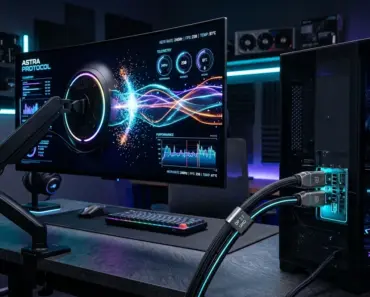
In the enthusiast PC gaming and professional creator display market, organic self-emissive technology has completely dethroned conventional IPS and VA LCDs. Delivering pixel-level local dimming, instantaneous sub-millisecond response times, and mathematically infinite contrast ratios, OLED monitors have become the gold standard. However, as monitor manufacturers push HDR peak brightness toward blinding specular highlight thresholds, a fierce technological duel has emerged between two rival architectures: mla vs qd oled. On one side stands LG Display’s Micro-Lens Array Plus (MLA+) White-OLED, utilizing billions of microscopic convex lenses to extract trapped photons. On the opposing side stands Samsung Display’s Third-Generation Quantum Dot OLED (QD-OLED Gen 3), leveraging inorganic semiconductor nanocrystals to convert pure blue OLED light into saturated primary colors. For prospective buyers navigating 240Hz, 360Hz, and 480Hz gaming monitors, evaluating optical stack physics, Windows subpixel text fringing, ambient black levels, and thermal burn-in longevity is essential before investing.
1. The Internal Reflection Loss Problem in Organic Displays
To understand why advanced optical architectures like MLA+ and QD-OLED were engineered, one must analyze the physical bottleneck of conventional White-OLED (WOLED) panels.
An OLED panel generates light when injected electrons and holes recombine radiatively within an organic emissive layer (yielding excitons). However, generating photons inside organic material is only half the battle; those photons must physically escape the panel into the viewer’s room.
In a standard planar OLED stack, photons generated in the organic emissive layer (refractive index n ≈ 1.7 to 1.8) encounter glass substrates (n ≈ 1.5) and ambient air (n = 1.0). When light strikes the boundary at an angle exceeding Snell’s critical angle (θc = arcsin(n2 / n1)), it undergoes Total Internal Reflection (TIR):
In standard Gen 1 and Gen 2 WOLED monitors, roughly 75% to 80% of all generated light is trapped within the glass substrate and transparent conductive anode, bouncing internally until it is absorbed as waste thermal heat!
To achieve bright HDR highlights on early OLEDs, manufacturers had to drive higher electrical current density (J) through the organic stack. But higher current accelerates exciton quenching (triplet-triplet annihilation) and Joule heating, drastically shortening the panel’s lifespan and inflicting permanent image retention (burn-in). Consequently, aggressive Automatic Brightness Limiters (ABL) throttled full-screen white brightness down to a dull 180 to 200 nits.
2. Micro-Lens Array (MLA+) Optical Extraction Physics
Developed by LG Display, Micro-Lens Array Plus (MLA+) solves internal reflection through nanoscale physical optics.
During semiconductor deposition, a microscopic layer of convex hemispherical lenses is etched directly onto the glass substrate atop the organic emissive layer. Across a single 27-inch 1440p or 32-inch 4K panel, LG Display integrates over 5,000 microscopic lenses per individual subpixel, totaling tens of billions of micro-lenses across the display!
The physical operation of MLA+ is governed by optical beam reshaping:
- Light rays that would normally strike the flat glass-air interface at shallow angles (exceeding θc) strike the curved surface of the micro-convex lenses.
- The curvature alters the angle of incidence below the critical angle, allowing trapped photons to escape out of the panel into the viewing cone.
- Combined with a specialized internal reflective layer (the “Meta Booster” algorithm), MLA+ increases optical extraction efficiency by up to 70% compared to traditional WOLED.
Because light is extracted optically rather than forced through brute-force electrical current, an MLA+ OLED monitor achieves peak 3% window HDR highlights of 1,300 to 1,500 nits (and up to 3,000 nits on televisions) while operating at lower electrical current density than older 800-nit panels. This enhances thermal headroom and dramatically reduces long-term burn-in susceptibility.
3. QD-OLED Gen 3: Quantum Dot Photoluminescent Conversion
Samsung Display’s Third-Generation QD-OLED takes a fundamentally divergent architectural path by replacing color filters entirely with quantum dots.
In LG’s WOLED architecture, the organic stack emits white light, which then passes through color filters (Red, Green, Blue) to produce color. Color filters are inherently subtractive: an absorption filter blocks two-thirds of the optical spectrum to pass a single primary color, throwing away 65% of optical energy as heat! Furthermore, WOLED adds an unfiltered White (W) subpixel to boost luminance. In high-brightness HDR scenes (e.g., bright orange explosions or neon yellow lasers), the white subpixel dilutes the image, washing out color saturation.
QD-OLED eliminates color filters and the white subpixel:
- Pure Blue OLED Emitter Stack: The backplane contains three or four layers of high-efficiency blue fluorescent/phosphorescent organic material emitting high-energy 455 nm blue photons.
- Direct Blue Subpixel: Blue subpixels allow the pure blue OLED photons to pass straight through without filtering.
- Printed Quantum Dot Photoluminescent Converters: Red and green subpixels contain printed layers of inorganic semiconductor nanocrystals (Cadmium-free Core-Shell Indium Phosphide / Zinc Selenide). When struck by high-energy blue photons, the quantum dots absorb the energy and re-emit monochromatic red (630 nm) and green (532 nm) light via quantum confinement:
$$E_{\text{photon}} = \frac{hc}{\lambda} = E_g + \frac{\hbar^2 \pi^2}{2 \mu R_{\text{dot}}^2}$$
Because quantum dots exhibit nearly 100% photoluminescent quantum yield and emit exceptionally narrow spectral bandwidths (Full Width at Half Maximum / FWHM < 30 nm), QD-OLED achieves breathtaking color volume coverage—delivering over 99.3% of DCI-P3 and 88% to 91% of Rec.2020. Crucially, high-luminance HDR highlights remain 100% color-saturated, completely avoiding the white-subpixel desaturation flaw of WOLED!
4. Subpixel Geometry, Text Clarity, and Windows ClearType
For PC gamers who also use their monitors for daily productivity, coding, and web browsing, subpixel geometry is of paramount importance.
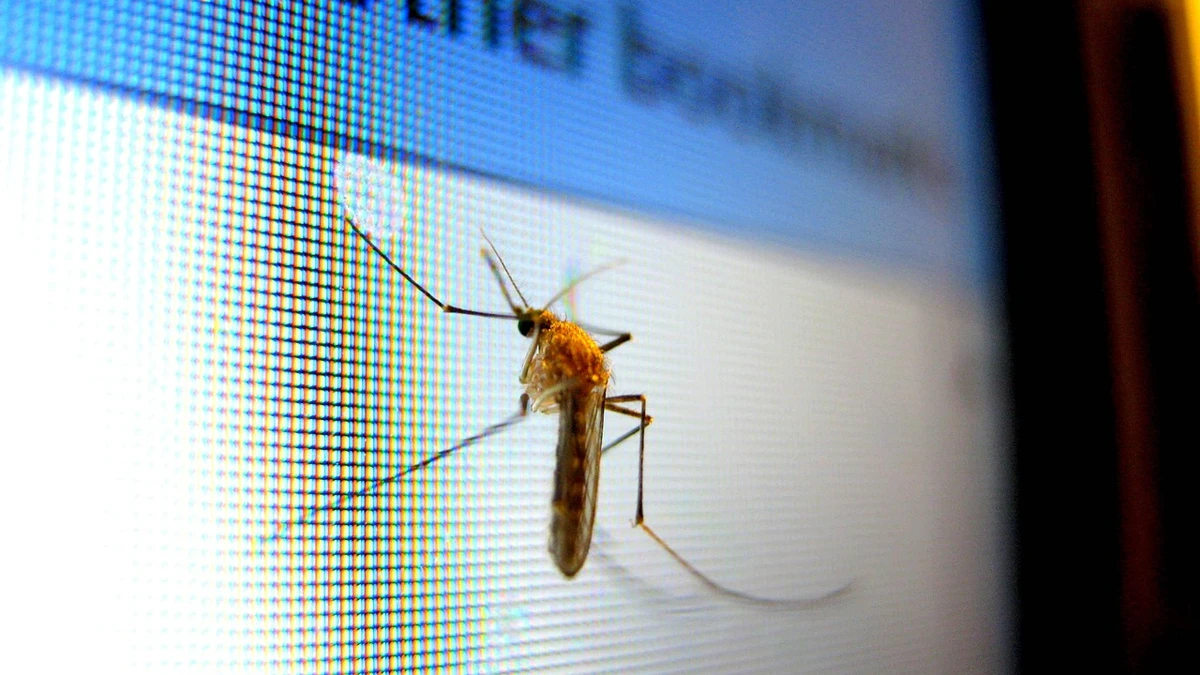
Microsoft Windows renders typography using ClearType subpixel anti-aliasing. ClearType assumes a standard linear RGB horizontal stripe (Red, Green, Blue side-by-side). When subpixels deviate from this layout, the anti-aliasing algorithm miscalculates edge smoothing, creating colored magenta or green fringing on text borders.
MLA+ WOLED Subpixel Layout: RWBG Stripe
MLA+ WOLED monitors deploy a four-subpixel layout: Red, White, Blue, Green (RWBG) in a vertical stripe. The inclusion of the white subpixel alters the physical spatial spacing between colored subpixels. On 27-inch 1440p panels (110 PPI), fine black text on white backgrounds displays subtle red/green fringing. However, on new 32-inch 4K panels (140 PPI), the microscopic pixel density renders this fringing virtually imperceptible to the naked eye at normal viewing distances.
QD-OLED Gen 3 Subpixel Layout: Refined Triangular RGB
First-generation QD-OLED panels utilized an aggressive triangular subpixel geometry (Green at the top apex, Red and Blue at the bottom base). This non-linear geometry caused notorious color fringing on high-contrast text and UI window borders.
In Third-Generation QD-OLED panels (e.g., 2024–2026 panels featuring 360Hz 1440p and 240Hz 4K), Samsung Display substantially redesigned the subpixel shapes: the subpixels are squarer, and the spatial fill factor is increased by 20%. While still triangular, the tighter spacing minimizes optical dispersion, yielding significantly crisper text rendering that satisfies software developers and content creators.
5. Ambient Lighting, Black Levels, and Reflection Handling
A critical physical difference between the two technologies lies in their interaction with ambient room lighting:
MLA+ WOLED (Superior in Bright Rooms): LG’s WOLED panels incorporate a circular polarizing anti-reflective filter. When ambient room light (from sunlight or overhead lamps) strikes the display, the polarizer absorbs the reflections. Inky blacks remain truly pitch-black (0.0001 nits) regardless of ambient lighting conditions.
QD-OLED Gen 3 (Vulnerable to Ambient Glare): To maximize light extraction, Samsung Display omitted the circular polarizing filter from QD-OLED. Furthermore, the quantum dot nanocrystals are sensitive to ambient light: when external photons strike the panel, the quantum dots scatter light and reflect ambient photons, causing the screen to display a raised, purplish-gray black level in bright rooms!
If your gaming battlestation is located in a sunlit room with uncovered windows, MLA+ WOLED delivers decisively deeper perceived contrast. Conversely, if you game in a light-controlled, dim, or dark room, QD-OLED provides unmatched specular brilliance and color saturation.
6. Thermal Dissipation & Graphene Heatsink Architectures
Because both MLA+ and QD-OLED push sustained peak luminance levels beyond 1,000 nits, managing localized junction temperature inside the thin-film transistor (TFT) backplane is critical to preventing permanent burn-in.
Operating an organic emitter at 50°C compared to 35°C accelerates exciton dissociation and chemical bond degradation by over 300%. To counter this, tier-1 monitor manufacturers incorporate advanced passive cooling solutions:
- Pure Graphene Thermal Interfaces: High-end MLA+ monitors place a microscopic sheet of pure synthetic graphene directly behind the OLED backplane. With an in-plane thermal conductivity exceeding 1,500 to 2,000 W/m·K (dwarfing copper’s 400 W/m·K), graphene rapidly spreads concentrated heat spikes away from high-brightness gaming HUDs across the entire aluminum chassis.
- Dedicated Aluminum Extrusion Heatsinks: Brands like ASUS ROG and Alienware mount thick extruded aluminum heatsink plates behind the panel, eliminating the need for noisy cooling fans while keeping panel operating temperatures below 40°C during marathon HDR gaming sessions.
- Firmware Thermal Mitigation Algorithms: Integrated Real-Time Temperature Monitoring adjusts current delivery on a per-zone basis, throttling brightness only on thermally stressed clusters while maintaining full brightness across the remainder of the frame.
7. Spectral Power Distribution (SPD) & Metamerism Failure
An intriguing phenomenon encountered by color-critical professionals calibrating MLA+ and QD-OLED monitors is observer metamerism failure.
In standard colorimetry (CIE 1931 2° Standard Observer), two displays with identical measured chromaticity coordinates (x, y) should appear visually identical. However, when placing an MLA+ WOLED monitor side-by-side with a QD-OLED Gen 3 monitor both calibrated to D65 (x=0.3127, y=0.3290) using a professional spectrophotometer, human observers frequently perceive the QD-OLED as slightly warmer or greenish-cyan!
The root cause lies in their radical Spectral Power Distribution (SPD) divergence:
- Broadband WOLED Phosphor Emission: MLA+ emits broadband light across wide spectral humps. The red, green, and blue primary peaks have broad Full Width at Half Maximum (FWHM ≈ 50 to 90 nm), closely mimicking natural broadband daylight.
- Narrow-Band Quantum Dot Laser-Like Emission: QD-OLED produces exceptionally sharp, needle-like monochromatic spectral emission peaks (FWHM < 25 to 30 nm). Because individual human eyes possess slight genetic variations in cone photoreceptor sensitivity curves (L, M, and S cones), narrow-band quantum dot primaries stimulate individual human retinas differently, causing metameric mismatch against standard colorimeters.
Professional post-production studios resolve this by performing perceptual visual matching using an industry-standard Sony BVM-HX310 mastering monitor as reference, offsetting white point targets slightly (e.g., target x=0.3110, y=0.3295 for QD-OLED) to achieve visual uniformity.
8. Burn-In Prevention Firmware Algorithms & Refresh Cycles
Modern OLED monitors incorporate sophisticated autonomous firmware maintenance routines that run silently in the background to ensure multi-year operational reliability:
- Short Pixel Clean / Compensation (Every 4 Hours): When the monitor enters standby after 4 cumulative operating hours, it executes a 5 to 7-minute pixel compensation cycle. The internal T-Con ASIC applies minute test currents across every TFT backplane node, measuring microscopic Vth (threshold voltage) shifts and recalibrating current delivery to equalize subpixel luminance.
- Deep Panel Refresh (Every 1,500 Hours): A comprehensive 1-hour cycle that measures TFT mobility degradation and adjusts global compensation look-up tables (LUTs) to erase subtle image retention.
- Pixel Orbiting / Screen Shift: The display controller imperceptibly shifts the entire active image by 2 to 4 pixels horizontally and vertically every 5 to 10 minutes, preventing static HUD elements (such as taskbars or game health bars) from permanently imprinting into organic subpixels.
- Static Logo & Taskbar Detection: Real-time frame analysis chips scan for unchanging high-contrast pixels. If a static logo or desktop icon is identified for longer than 60 seconds, luminance in that localized zone is gradually dimmed by 20% to 30% without affecting surrounding gaming content.
9. Gaming Monitor Buying Checklist & 3-Year Burn-In Warranty Analysis
In 2026, leading display brands (Alienware, ASUS ROG, MSI, and LG UltraGear) have standardized on comprehensive 3-year burn-in warranties that cover permanent image retention during normal usage. However, critical differences exist in their replacement protocols:
- Advanced Exchange vs. Return-for-Repair: Dell Alienware (AW3225QF QD-OLED) and ASUS ROG (PG32UCDM QD-OLED / PG34WCDM MLA+) offer advanced replacement guarantees, shipping a replacement monitor before you return the defective unit. Budget brands frequently require shipping the monitor to a repair depot for weeks.
- Firmware Thermal Cycling Compliance: Most manufacturer warranties require that the user not disable automatic pixel cleaning routines or cut main AC power directly via smart plugs, which aborts standby pixel compensation.
10. Colorimeter Calibration Protocols: 3D LUTs and HDR Tone Mapping
For content creators and mastering colorists choosing between MLA+ and QD-OLED, achieving colorimetric accuracy requires understanding hardware Look-Up Table (3D LUT) calibration:
Standard consumer monitors rely on 1D LUT adjustments inside GPU graphics drivers (ICC profiles), which adjust primary color curves individually but cannot correct cross-color non-linearities. Professional OLED monitors (such as ASUS ProArt or high-end LG UltraGear models) feature internal 14-bit or 16-bit 3D LUT hardware that can be programmed directly via calibration software (Portrait Displays Calman or Light Illusion ColourSpace):
- EOTF Tracking & Roll-Off Curves: In HDR10 mastering, displays must adhere strictly to the SMPTE ST 2084 Perceptual Quantizer (PQ) electro-optical transfer function. QD-OLED displays follow PQ tracking with near-zero error up to their physical clipping point (~1,000 nits) due to their linear quantum dot response. In contrast, MLA+ monitors employ sophisticated tone-mapping knee algorithms that gently roll off specular highlights between 800 and 1,400 nits to preserve fine highlight details.
- Near-Black Chromaticity Stability: Both panels must handle the tricky transition from 0% pure black to 1% near-black luminance. In older OLEDs, near-black quantization errors produced visible macro-blocking (chrominance overshoot). Gen 3 QD-OLED and MLA+ deploy high-precision sub-millivolt PWM dithering to eliminate shadow noise, maintaining Delta-E < 1.0 across the entire greyscale.
11. Quantitative Technical Benchmark: MLA+ vs. QD-OLED Gen 3
| Performance Metric | MLA+ WOLED (LG Display) | QD-OLED Gen 3 (Samsung Display) |
|---|---|---|
| Peak HDR Luminance (3% Window) | 1,300 to 1,500 nits | 1,000 to 1,300 nits |
| 100% Full-Field White (SDR/HDR) | 250 to 280 nits | 250 to 290 nits |
| Color Gamut (Rec.2020 Coverage) | 72% to 76% (Color filter loss) | 88% to 91% (Quantum dot purity) |
| High-Luminance Color Brightness | Desaturated by White subpixel | 100% Pure saturated primary colors |
| Subpixel Matrix Geometry | RWBG Stripe | Refined Triangular RGB |
| Ambient Black Levels in Light | True Deep Black (Polarized) | Raised / Purplish-Gray tint |
| Thermal Dissipation Architecture | Custom passive graphene heatsinks | Graphite sheets + thermal cycling |
8. Buyer Recommendation Framework: How to Choose
When selecting an advanced OLED monitor in 2026, align your purchasing decision with your room environment and primary usage profile:
Buy an MLA+ WOLED Monitor if:
- Your desk is situated in a bright room with natural daylight or direct overhead lighting, where maintaining pitch-black contrast without purplish reflection is essential.
- You prioritize blazing white highlight brightness in HDR gaming (e.g., snowfields, muzzle flashes, and specular reflections).
- You want proven long-term durability backed by LG’s multi-stack organic emission.
Buy a QD-OLED Gen 3 Monitor if:
- You game or edit content primarily in light-controlled, dim, or dark room environments.
- You demand cinema-grade color fidelity, unmatched Rec.2020 color volume, and fully saturated colors in high-luminance HDR highlights.
- You spend considerable hours reading text, coding, or writing on 4K panels where Gen 3’s refined subpixel geometry delivers crisp typography.
For broader comparisons between organic emissive architectures, review our comprehensive analysis of QD-OLED vs. WOLED subpixel fringing and inspect mobile display advances in our Tandem OLED vs. Mini-LED in laptops guide. Track real-world accelerated longevity benchmarks directly via the RTINGS Accelerated OLED Burn-In Test and review display science diagnostics at DisplayMate Technologies.
MLA+ OLED vs. QD-OLED Gen 3: Advanced Monitor Architecture
Micro-Lens Arrays, Quantum Dot Electroluminescence, Text Clarity, and Thermal Burn-In Physics (Complete architectural audit with telemetry tables and schematic breakdowns).
whitepaper_batch_15_6_mla_oled_vs_qd_oled_gen3.pdfFormat: Publication-Grade PDF