This emerging datacentre project delays crisis threatens the entire AI industry’s growth, as the infrastructure needed to train and run advanced models simply isn’t coming online fast enough.
According to the Uptime Institute, 250 global datacentre projects exceeding 100MW were announced between 2021 and 2024. Of those, approximately half will either not happen or be significantly delayed. This datacentre capacity crisis, coupled with an AI infrastructure shortage, means that many server farm project cancellations are already reshaping the roadmap for artificial intelligence.
The Scale of Datacentre Project Delays and Cancellations
Behind the AI boom lies a sobering reality: many planned datacentre projects are failing to materialise. You might assume that with the insatiable demand for cloud computing and artificial intelligence, every server farm on the drawing board would race to completion. Instead, global datacentre projects are being abandoned at an alarming rate, and the numbers paint a stark picture. Planned projects announced last year, if run at just 25% capacity, would have consumed 1.3% of the world’s projected 2025 electricity usage — a staggering figure that highlights why datacentre project delays are not just a logistical headache but a fundamental bottleneck for the entire AI revolution.

These are not small facilities. Industry analysts at Uptime identified six mega-gigawatt datacentre projects last year, each aiming for at least 5GW — enough power to supply a small city. Yet many of these mega datacentre project failures are being shelved or paused indefinitely. The reasons range from power grid constraints and permitting delays to rising construction costs and community opposition. For hyperscalers like the major cloud providers, these hyperscaler project cancellations force a scramble for alternative locations, often in regions with more available energy and faster approvals.
Project Range and Cyberjaya – Two Notable Casualties
Two high-profile examples illustrate the trend. In Arizona, the massive Project Range — a planned energy-intensive data centre campus — was cancelled after facing significant hurdles. Meanwhile, in Malaysia, the ambitious Cyberjaya campus project also fell through, leaving a gap in Southeast Asia’s digital infrastructure plans. These datacentre project delays and outright cancellations are not isolated incidents; they signal a broader crisis where the physical backbone of the AI industry simply cannot keep pace with the software-driven demand. As you watch the AI landscape evolve, remember that behind every model and chatbot lies a physical datacentre — and many of those are stuck in limbo.
Why Are Proposed Datacentre Projects Failing?
A perfect storm of market, operational, and supply chain issues is derailing datacentre development. But what exactly is causing these datacentre project delays? It comes down to a handful of interrelated barriers that prevent many proposals from ever breaking ground. Understanding these challenges helps you see why the AI revolution — for all its promise — remains tethered to physical infrastructure that is struggling to materialize.

Developer Credibility and Tenant Demand
One of the biggest datacentre development challenges lies in the credibility of the developers themselves. The surge in AI interest has attracted many inexperienced players who lack the track record needed to secure financing or permits. Without a proven history of delivering large-scale projects, these developers often fail to inspire confidence in investors or local authorities. Compounding this is the issue of tenant pre-commitment issues. Many proposed datacentres lack a committed tenant — such as a major cloud provider or AI company — willing to sign a long-term lease. Without that commitment, the financial risk becomes too high, and the project stalls before construction can even begin.
Energy and Water Resource Constraints
Another critical factor is the immense resource consumption these facilities demand. Datacentres require vast amounts of electricity for computing and cooling, as well as significant water supplies. Many proposed sites face outright rejection because the local grid cannot support the load, or water resources are already strained. The supply chain bottlenecks for data centres further exacerbate the problem. From specialized cooling equipment to high-performance servers, the global supply chain simply cannot support the level of projects on the projected timeline. Components are delayed, costs rise, and timelines stretch indefinitely. When you combine these resource constraints with the geographic concentration of datacentres in a few key corridors, it creates a logjam that holds up countless proposals. The result? More datacentre project delays that ripple across the entire AI ecosystem.
Energy Grid Bottlenecks: A Critical Barrier
Even when a datacentre is fully constructed and equipped with the latest AI hardware, it can sit completely idle. The reason? The local power grid simply cannot deliver enough electricity to run it. This is one of the most frustrating forms of datacentre project delays: the building is ready, but the energy isn’t. Grid capacity limitations have become a primary bottleneck, turning promising sites into expensive, unused shells.
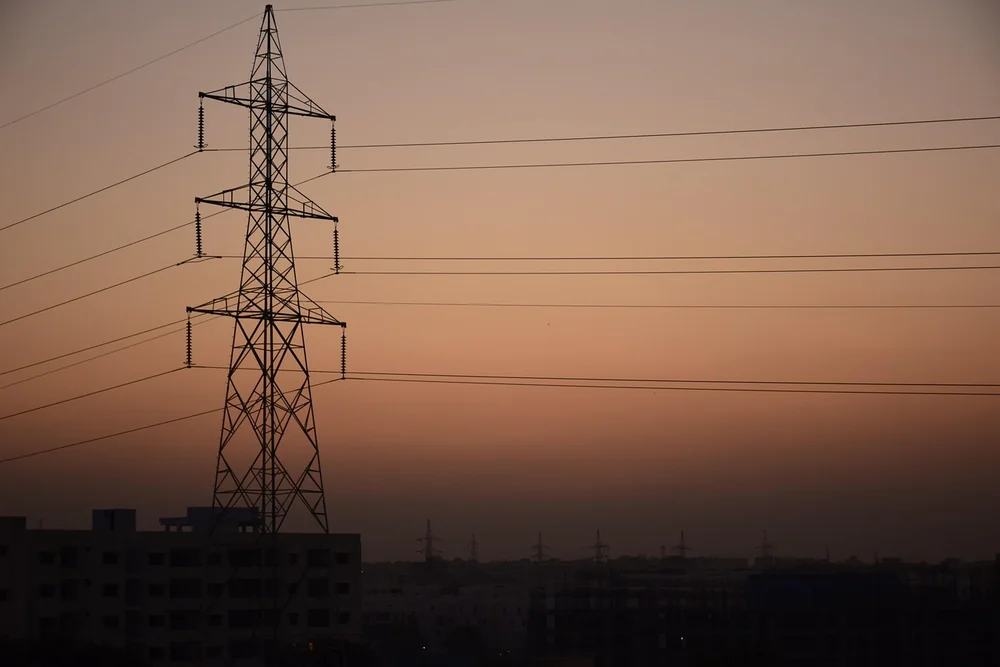
To put the scale in perspective, roughly 80% of new power demand in the United States comes from datacentre projects. That shift places enormous strain on aging grid infrastructure. Interconnection queues—the waiting list to connect new power loads to the grid—are growing longer every quarter. The result is that many developers find themselves stuck in a slow queue for grid interconnection delays, unable to power up servers even after construction finishes.
California’s Idle Datacentres
California offers a stark example. In some parts of the state, newly built datacentres stand empty for years because the utility cannot supply them with the required electricity. The facilities are ready, but the grid is not. This waste of capital and energy resources is a direct consequence of power grid capacity for data centres failing to keep pace with construction. For you, the AI user, this means models you rely on might be hosted in a datacentre that is under-utilised or waiting for a transformer upgrade.
Virginia Controversy – Prince William Digital Gateway
The situation in Virginia shows that grid problems are not just technical—they are political and legal too. The Prince William Digital Gateway site, planned near a historic Civil War battlefield, faced strong local opposition. Residents and preservation groups challenged the development, and a local court ruling eventually halted the project. Soon after, a key financial backer pulled out entirely. This datacentre project delay was driven by community resistance as much as by grid constraints. It illustrates how power grid capacity for data centres is only one piece of the puzzle; public sentiment and legal hurdles can stop a project cold, even if the utility lines are available. For anyone following the AI industry, these conflicts are becoming more common as demand for electricity grows faster than the grid can handle.
H2: How Datacentre Delays Impact AI Companies
When a datacentre project stalls because the grid can’t keep up, the effects ripple straight through to the AI services you rely on every day. AI giants are already feeling the pinch as insufficient compute capacity slows their cloud offerings. Google, for instance, has openly admitted that its cloud business is now ‘compute-constrained’ due to surging demand for AI services. That’s a clear signal that datacentre project delays are no longer a hypothetical problem — they are actively limiting what AI companies can deliver.

The knock-on effect is a growing AI compute shortage. When hyperscalers can’t build new facilities fast enough, they have to ration their existing capacity. That means slower rollouts of new AI features, longer wait times for model training, and higher costs for businesses that depend on cloud-based AI tools. For you, this could translate into sluggish performance on AI-powered apps, delayed product updates, or even capped usage tiers on services you subscribe to.
Beyond the immediate user experience, the shortage of operational datacentres threatens the pace of AI innovation itself. Startups and researchers who rely on hyperscaler AI infrastructure to train large models may find themselves priced out or pushed to the back of a growing queue. The cloud capacity constraints that follow from delayed projects create a bottleneck that slows the entire AI ecosystem — from virtual assistants to generative tools. Until the power and permitting issues behind these delays are resolved, the gap between AI ambition and available compute will only widen.
Uncertain Timelines and the Future of Datacentre Development
You might wonder just how many projects are caught in this limbo. The Uptime Institute tracked 250 global datacentre projects exceeding 100MW that were announced between 2021 and 2024. That is an enormous pipeline of capacity meant to power everything from cloud services to advanced AI training. Yet the reality is sobering: roughly half of those projects will either never happen or face significant delays. That means no clear completion dates exist for most of the delayed work, leaving the entire datacentre construction timeline in a state of flux.
This uncertainty has a direct impact on your future experience with AI tools. If major computing hubs are stuck in planning stages, the speed at which new generative features roll out will remain unpredictable. The project cancellation outlook is equally worrying—many operators may simply walk away if power constraints or regulatory hurdles become too costly. What does that mean for the broader energy picture? Planned projects announced last year, even if run at just 25% capacity, would alone consume 1.3% of the world’s projected 2025 electricity usage. That figure highlights the enormous strain on the grid, and it’s why global electricity demand data centres are now a central topic in energy policy discussions.
For you, the practical takeaway is that datacentre project delays are not a temporary glitch. They reflect a structural bottleneck where power availability, permitting timelines, and sustainability concerns collide. The industry will need years to resolve these issues, and in the meantime, the gap between AI’s potential and its hardware foundation will remain wide. Keep an eye on regional energy policies—they may become the single biggest factor determining when the next wave of AI capabilities actually reaches your devices.
Frequently Asked Questions
How does the energy grid bottleneck affect AI companies?
Energy grid bottlenecks force datacentre projects to wait for new power infrastructure. This directly limits the number of servers AI companies can deploy, slowing their ability to train and run models. You may see longer wait times for cloud AI services and higher costs as existing capacity becomes scarcer.
What factors are causing proposed datacentre projects to fail?
Multiple factors combine to stall projects: insufficient local power supply, lengthy permitting processes, and competition for land and water. Supply chain delays for key equipment like transformers also play a role. These datacentre project delays are not limited to one region.
How significant is the datacentre shortage for the AI industry?
The shortage is a major bottleneck because AI workloads demand enormous compute power. Without enough new datacentre projects, scaling AI applications becomes slower and more expensive. This is a global challenge that affects everything from model training to real-time inference.